
On 5 January 2026, Tyler Bates stepped out of Marilyn Manson's touring band to concentrate on film and television work. He did not step away from the record. Co-writer, co-producer, the hands on the desk for the fourth time, he kept his name on the half of the story that was still waiting in the vault.
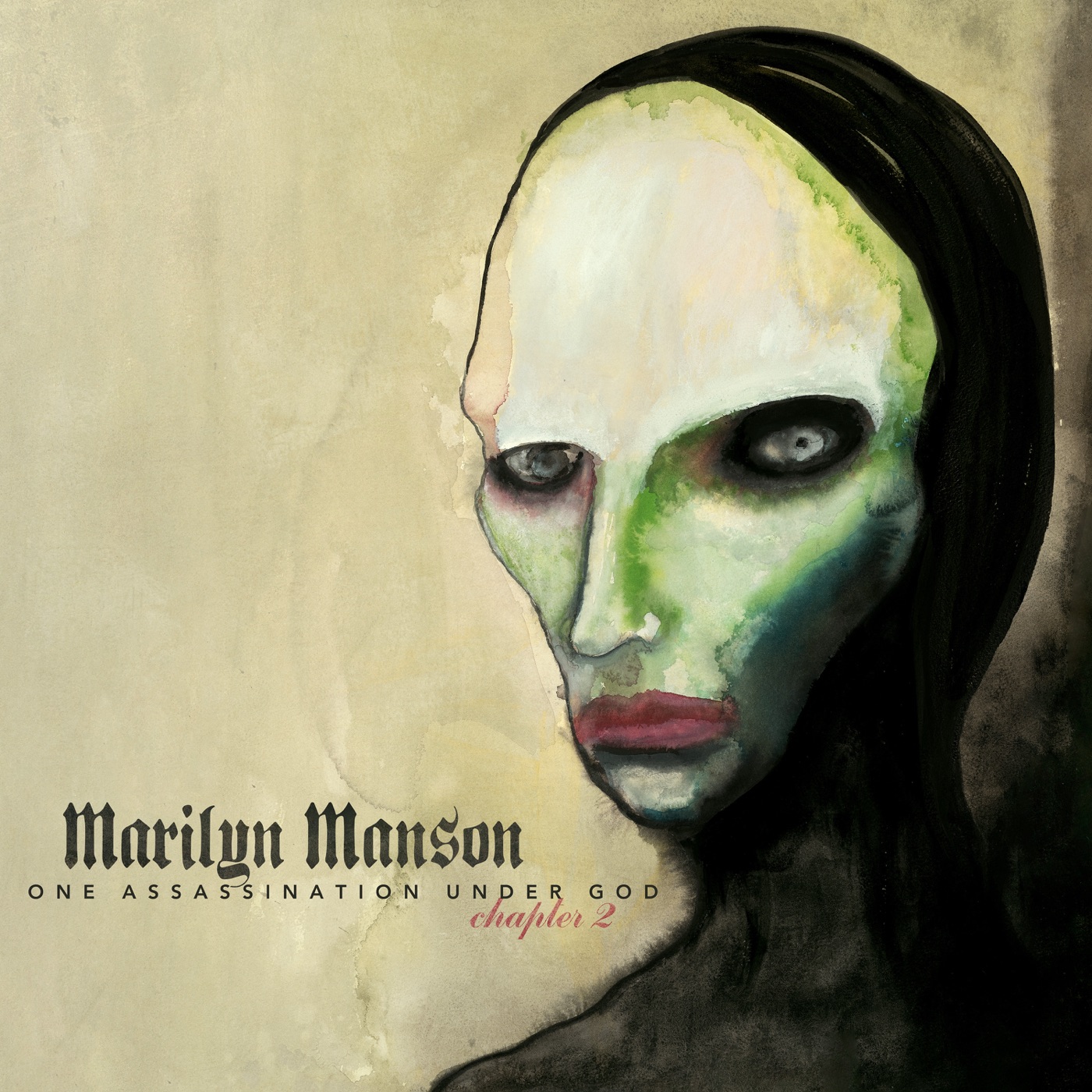
The veteran exhibit of American shock rock, on show under one man's stage name since 1989, released One Assassination Under God - Chapter 2 through Nuclear Blast on 14 August 2026, closing the two-part concept that One Assassination Under God - Chapter 1 opened in 2024 with nine tracks and around forty three minutes, built by the same partnership that produced The Pale Emperor in 2015 and Heaven Upside Down in 2017. It is the quieter half. On purpose.
Picture a waxworks museum after closing. The last visitors have gone, the main hall is dark, and only the exit signs and the climate control are left running, a low mains hum under everything, holding every figure at the one temperature where wax still keeps a face. The first chapter was the main hall at noon, its riffs lit up like the famous faces by the entrance. This one smashes the ceiling lights and walks you into the back rooms at midnight: the same maker, the same figures, and now you notice the seams, the glass eyes, the way the exit light slides across a cheekbone that is not quite skin.
That is the sound, and it is a choice. Bates walks the guitars back from jagged distortion into minor-key harmony and slow atmosphere, the mix is cavernous enough to echo, and the bass and electronics are wired into the circuitry of each arrangement instead of buried under it. Big riffs are the casualty. The dust sheets stay on most of them.
What carries the building is the voice. Manson's baritone is in firm shape, and he uses all that space the way a night guard uses a torch, lighting one face at a time and leaving the rest in the dark, until the voice comes up to full strength and a figure you were sure was wax turns its head to follow you down the corridor.
The rooms worth the ticket
"Unalive" unlocks the doors, industrial and gothic welded into one frame, and it sets the lighting for everything after it. It also carries the line "Eyes may cry, but I'll never weep". That line is not heard in a vacuum. The singer has faced multiple sexual assault allegations since 2021, and a title with the word assassination in it keeps that fact in the room whether a song names it or not. The music does not argue the case. It keeps walking.
"Front Toward Enemy" is where the machinery in the basement comes back on. The title is the instruction stencilled on the face of a Claymore mine, and the song behaves accordingly: a nasty industrial cut, the one room where the machine outweighs the atmosphere, and it ends in a blast that shatters every display case in the hall. If you came for the riffs, start here. It is the one room where they were never packed away.
"All The Vilest Things" is the hook, absurdly catchy and unashamed of it, the song built for the gift shop on the way out. "The Arsonist" belongs to the voice instead: its refrains are scathing, the baritone at full heat, a man pouring lamp oil along the velvet ropes and narrating the smoke as it climbs the curtains.
"Exit Wound" is the standout of the late run, the song that pulls the chapter's loose threads into one knot. Then "Enantiomorph" closes the building. An enantiomorph is a mirror-image form, and in this building it is the left-handed twin poured from the reversed mould of a figure in the main hall: the same face, the same wax, and no way to lay one over the other. That is the exact relation between these two chapters, and the closer is the high point of the record, slow and open, the one track where the atmosphere is the architecture rather than the decoration.
Leftovers, or the back rooms
The record poses one question and splits a room on it. Hear it as the songs that did not fit the first chapter, swept into a second one to clear the stockroom, or hear it as the darker, more cohesive half of a single piece. The second hearing is the right one. These songs share a palette, they are built for low light, and they would have looked wrong under the noon lamps of 2024.
This is the mirror image of the first chapter, not its leftovers.
The cost is immediacy, and it is real. With the riffs in storage, the songs that are not doing a specific job plod on the same slow tread and blur into one long corridor; the first chapter grabbed you at the door, and this one waits for you to walk far enough in. On nine tracks there is no spare room to lose. I spend my working hours hunting hum out of signal chains, and a couple of these songs are more hum than signal.
So, the closing inventory. One Assassination Under God - Chapter 2 is darker, roomier and superbly sung, and poorer in riffs than the first chapter by a distance you will feel. If the first chapter was yours, this is the other half, and the story does not finish without it. If you want the jagged, riff-first Manson, take "Front Toward Enemy", "The Arsonist" and "Enantiomorph", and leave the rest of the building to the night guard.