
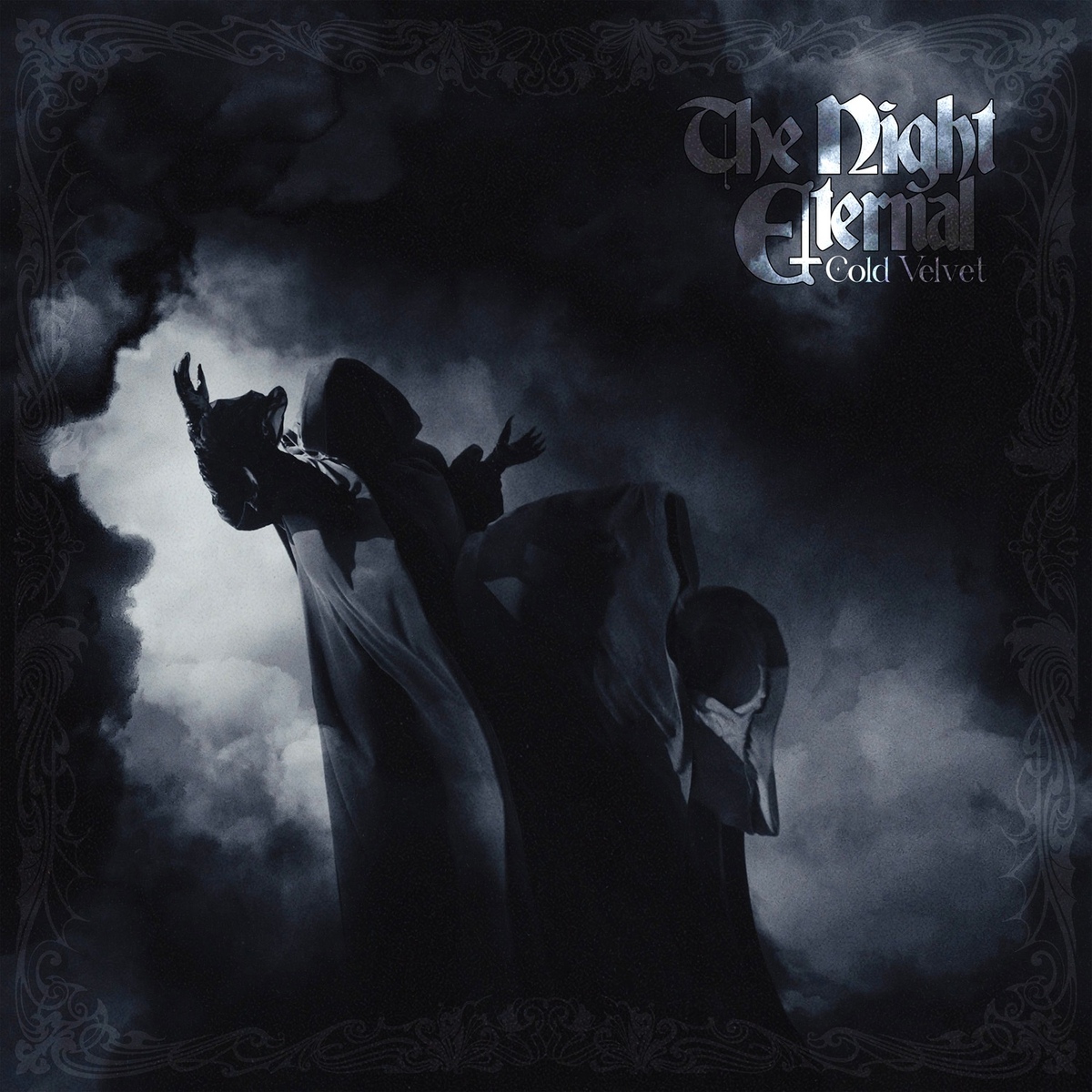
On 21 August 2026 Metal Blade Records released Cold Velvet, the third album by The Night Eternal and the first after two records on Ván Records, Moonlit Cross in 2021 and Fatale in 2023. A third album on a bigger label is where a band usually starts dressing for the buyer. The Ván Records graduates went to a tailor instead.
Recorded between May and December 2025 at Church Of Sound Studios with Michael Zech, the Secrets Of The Moon guitarist better known in extreme metal circles for Triptykon, Sulphur Aeon and The Ruins Of Beverast, new to the band, Cold Velvet slices the plain leather off the heavy metal of its predecessor and cuts the cloth again, closer to the goth rock and post-punk of the eighties. It is a deliberate change. Rob Richter told metal.de on release day that the band wanted a record heavy and eighties in character, though from the late end of the decade, 1988 or 1989 rather than 1982, and more organic than anything it had made before.
The guitars of Richter and Henry Käseberg have not gone anywhere, and they remain the best argument this band has. The new cut simply sews them into the lining instead of pinning them to the lapel: a coat of cold velvet with razor wire stitched inside, soft enough from across the room and quick to open the palm of anyone who grabs it by the collar. Restraint of that kind is easy to mistake for retreat, and it is not one. The wire is still there, only sewn in deeper.
The singer at the centre of the change, Ricardo Baum, is the reason it works. Ethereal in one line and gruff in the next, he floats a chorus and then roughs it up in the same breath, carrying melody, menace and a good deal of theatre without ever sounding like a man in a costume. A band that rebuilt its whole wardrobe around that voice knew exactly whom it was dressing.
Velvet on the outside, razor wire in the lining, and a singer the whole coat was cut to fit.
What each song is for
"Where This World Ends" opens the door, and it is the right song for the job: fierce, balanced between the metal and the goth, with a guitar solo good enough to settle the argument on its own. Anyone who feared that the move to Metal Blade meant a softer band gets the answer inside the first song.
"Eurydice (Don't Look Back)" is the hook, and Metal Blade knew it, putting the song out as the lead single. Its call-and-response chorus is the one this record will be remembered by, the kind that has you answering it back before the second verse and still humming it a fortnight later. Some songs are written to open a set. This one is cut to be hummed on the way home from one.
"Shapes of Sorrow" does the dirty work. It is where the steel shows through the velvet, with Aleister Präkelt's drumming pushing the song forward rather than keeping time behind it, and it is the closest this band comes to Paradise Lost. It is also the song for anyone who wanted them to stay angry.
"Caught in a Spell" breaks the mould, though the mould is hard to name. There is a desert-country swing in the guitars and something very close to a disco pulse under the chorus, and which of the two you hear depends on which hand you follow. It arrives third, before the record has had time to settle into a habit, and that placement is the clearest signal that the eighties being chased here are the ones with the strange singles in them. "The Veins of Time" is the other song to stop on, metal and melodic rock welded to a wave pulse, and the strongest melody on the album after the single.
Where the seam pulls
The price of all that tailoring is paid in the middle. "When the Last Candle Dies" holds the shape the songs on either side of it have already cut and does nothing else with it, and a record built on restraint keeps no spare cloth to hide a song that fails to earn its place. That loose thread is what stands between this album and the essential shelf. It is one song. It is also the only one.
The larger argument is over the cloth itself, and this is a record that splits the room: one half hears a band that has finally grown into a sound of its own, the other hears a band wearing somebody else's clothes, because the eighties being copied here are close enough to touch. The first reading is the right one. A band borrowing a style does not cut it this precisely to one singer, does not put its strangest song third, and does not hand the drummer the job of carrying the heaviest track instead of decorating it.
The closer takes the longest way round, and that is where the question of patience really belongs. "Dance on Crimson Ground" is the record's great gamble, a stretched-out eighties single that keeps finding another room to walk into, and the one moment where the band lets the tailoring show on purpose. Picture a gaslit dance hall long after the last tram has gone, the band still playing in velvet with the razor wire showing at the cuffs, and a floor that refuses to empty. The closer asks for patience. It pays it back.
Forty years of writing about heavy metal have left me short of patience with bands who buy the old coat off the rail and call it heritage. This band did the harder thing: a new coat, cut to a late eighties pattern, fitted to a singer who can carry it and lined with enough steel to draw blood. Cold Velvet belongs on the shelf beside In Solitude and Unto Others, and anyone who still files heavy metal and eighties goth in separate rooms will find this record has knocked the wall through. Ignore it and you miss a band that stepped up to a bigger label and came back better dressed and still armed.