
On 2 October 1984 Tyfon Grammofon released the first Bathory album in a pressing of one thousand copies, and the goat on the front of every one of those copies was yellow.
Nobody involved thought of that run as a layer, and a layer is what it became. The people who read the past out of a body of ice are glaciologists, and their instrument is a core, a cylinder a hand's width across hauled up from hundreds of metres down, where every pale band is one year's snow crushed flat under all the winters that fell on top of it. Nobody wrote those winters down and nobody needed to, because the ice kept the record by itself: the ash of an eruption on another continent, a summer that never properly thawed, a season of dust. Black metal vinyl is drilled and read the same way.
The deepest bands in that core are the first pressings, thin strata laid down between 1984 and 1995 by labels that musicians and fanzine editors ran from their own addresses, and above them lies the fresh snow of every repress, remaster and coloured variant pressed since, a drift deep enough now to bury the original winter under thirty years of permafrost. The music is identical in every layer. The collector is buying the date the snow fell.
Three kinds of stratum reward the drill, and none of them can be heard on the record: the first run, small enough to be counted; the variant, in which one album is two objects because a sheet of paper or a picture disc separates them; and the absence, the winter in which a record should have gone onto vinyl and did not. The logos, the photographs and the sleeves that make these objects worth wanting in the first place belong to the wider story. Beneath that story lies the ice, and the catalogue numbers that date it.
Hast thou entered into the treasures of the snow? or hast thou seen the treasures of the hail, which I have reserved against the time of trouble, against the day of battle and war?
The Book of Job, King James Version, 38:22-23
The yellow band at the bottom of the core
The Swedish outfit that took its name from a Hungarian countess was Bathory, and the man who named it was Quorthon. Recorded in June 1984 at Heavenshore Studio in Stockholm, the album carried on its front a goat taken from a drawing by Joseph A. Smith, meant to be printed in gold, a colour the budget could not stretch to, so Quorthon asked the printers for something as near to gold as they could manage and got back a bright yellow that he later thought looked awful.
The thousand copies sold out in two weeks. Every pressing after them struck the colour out of the sleeve. The first run hardened into the thinnest and most chased stratum in the column, a band of frost laid down in the autumn of 1984, long before the Norwegian second wave had a name, then sealed under every black and white goat pressed since and ground down further in the decade when the compact disc swept the LP off the racks. Revolver's White Whale Vinyl column, published on 26 August 2020, carried collector Scott Carlson's belief that far fewer than a thousand yellow copies survived that decade intact.
The labels the bands dug for themselves

The label that opened its catalogue with this record was Moonfog Productions, which Satyr and Tormod Opedal had been running unofficially since 1992, and it gave its first number, FOG 001, to sessions taped at Nesodden Musikkverksted in August and September 1993 and released on 25 October that year. The band whose debut carried that number was Satyricon, Satyr's own, and Dark Medieval Times went onto vinyl in a limited edition its Discogs entry sets at a thousand copies, with at least the first five hundred carrying a folded poster of the back sleeve artwork.
The poster is the ash in the ice. Copies of that run are dated first by the letters gouged into the dead wax of the runout groove, reading FOG - 001 A DMM G.P. on side A, and then split in two by a folded sheet of paper that either is in the sleeve or is not, and no later pressing can force it back in. In 2021 the album returned remastered under different artwork and reached number 53 on the German albums chart, fresh snow of a colour the original winter never had to carry.
A first pressing works the way a relic works. The bone inside a reliquary is a bone like any other, and what is paid for is the writing that says whose it was and whose hands have held it since; the letters in the dead wax are that writing, and the folded poster is the seal that proves nobody has been inside.
The music is identical in every layer. The collector is buying the date the snow fell.

The French house that had worked through the same arithmetic a year earlier was Osmose Productions, and the Bergen trio whose first album it put out in four shapes at once was Immortal: Diabolical Fullmoon Mysticism, released on 1 July 1992, arrived as a standard compact disc beside three limited formats, a vinyl LP, a picture disc and a cassette. Osmose pressed the picture disc again in 1998 and the regular LP again in 2005, so that the same winter now sits in the core twice, the original fall and a second snow six years above it. The surviving picture discs share one catalogue number, OPPIC 007, cut at the Gramofonové závody plant in the Czech Republic, and the repress swallowed that number whole: no separate listing splits an original 1992 copy from the 1998 one, close enough in look to fool anyone who drills without a paper trail.
| Record | First issue | The first layer | What fell on top |
|---|---|---|---|
| Bathory, Bathory | Tyfon Grammofon, 2 October 1984 | 1,000 LPs with a yellow goat | A black and white goat on every later pressing |
| Immortal, Diabolical Fullmoon Mysticism | Osmose, 1 July 1992 | Limited LP, picture disc and cassette | Picture disc again in 1998, LP again in 2005 |
| Satyricon, Dark Medieval Times | Moonfog, 25 October 1993 | Limited LP, part of the run with a folded poster | Remaster with new artwork, 2021 |
| Ulver, Bergtatt | Head Not Found, February 1995 | No official vinyl | Century Media LP, 2016; coloured editions in 2019 and 2024 |
A stratum recorded and not recommended
Burzum's first album was recorded at Grieghallen in Bergen in January 1992 and released by Deathlike Silence Productions in March 1992, and most later issues join it to the Aske EP under the title Burzum/Aske. Its original pressing is part of any honest account of what black metal collectors look for.
Varg Vikernes, who made those records alone, was sentenced on 16 May 1994 to 21 years in prison for the murder of Øystein Aarseth, the arson of three churches and the attempted arson of a fourth, and the theft and storage of 150 kilograms of explosives. He was released on parole in 2009, after serving nearly fifteen years of the sentence. On 8 July 2014 a French court convicted him of inciting racial hatred over posts on his blog, and he received six months' probation and a fine of 8,000 euros. He has promoted neo-Nazi views in print since his imprisonment, when he founded a group called the Norsk Hedensk Front.
Leaving those pressings out would falsify the account. They are on no list of records to buy.
The winter that laid down no ice
The band that named itself after wolves was Ulver, and the label that carried its first album was Head Not Found, which Jon Kristiansen ran beside his fanzine Slayer from 1992 and which issued Bergtatt in February 1995, after sessions at Endless Lydstudio in Oslo across November and December 1994. That first edition went out on compact disc and cassette with no official vinyl beside it, leaving a hole in the core where the most wanted layer ought to lie.
What filled the hole was dirty snow. Unofficial vinyl broke into it three times before the band authorised anything, a plain LP in 2012 followed by blue and white vinyl versions in 2013, and a collector drilling for a 1990s LP of that record brings up nothing but counterfeit ice. The first official vinyl came from Century Media on 3 April 2016, remastered by Jaime Gomez Arellano, pressed at 180 grams in a gatefold as part of the same reissue campaign that brought back Kveldssanger, and the coloured layers then fell quickly: a milky clear edition of 200 and a transparent blue edition of 100 in 2019, a translucent grape edition of 500 in 2024.
Here the rarity runs backwards. The oldest vinyl in that column is the plastic nobody authorised, and the scarcest official layer is one of the newest, a hundred blue discs pressed twenty four years after the winter they are supposed to record.
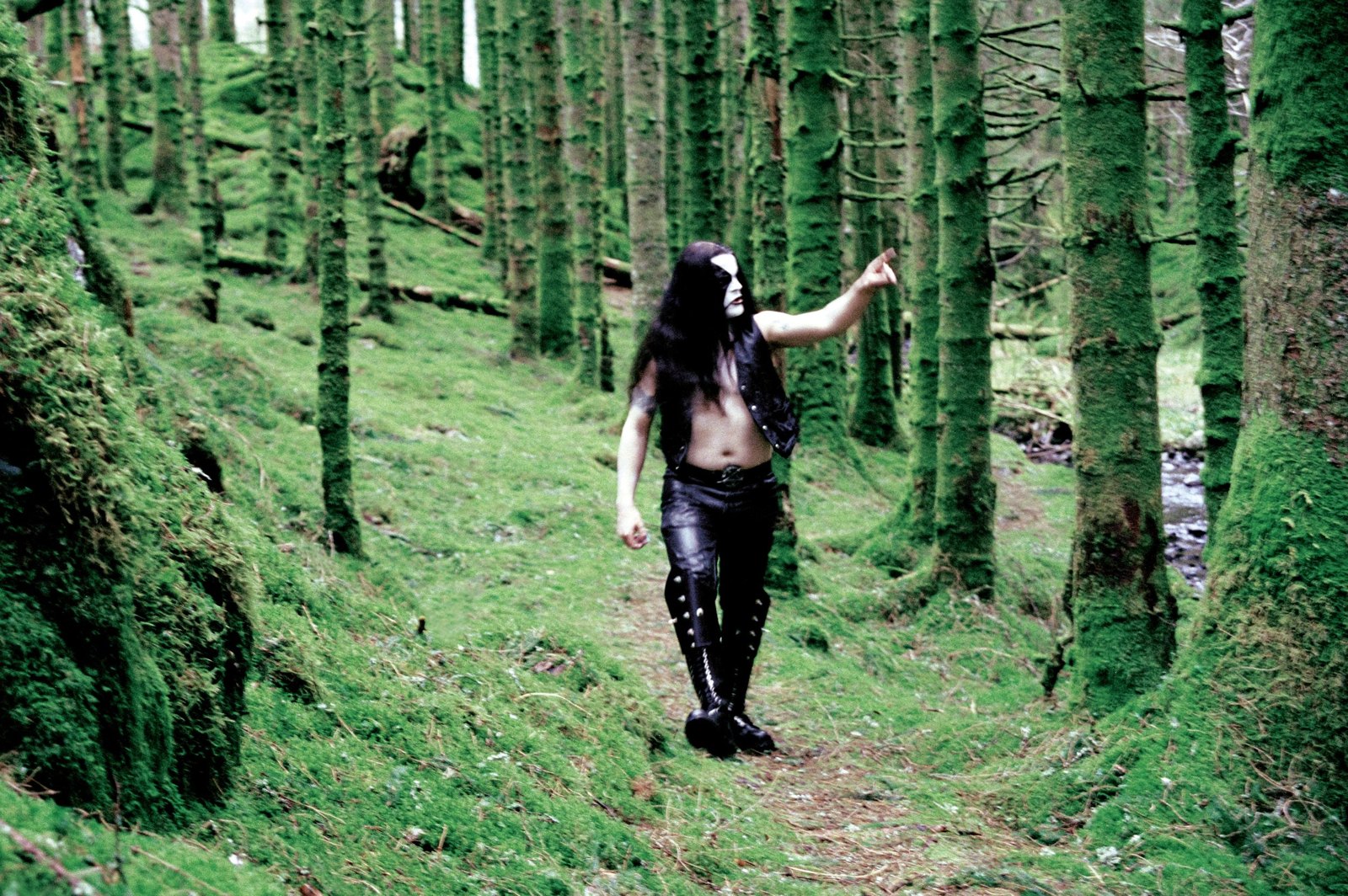
A yellow band from 1984, a picture disc doubled six years after itself, a folded poster inside a label's first catalogue number, and in 1995 a stretch of clear ice where no vinyl formed and unauthorised plastic filled the desolation: one column drilled out of a decade of northern winters. The price of a layer follows its thinness and whether anything has disturbed it since. The faces photographed for these sleeves and their inner pages were painted before they were ever pressed, and that paint has its own history, set down in full in corpse Paint.
The snow keeps falling on all of them. The oldest winters do not come back.
