
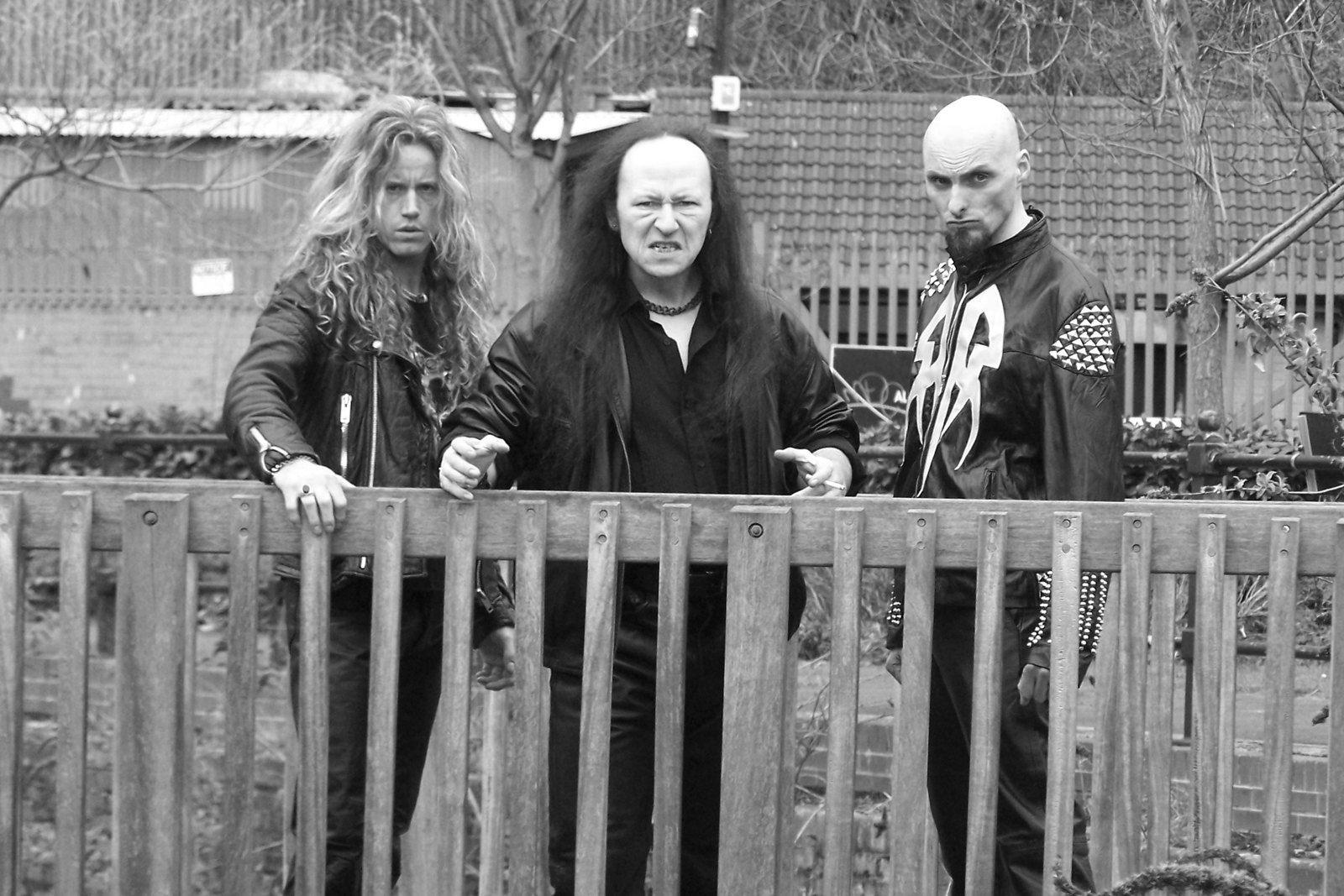
Fifteen songs, two of them marked with the letter O. The Washington lobby founded in May 1985 that drew up a list of the fifteen most objectionable records in the country, stamping each one with a letter for its offence, X for sex, V for violence, D/A for drugs and alcohol and O for the occult, was the Parents Music Resource Center, and its O went to only two tracks: "Possessed" by Venom and "Into the Coven" by Mercyful Fate. Two out of fifteen.
So is heavy metal music satanic? Even the accusers' own charge sheet said mostly not. The bands who put the devil on their sleeves were overwhelmingly doing what the theatre has always done with him, and the handful who meant something by it meant something quite different from what the pulpits feared.
The devil in heavy metal works like the paraffin in a fire-eater's mouth, a lungful of fuel sprayed across a lit torch into a column of flame that scorches the eyebrows off the front row and blisters the paint on the ceiling, looks exactly like hell for two seconds, and is from start to finish a piece of chemistry the performer rehearsed in a car park all afternoon. The flame is real. The hell is not.
How the accusations reached the Senate, the statute books and the bench belongs to the story of when the courts came for it. The question of belief is older and plainer, and the people best placed to answer it are the musicians themselves.
The accusers' own evidence
The Newcastle trio that did more than any band alive to hang the goat's head over the genre's door was Venom, and "Possessed", the title song of its 1985 album on Neat Records, is exactly what the lobby said it was, a song sung in the voice of a man claiming the devil for his master over a riff that clatters like a drawer of cutlery flung down a stairwell. The lobby read the lyric sheet correctly. It misread the men who wrote it.

Venom's own singer and bassist Cronos told Guitar World in November 2008 that the band were entertainers first and foremost, and that a real Satanist or murderer would not waste time playing songs for a living. The demon's face on the sleeve of Black Metal in 1982 was there to frighten parents and sell records. The records bear him out. They are pantomime with the amplifiers turned up.
That is the rule for most of the music. Iron Maiden, Slayer, W.A.S.P. and a hundred smaller bands used the devil as a subject the way horror novelists use the vampire, because he was the biggest villain in the Western imagination and he came free of copyright.
The singer who meant it
The other O on the list is the one exception that repays a closer look. The Danish singer in black and white face paint who wrote "Into the Coven" for Mercyful Fate's 1983 debut Melissa is King Diamond, and he has said in interview after interview that he lives by the philosophy of Anton LaVey, the American who founded the Church of Satan. That makes him the rare metal singer who claims the word for himself.
What he claims by it is not what the pulpits described. LaVey's Satanism, set out in The Satanic Bible of 1969, is an atheist creed of self-interest that does not believe in a literal devil, and King Diamond has said plainly that his view has nothing to do with the devil of the Christian and Jewish scriptures. The one sincere Satanist of the golden age turned out not to believe in Satan. The sermons never mentioned that.
Belief with real victims did exist, and it came from somewhere else. In Norway between 1992 and 1993 a small circle of black metal musicians and fans set fire to a series of wooden churches, starting with the Fantoft stave church near Bergen on 6 June 1992, the fire Vikernes was tried for and acquitted of. On 16 May 1994 he was convicted of three other church arsons and of the murder of the guitarist Øystein Aarseth. That belongs to black metal, a different music from a different decade. It is also the only chapter in which the accusation found people who fitted it.
Believers at the microphone
The more common story runs the other way. The Birmingham singer who fronted the band that invented the whole dark vocabulary was Ozzy Osbourne, and the four men of Black Sabbath wore crosses in their early years, hammered out of scrap aluminium by his father at the factory where he worked, after a self-described coven cursed the band for refusing to play at one of its gatherings. The band that named the devil wore the cross against him.
Look along the stage and the pattern repeats. The Detroit-born showman who staged his own execution night after night in the early seventies, Alice Cooper, is a pastor's son who returned to the Christian faith in the 1980s and has spoken about it openly ever since. The Chilean-born singer and bassist who has shouted Slayer's darkest lyrics for forty years, Tom Araya, was raised Catholic and has said on the record that he still believes in God. Dave Mustaine of Megadeth has described himself as a born-again Christian since 2002. None of them saw a heresy in it.
The band that named the devil wore the cross against him.
The contradiction was only ever visible from outside. Inside the music the devil was a character, one more figure in a pantheon of ghosts, tyrants and monsters crowding the same records, and a Catholic could sing him with the same clear conscience that an actor plays Iago.
The devil can cite Scripture for his purpose.
William Shakespeare, The Merchant of Venice
Is heavy metal music satanic? What the investigators found
The panic peaked on television. On 25 October 1988 NBC broadcast two hours of Geraldo Rivera's special Devil Worship: Exposing Satan's Underground, which put heavy metal bands, Slayer, Venom and W.A.S.P. among them, beside claims of a hidden network of satanic cults murdering children across the country. Wire reports at the time said it drew NBC's highest ratings ever for a two-hour documentary special.
The fear had a pedigree of its own by then. Michelle Remembers, a 1980 memoir by Michelle Smith and her psychiatrist Lawrence Pazder, set out recovered memories of ritual abuse that later investigators could not corroborate, and the McMartin preschool case in California, the longest criminal trial in American history at the time, ended in 1990 without a single conviction. Neither case had anything to do with records. Both were blamed on the same devil.
The alarm went off across the country like a smoke detector screaming over a slice of burnt toast, the whole household dragged out onto the lawn in dressing gowns, the fire crew putting an axe through the kitchen door, and inside nothing burning but a scrap of bread. Four years later the people with the axes looked. In 1992 Kenneth Lanning, the FBI's specialist on crimes against children, published his "Investigator's Guide to Allegations of 'Ritual' Child Abuse" and reported no corroborated evidence of the organised satanic murder cults the talk shows had described.
Nothing in the bureau's report depended on the records. Nothing in the records needed the report. The two had been measuring different things all along, one a crime that did not exist and the other a stage show that did.
The verdict
Beyond dispute, heavy metal is not satanic in any sense a believer on either side would recognise. It is a music that took the devil as a subject because he was the most frightening figure its audience had been raised on, and it treated him the way theatre, opera and the horror film had treated him before it: as a character to be played loud, with the lights down.
A few sang him in earnest, and even the most earnest of them turned out to mean an atheist philosophy of the self. Many more sang him while wearing a cross. The panic that confused the two fell apart under its own investigators, and the fair question that remains, whether the music does its listeners harm of any kind, is taken up under is heavy metal bad for you. The faithful have kept playing the records all the while. Nobody has yet been converted by one.
