
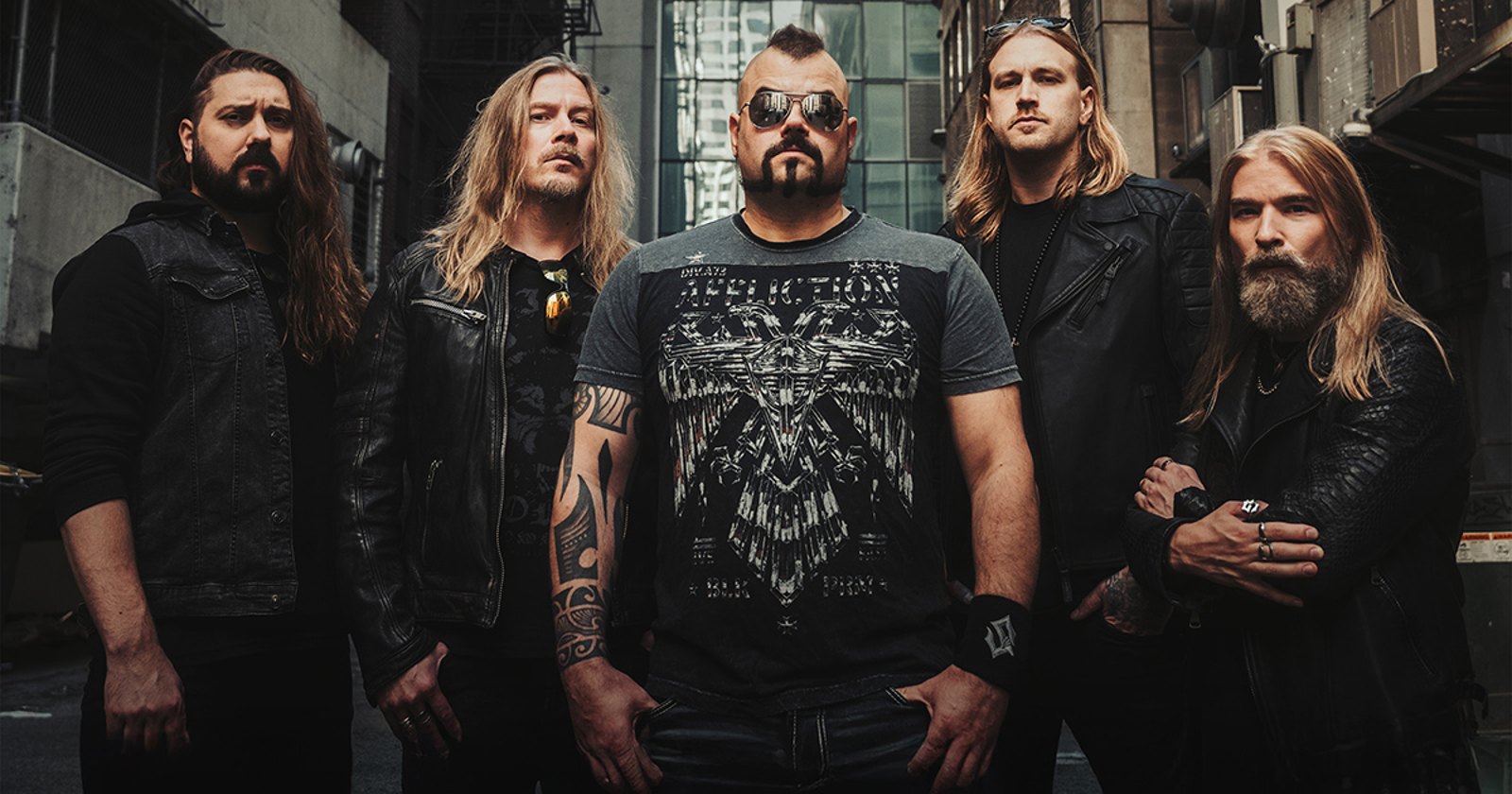
Filed as power metal on Metal Archives, racked under power metal in every shop that still sorts its vinyl by genre, and called epic power metal by a good share of the critics who have reviewed its records, the Swedish band with a military history syllabus for a lyric sheet is Sabaton, and the answer to what genre is Sabaton is power metal, of the heavier, mid-tempo, anthemic European strain.
Then come the objections. The riffs march where the genre is supposed to sprint, the singer rasps where it is supposed to soar, and not one dragon has ever turned up in a chorus.
All of that is accurate, and none of it moves the band out of the family. Listen to what the arrangements do, rather than to what the genre's first decade taught people to expect, and tempo, keyboards, harmony, song form and subject all point the same way. The voice, the one element that looks like an exception, is the strongest evidence of all, because it took a rasp to the top octave the style had kept lacquered since the late eighties and scraped the lacquer back to bare wood.
Mid-tempo, and proud of it
Built on kick drums that walk rather than run, on tracks such as Panzerkampf at 98 beats a minute and Primo Victoria at 124, the typical Sabaton anthem moves at a marching pace, nearer to Accept and Judas Priest than to the double-bass torrent that Helloween let loose in the late eighties. The drums sound like the pedal line of a Bach chorale prelude taken by an organist who has been told to stamp every note until the boards of the loft split, and that weight, not velocity, is what carries the riff.
Weight is the whole point. Anyone arriving from the speed end of the family, the school dissected in what genre is DragonForce, will find the same major keys and the same heroic choruses running here at a far slower clip and landing harder, because a crowd can stamp on a beat it feels and cannot stamp on one it has to count. Speed was never the definition. It was only the first costume.

Primo Victoria, released on 4 March 2005 on Black Lodge Records, fixed that template in place. Its title song, written about the Allied landings in Normandy in June 1944, settles into a stomp a festival field can clap to without anyone counting, and almost every anthem the band has released since is cut to the same pattern, a riff built for feet and a chorus built for throats.
The voice that breaks the tenor rule
Set down by Michael Kiske on Helloween's Keeper of the Seven Keys Part I in 1987 and carried through the nineties by Timo Kotipelto in Stratovarius and Joacim Cans in Hammerfall, the house voice of European power metal was a clean, high tenor that lived above the stave and treated the top of its range as a home address rather than a place to visit. Nobody in the Swedish band shatters a wine glass with a high C.
The voice at the front of the stage belongs to Joakim Brodén, and it lives nowhere near that address: a chesty, gravel-grained clean voice that critics and the band's own fans alike call baritone, sung hard, with no falsetto to fall back on and no visible interest in acquiring one.
Where the Kiske school rings like a glass harmonica tuned to the ceiling, Brodén's voice is a cello with the varnish scorched off, bowed hard at the frog until the wood itself groans, and that rough grain drags the melody down out of the rafters into the chest register, where forty thousand untrained voices can actually reach it. That is the whole argument. A power metal chorus exists to be sung back, and the tenor convention always carried a paradox, because it wrote the hook in a register the audience could only shout at from below.
Brodén's voice is a cello with the varnish scorched off, bowed hard at the frog until the wood itself groans.
Dropping the melody into range turned the singalong into the structural centre of the arrangement rather than its decoration, which is a power metal idea carried further than its founders carried it, not an exit from the genre. The theatrical, operatic baritone of Attila Dorn in Powerwolf reached the same ground from the opposite direction, polished where Brodén is rough, and between them the two bands made the low voice respectable in a style that had spent a decade treating it as a mistake.
Keyboards, choirs and the gang chorus
Laid under nearly every riff, the keyboards do the work the guitars refuse: synth pads and brass patches holding the chords, the lead melody doubled an octave up, and on The Red Baron, from Sabaton's The Great War in 2019, a Hammond organ line built on a Bach motif, run into a distorted guitar amp in the old Deep Purple manner, that turns the song into a chapel voluntary played at arena volume. Strip those parts out and what remains is a heavy metal band. Leave them in and the song belongs to power metal.
Behind the lead vocal stand the choirs, multitracked layer on layer until a chorus sounds like a cathedral choir stall packed three deep and told to blow the lead out of the stained glass, and that is precisely their job: to turn one man's line into a crowd before the crowd has joined in. The harmony underneath stays in major keys or the brighter modes, the progressions resolve where the ear expects them to, and gang vocals answer the lead line until a chorus built for one man sounds like a full terrace instead.
Song form completes the case. The Last Stand, the title song of the 2016 record, runs three minutes and fifty five seconds, puts its chorus in front of you inside the first minute, and spends its instrumental break on a harmonised lead line you could hum rather than merely admire. That is the stadium arithmetic of the whole catalogue: short songs, early hooks, nothing that keeps a hall waiting for the payoff. Helloween's long suites and the layered epics of Blind Guardian belong to the same genre and a different ambition.
Battles instead of dragons
The lyrics are where the band broke hardest with the house tradition, and even there the break is shallower than it looks. Blind Guardian read Tolkien and Arthurian legend, Rhapsody of Fire invented a whole continent to sing about, and Helloween filled its songs with keepers and future worlds, while the Swedes read the archive instead, singing about named battles, named units and named men, from the Normandy beaches to the trenches of the First World War.
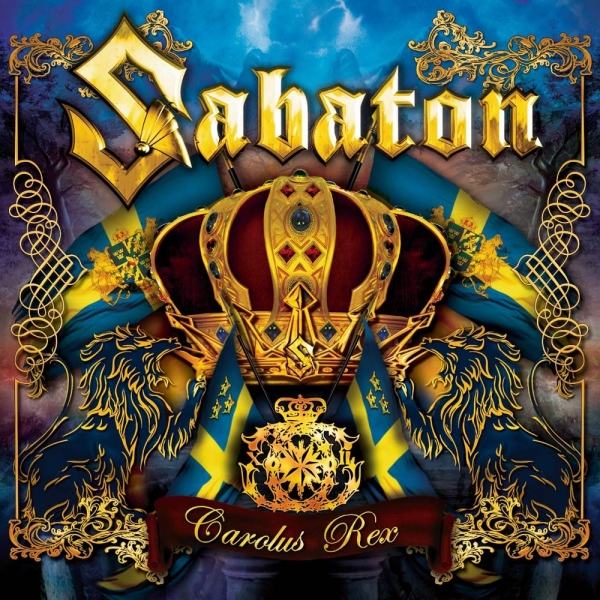
Carolus Rex, released by Nuclear Blast in 2012, pushed the method to its limit, a concept album about the rise and collapse of the Swedish Empire under Charles XII, recorded in full twice over, once in English and once in Swedish, and sequenced as one long story about ambition and its price. The heroism is exactly the heroism of the older records. Only the source has changed, from the myth to the history book, and a genre is defined by what it does with heroism, not by where it finds it.
Sabaton genre labels, and which of them hold
Heavy metal is the first alternative people reach for, and it is true in the sense that every power metal band is a heavy metal band, with the Accept and Judas Priest lineage audible in the riffing. It is also useless as a sorting tool. Epic metal fits better, since the term already covers the grand, mid-paced heroics of Manowar, Bathory in its Viking years and Manilla Road, and heavy/power or epic power metal remains the most exact label anyone has found.
War metal is the misnomer, and a serious one. The name is already taken, by a music that shares nothing with these choruses except the subject of its song titles.
History metal began as a fan joke and gained a certain official weight once the band launched its Sabaton History channel on YouTube on 7 February 2019, but it names a subject, not a sound, and a subject has never defined a genre in this music. Nobody files Iron Maiden under history metal for Aces High.
Placed on the map of the subgenres of power metal, the band sits on the heavy, anthemic branch beside Powerwolf and Hammerfall, well away from the speed branch and short of the symphonic one, as the most visible exponent of that strain, and the faithful who sing its choruses back across the festival fields of Europe have never needed the label explained to them.
| Element | Helloween and Blind Guardian convention | Sabaton |
|---|---|---|
| Tempo | Fast, double-bass driven | Mid-tempo, marching |
| Vocal register | High clean tenor (Kiske), layered choirs (Kürsch) | Rough, baritone-leaning clean voice |
| Keyboards | Sparse at Helloween, orchestral later at Blind Guardian | Constant: pads, brass, organ, doubled leads |
| Harmony | Major keys, twin guitar melodies | Major keys, choirs, gang choruses answering the lead |
| Song length | Short singles beside long suites | Mostly three to five minutes |
| Lyrics | Fantasy, myth, Tolkien | Real battles and named people |
| Verdict | Power metal | Power metal |
On any honest reading the classification holds on every count that matters musically, and each of the objections turns into evidence once the arrangement is heard for what it is. The tempo is slower. The voice is lower. The stories are true. The genre is the same.
