
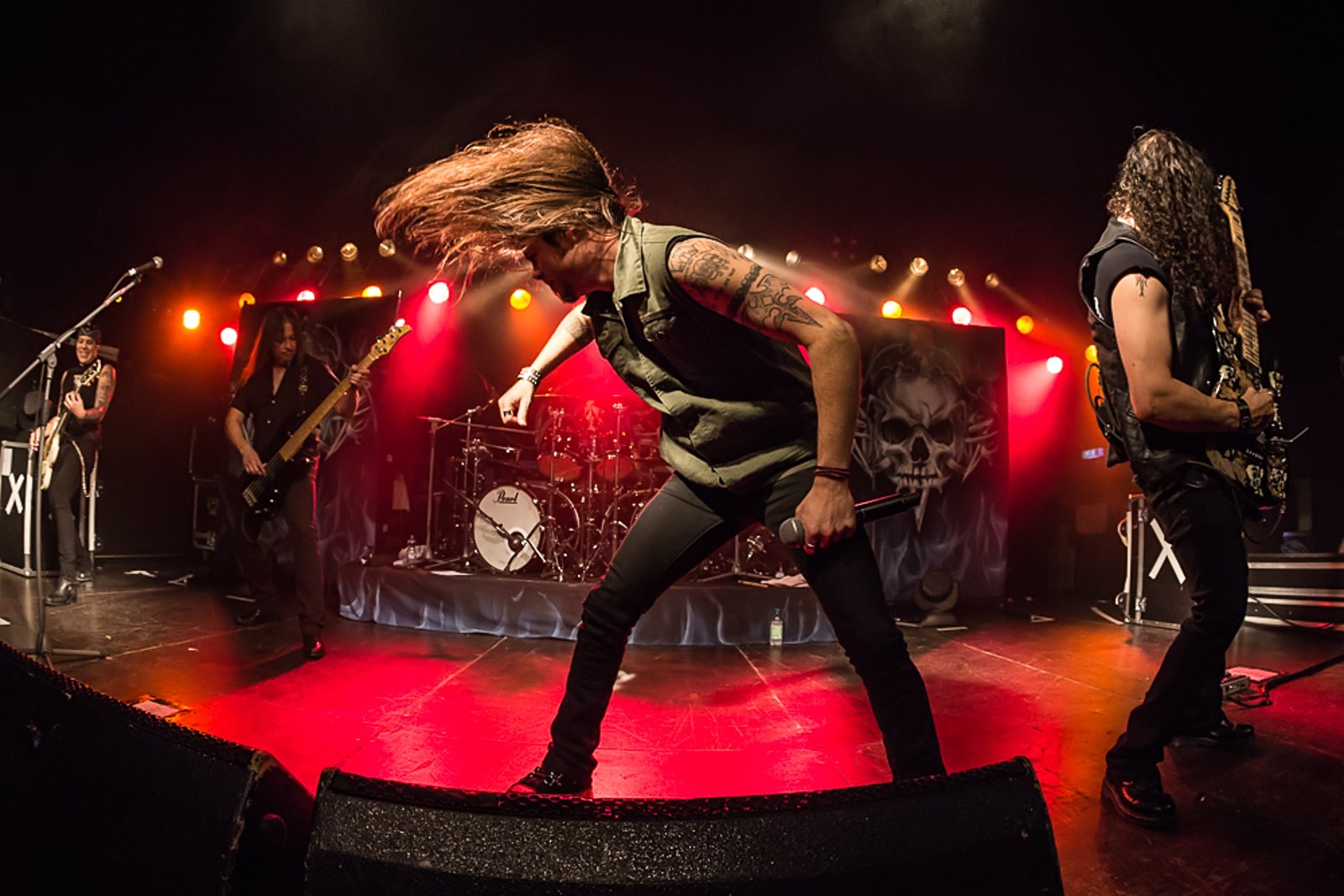
On Christmas Day 1975 a nineteen year old bassist from Leytonstone founded a band and named it after a torture cabinet he had seen in a film, an upright iron coffin with spikes set into the inside of its door, in a film version of Alexandre Dumas's The Man in the Iron Mask. The East London band that has carried the name of that cabinet for half a century is Iron Maiden. The name arrived first. The music had to grow into it.
A band name is given the way a lifeboat is named, painted onto the bow before the hull has met a single wave and then christened with a bottle smashed across the planking on the slipway, so that the boat goes out into every storm afterwards carrying those letters, and every crew that ever sailed holds it bad luck to paint them out. Almost nobody in this music chose with that in mind. Most were picked in a hurry, by people barely out of school.
The name also works before a note is heard. It sits across the top of the sleeve, gets redrawn as a logo and ends up stitched onto the back of a jacket, and the whole art of heavy metal album covers has always had to leave it room. What the name says, and where it came from, is decided long before any painter is hired.
A cabinet, a cinema and a song that came first
The band then did something that became a habit across the whole family. It wrote a song named after itself, a short charge about the cabinet sung by Paul Di'Anno, and closed its debut album with it in April 1980, and the song "Iron Maiden" has stayed close to a fixture of the band's live set ever since, usually with the mascot looming over the stage while it runs. A name, a song and a monster, all bolted to the same frame.
The Birmingham quartet worked the other way round and let a song rename them. Geezer Butler wrote the words of "Black Sabbath" after a night he has described as a dark figure standing at the foot of his bed, the title was borrowed from a horror film, and in 1969 the quartet, still booked around Birmingham as Earth, took the song's name for its own. The riff came before the name. So did the fear.
The riff came before the name. So did the fear.
Names lifted from other people's records
A good share of the family simply took a title off somebody else's shelf, and the loan cost nothing but nerve.
The last song the bassist wrote for Hawkwind before the space rock band put him out in May 1975 went onto the B-side of their single "Kings of Speed" in March 1975, and it was called "Motorhead", American slang for a speed user. The bass player who took that title with him, after his manager warned that his first choice of name would never get past the television censors, was Lemmy Kilmister. He cut the song again with Motörhead for Chiswick in 1977, and the record went at the old Hawkwind arrangement like a battering ram at a barn door. The door came off its hinges.
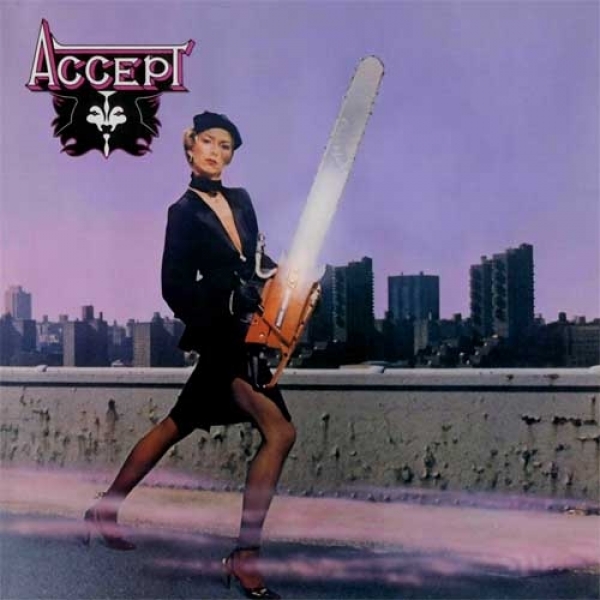
Solingen took its name from the blues. The German five who put out their self-titled debut on Brain in 1979 had borrowed the word from Accept, a 1970 album by the British blues band Chicken Shack, and the band was Accept, which within three years would be hammering the last of that blues out of its riffs. The Stourbridge band Diamond Head did the same, taking its name from a poster for Phil Manzanera's first solo album, Diamond Head, of 1975. Nobody bothered to ask permission. Titles cannot be copyrighted.
The best known borrowing in the whole family, a Bob Dylan title taken up in Birmingham in 1969 and handed on to a later line-up, belongs to Judas Priest, and it is the one every fan already knows. What matters is the habit. A borrowed title is a debt acknowledged in public, part of a lineage worn on the sleeve, and not one of these bands ever tried to hide the loan from the disciples who bought the records.
Some names were nailed to a single man. The guitarist who walked out of Deep Purple in 1975 and named his new band after the Rainbow Bar and Grill on the Sunset Strip, putting his own name in front of it on the first sleeve, was Ritchie Blackmore. The singer he hired, born Ronald Padavona, had long since taken a stage surname that most accounts trace to a New York racketeer, Johnny Dio, though Dio himself also offered a gentler family story for it, and when he went solo in 1982 the band simply carried it: Dio. A surname is the one brand that cannot be sold on with the equipment. It leaves when the man does.
Spelled wrong on purpose
The Sheffield schoolboy who used to draw sleeves and reviews for imaginary bands in the back of an English exercise book, one of them called Deaf Leopard, was Joe Elliott, and when he joined a local band then working as Atomic Mass he brought the name with him. The spelling was bent into Def Leppard at the suggestion of the drummer, Tony Kenning, so it would not read as a punk group's name. Two letters changed. The joke survived.
Los Angeles went further. The quartet that took a phrase its guitarist Mick Mars had heard about an old band of his, a motley looking crew, and dropped two umlauts on it over bottles of the German beer Löwenbräu was Mötley Crüe. The dots were decoration. They were also a threat, and a threat nobody in Germany could take seriously.
The Bellevue quintet that had been playing under the name The Mob renamed itself after the title song of its own four track EP of 1983, "Queen of the Reich", and fused it into a single word with two dots over the y that nobody has ever known how to say, and the band was Queensrÿche. The song cut straight through the old name like a jigsaw through plywood. What was left fitted on a sleeve. In Hamburg a pun did the same work in one stroke, when a band of teenagers welded a hello onto the front of Halloween and printed Helloween on its first sleeve.
Nobody in this music ever held a meeting to choose a name. They held a pint, a paperback or somebody else's record, and the name was whatever lay nearest to hand.
Declan Rourke, KaosMetal
Names that weighed something, and names out of books
Before any of them, the English quartet named after a prediction, made by a member of The Who during a 1966 studio session, that it would go down like a lead balloon was Led Zeppelin, which took the insult and hung it over the door as the heaviest joke in rock. Iron Butterfly, formed the same year in San Diego, set a metal beside something fragile, and after that every name with iron, steel, lead or metal in it made a promise about tonnage. Few broke it.

The paperbacks came next. The Whitley Bay four who took their name from the tiger-keeping warrior caste of an island in Michael Moorcock's Elric stories were Tygers of Pan Tang, and Wild Cat, released by MCA in July 1980, carried that name to number eighteen on the British albums chart. A sorcerer's island off the Northumberland coast. It sold.
What runs through every one of these is chance. A cabinet in a film, a B-side, a misspelling in a school exercise book, a line in a paperback. Pressed into vinyl, printed on shirts by the hundred thousand, sewn onto the backs of jackets in every country that sold the records and chanted by crowds before every encore, those accidents hardened into something no marketing department could have built, precisely because nobody tried to build them. The chroniclers like to find a plan behind the great names. There was none.
The earliest versions of those names survive as objects, on first singles pressed in a few hundred copies, on demo sleeves and on records issued before a spelling was settled, and chasing them down is its own discipline, set out in the heavy metal records collectors chase. The paper remembers the version the band would rather forget.
Most of the great names were accidents. Not one of them has been changed since the band became famous, and none of them could be now.
