
Four causes of action, one demurrer, and not a single day of trial. That is the whole arithmetic of the suicide solution lawsuit, McCollum v. CBS: the case the newspapers of the middle eighties treated as a heavy metal record standing in the dock never put a witness on a stand. It was argued on paper. On paper it was lost.
Filed in the Superior Court in Los Angeles on 25 October 1985, a day short of a year after the death it concerned, and aimed at CBS and the other companies that had put the record into the shops, the complaint blamed that death on a song from the first side of Blizzard of Ozz, and the singer whose name sat at the top of the caption was Ozzy Osbourne.
Two courts took the pleading apart and threw every page of it back across the counter. The ruling itself sits beside the rest of the decade's charge sheet in the chapter it belongs to. The reasoning deserves the closer look.
Four counts against one record
John McCollum was nineteen. He died by suicide at his family's home in Indio, California, on 26 October 1984. He had spent that evening listening to Ozzy Osbourne records. His parents brought the suit.
The complaint argued four ways at once. Two counts rested on negligence, that releasing the music had aided and encouraged the suicide, and separately that it had created what the pleading called an uncontrollable impulse toward self destruction. A third count read that same impulse as intentional incitement. The fourth said the defendants had broken section 401 of the California Penal Code, which forbids aiding, advising or encouraging a suicide.
Behind the counts stood a barrage of claims about the music itself: a strong, pounding and driving rhythm, a sound process called hemisync said to act on the listener's mind, an image built for the singer as the madman of rock and roll and sold, the complaint said, to troubled teenagers, and a running order across two albums that led, on the pleading's reading, toward emptiness.
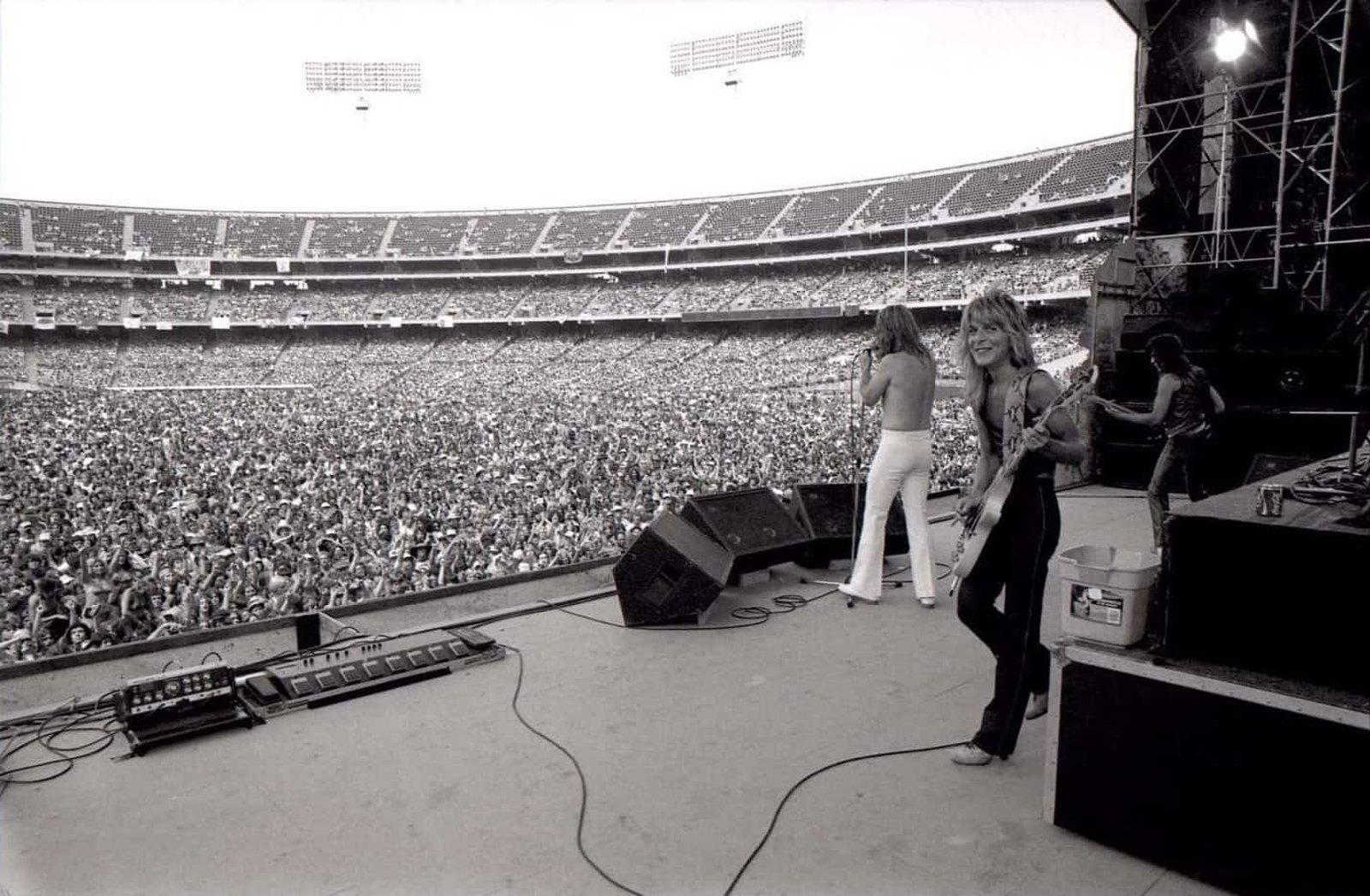
The second of those albums was Diary of a Madman, released in 1981, and its title track, the record's closing piece, is theatre from Randy Rhoads's first classical guitar figure to the last massed voices, a man coming apart sung by a man playing him. The complaint read it as a route map.
The appeal court noted a fact the pleading passed over: the album John McCollum listened to last, the live Speak of the Devil, was one the complaint did not criticise at all.
The suicide solution lawsuit and the Brandenburg test
On 7 August 1986 the trial court sustained the defendants' demurrers without leave to amend, and on 19 December 1986 it refused a second amended complaint and signed the order of dismissal. A demurrer is a strange weapon. It concedes every fact the other side has pleaded, true or not, and asks whether the law offers any remedy even then.
So no court ever had to decide whether hemisync existed or what lay under the guitar solo. The masked lyrics theory was a snow bridge across a crevasse, a white crust over blue dark that might or might not hold a man's weight, and the demurrer did the one thing no guide would ever do on a glacier: it assumed the bridge was sound, marched the entire case across it, and found the far side led nowhere.
The appellate judge who wrote for Division Three of the Second Appellate District, with Justices Danielson and Arabian concurring, was H. Walter Croskey, and on 12 July 1988 he started from the proposition that music is expression protected by the First Amendment, a protection that covers the speaker, the speech and the listener alike.
The 1969 Supreme Court case about a Ku Klux Klan rally in Ohio that still marks the outer wall of that protection is Brandenburg v. Ohio: speech may be punished only when it is directed to producing imminent lawless action and is likely to produce it. Croskey applied it to a suicide rather than a riot. The complaint had no answer to the word imminent.
Measured against that test, the complaint flew the way a kite flies on a windless beach, a man sprinting along the tide line with the string wrapped round his fist, the kite lifting behind him only while he keeps running and pitching nose first into the wet sand the moment he stops. A record made years earlier supplies no wind of its own.
A record made years earlier supplies no wind of its own.
Nothing in the song, the opinion found, commanded anyone to any concrete act at any specific time, and lyrics are not written to be read as literal instructions. Citing Hess v. Indiana, it refused to punish speech for a mere tendency toward harm, whether by censorship before publication or by damages after it.
Reasonable persons understand musical lyrics and poetic conventions as the figurative expressions which they are.
California Court of Appeal, McCollum v. CBS, Inc., 12 July 1988
The opinion then set the song in a long literary tradition of writing about despair, from Shakespeare and Tolstoy to Sylvia Plath, and beside the California media cases that had already failed on the same ground. Nobody had ever sued Tolstoy.
No duty, and a radio contest that did not fit
Negligence needs a duty, and the court found none as a matter of law. Under the factors the California Supreme Court had set out in Rowland v. Christian in 1968, the death was not a reasonably foreseeable consequence of what the opinion called the defendants' remote artistic activities, and the foreseeability required had to be very high, because restraining art lays its cost on everyone else.
The precedent the family's lawyers leaned on hardest was Weirum v. RKO General, the 1975 case in which a Los Angeles radio station ran a contest that sent listeners racing to find a disc jockey's car, and two teenagers chasing it forced another motorist off the road and killed him. The McCollums wanted the same rule.
Croskey drew the line cleanly. The station had urged particular listeners on in real time, live on the air. Osbourne's record had been made years before and urged nobody to do anything at any given moment.
The last duty factor weighed heaviest. A duty on performers to trim their work for the sake of emotionally troubled listeners, the court held, would flatten all expression to the broadest standard of taste and the lowest level of provocation, and a free society could not accept it; every record shop in the state would have had to clear its racks down to the blandest stock on the shelf.
Intent, and a hand that was never there
The two intentional counts fell for the same missing piece. It is not enough, the opinion held, to say a defendant meant to release a record. The plaintiffs had to show a defendant meant the release to cause a death, and what they had pleaded on that point were conclusions with no facts beneath them.
The one criminal law in the complaint was section 401 of the Penal Code, which the California courts had read in In re Joseph G. to require direct participation in the events leading to the act, the furnishing of the means. The court held it could not reach composers, performers, producers and distributors of recordings sold to the general public. The breach the family was looking for was not there.
| Count | What it claimed | Why it failed |
|---|---|---|
| Negligence (count I) | Careless release of music that aided and encouraged the suicide | No duty: the death was not foreseeable, and a duty would chill expression |
| Negligence (count II) | Careless release created an uncontrollable impulse toward self destruction | Same no-duty analysis as count I |
| Intentional incitement (count III) | Release meant to create an uncontrollable impulse | No facts showing an intent to cause a death |
| Penal Code section 401 (count IV) | Aiding, advising or encouraging a suicide | No specific intent and no direct participation |
What the McCollum opinion left standing
The dismissal was affirmed and the defendants recovered their costs on appeal. A petition for rehearing failed on 27 July 1988, and the California Supreme Court denied the family's petition for review on 12 October 1988. In the church halls the song stayed anathema for years. In the law it became a precedent of a kind: a Georgia court reached the same result in Waller v. Osbourne on 6 May 1991, applying the same Brandenburg test to the same song without citing the California ruling.
The one question the California judges never had to answer, because the demurrer had conceded the hidden lines from the start, was whether a message nobody can consciously hear counts as speech at all, and the Nevada judge who did answer it, in a 1989 pre-trial order over a different band's record, was Jerry Carr Whitehead. He said it did not.
Beyond dispute, the song was never the real defendant. The theory was: the listener as a receiver without a will, steered by a groove he did not choose. It lost in every American courtroom and survived outside them, in the picture of the teenager in a denim jacket who is only ever acted upon, still near the top of the list of heavy metal fan stereotypes.
The record stayed in print. The complaint did not.
