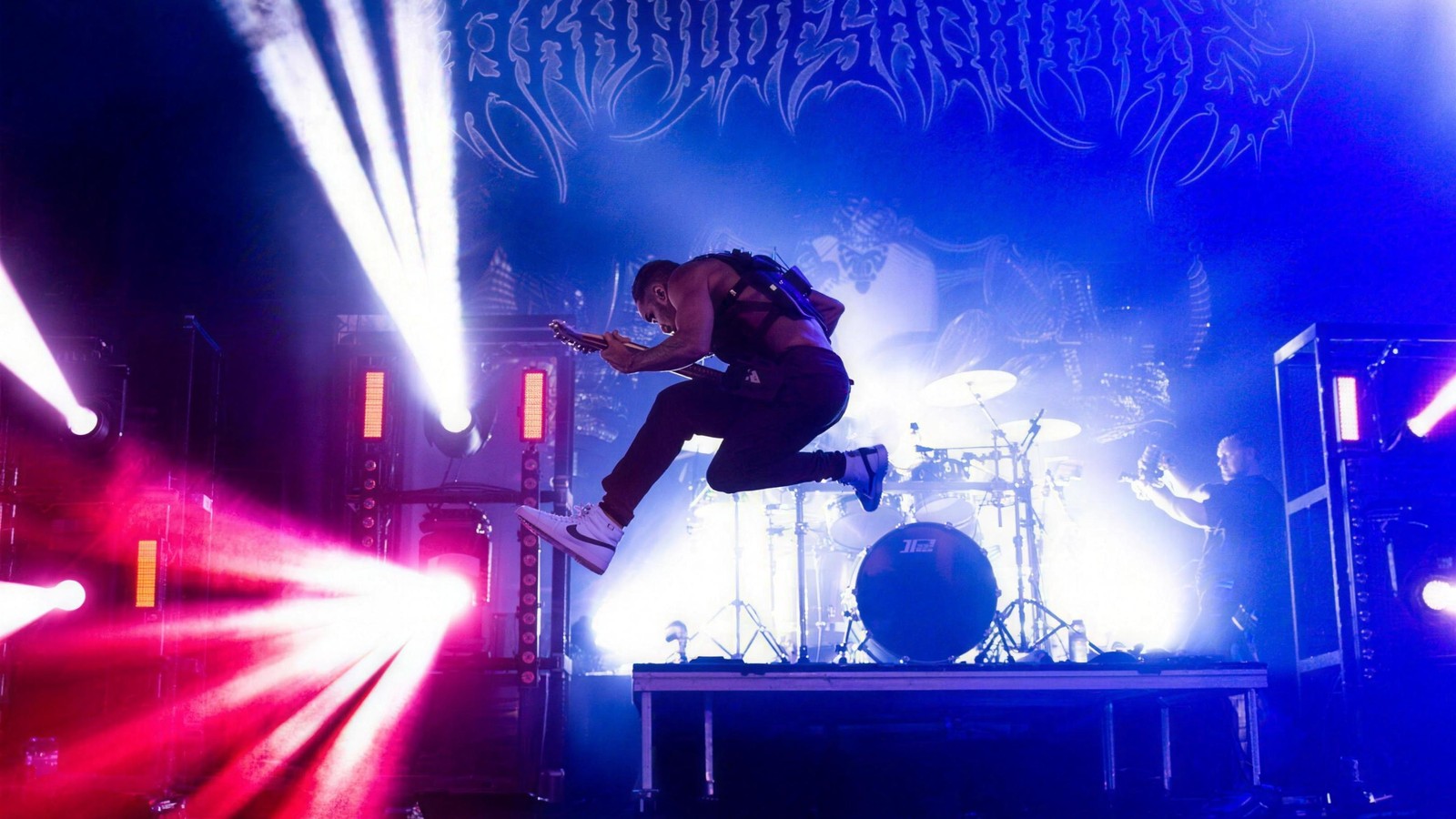
Nine bands, one ticket, thirty-three nights. Announced on 6 April 2007 by a twenty-five-year-old promoter named Ash Avildsen, presented by a guitar maker, a drum maker, a magazine and a website, and run from 1 June at Northern Lights in Clifton Park, New York, to 8 July at the B.B. King Blues Club in Manhattan with Necrophagist on the top line, the package that shoved the first deathcore bands into a death metal running order and kept them there all summer was the Summer Slaughter tour.
Under Decapitated, Cephalic Carnage, Cattle Decapitation and Arsis sat the newcomers, As Blood Runs Black out of Los Angeles and Beneath the Massacre out of Montreal, with Ion Dissonance and The Faceless working the border between the two camps, and every night the lower half of that poster hauled the breakdown, the slowed and pounding section deathcore took from hardcore, into rooms booked for blast beats and slammed it through the house speakers at people who had paid to watch sweep picking. It looked like a footnote. It was a hinge.
How the profile pages filled those clubs with teenagers in the first place is the wider story. Summer Slaughter turns on a single mechanical fact: for most of two decades, one summer bill made the two halves of the genre's record collection play to the same room, at the same price, on the same night.
One stage, one standard
Avildsen spelled the idea out a year later, when the tour came back larger. The aim, he told Blabbermouth on 17 June 2008, was "the best club festival lineup possible for the cheapest price possible". A club festival is a festival bill crammed into a room with a bar at the back: doors in the late afternoon, short sets for everyone under the top three, one ticket for the lot.
That format did the real work. You bought a ticket for Whitechapel and you stood through Psycroptic. You bought one for Kataklysm and you stood through Born of Osiris. Leaving during the band you had not come for meant missing the one you had.
Put a deathcore band on the same stage forty minutes after a technical death metal band whose whole case rests on precision, and the room judges the second set by the yardstick of the first. Either the guitarists hold the standard that has just been set in front of them, or the floor drifts back to the bar. No friend count, no label budget and no clever video survives that test. The breakdown does, if the playing around it holds.
No friend count, no label budget and no clever video survives that test. The breakdown does, if the playing around it holds.
Picture the loading hallway behind the stage on one of those nights, a single door wide, ten bands' gear moving through it on a forty-minute rotation, the death metal band's flight cases rolling off at a run while the deathcore band's cabinets are shoved on, the two loads slammed past each other so hard that corners shear, latches tear off their rivets and handles snap clean away, until by the last date every case on the tour carries the other camp's colours ground into its dents. That is what a shared bill does to the people on it. Each side leaves with some of the other side in it.
From the death metal half the younger bands took a hunger for technical precision, and it is no accident that the names that came back summer after summer, Born of Osiris, Veil of Maya, After the Burial and later Rings of Saturn, belong to the technical and progressive wings of deathcore rather than its downtempo or slam wings. From the deathcore half the death metal bands took an audience that was younger and larger than the one their own club tours drew. By common consent both sides got the better end of the trade.
How the Summer Slaughter tour built its bill, 2008 to 2010
Topping a 2008 bill of ten bands from five countries that ran thirty-three dates, from 20 June at the Majestic Theatre in Detroit to 28 July at the House of Blues in Chicago, with Kataklysm, Vader, Cryptopsy, Aborted and Psycroptic stacked beneath it, the melodic death metal band from Waterford, Michigan, that would carry the tour twice more was The Black Dahlia Murder. Below that weight sat three deathcore bands, Despised Icon, Whitechapel and Born of Osiris, plus The Faceless again.
Whitechapel's second album, This Is Exile, came out on Metal Blade in the second week of July 2008, in the middle of that run, and entered the Billboard 200 at number 117 on 5,900 copies. In August the brand took a Canadian leg out under Necrophagist with Whitechapel, Veil of Maya, Beneath the Massacre and Dying Fetus, and at the end of the month it crossed the Atlantic for a European run with Suicide Silence at the top, from the Barfly in Liverpool on 29 August through Germany and Austria. Three legs in one year. The pedigree of the bill was set.
The Illinois band that played the American run, the European run and the next summer as well was Born of Osiris, out of Palatine, Illinois, and signed to Avildsen's own Sumerian Records, whose first release for the label, the EP The New Reign, had come out on 2 October 2007 with "Bow Down" as its seventh track. Two summers on the same stages as Cryptopsy and then Necrophagist put a young band in front of one of the most demanding guitar audiences in American clubs, night after night, with nowhere to hide.
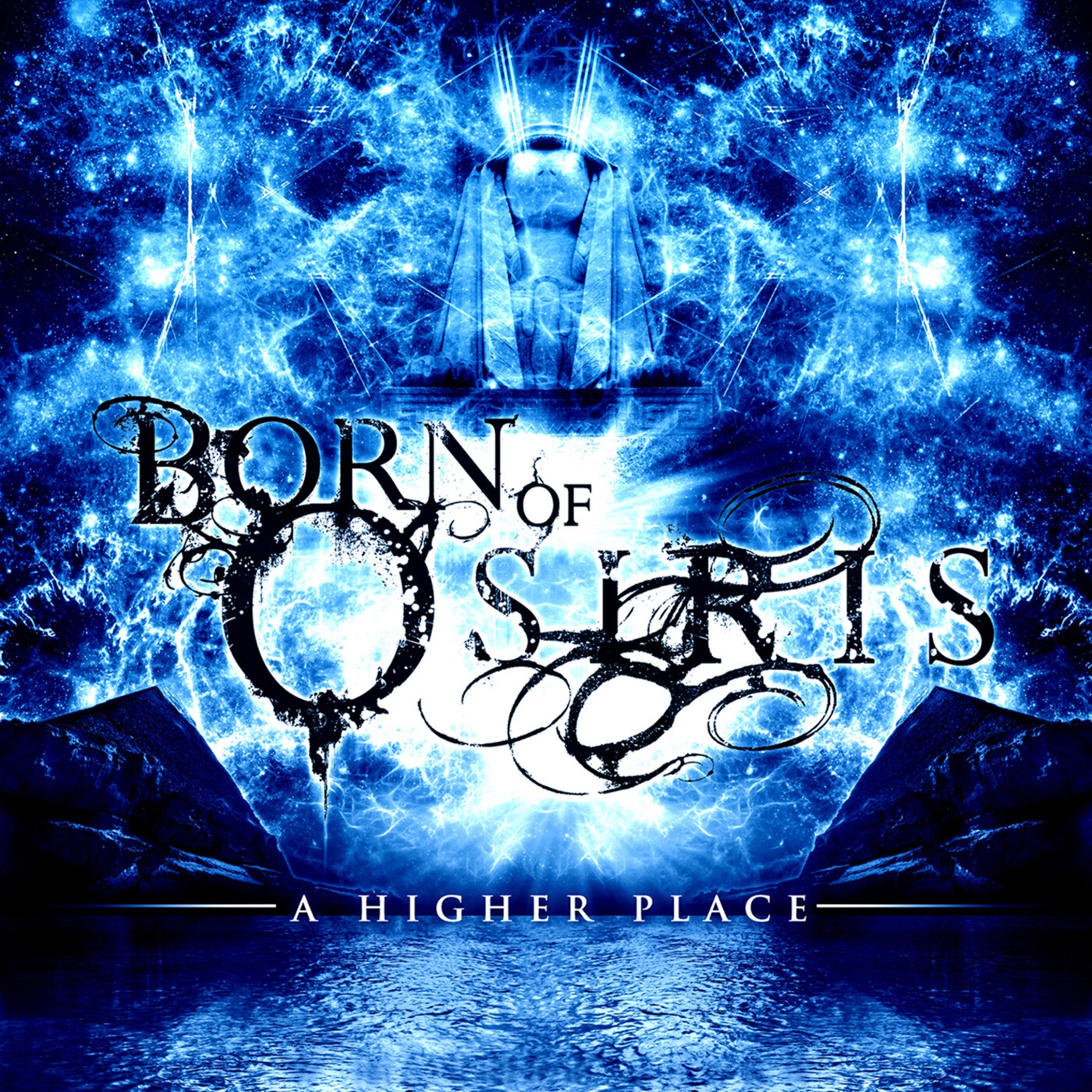
On 7 July 2009 Sumerian released A Higher Place, the band's first full-length, while Born of Osiris was out on the third Summer Slaughter, a run that opened on 5 June at Sonar in Baltimore and ended in July, with Necrophagist and Suffocation on top and Winds of Plague and After the Burial on the same bill. Releasing a record in the middle of a summer package is like tearing the old engine out of the van with a chain hoist in a truck stop lot, dropping a new one into the bay and flooring it back onto the interstate before the bolts have cooled: the album arrives already moving, in front of the crowd that will buy it that night at the merch table.
The 2010 edition put Decapitated at the top and All Shall Perish, Veil of Maya and Carnifex in the middle, and Avildsen told Blabbermouth on 26 April 2010 that it was "a much younger lineup this year", aimed at "underground extreme metal rather than mainstream metal". He also pointed out that every show had air conditioning, a line aimed squarely at the outdoor summer festivals playing on asphalt the same weeks. It was a fair hit.
| Year | Top of the bill | Deathcore bands on the bill |
|---|---|---|
| 2007 | Necrophagist | As Blood Runs Black, Beneath the Massacre |
| 2008 | The Black Dahlia Murder | Despised Icon, Whitechapel, Born of Osiris |
| 2009 | Necrophagist, Suffocation | Winds of Plague, Born of Osiris, After the Burial |
| 2010 | Decapitated | All Shall Perish, Veil of Maya, Carnifex |
| 2011 | The Black Dahlia Murder, Whitechapel | Whitechapel, As Blood Runs Black, Oceano, Within the Ruins |
| 2012 | Cannibal Corpse, Between the Buried and Me | Veil of Maya |
| 2013 | The Dillinger Escape Plan | Rings of Saturn, Thy Art Is Murder |
| 2014 | Morbid Angel | Thy Art Is Murder, Within the Ruins |
| 2015 | Arch Enemy | Born of Osiris, Veil of Maya |
| 2016 | Cannibal Corpse | After the Burial, Carnifex, Slaughter to Prevail, Ingested, Enterprise Earth |
| 2017 | The Black Dahlia Murder, Dying Fetus | Oceano, Rings of Saturn, Betraying the Martyrs, Lorna Shore, AngelMaker |
| 2018 | Between the Buried and Me | Born of Osiris, Veil of Maya |
| 2019 | Cattle Decapitation, Carnifex, The Faceless | Carnifex, Lorna Shore, Brand of Sacrifice |
| 2024 | Veil of Maya, Brand of Sacrifice | Veil of Maya, Brand of Sacrifice, Left to Suffer, Cabal |
Fan votes and a progressive summer
The Knoxville band with three guitarists that in 2011 became the first deathcore act to share the top line of the North American run was Whitechapel, co-headlining with The Black Dahlia Murder over Darkest Hour, Six Feet Under, Dying Fetus, Oceano and Fleshgod Apocalypse from 22 July at the House of Blues in Los Angeles to 21 August in Dallas. Four summers earlier the genre had been playing in daylight. Now it closed the night.
That year the tour also handed the opening slot to its own audience, through a vote on its Facebook page that closed on 11 April 2011, and Within the Ruins from Massachusetts took it. A poll sounds polite. In practice it worked like a crowd leaning on the steel barricade until it walks six feet across the concrete toward the stage, feet screeching, because the people behind it want a particular band in front of them and nobody on the security side can hold the line.
Avildsen called 2012 "the biggest year in the history of the tour", with Cannibal Corpse and Between the Buried and Me sharing the top and Veil of Maya and Job for a Cowboy further down, and in 2013 he handed the top to The Dillinger Escape Plan with Periphery, Animals as Leaders and The Ocean beneath it, a bill leaning hard toward the progressive and technical side. The deathcore came in through the side door again. Rings of Saturn won that year's fan vote by one percent over Thy Art Is Murder, the Sydney band whose Hate had reached number 35 on the Australian chart in 2012, and the promoters booked Thy Art Is Murder alongside them for the whole tour. In 2014 Morbid Angel took the top line, death metal returned in full, and Thy Art Is Murder and Within the Ruins were back underneath it.
The 2015 edition was headed by Arch Enemy, with Born of Osiris and Veil of Maya on the bill.
Justin Lowe, a founding guitarist of After the Burial who had left the band in June 2015, was found dead on 21 July 2015. Before the tour opened on 28 July in Denver, After the Burial, booked for that run, announced that it would not play it.
After the Burial returned the following year. The 2016 bill, headed by Cannibal Corpse, carried it alongside Carnifex, Slaughter to Prevail from Yekaterinburg, Ingested from Manchester and Enterprise Earth.
The 2017 bill, under The Black Dahlia Murder and Dying Fetus, carried Oceano, Rings of Saturn, Betraying the Martyrs, Lorna Shore and the Canadian band AngelMaker, voted in by fans. Five deathcore bands under two death metal headliners, the balance of 2007 turned upside down and still on one ticket.
From the first slot to the top line
The 2018 bill had gone to Between the Buried and Me, with Born of Osiris and Veil of Maya under it, and the next summer the deathcore side finally took a share of the top again.
Run from 20 July in Denver to 14 August at 1720 in Los Angeles under a three-way co-headline with Cattle Decapitation and The Faceless, the first triple co-headline in the tour's history, the San Diego County band that had worked its way up from the middle of the 2010 bill to the top of the 2019 one was Carnifex. Nine summers. One climb.

Nuclear Blast released World War X on 2 August 2019, two weeks into that run, and Carnifex had already put out "No Light Shall Save Us", with Alissa White-Gluz of Arch Enemy as guest singer, as the record's calling card. Its breakdown lands like a tour bus reversing out of a venue lot without looking, tearing a concrete parking stop out of the asphalt and dragging it ten feet with a scream of rebar, and the band carried it into rooms that had come in part for Cattle Decapitation and The Faceless, with "No Light Shall Save Us" turning up in the set from Joliet to the closing night in Los Angeles. That is the old Summer Slaughter trade, made at the top of the bill instead of the bottom.
Lower down sat Lorna Shore and, in the first slot of the night, Brand of Sacrifice, a band from Toronto that had formed only the year before. Then the tour went dark for four summers. Nothing ran in 2020, 2021, 2022 or 2023.
Back in 2019 we were the first band on the bill.
Kyle Anderson of Brand of Sacrifice, Blabbermouth, 24 April 2024
The Toronto band that had opened the 2019 bill and five summers later shared its top line was Brand of Sacrifice, co-headlining the 2024 return with Veil of Maya, both of them playing their first full headline sets on the tour, over a twenty-one date run from 12 July in Brooklyn to 10 August in Reading, Pennsylvania, with Left to Suffer, Ten56, Tallah, Cabal, Brat and Gideon underneath. "Altered Eyes" came out as a single in 2021, one of the songs from Lifeblood, the album the band made while the tour was dark. The poster tells the rest. In 2019 the band's name sat in the smallest type at the foot of the sheet, and five summers of breakdowns kicked it up the bill rung by rung, like a boot stamping up a rusted fire escape, every rung clanging and bending under the heel, until it hit the top row.
On any honest reading 2024 marks the end of the arc that began under Necrophagist. It was the first summer in the United States and Canada on which every name on the top line came from the deathcore side of the bill, and Avildsen said when it was announced that the tour had been "crucial year after year for breaking new artists". In 2025 and again in 2026 the top line went to Hatebreed, a hardcore band, with Devourment and Incantation under it on the 2026 run. The tour that taught deathcore to stand next to death metal had started booking the genre's other parent.
The other summer road, the one that ran through parking lots and pop punk, is the story of deathcore on the warped tour, and it reached a different crowd for different reasons.
What Summer Slaughter proved was simpler. A deathcore band did not need a separate scene, a separate stage or a separate audience to survive among the players it had borrowed from. It needed forty minutes, a working PA and a room that had paid to hear the band before. Year after year the genre got all three, and the attrition of those summers left standing the bands whose playing could take it.