
Prose = words in their best order; poetry = the best words in the best order.Samuel Taylor Coleridge, Table Talk
The best metal lyrics are the ones that still stand up with the amplifiers switched off, and there are fewer of them than the faithful like to admit. A riff at full volume can drag almost any sentence across a hall of ten thousand people and kick the lyric sheet off the music stand on its way through, and nobody in the hall asks what the words meant. Read cold, most of them fall over.
A reel of 35mm release print held up to a window shows almost nothing, a strip of brown celluloid with frames no bigger than a postage stamp and faces too small to put a name to, until a projectionist threads it past the gate and the carbon arc behind it throws every frame forty feet wide across a darkened hall. Most lyric sheets are that reel. The riff is the arc lamp.
A handful of frames can be read in daylight, with the lamp out. What the music sings about in general, the wars, the myths and the road, belongs to heavy metal lyrical themes. Which words hold up on the page is a narrower question, and a harder one.
Reportage, 1970: the needle and the uniform
The lyricist who set a soldier home from Vietnam and a hypodermic needle in the middle of Paranoid, released by Vertigo in September 1970, over seven minutes of slow, patient bass, was Geezer Butler of Black Sabbath, and "Hand of Doom" is the first lyric in the style that reads as reporting rather than as a horror film. By Butler's own account it grew out of stories he heard from Vietnam veterans at an American army base in Germany, a stop-off where returning soldiers decompressed before flying home. Many of the men he met there were already on heroin.
On the page the song is a case file. A young man comes home with a habit, the drug is described as an escape that closes behind him, the body pays the bill one verse at a time, and the last lines hand down a sentence nobody in the song is able to appeal. There is no chorus to hide behind and no moral pinned to the end. Nothing in it is a metaphor for anything else. That is why it lasts.
A love song about dying, misread for fifty years
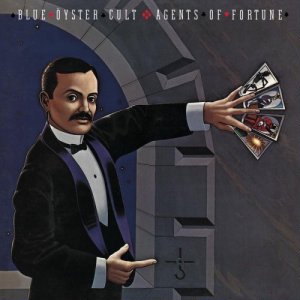
The Long Island band that got its only top twenty single out of a song about death answered to the name Blue Öyster Cult. Written and sung by the guitarist Donald Roeser, known on the sleeves as Buck Dharma, and released on Agents of Fortune by Columbia in May 1976, "(Don't Fear) The Reaper" climbed to number twelve on the Billboard Hot 100 on a guitar figure that repeats like a clock nobody can stop.
The words hold the page because they never raise their voice. They set the seasons, the wind and the rain beside a pair of lovers and ask why people should fear what none of those things fear, then carry the couple past the end of their lives into a reunion the song treats as simply the next room. For fifty years it has been read as an invitation to a suicide pact, and Roeser has spent most of them explaining that he meant the opposite. He has said flatly that it is not about suicide, and that the song imagines a spirit surviving death to rejoin the one it loved. The misreading belongs to the listeners. The lyric is a benediction.
Nothing in it is a metaphor for anything else. That is why it lasts.
Confession: a man who unplugs the world
The drummer who brought the quiet opening chords to the most harrowing song on Stained Class, released by CBS in February 1978, was Les Binks, and the singer who wrote the words over them was Rob Halford of Judas Priest. Binks holds his only songwriting credit with the band for that music. The song follows a man who stops talking, stops eating and withdraws into his own head while the people around him try to reach him, until the chorus claims the whole retreat as the only freedom he has left.
Halford builds it like a switchboard operator on a night shift pulling the cords out of the board one by one, family on the first line, friends on the second, doctors on the third, each plug yanked from its socket and dropped to hang on its weight, until the last lamp on the panel goes dark and the room is his alone. Whether the man in the song is ill or dying the words never settle. They do not need to.
It is the rare metal lyric that could sit in a poetry anthology without a word changed. The guitars smash through the second half like a salvo through a shuttered window. The words were finished before they arrived.
The sermon and the riddle: two lyrics by one singer
The Rainbow veteran who wrote the title song of Heaven and Hell, released by Vertigo in April 1980, as an argument rather than a story was Black Sabbath's new singer, Ronnie James Dio. Where Butler had filed reports, Dio preached, laying out the case in plain terms: heaven and hell are not places a soul is sent to but a choice each person carries, the world is thick with flatterers who will sell a listener a fairy tale and rob him while he listens, and the fool who believes them has only himself to blame.
It reads on the page like a short catechism with the answers already filled in, and Tony Iommi's riff marches it down the aisle at the pace of a procession. Few lyrics in the style say what they mean this cleanly.
The same singer also wrote the style's great riddle. "Holy Diver", the title song of Dio's first solo album in 1983, is a pile-up of tigers, rainbows, riders and a figure sent down to save a world that does not want saving, and Dio later described it as a Christ figure on another world, one whose own people beg him to stay rather than let him leave to save anyone else. Sung, it is thrilling. Printed, it is a puzzle with half the pieces in another box, which is not a fault, only a different job.
A good metal lyric does not need the riff to explain it. It needs the riff to be heard over the bar.
Declan Rourke, KaosMetal
The best metal lyrics as a creed: a gambler with no regrets
The bassist who wrote a whole philosophy of life into a song about playing cards, and who then told interviewers he was really more of a one-arm-bandit man, had a name everyone in the business knew: Lemmy Kilmister. He said plainly that cards and dice simply made the better lyric, since a one-arm bandit gives a songwriter nothing to sing about beyond spinning fruit and falling wheels. The song was the title track of Motörhead's Ace of Spades, released by Bronze in November 1980.
The lyric treats every hand as a wager on the next one and every loss as part of the fun, and it ends on a man who has no interest in living forever and says so without a flicker of self-pity. It is the whole outlook of a band in a few quatrains, sung at a speed that turns the argument into a dare, and on the page the dare holds. Gamblers have had worse epitaphs.
| Song | Band | Year | Words by | What holds |
|---|---|---|---|---|
| "Hand of Doom" | Black Sabbath | 1970 | Geezer Butler | Reportage with no moral attached |
| "(Don't Fear) The Reaper" | Blue Öyster Cult | 1976 | Donald Roeser | Love past death, sung calmly |
| "Beyond the Realms of Death" | Judas Priest | 1978 | Rob Halford | A withdrawal told from inside |
| "Heaven and Hell" | Black Sabbath | 1980 | Ronnie James Dio | An argument, not a story |
| "Ace of Spades" | Motörhead | 1980 | Lemmy Kilmister | A whole outlook in a few quatrains |
What the words that last have in common
Set side by side, the survivors share one habit. Each lyric picks a single person, a soldier with a habit, two lovers, a man going silent, a fool being flattered, a gambler, and stays with that person to the last line, while the weaker songs of every era address a crowd, an army or the whole of mankind and end up addressing nobody. The riff can carry a crowd. A page can only carry one person at a time.
The craft behind that, the narrator, the verbs, where the rhyme falls and where it is refused, is its own subject, taken apart line by line in how to write metal lyrics. None of it can be faked by volume.
Half a century after "Hand of Doom", most of the style's words are forgettable and a few are as good as anything in popular song. How those few fit into the music's long run from the first Birmingham rehearsals to the present day is in the whole thing, start to finish. The shortlist stays short. It should.
