
The best heavy metal vocals are not the highest notes ever put on tape. They are the takes in which a singer decides, inside a single song, what that song is about, and hauls two guitars, a bass and a drum kit along behind the decision. Range is the raw material. The performance is what gets built out of it.
A great vocal take works like the soprano cornet in a works brass band on contest day, the single E-flat instrument pitched above twenty-odd others, the one the adjudicators in their closed box listen for hardest, which on a good afternoon lifts the whole march a hair above the band and on a bad one splits the chord open with one sour note heard in every row of the hall. There is nowhere in the part to hide.
A war cry and a duet
Start in October 1970. The Midlands singer whose wordless cry opens "Immigrant Song", on Led Zeppelin III, was Robert Plant of Led Zeppelin, and that cry, a high, open wail that rips straight through a staccato riff of octaves, set the pitch of the heavy metal scream more firmly than any whole album of the period. He sings no words in it. The whole genre learned it anyway.
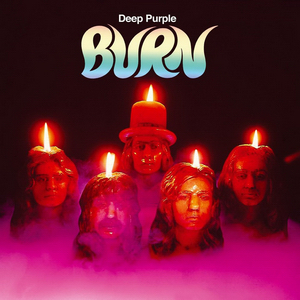
Four years later came the duet. Released on 15 February 1974, Burn gave Deep Purple two new voices at once. The unknown baritone who answered a Melody Maker piece saying Deep Purple needed a singer, sent in a tape and was picked after a single audition, was David Coverdale, unveiled as Ian Gillan's replacement in September 1973. On the title track he plants the verses low and broad while Glenn Hughes, the bassist hired in the same reshuffle, takes the upper line and throws a scream across the chorus that flattens Ritchie Blackmore's guitar against the back of the mix. Two voices, one song, no quarrel over who owns it.
The trick of that take is the handover. Coverdale's chest voice carries the story, Hughes's lighter, higher tenor carries the alarm, and the two meet in the chorus in harmony, the soul singer's habit of trading lines brought into a band that had never had two lead voices before. Most heavy bands never tried it again. Few could have.
Swell, scream and hush
The singer out of upstate New York who walked into Black Sabbath in 1979 with Elf and Rainbow behind him was Ronnie James Dio, and the title track of Heaven and Hell, released by Vertigo in April 1980, is seven minutes of a singer steering a band by dynamics alone. He enters almost conversational over Geezer Butler's bass line, holds the verses back at half power, and lets the chest voice open to full width only as the song turns toward its long close, each phrase a notch louder than the one before it. It is a messa di voce, the swell on a single held note, stretched across an entire song. Tony Iommi follows him. That is the point.

Three years after that, a four-song EP opened on a scream so high and so long that it sold the band before the first verse had landed. Nobody who heard it forgot it. The singer behind it answered to Geoff Tate, and "Queen of the Reich", first issued in 1983 on the band's own 206 Records before EMI signed Queensrÿche, climbs out of that scream into verses sung in a tenor so evenly produced that the top of his range sounds no more strained than the bottom. The scream is the advertisement. The evenness is the achievement.
The Iron Maiden singer who wrote "Revelations" on his own for Piece of Mind in 1983 was Bruce Dickinson, and it is the take on which he refuses the easy climb. The verses sit low and hushed over a slow riff, the voice held back like a breath held under water, and the full tenor arrives only when the song has earned it, so that the release lands with twice the weight of a performance that shouts from the first bar. It is also one of the few Iron Maiden songs built around the singer rather than the guitars, a slow march on which the twin leads wait their turn. No finer exponent of restraint ever fronted a band built for volume.
I sound my barbaric yawp over the roofs of the world.
Walt Whitman, Song of Myself
The best heavy metal vocals of the eighties
On "Eagle Fly Free", the single from Keeper of the Seven Keys Part II, released by Noise in August 1988, the voice at the front of Helloween belongs to Michael Kiske, and it does something the tempo should forbid. Over double bass drums at full tilt, he holds the long notes of the chorus bright, open and dead centre on the pitch, with none of the rasp or the clipped endings a singer usually uses to survive that speed. It made him the standard-bearer for a whole continent of power metal tenors. Most of them sang faster. None sang cleaner.
The strangest take on the shelf had come two years earlier, in 1986. The Florida singer who performed behind a silver mask and signed himself Midnight fronted Crimson Glory on the band's self-titled debut, released on Par Records in the United States and licensed to Roadrunner in Europe, and "Lost Reflection" is sung close and soft through the verses, nearly whispered, before the voice doubles against itself in a high, keening line across the chorus, the same wide-interval layering trick critics single out through the whole record. It sounds less like a tenor showing his range than like a man arguing with his own echo. It is the one ballad of the decade that frightens.
It sounds less like a tenor showing his range than like a man arguing with his own echo.
Painkiller, and the scream as engine
Scott Travis's drum introduction to the title track of Painkiller, released by Columbia on 17 September 1990, works as a fanfare, and then in comes the voice that had fronted Judas Priest since the early seventies, already at the top of its register: Rob Halford. The scream on the chorus winds up like a steam whistle opened full on a factory roof, the valve driven wider with every second until the note climbs out of a growl into a howl that shakes the slates loose along the whole street, and it holds there, on pitch, while the guitars trade solos underneath.
What makes it a performance rather than a stunt is breath. Halford himself credits the scream to trained technique built over decades rather than any trick, and vocal analysts who have studied the performance call his breath control impeccable, the long notes arriving at full width and leaving at full width instead of sagging at the tail the way a tired scream does. A stunt would have held one scream. He built a whole song on them.
| Song | Singer | Band | Year | What the take proves |
|---|---|---|---|---|
| "Immigrant Song" | Robert Plant | Led Zeppelin | 1970 | A wordless cry can set the pitch for a genre |
| "Burn" | David Coverdale, Glenn Hughes | Deep Purple | 1974 | Two lead voices can share one song |
| "Heaven and Hell" | Ronnie James Dio | Black Sabbath | 1980 | Dynamics steer a band |
| "Queen of the Reich" | Geoff Tate | Queensrÿche | 1983 | An even tenor matters more than the scream |
| "Revelations" | Bruce Dickinson | Iron Maiden | 1983 | Restraint makes the release land |
| "Eagle Fly Free" | Michael Kiske | Helloween | 1988 | Clean tone survives any tempo |
| "Lost Reflection" | Midnight | Crimson Glory | 1986 | A ballad can haunt |
| "Painkiller" | Rob Halford | Judas Priest | 1990 | The scream as the engine of a song |
Asked to keep a single one of the eight takes, keep Dio's. The others win on height, on speed, on strangeness or on nerve, but "Heaven and Hell" is the one in which the voice does the arranging, deciding when the band gets louder and when it waits, and nothing about it depends on a note most singers cannot reach. It can be learned. It has almost never been matched.
The physics behind all eight, the open throat, the passaggio and the frequencies that cut through a wall of guitars, has its full account in the chapter it belongs to. None of these singers ignored it. Each bent it to a single song.
Copying any of them starts with breath and a teacher rather than a record, and the first steps are set out under how to sing heavy metal. Beyond dispute, the fastest way to wreck a voice is to begin with the Painkiller scream.
A high note is a fact. A take is a decision.

