
Four nights that Iron Maiden played at the Long Beach Arena in March 1985, taped by the Record Plant's mobile recording truck parked outside the building and released that October on the double album Live After Death, fixed on vinyl the whole contract that heavy metal vocals sign with an audience: the singer climbs, the hall answers, and by the third song nobody can say where the stage ends and the floor begins.
The former Samson singer whom the music papers had long since nicknamed the air raid siren was Bruce Dickinson, and across those four nights he drove sustained tenor notes over the twin guitars of Dave Murray and Adrian Smith hard enough to crack the plaster off the back wall, then turned on the floor seats and ordered some thirteen thousand people to send the same volume back. The hall obliged.
Heavy metal vocals work the way falconry works. The note leaves the singer as a hawk leaves the gauntlet, climbs in widening rings above the churn of the rhythm guitars, hangs there against the wind for a bar or two while the drummer counts beneath it, then folds its wings and stoops onto the downbeat, and the whole room flinches at the strike.
The riffs, the labels and the decades belong to the genre in full. The throat and the floor keep a separate account, and it opens on a problem of plain acoustics.
Heavy metal vocals and the open throat
A blues singer in 1967 confided. He sang close to the microphone and low in his range, bent notes the way a guitarist bends a string, and the band left him room between phrases. The heavy bands of 1970 took the room away. Two Marshall stacks per guitarist and a drummer hitting as hard as John Bonham, in halls where the singer often had little or no monitoring of his own, since the wedge monitor was only then being invented, left him two choices, and only one of them involved being heard.
He went up. The power chord lives low, root and fifth in the octave or two below middle C, or C4, and a voice sitting there disappears into it like a coat thrown onto a pile of coats. A tenor singing between C4 and C5, the high C of the operatic tenor, sits above the chord in clear air, where the guitar offers only its upper harmonics and the ear has nothing else to follow.
The conservatory has a name for the hard ground on that climb. Every voice passes through a passaggio, where chest register gives way to the lighter upper mechanism, and for a tenor it sits around F4 to G4. A classically trained tenor covers the voice there, rounding and darkening the vowel so the larynx stays low and the tone stays even up to the high C. The metal tenors mostly refused. They kept the vowel bright and open, narrowed the space just above the vocal folds into what teachers now call twang, and pushed chest-dominant sound far higher than any singing teacher of 1970 would have signed off on.
The metal tenors kept the vowel bright and open, and pushed chest-dominant sound far higher than any singing teacher of 1970 would have signed off on.
The physics sided with the refusal. The human ear is most sensitive around three kilohertz, and opera singers carry over an orchestra by clustering energy there, in what the Swedish voice scientist Johan Sundberg called the singer's formant. Twang boosts the same band without the covered vowel, so a bright, narrowed tenor at full power slices through a wall of distorted guitars the way an operatic voice slices through eighty strings, arriving at the same frequencies by a different road.
Halford, Dickinson and the note above high C
The former apprentice lighting technician at the Wolverhampton Grand who took the microphone in Judas Priest in 1973 was Rob Halford. On "Victim of Changes", the near eight minute centrepiece of Sad Wings of Destiny in 1976, he fired the opening salvo of the whole style: a gritty chest voice through the verses, a clean climb through the passaggio, and at the end a sustained scream pitched well above the tenor's high C, so far above it that it stopped sounding like a man at all.
The scream is not decoration. Halford changes register the way a guitarist changes pickups, chest voice with grit for the threat, a brighter and thinner head voice for the lift, and a reinforced falsetto at the very top, reaching pitches normally left to sopranos. The four octave range the music press prints beside his name is an estimate, not a measured fact, and it matters less than what he does at its edges. On the title track of Painkiller in 1990 he was thirty nine and still using all of it.
Where Halford cut, Dickinson sustained. The singer who crossed from Samson to Iron Maiden in September 1981 made his first record with them, The Number of the Beast, the following year. He brought what Paul Di'Anno's punk delivery had never attempted: long notes held at full power through whole choruses, wide vibrato at the end of each, and breath that carries a phrase past the point where most singers would have snatched air.
A siren is built to empty streets. Dickinson's voice was built to fill them, and the nickname arrived once he was already fronting Iron Maiden, coined by manager Rod Smallwood from a fan's complaint letter about an early show at the Rainbow Theatre, because nothing else described a sound that climbed, held and wailed across a whole band without once thinning out. He left in 1993 and came back in 1999. In February 2015 he announced treatment for a cancerous tumour at the back of his tongue, was declared clear of it that May, and returned to touring in 2016.
A conservatory would tell these men to cover the vowel above G4 and save the instrument for forty years of Verdi. They left the vowel open, sang the note anyway, and several of them were still singing it past seventy.
Julien Vasseur, KaosMetal
Dio, Tate and the herald on the battlements
Taught to breathe by a trumpet rather than by a singing teacher, on his own repeated account, the small man with the largest chest voice in the genre was Ronnie James Dio. He fronted Rainbow from 1975 and Black Sabbath on Heaven and Hell in 1980, and he sang like a herald reading a declaration of war from the battlements, every consonant struck clean, every vowel hurled across the moat to an army that had not yet grasped it was finished.
The title track of Holy Diver, the 1983 debut of Dio the band, is the plainest lesson in how he worked. He almost never went into falsetto, carrying a chest-dominant voice up to the top of each chorus and shaping the vowels with the precision of a man who had spent his youth hearing how a trumpet's tone changes with the lips. Nothing in it is shrieked. All of it lands. Dio died of stomach cancer on 16 May 2010, aged 67.

The singer whose high notes on a four track EP from 1983 got a band from the suburbs of Seattle signed to EMI answered to the name Geoff Tate, and on The Warning, released in September 1984, Queensrÿche built whole songs around him. Tate held notes high in the tenor range the way a glassblower holds a bulb on the end of the pipe, turning it, thinning it, taking it to the very point where one more breath would burst the glass and stopping there.
Operatic is the word the metal press reached for, meaning loud, high and vibrato-heavy. To a trained ear it names a technique, a lowered larynx, a covered vowel above the passaggio and energy gathered into the singer's formant, and Tate, who studied for a period with the American vocal coach David P. Kyle, came nearer to it than most of the high tenors in that lineage. Most of his peers settled for the volume.
Falsetto, the baritones and the farrier's rasp
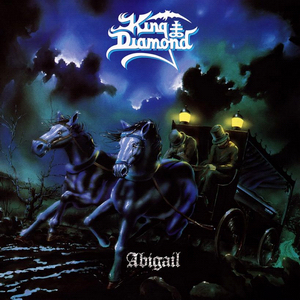
On Abigail, released by Roadrunner in 1987, the Danish singer who voiced every character in his own ghost story, the narrator in a low chest voice close to speech and the dead and the possessed in a falsetto pitched far above it, signed himself King Diamond, and the switch between the two registers does more to frighten than any lyric could. The top voice is true falsetto, not the reinforced head voice of the tenors: folds stretched thin and meeting only at their edges, light, piercing and strange.
He had drawn that falsetto across the riffs of Mercyful Fate since Melissa and Don't Break the Oath, and on the solo records it runs like a bow drawn along the back of a carpenter's saw, a sound pulled out of a tool built for cutting, eerie and sweet with the teeth still on the blade.
Not every voice went up. From Düsseldorf in 1982 came Warlock, and at its microphone stood the singer that German teenagers of the decade would know by her first name alone, Doro Pesch, who sang lower and grainier than the tenors around her and never pretended otherwise. On Triumph and Agony in 1987 "All We Are" was written as an anthem to be shouted back by a hall, and she has kept it in her live sets ever since under her own name, Doro.
The baritones took the low road on purpose. A baritone voice sits roughly between A2 and A4, an interval of two octaves, and the former Misfits singer who crooned in that dark register was Glenn Danzig, whose first album with his band Danzig came out on Def American in 1988, Rick Rubin producing. Messiah Marcolin carried a robed, vibrato-laden baritone into Candlemass in 1986.
The rasp is the third road. The ventricular folds, sometimes called the false folds, sit just above the true vocal folds, and a singer who lets them join the vibration adds noise and grit to the pitch without shredding the folds that make it. On Balls to the Wall in 1983 Udo Dirkschneider's voice goes across the riffs of Accept like a farrier's rasp across a hoof, taking the smooth edge off every note and leaving the filings on the floor.
Lemmy Kilmister sang Motörhead with his microphone set high above his head, face tilted back, gravel poured into a baritone. It was not technique in any sense a teacher would sign. It was a sound nobody could copy.
Lemmy sang with his microphone set high above his head, face tilted back, gravel poured into a baritone. It was a sound nobody could copy.
Necks, horns and a quarter of a million throats
Who first called the front row headbangers is contested. One story gives the word to Led Zeppelin's American audiences of 1969, another to Motörhead's fans a decade later, with Lemmy quoted for it. The motion itself needs no historian. A front row of headbangers keeps time like the oarsmen of a war galley pulling to the drum, hair up on the backbeat and down on the snare, and a clumsy tempo change snaps the rhythm the way a missed stroke snaps oars against the hull.
The raised index and little finger that Dio made the salute of the faithful reaches back further, to the Chicago band Coven and its singer Jinx Dawson, pictured making the sign on the artwork of their 1969 debut. In June 2017 Gene Simmons of Kiss filed to trademark the gesture with the United States Patent and Trademark Office and withdrew the application within two weeks. The hand stayed public property.
The gang vocal was built for the hall before it was ever recorded. On record it is the rest of the band shouting the chorus round one microphone, the sound of a football terrace moved into a studio, and on Stay Hungry in 1984 Twisted Sister put that shout at the centre of "We're Not Gonna Take It" and let MTV carry it into American living rooms. Its job is simple. It hands the audience a part it can sing without any training at all.
The crowd took more than the chorus. At Rock in Rio on 19 January 2001, in front of a crowd reported at around a quarter of a million people, Iron Maiden played "Fear of the Dark" and a field of banners and bare arms sang the guitar melody back to the stage, a wordless line pitched where untrained voices could reach. The recording issued on Rock in Rio the following year flattened the band under the noise of the field. Since then no heavy metal crowd has waited to be asked.
Harleys, dragons and a pharaoh's tomb
The show grew with the voice, one piece of fanfare at a time. From the Hell Bent for Leather era in 1979 Halford began riding a Harley-Davidson onto the stage, and the motorcycle has stayed part of the band's live show ever since. Iron Maiden's mascot Eddie began walking the stage as a giant on stilts on the Beast on the Road tour of 1982, and for the World Slavery Tour of 1984 and 1985, 189 shows in eleven months, the band built an Egyptian set, a pharaoh's tomb hauled from continent to continent in the backs of articulated lorries.
Dio went further on the Sacred Heart tour of 1985 and 1986 with a mechanical, laser-lit dragon the press nicknamed Denzil, which loomed over the drum riser, breathed fire and was slain nightly. It was absurd and it was loved. The singer who had sung the dragons into being on record finally had one on the payroll.
Beneath the machinery sat the oldest fact of the live show: the singer plays no instrument, faces the hall and speaks for it. Everything else is scenery.
The live album, and what the studio did afterwards
The live album was the genre's way of bottling that exchange, and for the whole of the seventies the room where it was best bottled was Japan. Deep Purple recorded Made in Japan in Osaka and Tokyo in August 1972, Scorpions made Tokyo Tapes there in April 1978 and Judas Priest followed in February 1979.
| Album | Released | Recorded | What it proved |
|---|---|---|---|
| Deep Purple, Made in Japan | 1972 | Osaka and Tokyo, August 1972 | The long, loose heavy rock concert set down whole |
| Scorpions, Tokyo Tapes | 1978 | Tokyo, April 1978 | Uli Jon Roth's farewell to the band on record |
| Judas Priest, Unleashed in the East | 1979 | Tokyo, February 1979 | The live album as a studio product |
| UFO, Strangers in the Night | 1979 | Chicago and Louisville, October 1978 | Michael Schenker's last shows with the band, on record |
| Motörhead, No Sleep 'til Hammersmith | 1981 | Leeds and Newcastle, March 1981 | A live album could enter the UK chart at number one |
| Iron Maiden, Live After Death | 1985 | Long Beach, March 1985, and Hammersmith, October 1984 | The singer and the crowd as one instrument |

Unleashed in the East carries the genre's most famous asterisk. Fans soon nicknamed it Unleashed in the Studio: Halford was fighting flu on the two nights in Tokyo, and guitarist Glenn Tipton has said the vocals were touched up afterwards. The guitars smashed their way through the Tokyo halls and onto the tape mostly intact. The voice was repaired afterward, at a studio in England.
Motörhead went the other way. No Sleep 'til Hammersmith kept its rough edges and went straight in at number one in Britain in June 1981, beating every studio album on the chart that week, and the lesson was not lost on any band that could still play its own songs in a room.
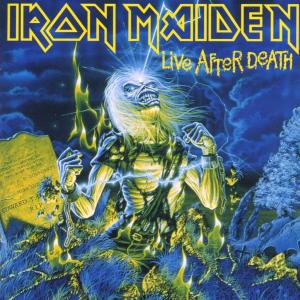
Live After Death answered both. Recorded across the four Long Beach nights and the Hammersmith Odeon the previous October, mixed by Martin Birch and released in October 1985, it put the audience in the mix at nearly the level of the band, so Dickinson's calls and the answers from the seats became part of the arrangement, a second choir the band never had to pay.
The singer is usually the one member of a heavy metal band who plays no instrument, faces the hall and speaks for it.
Strip away the ramps, the dragons and the chants, and the question left standing is the oldest one in the music: what is heavy metal, and where did the sound those crowds were answering come from in the first place.
The voice got there first. Then the crowd learned to answer.

