
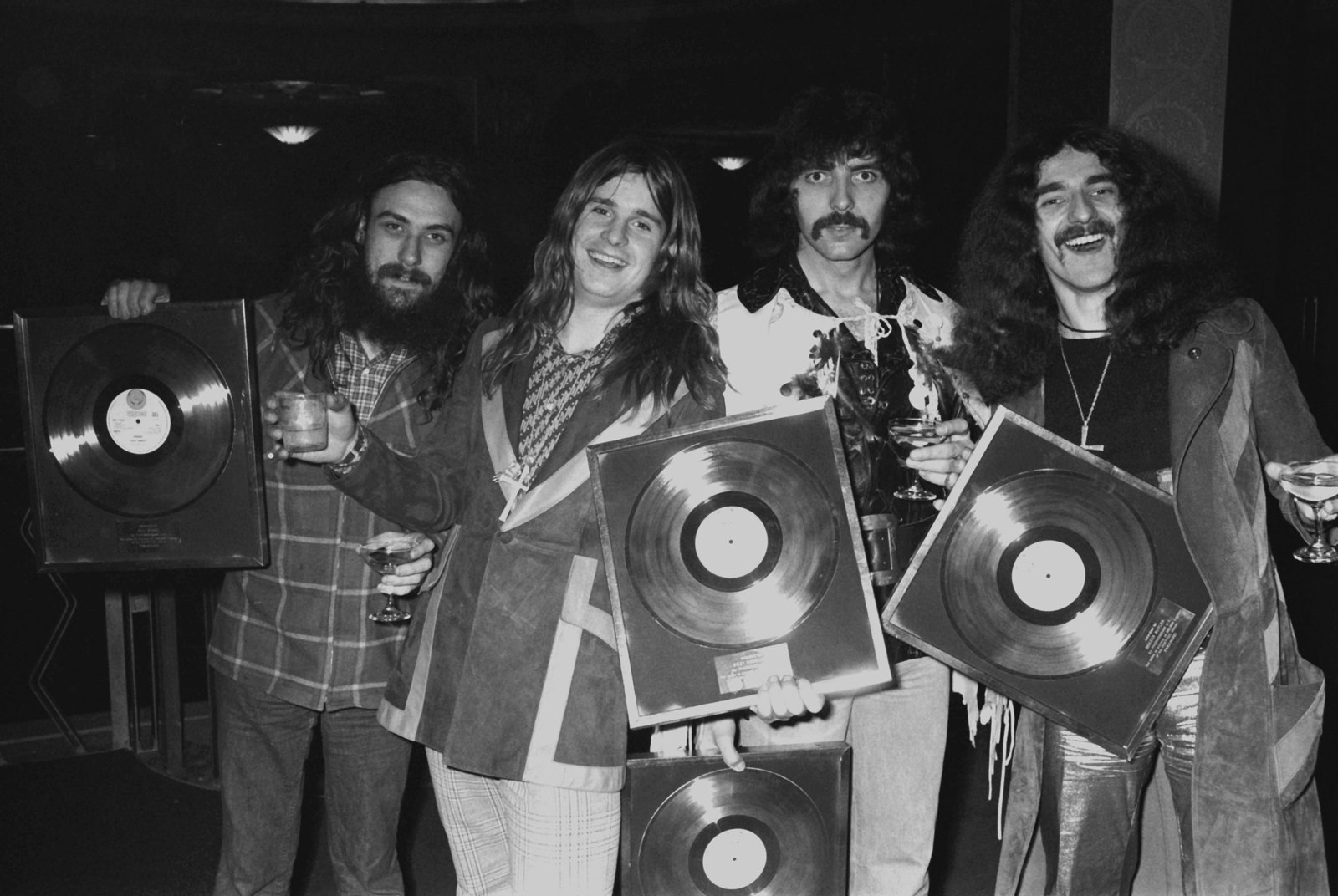
The songs that built heavy metal are not the four everybody knows. The Aston quartet whose "Paranoid", "Iron Man", "War Pigs" and title track fill every greatest hits disc was Black Sabbath, and those four sold the style to the world, but the black sabbath heavy metal songs that carry the load of later genres sit deeper in the first six albums, on second sides and album tracks, where thrash, stoner, doom and sludge each found the riff it would spend thirty years rebuilding.
A new bridge is never opened on the engineer's word. Before the first car crosses, the contractor drives lorries heaped with gravel onto the deck and parks them nose to tail, span after span, until the structure carries more weight than it will ever meet in service, while surveyors crawl underneath with dial gauges and read how far the beams sag. A span that springs back true is signed off. One that cracks is cut up by the contractor's gang and dumped in the river below.
These songs took that test in 1970 and 1971. Half a century of heavier bands has parked its full tonnage on them since.
The famous four stand at the centre of the style's birth, and they have been weighed often enough, beside the Kinks singles and the Zeppelin albums, to show where it sits in the story. The engineering that later genres actually drive across happened on the tracks around them.
Black Sabbath heavy metal songs beyond the famous four
Named, by the bassist's own account, after the shape of Bill Ward's beard, which looked to him like the nib of a pen, and dressed up with full stops to sound more sinister than it was, the fourth song on the February 1970 debut is "N.I.B.", and its first minute belongs to the bass. Geezer Butler plays alone through a wah pedal, at producer Rodger Bain's suggestion, then locks onto the riff in unison with Tony Iommi's guitar an octave above him. That bass solo runs as its own separately listed track on American pressings, credited as "Bassically" before the song proper begins. The four men filmed playing it at the Olympia in Paris that December were not yet a year into their recording life.
What changed in those bars is the job of the instrument. Through the sixties the bass had walked under a blues band, filling the gaps between the chords, and on "N.I.B." it stops walking and carries the riff on its own shoulders, doubling the guitar note for note, so that the riff hits with two instruments' worth of weight and none of the swing. The bassist who wrote nearly every lyric the band sang in those years was Butler as well, and here he wrote the devil a love song, sung from Lucifer's own side of the bed. Every heavy bass player since who doubles the guitar at full volume instead of walking beneath it is playing his part.
The bass stops walking and carries the riff on its own shoulders.
Children of the Grave and Sweet Leaf, 1971
The third album opens on a cough. Iommi, smoking with Ozzy Osbourne between takes, coughed into a running microphone, and the band looped the sound and set it at the head of the record, a joke nobody bothered to cut. Then "Sweet Leaf" drops its riff, tuned down three semitones to take the strain off Iommi's damaged fingertips, so broad and so slow in the way it rolls that it flattens the cough, the hiss and the half second of silence into the floor. It is a love song to marijuana. A whole school of desert bands later took it as a catechism. Critics and the bands themselves have pointed to "Sweet Leaf" and the album around it as the first stoner metal record, the taproot the nineties genre grew from before it had a name of its own.
The album that carried both songs, released by Vertigo in the summer of 1971 with Rodger Bain producing for the third time, was Master of Reality, and its first side closes on the song that first put the whole band on horseback. The track that did it was "Children of the Grave". Ward's toms and Butler's bass drive a triplet figure under the riff, the four men running together rather than stomping, and the song charges straight through its own quiet coda without breaking stride. Every galloping heavy metal rhythm of the next decade has this in its blood.
The live film shows what the studio take only suggests. Played in front of an American festival crowd at the California Jam, held at the Ontario Motor Speedway on 6 April 1974, the song runs faster than the record, Osbourne clapping the time over his head while Ward hammers the triplet like a man trying to kick his way out of a locked car, and the riff never loosens its grip on the beat. Speed metal was still ten years away.
Into the Void and the slow haul downward
The same record closes on the opposite lesson. "Into the Void" opens with a riff that seems to stall before it moves. The main figure that follows crawls the way a loaded coal boat was once legged through a canal tunnel in the Black Country, two men lying on their backs on a plank across the bow, walking their boots along the dripping brickwork in the dark for the best part of an hour while the horse was led over the hill above, every yard gained by main force. Tony Iommi has said the band tried the song in more than one studio because Ward could not get his part to sit right.
By common consent, the doom bands of the eighties took the tempo from it and the sludge bands of the nineties took the grime, and between them they have been legging that riff through the dark ever since. It sounds like weight because it is played as weight. Nothing in it is decoration.

Recorded in Los Angeles and released in September 1972, the fourth album bolted a different kind of riff onto the frame. "Supernaut" runs on a figure that lands off the beat, Iommi's chords jumping ahead of Ward's kick drum so that the song lurches forward like a truck with a slipping clutch, and halfway through the band drops out for a break of drums and percussion before the riff comes back and stamps the break flat. That mid-song break runs on timbales, claves and an agogo bell, a Latin percussion interlude dropped into a hard rock riff. Frank Zappa named it his favourite Black Sabbath track in a 1975 interview with Let It Rock, and John Bonham loved the song enough that Bill Ward remembers him copying its drum break note for note. The groove bands of the nineties built whole careers on a riff that sat off the beat like that.
Three years later the vanguard of another school came out of Sabotage. On "Symptom of the Universe", in 1975, Iommi pins his low string under the heel of his hand and chops out a muted riff at a pace no Sabbath song had yet run, a figure that thrash players a decade on would copy down to the last muted chop. The quiet acoustic coda that follows it is the band being itself. The riff is the band being copied.
What was built on them
| Song | Album | Year | What it carried |
|---|---|---|---|
| Black Sabbath | Black Sabbath | 1970 | The tritone and the slow dread doom took over |
| N.I.B. | Black Sabbath | 1970 | The bass doubling the riff instead of walking under it |
| Iron Man | Paranoid | 1970 | A vocal line sung in unison with the riff |
| Sweet Leaf | Master of Reality | 1971 | The lowered, rolling riff stoner rock took over |
| Children of the Grave | Master of Reality | 1971 | The running triplet under a heavy riff |
| Into the Void | Master of Reality | 1971 | The crawl sludge and doom still copy |
| Supernaut | Vol. 4 | 1972 | The riff that sits off the beat |
| Symptom of the Universe | Sabotage | 1975 | The muted, chugging riff thrash sped up |
Read down the right hand column and the progeny of one band fills most of a record shop. The drummer whose jazz training let the slow songs breathe and the fast ones run was Bill Ward, and on every one of these tracks the four men play a single part together, never a singer with a backing band. That unison, more than any one riff, is what the later genres inherited.
Nobody else in 1970 was building like that. The other band usually set beside them at the head of the line was still playing the blues, only far louder and far better recorded, and whether that counts is argued out under is Led Zeppelin heavy metal. Sabbath had already left the blues standing on the platform.
Every one of these songs is still being played somewhere tonight, by a band that has never heard of the album it came from. That is what building something means.
