
Now since these dead bones have already out-lasted the living ones of Methuselah, and in a yard under ground, and thin walls of clay, out-worn all the strong and specious buildings above it; and quietly rested under the drums and tramplings of three conquests; What Prince can promise such diuturnity unto his Reliques...Sir Thomas Browne, Hydriotaphia, Urne-Buriall, 1658
Twenty records make up this canon, and we have set them out the way an old church keeps what remains of its saints: a reliquary in a cold side chapel, each album under its own glass on worn velvet, a knuckle of the first riff in one case and a splinter of the tritone in the next, kept not because anyone expects the dead to rise but because every slow band of the last fifty-six years has come in out of the weather, stood at the same cases and gone back out with a little of the cold still on its hands. None of them is here for its sales.
The list runs in order of release, from the first Black Sabbath album in 1970 to a Paradise Lost record of 2020, with the date, the label, the studio or producer and the songs that carry each one, and we judge a sound only where the critics agree with one another. The history that joins these albums is told in the full story of the genre. This is the shelf, not the story.
Every slow band of the last fifty-six years has come in out of the weather, stood at the same cases and gone back out with a little of the cold still on its hands.
1970 and 1971: the first two relics
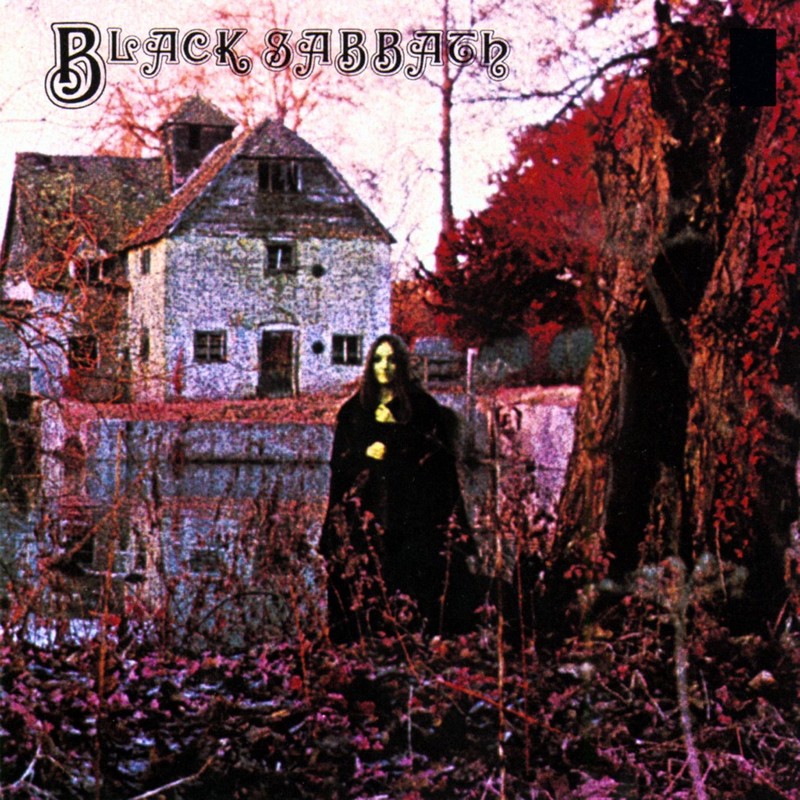
Recorded at Regent Sound in London in November 1969, most of it in a single session of about twelve hours, produced by Rodger Bain and released by Vertigo on Friday 13 February 1970, the debut by the four young men from Aston opens with rain, thunder and a church bell before Tony Iommi strikes the tritone of the title track at a tempo no rock band of that year had any commercial reason to choose. "Black Sabbath" is the founding document of doom, and "N.I.B." and "Behind the Wall of Sleep" carry the same weight in shorter songs. The album reached number eight in Britain and twenty-three on the Billboard 200, the American album chart, and in 2017 Rolling Stone ranked it fifth among the greatest metal albums. It is not a doom album from end to end. Without it there would be no doom albums at all.
Recorded at Island Studios in February and April 1971, again with Bain, and released by Vertigo that summer, Master of Reality is the record on which Iommi, missing two fingertips lost in a sheet metal factory, slackened his strings a step and a half to C sharp on three songs, with Geezer Butler tuning down to meet him, so that "Children of the Grave", "Lord of This World" and "Into the Void" come down like leaden sash weights dropping inside a wall, each riff landing lower than the ear expects. Much of what follows inherited that tuning. The album reached number five in Britain and number eight in America.
1984 to 1986: the keepers of the case
Recorded in February 1984 at Track Record Studios in Los Angeles with Bill Metoyer and the Metal Blade founder Brian Slagel, and released by Metal Blade that March, the self-titled debut by the Chicago quintet Trouble, known since as Psalm 9, set the twin guitars of Bruce Franklin and Rick Wartell under the strained high voice of Eric Wagner on "The Tempter", "Revelation (Life or Death)" and the title track. With the self-titled debut by Saint Vitus the same year, it is one of the two records usually named as the first doom albums of the decade. AllMusic gave it four and a half stars and Rock Hard three out of ten, which measures how far the slow riff stood from any agreement in 1984.
Formed in 1971 around the singer Bobby Liebling in Alexandria, Virginia, across the river from Washington, D.C., and left for fourteen years with nothing to show but a handful of singles, Pentagram self-released its first album in February 1985, built from songs recorded in 1981 and 1982 under the name Death Row and partly re-recorded in 1984. Peaceville reissued it in 1993 as Relentless, the title it has carried ever since. "Death Row", "All Your Sins" and "Relentless" are the songs to start with.

Written by a bassist from Stockholm who had already watched one band, Nemesis, fall apart under him, recorded at Thunderload Studios in February 1986 with Ragne Wahlquist of Heavy Load producing, and released by the French label Black Dragon on 10 June 1986, the debut by Candlemass did for European doom what the first Black Sabbath album had done for all of it: it fixed the form. Epic doom took its name from the title of Epicus Doomicus Metallicus, and Chris Chantler of Metal Hammer called each of Leif Edling's songs on it, "Solitude", "Crystal Ball" and "A Sorcerer's Pledge" above all, "virtually a template for How To Do Epic Doom Metal". AllMusic called its songwriting the most consistent of the band's career, and its one serious reservation was a voice with less power than Messiah Marcolin brought to the albums that followed.
Signed to SST, the hardcore punk label run by Greg Ginn of Black Flag, and playing to punk audiences who had come for speed and received the opposite, the Los Angeles quartet Saint Vitus recorded Born Too Late at Total Access Recording in Redondo Beach with Joe Carducci producing, released it in October 1986 as its first album sung by Scott "Wino" Weinrich of The Obsessed, and gave the genre its anthem in the title track, a song about long hair, slow music and the contempt both attracted. "Dying Inside" and "Clear Windowpane" complete the case. Paul Kott of AllMusic wrote that each chord "rains down like a hammer", Decibel called the album "a stone-cold classic" in 2010, and we agree with both.
1991: the gothic case and the British revival

Recorded over the winter of 1990 and 1991 at Academy Music Studios in West Yorkshire, with Keith Appleton engineering, and released by Peaceville on 19 March 1991, Gothic is the record on which the quintet from Halifax took the death metal of its debut and laid it out under glass: orchestral passages credited on the sleeve to the Raptured Symphony Orchestra behind the riffs, the voice of Sarah Marrion rising over Nick Holmes's growl on the title track, and Gregor Mackintosh's lead guitar carrying the melodies. "Gothic", "Eternal" and "Dead Emotion" carry it. Decibel made it the fifth album in its Hall of Fame in 2005, and Chantler wrote in Metal Hammer's list of essential doom albums that it "raised the bar, introducing arty '80s goth influences to an insular underground". It named gothic metal, and it set the terms for the slow Peaceville records My Dying Bride and Anathema made over the next three years.
At every gig we did there were people shouting, 'Play faster!' And it kind of made us play slower, to annoy people almost.
Greg Mackintosh of Paradise Lost, interviewed by Rob Laing, MusicRadar, 17 January 2022
Seven months later a singer who had walked out of Napalm Death, the band that had done more than any other to make extreme music fast, answered from the far end of the tempo scale. Lee Dorrian had left in 1989, and Cathedral, the band he formed with Garry Jennings, Adam Lehan, Mark Griffiths and Mike Smail, recorded its debut at Workshop Studios in Redditch that summer with Steve Gurney, credited as PBL, before Earache released Forest of Equilibrium on 21 October 1991. It opens with an eleven-minute track and closes with the nine-minute "Reaching Happiness, Touching Pain", and between them "Ebony Tears" and "Serpent Eve" deliver what the record's tagline promised, in Chantler's account: "Morosely magnificent slow-motion doom", a promise that confused many who had come to the band from Napalm Death. Decibel made it the twelfth entry in its Hall of Fame in 2006.
1992 and 1993: the case divides
Recorded at Razor's Edge in San Francisco with the engineer Billy Anderson and released by Earache in November 1992, Sleep's Holy Mountain, the second album by the trio of Al Cisneros, Matt Pike and Chris Hakius who called themselves Sleep, reached the label as a finished tape and was released exactly as the band sent it, "Dragonaut" first, "Holy Mountain" at the centre, the ten-minute "From Beyond" as the long way out. The metal press of the early nineties put Sleep at the head of the new stoner metal scene, side by side with Kyuss.
Three months later Sub Pop released the relic that would matter most to the musicians who wanted no song at all. Recorded in Seattle in August 1992 by Dylan Carlson on guitar and Dave Harwell on bass, and released on 5 February 1993, Earth 2: Special Low Frequency Version by the Olympia band Earth runs three tracks, "Seven Angels", "Teeth of Lions Rule the Divine" and "Like Gold and Faceted", across seventy-three minutes, with no vocals and riffs repeated until they stop behaving like riffs. It is not a song cycle. It is a single weighted chord kept under glass for an hour and a quarter, and drone doom, from Sunn O))) onwards, is the music of people who stood in front of that case long enough to learn how it was made.
Paradise Lost did not stay in the room it had built. Moving to Music for Nations, recording at Jacobs Studios in Surrey and the Townhouse in London with Simon Efemey producing and releasing its fourth album in September 1993, the band moved Holmes from the growl to a rough sung melody and wrote on Icon the songs, "Embers Fire", "True Belief" and "Christendom" among them, that took it into the German album chart at number thirty-one. "Icon definitely became his moment when he started doing the melodies," Mackintosh told MusicRadar of Holmes. Rock Hard gave it ten out of ten and Decibel added it to its Hall of Fame in 2018. On those verdicts Icon is the better written record and Gothic the more important one, and the chapel has room for both.
Recorded in June and July 1993, produced by Robert "Mags" Magoolagan with the band and released by Peaceville on 11 October 1993, Turn Loose the Swans, the second album by My Dying Bride, put Martin Powell's violin and keyboards at the centre and set Aaron Stainthorpe's sung lament against a death metal growl on "Sear Me MCMXCIII", "Your River" and "The Songless Bird". Chantler heard it hang "a monochrome rainbow of visionary, eccentric flamboyance" on the still young gothic doom and death sound. It is a dirge played by a sextet with a string player standing among the guitars, and IMPALA, the European association of independent labels, certified it gold in 2011.

The same autumn Century Media released the relic nobody would volunteer to put under glass. Recorded at Studio 13, a small room on the thirteenth floor of an abandoned department store in New Orleans, produced by the band with Robinson Mills engineering, Take as Needed for Pain by the five-piece Eyehategod drags guitars that reviewers kept comparing to Black Sabbath, with blues and Southern rock underneath, beneath the barely decipherable voice of Mike IX Williams, on "Blank", "Disturbance" and the title track above all. AllMusic heard in it "a relentlessly bitter, broken-down mood". Terrorizer named it the greatest sludge album in 2009, and Rolling Stone ranked it ninety-second among the greatest metal albums in 2017. It is the ugliest record on this list, and it has aged better than most of the others.
1994: two relics in one month
One record here reached the shops after its band had ceased to exist. Formed in Kaarina, in south-western Finland, in 1990, recorded in late 1992 and dissolved in the spring of 1993, the trio of Niko Sirkiä, Mikko Ruotsalainen and Jori Sjöroos, called Thergothon, left behind Stream from the Heavens, released by the Italian label Avantgarde Music on 15 June 1994, six tracks, "Everlasting", "Yet the Watchers Guard" and "Elemental" among them. The press of 1994 barely noticed. In 2014 Decibel ranked it ninth among the hundred best doom albums, and funeral doom, the slowest branch of the genre, places it at its foundation.
Thirteen days later Elektra released Welcome to Sky Valley, recorded at Sound City in Van Nuys in early 1993 with Chris Goss producing. The third album by Kyuss, the quartet of John Garcia, Josh Homme, Scott Reeder and Brant Bjork, is sequenced as three unbroken suites rather than a list of songs, with "Gardenia", "Space Cadet" and "Demon Cleaner" as its landmarks. Bjork left once the sessions were finished, citing his hatred of touring, and Alfredo Hernández took the drum stool for the tours that followed. Sleep and Kyuss had been named together at the head of stoner metal, and the style has lived between the Sleep record and this one ever since.
2000 to 2017: the chapel reopens
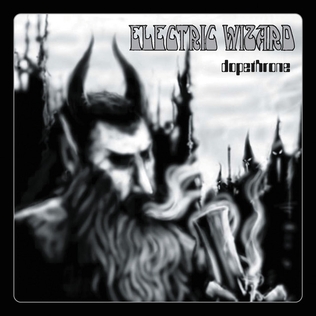
The Dorset trio that went back to early Black Sabbath and to Motörhead rather than to the American desert, Electric Wizard, recorded its third album at Chuckalumba Studios in May and June 2000 with Rolf Startin, and Rise Above, the label Lee Dorrian had founded, released Dopethrone on 25 September 2000. Jus Oborn, Tim Bagshaw and Mark Greening filled seventy-one minutes with eight tracks, "Funeralopolis" and the twenty-minute title track the longest of the songs. Terrorizer named it the album of the decade in 2009. The verdict took the whole decade.
Sunn O))), the Seattle duo of Stephen O'Malley and Greg Anderson that turned Earth's held chord into an amplifier ritual, reached its largest canvas nine years later. Produced by Randall Dunn and Mell Dettmer and released by the duo's own label Southern Lord in May 2009, Monoliths & Dimensions gathers the voice of Attila Csihar of Mayhem, a Viennese women's choir led by Jessika Kenney and the guitar of Dylan Carlson around the drone across four tracks, among them "Aghartha", "Big Church" and "Alice". The Guardian gave it five stars. It is the case in the chapel around which the most candles have been lit.
It is the ugliest record on this list, and it has aged better than most of the others.
The revival found its next keeper in Arkansas. Released by the Canadian label Profound Lore on 21 February 2012 and mixed by Chuck Schaaf with the band, Sorrow and Extinction, the debut by Pallbearer, sets the clean singing of Brett Campbell across five long songs, "Foreigner", "An Offering of Grief" and "Given to the Grave" among them. Pitchfork gave it 8.4 and put it first among its metal albums of 2012, and Decibel later made it the 253rd entry in its Hall of Fame.
The last relic of the revival was made after a death. Adrian Guerra, who had formed Bell Witch with the bassist Dylan Desmond in Seattle in 2010, left the band in 2015 and died in 2016. Desmond and the drummer and organist Jesse Shreibman recorded Mirror Reaper at Hallowed Halls in Portland with Billy Anderson, and Profound Lore released it on 20 October 2017 as one composition of eighty-three minutes, with vocals Guerra had recorded earlier set into its centre. There is no guitar: bass, drums, two voices and at times a Hammond organ carry all of it. PopMatters named it the best metal album of 2017. The music never offers a chorus, and it is stronger for refusing one.
The 2020s: Paradise Lost adds a relic
Twenty-nine years after Gothic, four of the five men who made it went back to the chapel. Nick Holmes, Gregor Mackintosh, Aaron Aedy and Steve Edmondson, with the Finnish drummer Waltteri Väyrynen, recorded Obsidian with the producer Jaime Gomez Arellano, and Nuclear Blast released it on 15 May 2020, preceded by the singles "Fall from Grace" and "Ghosts". It reached number two in both Germany and Finland, holds a Metacritic score of 90, and Metal Hammer described it as "turning bleakness into beauty". It belongs here because it shows the relics are not museum pieces: the band that laid death metal under glass in 1991 could still, in its fourth decade, set a new case beside the old one.
The decade's other claimant is Future's Shadow Part 1: The Clandestine Gate, released by Bell Witch through Profound Lore on 21 April 2023, another single long composition, and it needs time before anyone can say whether it will stay in the chapel. The canon grows slowly. It is the only speed this music has ever trusted.
The twenty essential doom metal albums in one table
| Year | Band | Album | Label | Branch |
|---|---|---|---|---|
| 1970 | Black Sabbath | Black Sabbath | Vertigo | Traditional doom |
| 1971 | Black Sabbath | Master of Reality | Vertigo | Traditional doom |
| 1984 | Trouble | Psalm 9 | Metal Blade | Traditional doom |
| 1985 | Pentagram | Pentagram (Relentless) | Pentagram Records | Traditional doom |
| 1986 | Candlemass | Epicus Doomicus Metallicus | Black Dragon | Epic doom |
| 1986 | Saint Vitus | Born Too Late | SST | Traditional doom |
| 1991 | Paradise Lost | Gothic | Peaceville | Death doom, gothic |
| 1991 | Cathedral | Forest of Equilibrium | Earache | Traditional doom |
| 1992 | Sleep | Sleep's Holy Mountain | Earache | Stoner |
| 1993 | Earth | Earth 2 | Sub Pop | Drone |
| 1993 | Paradise Lost | Icon | Music for Nations | Gothic doom |
| 1993 | My Dying Bride | Turn Loose the Swans | Peaceville | Death doom |
| 1993 | Eyehategod | Take as Needed for Pain | Century Media | Sludge |
| 1994 | Thergothon | Stream from the Heavens | Avantgarde Music | Funeral doom |
| 1994 | Kyuss | Welcome to Sky Valley | Elektra | Stoner |
| 2000 | Electric Wizard | Dopethrone | Rise Above | Stoner doom |
| 2009 | Sunn O))) | Monoliths & Dimensions | Southern Lord | Drone |
| 2012 | Pallbearer | Sorrow and Extinction | Profound Lore | Traditional doom |
| 2017 | Bell Witch | Mirror Reaper | Profound Lore | Funeral doom |
| 2020 | Paradise Lost | Obsidian | Nuclear Blast | Gothic doom |
Read down the table and the shape of the canon is plain: twenty records on sixteen labels, none holding more than two of them. Doom was never made by an industry. It was made by stubborn bands in cheap rooms for audiences that had to go looking for it, and the sleeves, logos and tunings that grew up around these records belong to the culture around the music. What matters here is simpler. Relics are added to the chapel. None has ever been removed.
