
Twenty records, four decades, and an ocean between the two schools that share the name.
Raised on the riff and the dark fantasy in American basements of the early eighties, then raised again on the chorus and the major key in German studios of the late eighties, the genre has always held two arguments in one room, so that a listener asked for the best power metal album names a record from his own side of the water and cheerfully tears the other side's favourite to pieces.
The trio from the Kansas plains that opened the American account in 1983 was Manilla Road. The German quartet that answered two years later, a great deal faster and a great deal brighter, was Helloween. Between those two starting points and the present sits a canon of about twenty albums that every later band has taken apart bar by bar, stripping the riffs off the tape and the vocal lines off the lyric sheet to learn how the machinery was assembled. Nothing in it is there for nostalgia.
The measure is arrangement, never reputation. A record earns its place by fixing something the bands after it copied: where the chorus lands, what the keyboard is permitted to do, how high the voice sits above the guitars, how long a song may run before an audience loses patience. The story that produced these records, told in order from the proto bands onwards, is power metal, chapter by chapter, and the albums are its exhibits rather than its plot.
What makes the best power metal album
Three variables decide it. The first is the voice's position in the mix, because power metal is the style in which the singer rides above the guitars rather than inside them, and every important record moved that line up or down. The second is the job handed to the keyboard, which travelled from absent to decorative to structural inside a single decade. The third is length, since a genre built on the chorus must decide how long it will make you wait for one.
Judged on those three counts, the best power metal album is not one record but a succession of them, each tearing up a clause the previous one had signed, the Kansas trio's buried voice overruled by German tenors pitched above the guitars, the lean German arrangement smothered under stacked choirs, the choirs thrown out by a Swedish revival in 1997 and dragged back in by an Italian orchestra the following year.
Nobody wins that argument. It simply continues.
The gallop, the twin guitar harmony and the falsetto all arrived ready made from heavy metal. What power metal did with them is what separates one of these records from the next.
Some famous names are missing on purpose. Manowar's Hail to England is epic heavy metal, slower and more ceremonial than anything its admirers built later. Queensrÿche's Operation: Mindcrime sits closer to progressive metal than its tenor suggests, and Nightwish's Oceanborn took the first steps down the road to the orchestra that eventually swallowed the band. All three are superb records. None of them fixed a rule that power metal bands then obeyed.
| Year | Band | Album | Label | What it fixed |
|---|---|---|---|---|
| 1983 | Manilla Road | Crystal Logic | Roadster | The voice inside the riff |
| 1984 | Jag Panzer | Ample Destruction | Iron Works | The American tenor |
| 1985 | Helloween | Walls of Jericho | Noise | The German tempo |
| 1987 | Helloween | Keeper of the Seven Keys Part I | Noise | The tenor above the guitars |
| 1987 | Savatage | Hall of the Mountain King | Atlantic | The classical theme as riff |
| 1988 | Crimson Glory | Transcendence | MCA / Roadracer | The high voice over minor riffs |
| 1995 | Blind Guardian | Imaginations from the Other Side | Virgin | The multitracked chorus |
| 1995 | Gamma Ray | Land of the Free | Noise | The economical anthem |
| 1997 | Stratovarius | Visions | T&T | The keyboard as second lead |
| 1997 | HammerFall | Glory to the Brave | Nuclear Blast | The guitar band without keyboards |
| 1998 | Rhapsody | Symphony of Enchanted Lands | Limb Music | The record written as a score |
| 1998 | Iced Earth | Something Wicked This Way Comes | Century Media | The rhythm guitar as lead |
| 1999 | Sonata Arctica | Ecliptica | Spinefarm | The melody in the voice |
| 2001 | Avantasia | The Metal Opera | AFM | The cast of singers |
| 2005 | Kamelot | The Black Halo | Steamhammer | The low voice in a tenor's style |
| 2006 | DragonForce | Inhuman Rampage | Roadrunner | The ceiling on speed |
| 2012 | Sabaton | Carolus Rex | Nuclear Blast | The march as a concept cycle |
| 2013 | Powerwolf | Preachers of the Night | Napalm | The liturgy as a hook |
| 2017 | Unleash the Archers | Apex | Napalm | The two schools in one band |
| 2022 | Blind Guardian | The God Machine | Nuclear Blast | Speed after the orchestra |
The American riff school
Released in 1983 on Roadster, the label the band ran for itself, Crystal Logic is the record on which Mark Shelton's trio settled the American template: riffs long enough to carry a verse without help, sword and sorcery for a lyric sheet, and a thin, nasal voice mixed down among the guitars instead of lifted above them. The Riddle Master and the closing Dreams of Eschaton show the method at its fullest.
Shelton's guitar tone has the rawness of a shawm blown at full breath in a stone market square, the double reed splitting a little further on every phrase, the split audible on every note and the split itself carrying the melody to the far side of the crowd. Polish would have killed it. By common consent the European school never learned that lesson, and never needed to.
The Colorado quintet that pushed the voice forward a year later was Jag Panzer, on Ample Destruction in 1984. The singer the scene called the Tyrant, Harry Conklin, delivers Licensed to Kill and The Watching at a pitch and a volume no American record had yet attempted, while the guitars of Mark Briody and Joey Tafolla keep the riff heavy enough that the tenor has something solid to climb.
Produced by Paul O'Neill and released by Atlantic in 1987, Savatage's Hall of the Mountain King is where the American school let a classical theme through the door, and it let the theme in at full volume. The instrumental Prelude to Madness rips the troll march out of Grieg's cello and bassoon parts, hands the melody to Criss Oliva's guitar and runs it into the title track, where Jon Oliva snarls rather than sings. The rest of the record, 24 Hrs. Ago and Legions among it, keeps the riff in charge and the keyboard nowhere.
The masked quintet from the Gulf Coast of Florida that lifted the American voice highest was Crimson Glory, whose Transcendence arrived in 1988. The singer billed only as Midnight takes Lady of Winter and Painted Skies into a register as high as anything in Germany and considerably stranger, and the harmonised guitars underneath stay dark and minor, which is the American school's signature. The voice went up. The riff refused to follow.
Released on Century Media in June 1998, Iced Earth's Something Wicked This Way Comes carried the American school through a decade that had written it off. Jon Schaffer's right hand chops triplets at a speed that turns the rhythm guitar into the lead instrument, and Matt Barlow's baritone, often doubled with a higher line, sits inside the riff on Burning Times and Watching Over Me instead of floating above it. The closing trilogy, Prophecy, Birth of the Wicked and The Coming Curse, runs the concept to its end.
Iced Earth never sold Europe the chorus. They sold it the right hand.
Germany sets the tempo
Issued by Noise Records late in 1985, Walls of Jericho is the rough draft of everything the European school became, and rough on purpose. Kai Hansen sings as well as playing guitar, the production by Harris Johns leaves the guitars scratchy and close, and Ingo Schwichtenberg's double kick runs under Ride the Sky like a mandolin tremolo picked with a steel blade in place of a plectrum, the strokes coming so fast the pair of strings blurs into one sustained tone, the blade gouging the wood beside the soundhole and every note still landing in its place.
The closing How Many Tears already stretches past seven minutes and sets its chorus against a harmonised lead, the shape the next two records would inflate to the size of a stage set.
Moving Hansen off the microphone and putting the eighteen-year-old Michael Kiske in front, the German quintet fixed the European voice on Keeper of the Seven Keys Part I in 1987 exactly where it has stayed ever since: a clean tenor riding high above the guitars, never fighting them for the same frequencies. The same record fixed the European form, short major-key anthems at one end and a long quest at the other. A Little Time and Twilight of the Gods show how little room a Kiske chorus needed to land.
That division is the whole catechism. Part II followed in 1988, and between them the two records set the terms every European band of the following decade accepted without reading the small print.
The nineties, when the chorus took over
The decade opened lean for the style in the Anglo-American market, and the records that mattered were made in Germany, Finland and Sweden for European and Japanese buyers. Gamma Ray and Stratovarius both charted steadily in Japan across the decade. Nobody in those studios was aiming at the radio. They were aiming at each other.

Recorded with Flemming Rasmussen, who had engineered and co-produced Metallica's Ride the Lightning, and released by Virgin in 1995, Imaginations from the Other Side is where Blind Guardian replaced the chorus sung by one man with the chorus sung by a crowd made of that man: Hansi Kürsch's voice tracked layer upon layer until the refrains of the title song and Bright Eyes hit like a whole congregation. A Past and Future Secret sets the same voice against acoustic guitars and proves it never needed the stack.
It was the most copied decision of the decade, and not all of the copying was healthy. A generation of bands took the stacked chorus and left behind the songs that justified it.
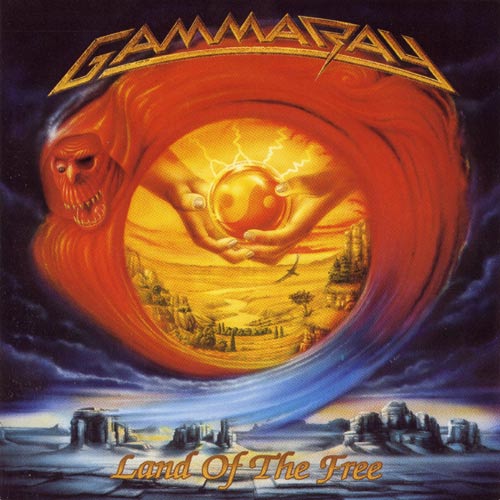
The same year, Gamma Ray answered with Land of the Free, Kai Hansen driving the tempo from behind his own microphone, and its lesson is economy. Man on a Mission drives the tempo without a wasted bar, and Rebellion in Dreamland opens the record at eight and a half minutes with a vocal arrangement that owes as much to Queen as to anyone in metal.
The Finnish quintet that turned the keyboard into a second lead instrument was Stratovarius, on Visions in 1997. Timo Tolkki's guitar and Jens Johansson's keyboards trade solos bar for bar on Black Diamond, whose opening harpsichord figure became a template, while Timo Kotipelto's tenor sits exactly where Kiske had fixed it and the ten-minute title track closes the record. Forever Free and The Kiss of Judas slow the tempo without letting the keyboard fall back into the accompaniment.
Recorded with Fredrik Nordström and released by Nuclear Blast in 1997, HammerFall's Glory to the Brave threw the keyboards out of the rehearsal room altogether and went back to twin guitars, a tenor and a fist in the air. The Dragon Lies Bleeding and Steel Meets Steel set the pattern, and the choice of cover, Warlord's Child of the Damned from 1984, paid a debt to the American school that the European press rarely acknowledged.
Released by Spinefarm in 1999, Sonata Arctica's Ecliptica closed the decade by moving the melody back into the voice. Tony Kakko writes FullMoon and Replica so that the vocal line is the hook and the keyboards only double it, and the double kick underneath runs at the full Stratovarius speed without ever being the point of the song.
Scores, casts and the long form
Recorded with Sascha Paeth and released by Limb Music in 1998, Symphony of Enchanted Lands is the record the Italian band then still called Rhapsody, known since 2006 as Rhapsody of Fire, wrote as a score rather than as a set of songs, orchestra and choir entered in the parts beside the guitar, which becomes one section among several. Emerald Sword is the single. The long title track is the ambition.
Luca Turilli and Alex Staropoli packed the arrangement the way an engraver packs a copper plate when he has cut so many staves into the metal that the press tears the paper coming off it, and the record's weakness is the same as its strength: on the longer pieces the tune is sometimes lost under the ink.
Written by Edguy's singer Tobias Sammet and issued by AFM in 2001, Avantasia's The Metal Opera solved a problem the genre had not known it had, which singer owns the chorus, by casting a different voice for each character. Kiske, André Matos, Kai Hansen, David DeFeis and Sharon den Adel share the parts, and on Reach Out for the Light Kiske and Sammet duet on a hook built for two tenors at once.
That record gave the genre its pedigree as theatre. Kiske had spent years away from metal, and the arrangement treats his return as a stage entrance, the band dropping away for a bar so the voice arrives alone.

The American band with a Norwegian at the microphone, Kamelot, took the theatre darker on The Black Halo, released by Steamhammer in 2005 and produced by Sascha Paeth and Miro, closing the Faust diptych Kamelot had opened on Epica in 2003, and the record on which the long form stopped sounding like a pageant and started sounding like a stage play.
Roy Khan sings March of Mephisto low and crooned in a style built for tenors, a harsh guest voice from the black metal side answers him, and the stomp proves that a power metal single never needed to sprint. Memento Mori runs to almost nine minutes without once waiting for its chorus.
A choir is an argument, not a decoration. The records that last used it to answer a question the song had asked. The rest used it to cover the fact that the song had asked nothing at all.
Julien Vasseur, KaosMetal
Speed, spectacle and the mass audience
Released by Roadrunner in January 2006, DragonForce's Inhuman Rampage is the European school's speed taken to its ceiling. Herman Li and Sam Totman play harmonised leads in unison with Vadim Pruzhanov's keyboard at tempos near 200 beats a minute, ZP Theart's tenor sits on top, and the whammy bar and pickup switch produce the arcade noises that became the band's fingerprint on Operation Ground and Pound and Revolution Deathsquad.
Under the noise sits a conventional power metal song. The choruses resolve in major keys, the verses hand over to them on schedule, and the audience that arrived for the spectacle stayed for the melody underneath it. Speed was the packaging. The tune was the reason.
Nuclear Blast released Sabaton's Carolus Rex in 2012, and it is the record that proved a mid-tempo march could carry an entire concept cycle about one kingdom, from the Thirty Years' War to the defeat at Poltava in 1709 and the empire's collapse that followed, without the arrangement ever speeding up to hold attention. The fanfare is the riff, and the riff never hurries. Sabaton produced it with Peter Tägtgren, and the choirs that fill The Lion from the North and the title song are mixed as a second rhythm section rather than a halo over the top.
The German quintet in corpse paint and cassocks that turned the liturgy into a hook was Powerwolf, and Preachers of the Night took it to the top of the German album chart in August 2013. Falk Maria Schlegel's church organ doubles the riff on Amen & Attack, Attila Dorn's operatic baritone sings Latin fragments as if they were a football chant, and Kreuzfeuer is sung in German with no loss of volume.
The fanfare is the riff, and the riff never hurries.
A canon still taking entries
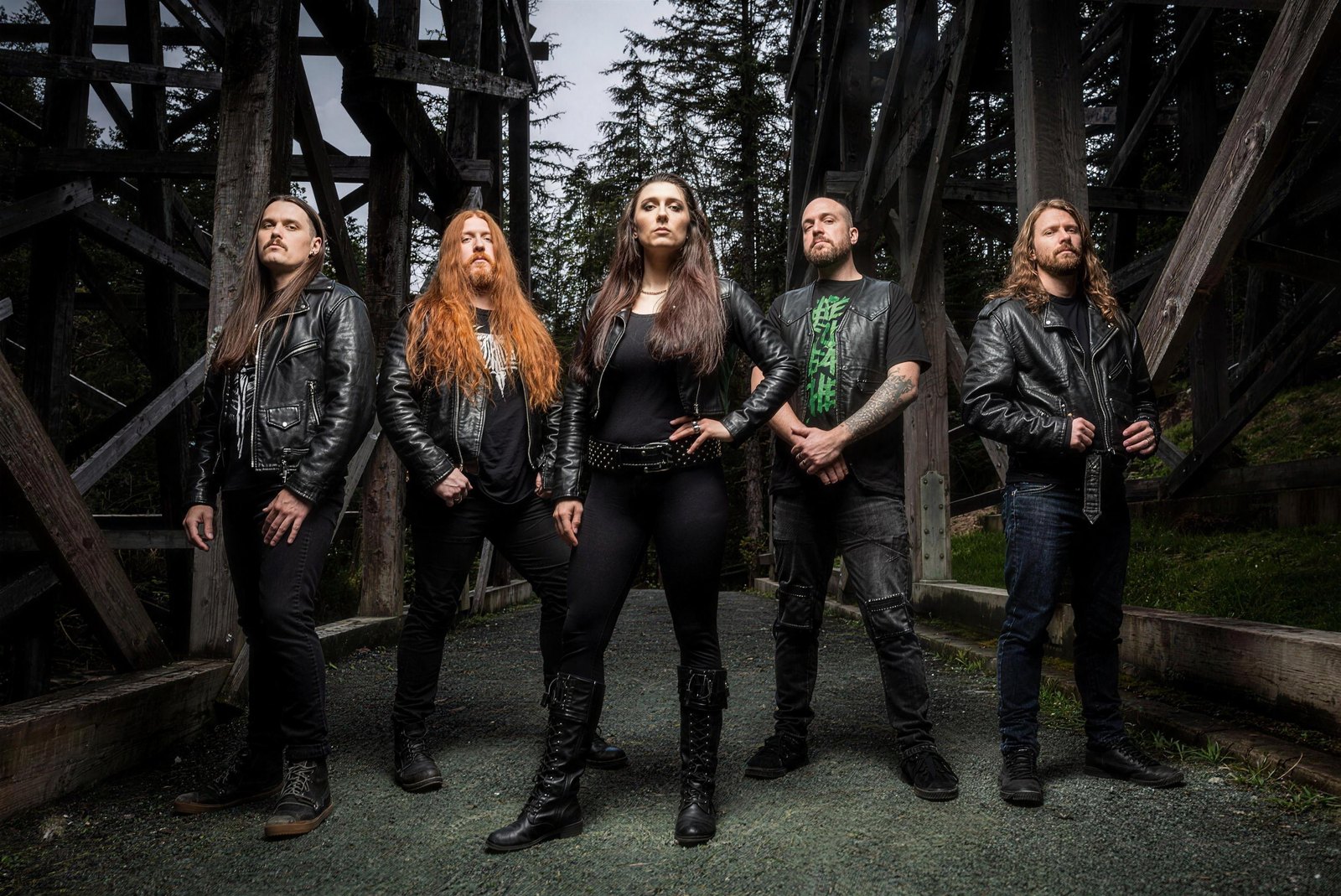
Out on Napalm Records in 2017, Unleash the Archers' Apex is the clearest sign that the two traditions have finally met inside one band. The Canadian quintet keeps the American weight in the guitars of Grant Truesdell and Andrew Kingsley, keeps the European tenor ambition in Brittney Slayes's voice, and threads Grant Truesdell's harsh backing vocals through a concept record whose title song and Awakening stand among the decade's finest. Abyss continued the story in 2020 as a direct sequel.
Slayes sings above the guitars the way Kiske did. The riffs underneath sound like Colorado in 1984. The argument between the schools ends there, at least for the length of one record.

Released by Nuclear Blast on 2 September 2022, The God Machine is Blind Guardian's first metal record since Beyond the Red Mirror in 2015, after Legacy of the Dark Lands, an orchestral album recorded under the Twilight Orchestra name in 2019, and it breaks the stack apart in favour of speed.
Deliver Us from Evil opens on riffing close to thrash, and Violent Shadows runs the double kick harder than anything the band had released in twenty years. Charlie Bauerfeind produced it, and Blood of the Elves keeps just enough of the old layered refrain to remind the listener where the stack came from.
Taken together, the twenty records hang like the inside moulds on a violin maker's wall, the wooden forms around which every later instrument's ribs have been bent over a hot iron and clamped until the maple either cracked or took the curve, so that forty years of bands, whatever they believe about their own originality, still come off the bench in one of a score of shapes.
The canon will not stay closed. Every one of these records also sits on a branch of the family tree, from the symphonic side to the progressive one and out to the folk and pirate offshoots, and the branches are traced in power metal subgenres.
