
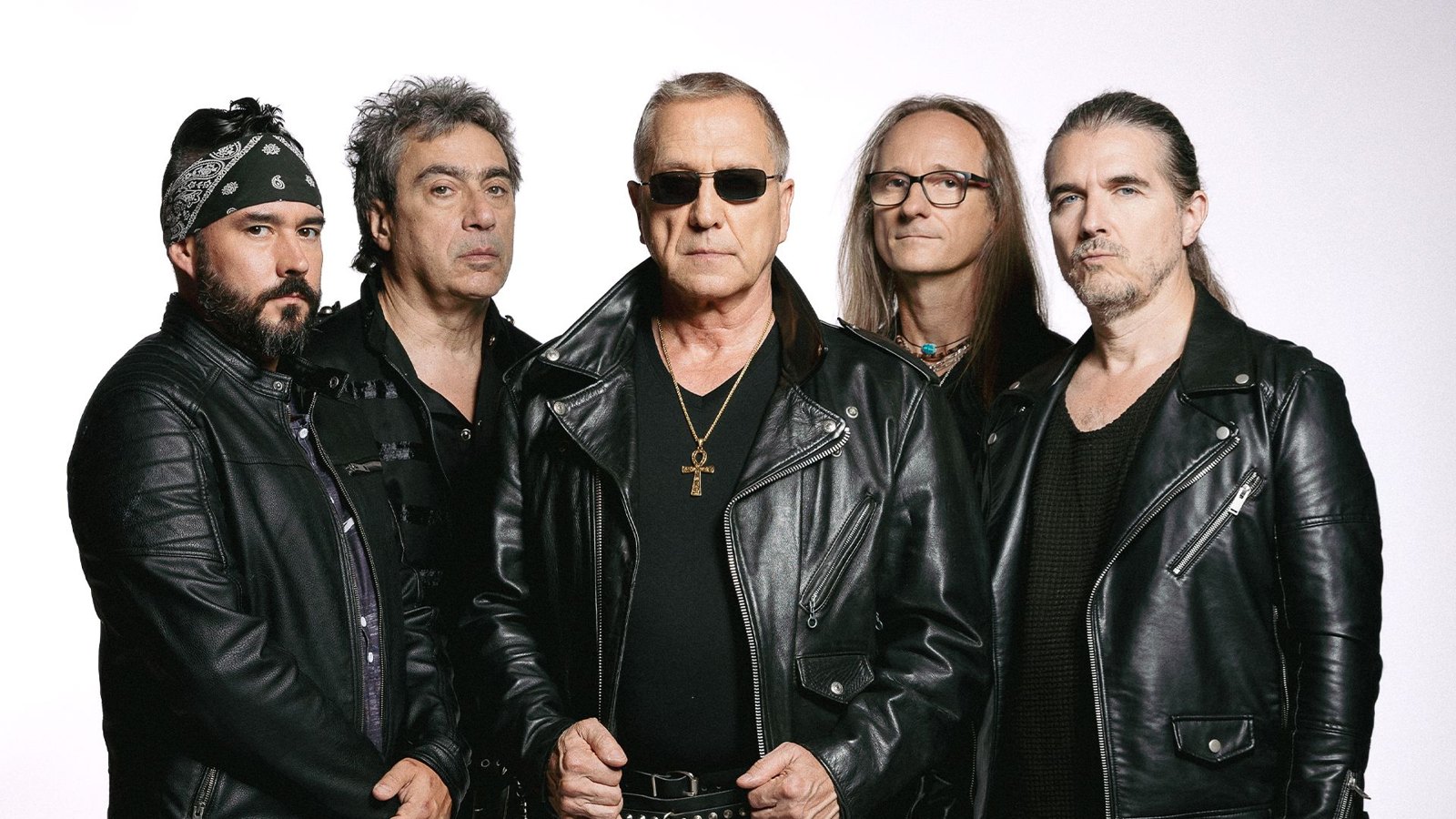
Sixty-five thousand copies in ten weeks, sung in French, sold inside one country and almost nowhere past its borders: that was the first album of a hard rock band in 1981, and the figure says more about french heavy metal bands of the first wave than any manifesto. The band that moved them, active only from 1980 to 1985, was Warning. It never recorded a line in English. It never needed to.
In 1982 the French telephone administration began handing out a small beige terminal free of charge, and within a few years millions of households were booking trains, reading exam results and gossiping through a national network that worked brilliantly inside the country and nowhere else on earth. On 30 June 2012 the service was cut dead, and every Minitel still plugged into a wall became a box of useless plastic, fit only to be torn out of the wall and slung into a skip, because there was no other network on the planet it could talk to.
The first French heavy metal worked on the same wiring. Between 1980 and 1986 the country built a whole system of its own, bands, a magazine, small labels and an audience that bought in tens of thousands, fast and complete and loved at home, and every part of it spoke a language the rest of the world's machinery could not read. Where these bands stand beside the founders of the genre is the subject of the longer account. The French question is narrower: what a country does with heavy metal when it insists on its own words.
French heavy metal bands in their own language
The band that turned a French-language hard rock record into a national event in 1980 was Trust, and Répression carried Antisocial, a song aimed at the grinding pace of city work that hits a French crowd like a water cannon turned on the first rows, knocking them off their feet and soaking everyone behind. An English version of the album followed later that year, with Jimmy Pursey of Sham 69 helping on the words, and the translated Antisocial came out milder than the original. The lesson was there from the first salvo. The songs lost their teeth at the border.
The one Trust song that did cross intact crossed in somebody else's hands. Anthrax recorded Antisocial for State of Euphoria in 1988, in English, at thrash tempo, and put it on American television, which is how much of the world first heard that riff. The riff travelled. The words stayed in France.
Trust was hard rock with a punk's manners rather than heavy metal in the strict sense, and the scene behind it went further. The band that put Les Fils du métal on a Vertigo sleeve in 1983 was Satan Jokers, formed at the end of 1981 by Renaud Hantson and Laurent Bernat, with a guitarist, Stéphane Bonneau, who had come out of the group that became Warning. That same April the first number of Enfer Magazine appeared, founded by Gérard Manvu for a public the big Paris rock magazines had been ignoring. Now the scene had a newspaper.
Devil's Records and the speed years
The singer the whole scene measured itself against was Christian Augustin, known to everyone as Zouille, and Sortilège built its records around him: a five-song EP for the Dutch label Rave-On in 1983, then Métamorphose on the French label Devil's Records in 1984, epic heavy metal with twin guitars and a voice that climbs where the arrangement leaves it room. Reviewers abroad still reach first for that voice, the one exponent of the French school they all know by name. It is a French instrument.
Sortilège recorded an English version of the same album at the same time, through contacts in Germany, and released it in several countries at once. It sold in Japan and almost nowhere else. Zouille in English sounds like an actor dubbing his own film half a beat late, and the buyers heard it at once, which is the whole problem of the decade in a single record.
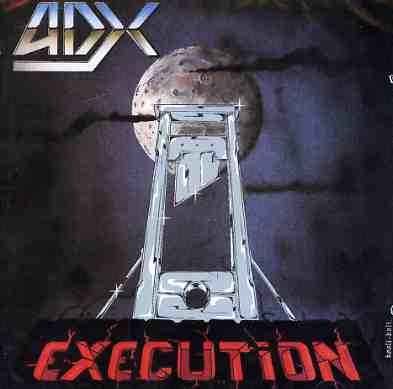
The five who dragged the French scene up to speed metal tempo were ADX, Phil Grelaud singing over the guitars of Betov and Hervé Tasson, known as Marquis, and Exécution, released on Devil's Records in April 1985, ran its riffs straight through the old hard rock furniture of the scene and splintered it. The demo before it had been called Le Fléau de Dieu. The album made good on the title.
Half the scene reached the shops through a Dutch label. Rave-On, a small label in the Netherlands, pressed Sortilège's first EP and H-Bomb's album, while Devil's Records carried Sortilège and ADX at home, and between them a few thousand copies at a time went into the specialist shops of a dozen French cities. It was a small trade. It paid for itself.
Around them the scene filled out fast. The brothers who founded Vulcain in 1981, one on guitar with a voice close to Lemmy's and one on bass, were Daniel and Vincent Puzio, and French critics had the band down as the French Motörhead by the time Rock 'n' Roll Secours arrived in 1984. H-Bomb put out Attaque on Rave-On in May 1984, Blasphème followed with a self-titled debut in 1984 and then Désir de vampyr a year later, and Killers, out of Bayonne and led by Bruno Dolheguy, cut Fils de la haine in 1985, four records in French hammered out inside two years.
Nightmare, formed in Grenoble in 1979, took the other road. It sang in English, opened for Def Leppard before more than four thousand people in its own city in 1983, and released Waiting for the Twilight on Ebony Records in 1984. It still records, for the German label AFM, and never had to translate a line. The language was the ticket.
Why the first wave stopped at the border
By 1986 the scene was coming apart. Warning had stopped in 1985, Sortilège put out Larmes de héros in 1986 and then ceased to exist, and H-Bomb switched to English, drifted toward the radio hard rock of Trust and folded after the To Feel Is Pain EP the same year. Even Enfer Magazine, the newspaper of the whole enterprise, was gone before the decade ended, folding in 1987, and by then the bands that had tried to translate had already lost the home crowd. The ones that did not could not leave the country.
A French heavy metal record of 1984 is a letter written in the one language its readers loved and the one language its postman could not deliver.
Declan Rourke, KaosMetal
Countries that sang in English from the start never faced the choice; the Australian heavy metal bands could post a tape to any label on earth and be understood on arrival. France could not, and the generation that followed drew its own conclusion. The loudest French bands of the 1990s played death metal in English, and the most famous of all belongs to death and progressive metal instead: Gojira. The heresy of singing heavy metal in French went quiet for twenty years.
The songs lost their teeth at the border.
Coming back in French
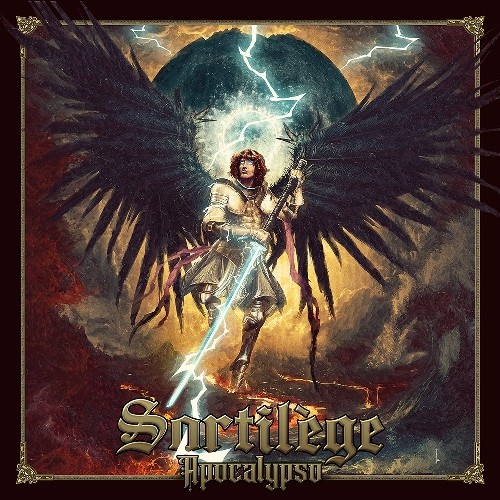
The return came from the same voice. Sortilège reformed in 2019 around Zouille and an entirely new band, and Apocalypso, released by Season of Mist on 3 March 2023, was its first album of new songs in thirty-seven years, still sung in French and still built on the epic lineage of Métamorphose. Reissues of the old records, from the Greek label No Remorse Records among others, had been selling abroad for years before it came out, and the border had already moved.
Vampire, filmed for that return, shows what the reunion kept: the high, theatrical voice leading, the guitars running in harmony behind it and not a word of English anywhere, the ninth track of that same Season of Mist album. ADX never really went away either, and its records are still in French. Vulcain, reformed in 2009, stopped for good in 2021 because of Daniel Puzio's health.
The standard-bearer of the young generation, founded in Quimper in 2013, is Herzel, whose singer Thomas Guillesser took the name from a Breton dictionary, and Le dernier rempart, released on 19 March 2021, puts a bombarde, the Breton oboe loud enough to carry across a harbour in a gale, on its opening track. The words are French. So is the audience, and now it is not only French.
The first wave was built for one country and stopped there. The second is built in the same language and bought by listeners who do not speak a word of it, which nobody in 1984 could have arranged. Sung in French, pressed abroad, played everywhere.
