
On Saturday 16 August 1980, on the infield of the Donington Park racing circuit in Leicestershire, the first Monsters of Rock festival worked its way up the bill from Touch to Riot, Saxon, April Wine, Scorpions and Judas Priest before handing the night to Rainbow, in front of a crowd of about 35,000. Nobody booked it as a lesson. It was one.
The veteran outfit closing the night, built around a guitarist who had walked out of Deep Purple five years earlier, was Rainbow, and Cozy Powell played his last show behind its drums that evening. Two slots below stood the Birmingham quintet that had put two lead guitars where the blues harp used to sit, Judas Priest. Halfway down played the Barnsley five with a top five album that spring, Saxon, and near the bottom, in daylight, before a field of strangers, came the New York band Riot, with the Hanover veterans of Scorpions further up. Founders, British upstarts, Americans and continentals shared one poster. Of all the jobs heavy metal bands would ever be asked to do, only one was missing from that poster, and nobody needed it yet.
Every band that matters did its work on one stone bridge. The founders sank the piers into the riverbed between 1968 and 1976, the young British bands threw the first span across in a two year rush, and the Americans and the continentals carried the roadway on to both banks. When the flood of the early nineties smashed through the parapets and swept the lamp posts downstream, a handful of stubborn bands stayed out on the stones with the water at their boots, and since the middle of the 2000s a new generation has been marching back across, stamping to hear the old masonry ring.
The order of events belongs to the heavy metal story. A band's case is simpler: what it built, and the one record that proves it. Reputation counts for nothing.
The founders, 1968 to 1976
The Aston quartet that first let a single riff carry an entire song on its back, with no chorus leaning on it and no shuffle propping it up from below, was Black Sabbath, and between February 1970 and July 1971 it put out three albums, Black Sabbath, Paranoid and Master of Reality, the third with the guitars tuned down to ease the strings under Tony Iommi's damaged fingertips. Doom, stoner and sludge are its grandchildren. Heavy metal is its eldest son.
When Ronnie James Dio took the microphone for Heaven and Hell in April 1980, the band showed that the riff, not any single voice, was the frame everything hung on, and that record sits beside Paranoid as the second way in. Led Zeppelin, heavier than anyone in 1969 and a blues band at heart, stand on the border.
The Hertford five who carried the conservatory into the rehearsal room were Deep Purple. Recorded in Montreux in December 1971 on the Rolling Stones' mobile studio, after a fire during a Frank Zappa concert had gutted the casino where the band meant to work, Machine Head gave the world "Smoke on the Water", but the lasting gift is "Highway Star", whose organ and guitar solos run on sequences borrowed from Bach, a grammar every neoclassical shredder has studied since.
The West Midlands band that finished the job, writing songs in which the blues survived only as a rumour, putting two lead guitarists side by side and, from 1978, handing its audience a uniform of studs and black hide, answered to the name Judas Priest. Sad Wings of Destiny in 1976 drew up the plans.
Released in April 1980 and recorded at Tittenhurst Park, the Ascot house John Lennon had owned, British Steel cut the songs down to radio length and took the band to number four in Britain, while "Breaking the Law" did its business in about two and a half minutes of a riff hammered flat and a chorus a whole pub could learn by the second pass. Screaming for Vengeance, two years later, finally cracked America with "You've Got Another Thing Comin'". Start with the first. Stay for the second.

Released in May 1976 on Oyster with Martin Birch at the desk, Rising put Dio's voice over Ritchie Blackmore's guitar for six songs, and the longest of them, "Stargazer", tells of a wizard, a tower and the slaves who built it while the Munich Philharmonic saws away underneath. Swords and sorcery entered the genre through that door.
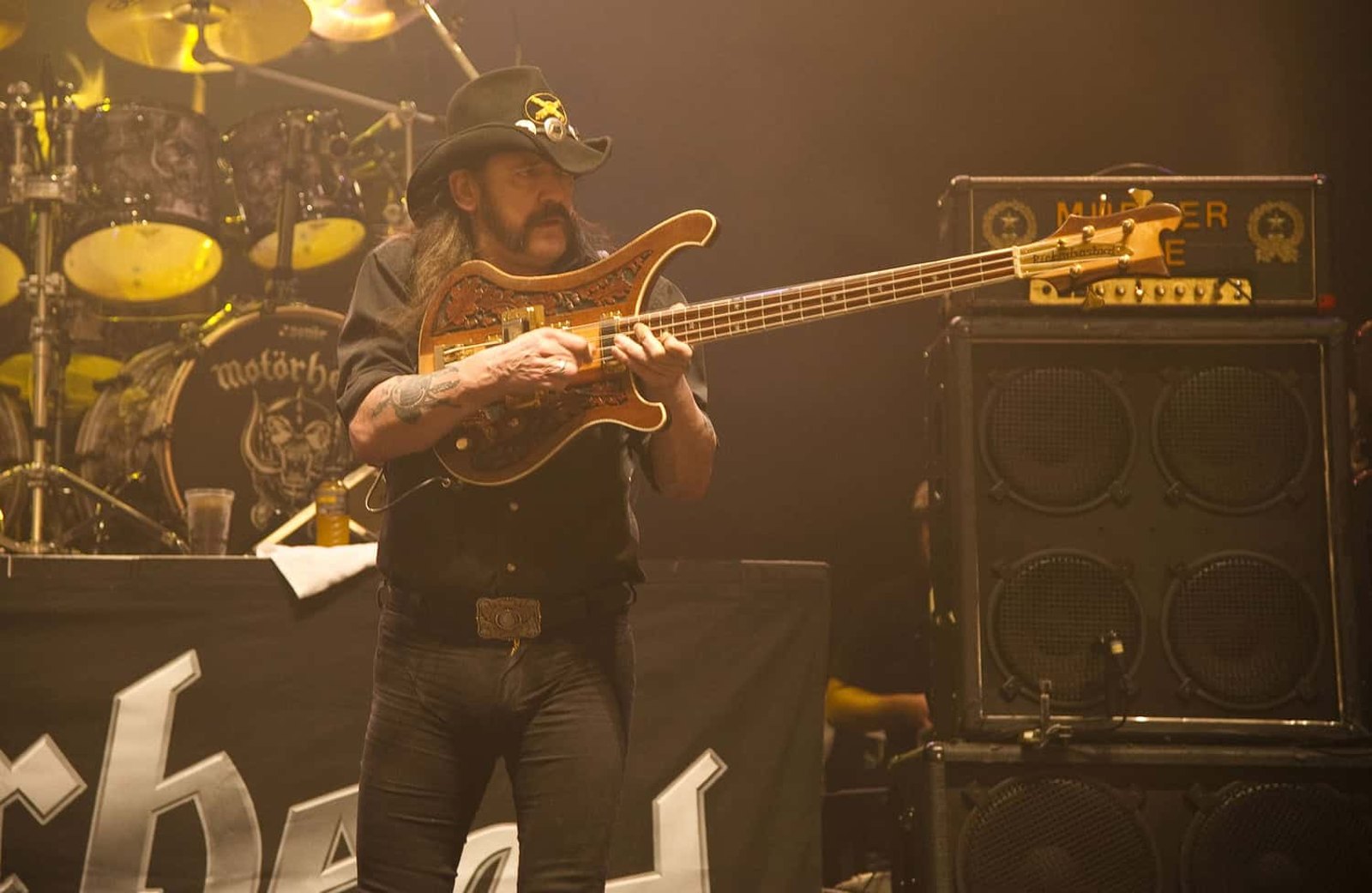
The trio that insisted until its leader's death that it played rock and roll, and meanwhile made heavy metal faster and dirtier than anyone had dared, was Motörhead. Issued by Bronze in November 1980, Ace of Spades went through the jukebox of every biker pub in Britain like a crowbar through a cash till and reached number four, and the live No Sleep 'til Hammersmith went to number one the following June. Thrash took its tempo and its contempt from these records.
Around them stood the bands that supplied a part rather than a whole design: Thin Lizzy and UFO with guitars harmonised in thirds, Uriah Heep with the organ turned up to the level of the guitar, and Budgie, a Cardiff trio whose "Breadfan" Metallica would later take apart and rebuild. None carried the whole weight.
Ace of Spades went through the jukebox of every biker pub in Britain like a crowbar through a cash till.
The British wave and the heavy metal bands it put on the map
Of the hundreds of British bands that pressed singles between 1979 and 1981, a few built things the world still uses. The rest were a weekend.

The band that led from the bass guitar, with Steve Harris writing most of the songs, was Iron Maiden, and The Number of the Beast, released by EMI on 29 March 1982 with Bruce Dickinson on his first record, went to number one in Britain on the strength of "Run to the Hills", the title track and the closing seven minutes of "Hallowed Be Thy Name". Maiden's gift was scale.
Two years later Powerslave closed on "Rime of the Ancient Mariner", more than thirteen minutes of Coleridge carried on two guitars, and after it every power metal and progressive band on earth felt entitled to a song the length of a vinyl side. History, war and literature became subjects rather than decoration. The band that did it still fills stadiums.
The Barnsley five who wrote about motorbikes, jumbo jets and the crowd in front of them, and almost never about wizards, were Saxon. Wheels of Steel reached number five for Carrere in 1980, Strong Arm of the Law followed that autumn, and Denim and Leather in 1981 printed the dress code of a whole movement on a record sleeve. Saxon's case is endurance.
The Stourbridge four who sold a fraction of what their reputation suggests, and were stripped for parts more often than any band of the wave, were Diamond Head. Brian Tatler's riffs on Lightning to the Nations, pressed in 1980 on the band's own Happy Face label, were carried off wholesale between 1984 and 1998, when Metallica recorded "Am I Evil?", "Helpless", "The Prince" and "It's Electric". Thrash owes this band a debt. It has mostly paid it.
Angel Witch brought the occult into the wave with a debut on Bronze in 1980, Venom took the same devilry and let the production rot until black metal crawled out of it, Girlschool went toe to toe with Motörhead on the St. Valentine's Day Massacre EP of 1981, and Def Leppard left for American radio and the glam years, a different shelf altogether.
The Americans: two roads out of 1983
America took the style in two directions at once. On the Sunset Strip it grew hair, hooks and a video budget, and the glam years have a story of their own. Everywhere else it went the other way, into long songs, fantasy sleeves and small labels that pressed a few thousand copies and sold them to believers by mail.
The New York band that played Donington before most of Manhattan knew its name was Riot. Fire Down Under, released by Elektra in 1981, is the place to start, and Thundersteel in 1988, faster and higher than anything the band had cut before, became a founding text of US power metal.
The quartet that turned volume into a creed and fur loincloths into a manifesto was Manowar. It recorded Hail to England in November 1983, released it the following February, and that same year entered the Guinness Book of Records for the loudest performance, from a wall of amplifiers set well past the point where hearing is a choice. Laugh at the furs. Greece and Germany did not.
The band that the former singer of Rainbow and Black Sabbath named after himself in 1982 was Dio, and it released Holy Diver in May 1983 with Vivian Campbell on guitar. "Rainbow in the Dark" and "Stand Up and Shout" made the case that a clean, operatic voice could still sell in America in the year of the Strip.

Out on the Kansas plains, where no label scout ever drove, the Wichita trio built around the guitarist and singer Mark Shelton put its records out on its own Roadster imprint and called itself Manilla Road. Crystal Logic, released in 1983, is heavy metal as an epic told around a fire, "Necropolis" and the title track built from Shelton's reedy voice and riffs that sound hewn rather than played. It sold almost nothing. It outlived nearly everything.
Stranger still, the Ventura band that took its name from a pass into Tolkien's Mordor and dressed its sleeves in Michael Whelan's paintings of Elric was Cirith Ungol. On King of the Dead, released in 1984, Tim Baker's voice scrapes across the riffs like a shovel across a coffin lid. Nothing else from 1984 sounds like it.
Behind them stood Omen, Jag Panzer and Armored Saint, and the early Queensrÿche and Fates Warning, who left for progressive metal.
America had two heavy metals in 1983, one made for the television and one made for the bedroom wall. Only the second one is still being played by people who were not born to hear it first.
Declan Rourke, KaosMetal
The Europeans, from Solingen to Copenhagen
On the continent the style arrived as an import and was re-engineered on the dock. Scorpions took it into the American top ten with Blackout in 1982, but two other bands changed what the music was.

The Solingen five who ran heavy metal like a factory shift and fired the opening shot of speed metal were Accept. Restless and Wild, released on Brain in 1982, opens on "Fast as a Shark", a cheerful German folk song on a crackling old record cut off by a scream, and then Stefan Kaufmann's double kick drums empty into the song like a nail gun into a stud wall, at a tempo thrash would soon claim as its own.
The Copenhagen band that dressed heavy metal in the occult without a trace of irony was Mercyful Fate. On Melissa, released by Roadrunner in 1983, the guitars of Hank Shermann and Michael Denner run long, twisting riffs in the British manner while King Diamond's falsetto goes through them like a hatpin through a wax doll, and his face paint handed black metal a costume a decade before it needed one. Heavy metal staged the theatre. Black metal believed it.
Running Wild in Hamburg sailed under a pirate flag from Under Jolly Roger in 1987 onward, Warlock put Doro Pesch in front of a German band and on to European television, and Helloween took Accept's speed, added choirs and keyboards, and walked off into power metal.
Keepers of the flame, 1991 to 2003
Nirvana's Nevermind came out on 24 September 1991, and within two years the major labels had cut loose most of the heavy metal acts on their rosters, while Rob Halford had walked out of Judas Priest and Dickinson out of Iron Maiden. The style did not die. It moved to Germany and to small labels.
Through those years the few bands playing it straight worked like lighthouse keepers after the shipping lane had closed, trimming the wick, polishing the glass and firing the beam out over empty sea every night whether a ship came or not. Saxon kept releasing records on smaller labels. The Wacken festival, founded in 1990, kept growing in a field in Schleswig-Holstein. Germany became the bastion, and Grave Digger sold Tunes of War, a record about Scottish history, to a German audience in 1996.
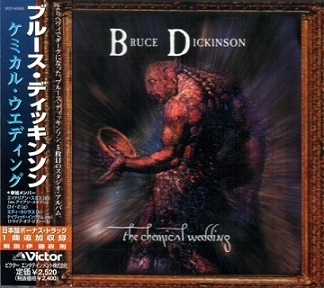
The man who made the best records of the decade in the old style, working with the Californian producer and guitarist Roy Z and his former bandmate Adrian Smith, was the singer Iron Maiden had lost, Bruce Dickinson. Accident of Birth in 1997 and The Chemical Wedding in 1998, the second soaked in William Blake and alchemy, sounded more like classic Maiden than anything Maiden itself was making at the time. Both men were back in the band by February 1999. The solo records had done the negotiating.
The revival, and the young bands who play it straight
The vanguard came from Sweden. The Arvika quartet that played the style at speed metal tempo with no wink at the audience was Enforcer, whose debut Into the Night appeared in 2008, and around it Portrait in Kristianstad treated Mercyful Fate as scripture while In Solitude in Uppsala did the same with darker results until the band ended in 2015. All of them are apostles of records pressed before they were born.
The lineage is most literal in Ventura. The trio formed there in 2011, whose Curse of the Damned in 2015 sounds like a lost 1982 single stretched to album length, is Night Demon. The old band and the new share a town.
The Austin band that took its name from Michael Moorcock's cycle of novels is Eternal Champion, and on The Armor of Ire, released by No Remorse in 2016, and Ravening Iron in 2020, its riffs come up like a sword pulled out of a peat bog, black with age and still sharp enough to open the hand that lifts it. Visigoth in Salt Lake City, Cauldron and Smoulder in Toronto and Haunt in California march in the same column.
Its riffs come up like a sword pulled out of a peat bog, black with age and still sharp enough to open the hand that lifts it.
The essential heavy metal groups, band by band
| Band | Country | Formed | Start with |
|---|---|---|---|
| Black Sabbath | England | 1968 | Paranoid (1970) |
| Deep Purple | England | 1968 | Machine Head (1972) |
| Judas Priest | England | 1969 | British Steel (1980) |
| Rainbow | England | 1975 | Rising (1976) |
| Motörhead | England | 1975 | Ace of Spades (1980) |
| Iron Maiden | England | 1975 | The Number of the Beast (1982) |
| Diamond Head | England | 1976 | Lightning to the Nations (1980) |
| Accept | Germany | 1976 | Restless and Wild (1982) |
| Mercyful Fate | Denmark | 1981 | Melissa (1983) |
| Riot | United States | 1975 | Fire Down Under (1981) |
| Manowar | United States | 1980 | Hail to England (1984) |
| Dio | United States | 1982 | Holy Diver (1983) |
| Manilla Road | United States | 1977 | Crystal Logic (1983) |
| Cirith Ungol | United States | 1971 | King of the Dead (1984) |
| Enforcer | Sweden | 2004 | Diamonds (2010) |
| Night Demon | United States | 2011 | Curse of the Damned (2015) |
| Eternal Champion | United States | 2012 | The Armor of Ire (2016) |
One record per band is enough to decide whether the rest deserve the time. Which single records outrank all the others, whoever made them, is a separate quarrel, and it is settled in the essential albums.
Half a century of heavy metal bands comes down to a plain test: a riff that holds a song up without help, a voice that sings instead of shouting, and a record that still empties a room of anyone who came for something softer. Start with Paranoid. Stop when the records run out. They have not run out yet.
