
Fifty-six years, several thousand albums, sixteen records left standing. The Aston quartet that loaded a long player with riffs heavy enough to carry every song on their own backs, and saw it go to number one in Britain in the autumn of 1970, barely seven months after its first album, was Black Sabbath, and every quarrel over the best heavy metal albums of all time still starts at that second record, Paranoid. Nobody has moved it. Plenty have tried.
Every heavy metal album pressed since then has been sent through the proof house. In the old gun trade a new barrel was packed with a charge far heavier than anything it would meet in service, locked inside a brick chamber and fired, and the barrels that split open along the seam were broken up for scrap while the ones that held had the proof mark struck into the steel. Five decades of reissues, imitators, grunge, nu metal and changing haircuts made the overcharge. Most records burst. Sixteen held.
Which record came first, and who played on what in which year, belongs to the whole story of heavy metal. Rank is decided by narrower questions: does the record still work from the first groove to the last, did it change what the next bands did, and does any other album do its particular job better. One great single does not drag a weak album into the top sixteen. Reputation counts for nothing.
Records that belong to thrash, death, black, doom or power metal answer to their own courts, and the Sunset Strip keeps its own books. What remains is heavy metal in the narrow sense, the riff, the clean voice and the two guitars, from a Birmingham blueprint of 1970 to a Swedish record of 2011.
The best heavy metal albums of all time, ranked
Sixteen records, from the top, with the label and year of the first release.
| Rank | Album | Band | Label | Year |
|---|---|---|---|---|
| 1 | Paranoid | Black Sabbath | Vertigo | 1970 |
| 2 | Stained Class | Judas Priest | CBS | 1978 |
| 3 | Powerslave | Iron Maiden | EMI | 1984 |
| 4 | Heaven and Hell | Black Sabbath | Vertigo | 1980 |
| 5 | Overkill | Motörhead | Bronze | 1979 |
| 6 | Blizzard of Ozz | Ozzy Osbourne | Jet | 1980 |
| 7 | Painkiller | Judas Priest | Columbia | 1990 |
| 8 | Balls to the Wall | Accept | RCA | 1983 |
| 9 | Don't Break the Oath | Mercyful Fate | Roadrunner | 1984 |
| 10 | Denim and Leather | Saxon | Carrere | 1981 |
| 11 | Abigail | King Diamond | Roadrunner | 1987 |
| 12 | Angel Witch | Angel Witch | Bronze | 1980 |
| 13 | Battle Cry | Omen | Metal Blade | 1984 |
| 14 | Symbol of Salvation | Armored Saint | Metal Blade | 1991 |
| 15 | Triumph and Agony | Warlock | Vertigo | 1987 |
| 16 | The World. The Flesh. The Devil. | In Solitude | Metal Blade | 2011 |
The top three are hard to dislodge. Below them every place is a fight, and the fights are about records, not reputations.
One to three: the blueprint, the die press and the long voyage
1. Black Sabbath, Paranoid (1970)
Recorded in a matter of days in June 1970 at Regent Sound and Island Studios in London with Rodger Bain producing again, issued by Vertigo that September and carried to the top of the British chart, Paranoid holds "War Pigs", "Iron Man", "Electric Funeral" and "Fairies Wear Boots", while its title track, knocked together in the studio to fill out the running time, went to number four as a single. The album opens on "War Pigs", close to eight minutes of air raid siren and marching riff that sets the generals of the song against the soldiers they spend.
Tony Iommi's riff on "Iron Man" comes down the scale like a wrecking ball swung from a crane that has never heard of hurry, each note knocking another row of bricks out of whatever pop song had been on the radio before it. Nothing here is decoration. The place at the top is beyond dispute, because no record in the genre has been copied more and none of the copies improved on it.
2. Judas Priest, Stained Class (1978)

The Birmingham five that went back into the studio late in 1977 with the producer Dennis Mackay and a new drummer, Les Binks, and came out with the purest heavy metal record of the decade, released through CBS on 10 February 1978, was Judas Priest, and the record was Stained Class.
"Exciter" opens on Binks' double kick drums at a speed the band had never attempted, and the guitars of K.K. Downing and Glenn Tipton cut its riff like a die press stamping tempered plate into identical parts, every edge exact and every blow the same weight. "Beyond the Realms of Death", co-written by Binks, laid down the model for every metal ballad that turns into a storm halfway through. It sold far less than British Steel. It taught far more.
3. Iron Maiden, Powerslave (1984)
The East London five who, for the first time in their recording life, made an album with exactly the same line-up as the one before it were Iron Maiden, and Powerslave, cut with Martin Birch at Compass Point in Nassau and released by EMI on 3 September 1984, opens on "Aces High", a song about the fighter pilots of 1940 that climbs off the runway at a pace no Spitfire could have matched.
"2 Minutes to Midnight" follows with the Cold War in its chorus, the Egyptian title track brings the band's first real change of colour, and the record closes on more than thirteen minutes of Coleridge. Nicko McBrain's drumming holds all of it together. Rank three, over The Number of the Beast, because this is the album where the band sounds finished rather than promising.
Four to seven: new voices, new drummers, the same weight
4. Black Sabbath, Heaven and Hell (1980)

Released by Vertigo in April 1980 with Martin Birch producing, Heaven and Hell was the first Black Sabbath album without Ozzy Osbourne, and the Aston riff machine, handed in Ronnie James Dio a singer who could hold a note for a whole bar and bend it into a story, came back from its weakest years with "Neon Knights", "Children of the Sea", "Die Young" and a title track that builds like weather.
"Neon Knights" opens the record at a sprint, a fanfare played on overdriven guitars rather than trumpets. The title track does the opposite, and takes its time. A band that had been written off in 1979 sounded, a year later, like it had never been away.
Better to reign in Hell, then serve in Heav'n.
John Milton, Paradise Lost, Book I, line 263
5. Motörhead, Overkill (1979)
Recorded with Jimmy Miller, the producer behind the Rolling Stones' best years, and issued by Bronze in March 1979, Overkill is the record on which Motörhead stopped sounding like a pub band with a grudge and began to sound like an engine, opening on Phil Taylor's double bass drums pounding under the title track like the pistons of a locomotive running downhill with the brake lines cut.
That drum pattern turned up again in thrash within five years. "Stay Clean", "No Class" and "Damage Case" hold the pace, and the title track pretends to end more than once before it finally does. Ace of Spades sold more. Overkill did it first, and did it rougher.
Phil Taylor's double bass drums pound under the title track like the pistons of a locomotive running downhill with the brake lines cut.
6. Ozzy Osbourne, Blizzard of Ozz (1980)
The singer Black Sabbath had let go in 1979 needed a guitarist, and the young Californian who arrived with a Gibson Les Paul and years of classical study behind him from his mother's music school in North Hollywood was Randy Rhoads.

Recorded at Ridge Farm in Surrey with Bob Daisley on bass and Lee Kerslake on drums and released by Jet in September 1980, Blizzard of Ozz put Ozzy Osbourne into the British top ten on "Crazy Train", "Mr. Crowley" and "Revelation (Mother Earth)", while Rhoads played solos that go up like a chandelier hoisted through a stairwell, every crystal swinging and flashing and never once smashing against the banister.
Rhoads died in a plane crash on 19 March 1982, aged twenty-five, after two studio albums with Osbourne. No guitar record of that decade was studied harder.
7. Judas Priest, Painkiller (1990)
The drummer hired out of Racer X in 1989, whose first act on a Priest record was to open it alone with a barrage of double kick and tom rolls, was Scott Travis, and Painkiller, produced by Chris Tsangarides at Miraval in the south of France and released by Columbia in September 1990, is Judas Priest running at a speed it had never touched.
Rob Halford's top register on the title track goes through the guitars like a cutting torch through a ship's hull plate. The record was nominated for a Grammy for Best Metal Performance in 1991, and Halford was gone from the band within two years. It is the last great record the classic band made, and it ranks for that reason as much as for the speed.
Eight to eleven: the continent, the coven and the crowd
8. Accept, Balls to the Wall (1983)

The German quintet whose manager, Gaby Hauke, wrote its lyrics under a pen name, and whose singer Udo Dirkschneider delivered them like orders barked across a parade ground, was Accept, and Balls to the Wall, released by RCA in December 1983, slowed the band down to march pace and found an American audience with it.
The title track, a mid-tempo stomp about the oppressed turning on their oppressors, rolls over the listener like a steamroller over fresh gravel, and "London Leatherboys" and "Fight It Back" keep the speed up behind it. The album went gold in the United States. Restless and Wild is faster. This one holds the room.
9. Mercyful Fate, Don't Break the Oath (1984)
The five Danes who put a singer in face paint in front of riffs out of the British wave, with a microphone stand made from a human thighbone and shinbone, were Mercyful Fate, and on Don't Break the Oath, released by Roadrunner in September 1984, the guitars of Hank Shermann and Michael Denner run longer and stranger than they had on Melissa.
"A Dangerous Meeting", "Come to the Sabbath" and "The Oath" turn through key and tempo changes the way a corridor turns in a house that keeps adding rooms. The band split the following year. Melissa had the shock. This had the songs.
10. Saxon, Denim and Leather (1981)
Written about the crowd rather than about wizards, released by Carrere in September 1981 and taken to number nine in Britain, Denim and Leather is the fourth album by Saxon and its best, carrying "Never Surrender", "Princess of the Night" and "And the Bands Played On", a single about the first Monsters of Rock at Donington in 1980.
The title track closes the record by thanking the audience for the whole movement. No other band of the wave thought to do it. Wheels of Steel has the hit. Here the songs hold from the first track to the last.
11. King Diamond, Abigail (1987)
The singer who walked out of Mercyful Fate in 1985, took two of its members with him and then spent a whole album telling a single ghost story was King Diamond, and Abigail, released by Roadrunner in 1987, is the best concept record heavy metal has produced.
A family moving into a mansion in 1845, a stillborn child who will not stay buried and seven horsemen at the gate make a plot out of a penny dreadful, and Andy LaRocque's guitar, with Mikkey Dee's drums underneath, plays it as if every door in the house had been nailed shut from the outside. Theatre, taken dead seriously.
Andy LaRocque's guitar plays it as if every door in the house had been nailed shut from the outside.
Twelve to sixteen: the records the underground kept
None of the last five sold in quantity. Collectors kept them the way a cathedral keeps a saint's finger bone in a silver reliquary, locked away for most of the year and carried out on feast days for the congregation to see.
12. Angel Witch, Angel Witch (1980)
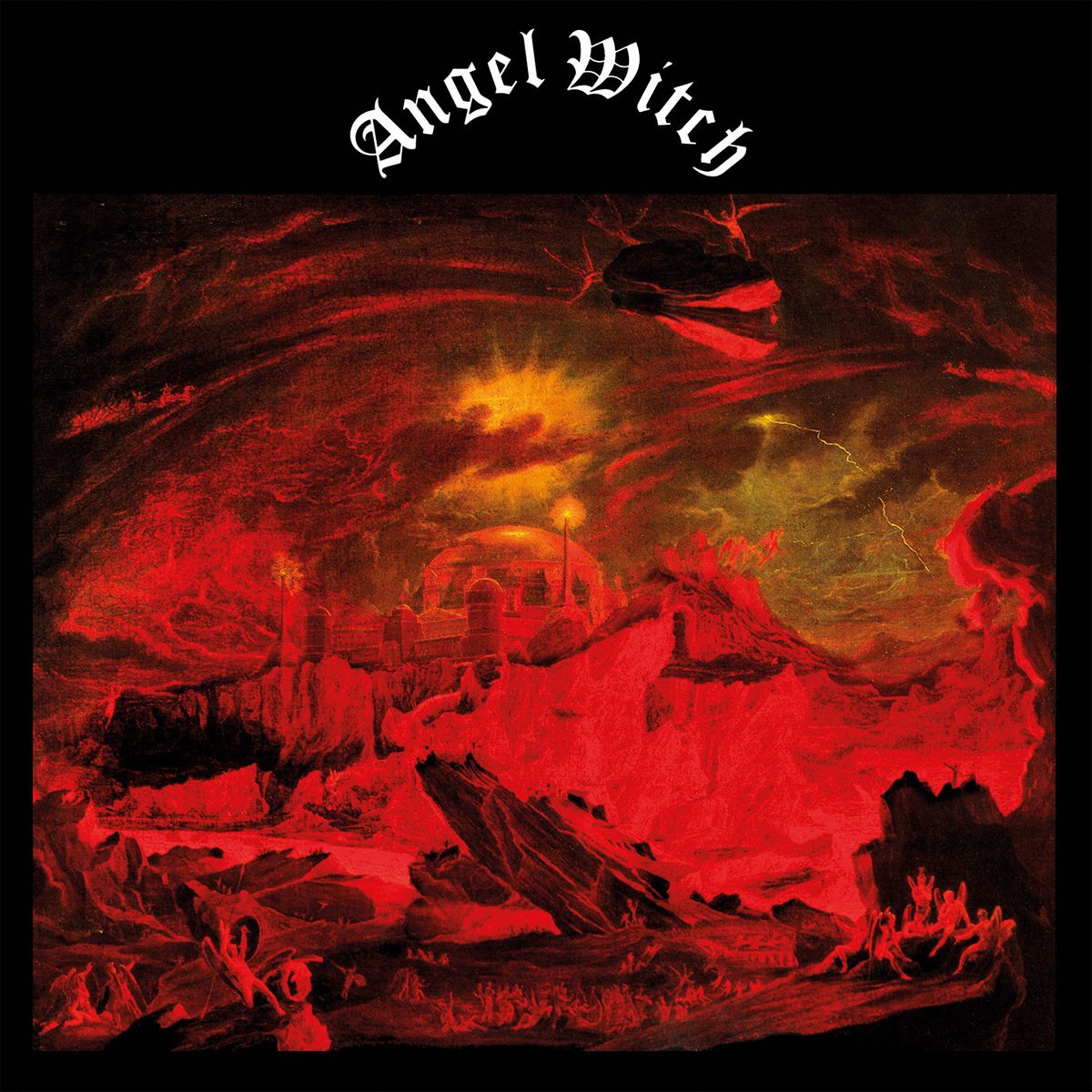
The London trio that made one album for Bronze in 1980 and came apart soon afterwards, before the career the record deserved could begin, was Angel Witch, and its debut holds "Angel Witch", "Atlantis", "White Witch" and "Sorcerers", dark riffs from Kevin Heybourne at a time when most of the British wave sang about motorbikes and nights out. One of the very few British wave debuts without a weak side.
13. Omen, Battle Cry (1984)
The Los Angeles quartet built around the guitarist Kenny Powell and the singer J.D. Kimball, which pressed its first album through Metal Blade in 1984, was Omen, and on Battle Cry the riffs of "Death Rider", "The Axeman" and "Die by the Blade" come down like a portcullis, iron bars dropping into stone. Kimball's voice sits low and hard where most American singers of 1984 were reaching for the ceiling, and Powell's riffs do the work keyboards did in other bands. The cleanest statement of American epic heavy metal outside Kansas.
14. Armored Saint, Symbol of Salvation (1991)
Released by Metal Blade in 1991 with Dave Jerden producing, Symbol of Salvation was completed after the guitarist Dave Prichard died of leukaemia in February 1990, and riffs he wrote are on it. John Bush sings "Reign of Fire", "Last Train Home" and the title track with the rasp of a man who has shouted over louder bands than this one, and Armored Saint made the album of its life just as grunge was clearing the major label racks of everything like it. Too late for the eighties and too early for the revival, it was a record without a market. It has outlived both.
15. Warlock, Triumph and Agony (1987)
The Düsseldorf band that took its singer Doro Pesch to New York, rebuilt itself around her with American players and came back with its biggest record, released by Vertigo in 1987, was Warlock, and Triumph and Agony carries "All We Are", "Für Immer" and "East Meets West". It was the last album under the Warlock name. Pesch carries the whole record without once sounding as if she is asking permission. "All We Are" is still sung back at her.
16. In Solitude, The World. The Flesh. The Devil. (2011)
The youngest scion of Mercyful Fate to make a great record, a Swedish band formed in 2002, nearly two decades after Melissa came out, is In Solitude, and The World. The Flesh. The Devil., released by Metal Blade in 2011, sounds nothing like a tribute act, with "To Her Darkness" and "On Burning Paths" winding through the old occult menace and adding a melancholy of their own. The band ended in 2015. The record answers anyone who says the revival only copied.
Near misses, and what kept each one out
The Number of the Beast has the bigger songs and Iron Maiden's first British number one, and it loses to Powerslave on the strength of its second side. British Steel is the better introduction to Judas Priest and the weaker album. Holy Diver is the finest thing Dio made away from Sabbath, and it sits just below Heaven and Hell because the riffs on the older record are Iommi's.
Rising and Machine Head stand on the border with hard rock and keep a foot over it. Melissa gives way to its successor and Ace of Spades to its predecessor. Crystal Logic missed by a single place and on another day would take Omen's. Blackout took Scorpions into the American top ten in 1982 and stays out because its best songs lean towards the radio. Lightning to the Nations taught Metallica more than it ever taught the charts. The single greatest songs are a separate quarrel, and they do not always come from the greatest records.
Several of the sixteen later fathered genres with names of their own, Overkill for thrash, Don't Break the Oath for black metal's theatre and Painkiller for the German speed bands of the nineties, and the subgenre map traces where each of those roads split off.
Start with Paranoid. Every place after it is open to argument. The first one is not.
