
And a river went out of Eden to water the garden; and from thence it was parted, and became into four heads.Genesis 2:10, King James Version
The heavy metal subgenres number somewhere near twenty on a strict count and well past fifty on a generous one, and every last one of them, the fastest and the slowest, the most theatrical and the most austere, came away from a parent style assembled in barely a decade, between the first Black Sabbath album in February 1970 and the first rush of young British bands in 1980. Nothing was invented. Everything was cut.
A diamond cleaver will study a rough stone for days before touching it, then score a shallow groove along its grain, set a steel blade in the groove and strike it once with a mallet, and the stone splits clean along a plane that had been inside it since the day it formed. Heavy metal came apart the same way. The lines of the break were already running through the records of the seventies: tempo, weight, the voice, the subject of the song and the show on the stage.
The Canadian anthropologist who carried a camera through the metal scenes of several continents for the 2005 film Metal: A Headbanger's Journey was Sam Dunn, and the genealogy chart he drew for it, a spread of some two dozen branches fanning out from a trunk of founders, started arguments among fans that have never really stopped. People still fight over its borders. That is what a map is for.
The chronology, decade by decade, belongs to fifty years of the riff. The fractures keep an order of their own, and it is not the order of the calendar.
How many heavy metal subgenres there are, and who keeps the count
Nobody keeps an official list, and the places a fan might look disagree by design. Metal Archives, the volunteer encyclopaedia of bands online since 2002, lets every entry carry its genre as free text, so that one band is filed as heavy metal and its nearest neighbour as heavy metal with power and folk influences, and the number of distinct descriptions on the site runs far past anything a single chart could hold.
Record shops and labels needed something blunter, and they sorted the music the way a railway hump yard sorts wagons, each new band shoved over the crest by a press release and left to roll down under its own weight until it slammed into the buffers of a siding marked speed, power, doom or prog, while the clerk throwing the points never once looked inside the wagon. The sidings multiplied in the eighties. They have multiplied ever since.
A strict count keeps only the styles that changed the music itself, a rhythm, a tuning, a way of using the voice, and leaves out the ones that changed only the clothes or the lyric sheet. A loose count takes in every hyphenated compound the underground has ever printed on a flyer. Both are honest. They simply measure different things.
The five lines are worth naming, because almost every split of the next forty years ran along one of them. Tempo, meaning how fast the riff runs. Weight, meaning how low it is tuned and how hard it lands. The voice, clean or harsh or somewhere in the wreckage between. The subject, from the open road to Tolkien to the Book of Revelation. And the stage, meaning what the band wears and what it sets on fire. Most styles moved on two lines at once.
Speed, the first fracture
Tempo broke first, and it broke in three countries inside four years. Motörhead had shown in March 1979, with Overkill, how far past the old limit a riff could be driven without falling to pieces, and the young bands listening took that record as a starting line rather than a finish.
The quintet from Solingen that opened Restless and Wild in 1982 with a track called "Fast as a Shark", Stefan Kaufmann's double kick drums running under the riff like a conveyor feeding a stamping press, was Accept, and in the reckoning of most chroniclers that song is where speed metal stops being a faster kind of heavy metal and becomes a kind of its own.

The Ottawa trio whose drummer sang every word from behind his kit, and whose debut Heavy Metal Maniac came out on the Californian label Shrapnel in 1983, billed itself as Exciter, and on that record the riffs run like a typewriter hammering out a ransom note, every key driven through the ribbon and the paper into the roller, one eighth note after another until the tape ran out. Speed metal had a name, a label and a sound. It kept the three together for a very short time.
The teenagers of the San Francisco Bay Area and the Los Angeles suburbs took the Motörhead and British wave records apart like a stolen car stripped in a lock-up, keeping the gearbox and the tyres and dumping the chrome in the canal, and what they kept was pace, precision and a snarl, while what went into the water was the clean high voice and the chorus built for a crowd to sing back. By July 1983, when Metallica released Kill 'Em All on Megaforce, that was thrash. Thrash has a history of its own, and it runs on a separate track.
What was left behind still carries the older name. Speed metal in the narrow sense, Agent Steel, Anvil's Metal on Metal of 1982 and the many European bands who followed Accept, kept the clean singer and the heavy metal chorus and simply ran them at double pace, and it survives today as a branch that thrash never fully absorbed.
They took the records apart like a stolen car stripped in a lock-up, keeping the gearbox and dumping the chrome in the canal.
The slow line and the dark line
Weight broke in the opposite direction. The bands who heard in the slowest Black Sabbath songs a whole language, and not a change of pace between the fast ones, dragged the riff down until each chord seemed to take a full bar to land, and between Witchfinder General's Death Penalty in 1982, Saint Vitus's first album for SST in 1984 and Candlemass's Epicus Doomicus Metallicus in 1986, doom metal had gathered its own congregation and written its own hymns. It never climbed back up to the old tempo. It never wanted to.

The Copenhagen quintet with a falsetto singer in black and white face paint and a microphone stand made from a human femur and tibia crossed like the bones under a skull went by the name Mercyful Fate, and Melissa, released on Roadrunner in 1983, set long occult stories over riffs that could have come off any record of the British wave. The music was heavy metal. The subject had split.
That is the line fans now call dark heavy metal, and it has never needed to change tempo or tuning to earn the name. It changes what the song is about and what the singer looks like while singing it. The heresy lives in the lyric sheet and on the face, and the guitars underneath stay loyal to 1980.
The Newcastle trio that opened the next split without meaning to was Venom, and its second album, Black Metal, in 1982, lent its title to a style that Bathory in Sweden and Hellhammer in Switzerland pushed far harsher within two years. Death metal broke away from thrash rather than from heavy metal, once Possessed had put a song called "Death Metal" on Seven Churches in 1985 and Death had made Scream Bloody Gore in 1987. Venom itself never went where either style went.
In both of those styles the clean singer went the way of a stained-glass window in a riot, kicked in from the street with the lead still hanging in the frame, and a harsh voice climbed through the hole where he had stood. Everything else could be argued about. The voice could not. Both have their own histories, and both started there.
Clean voices, long swords
The subject line split again in the other direction, towards myth, and it took the clean voice with it. Slower than speed metal and longer than anything on the radio, the records that came to be called epic heavy metal were about swords, sorcery, lost kingdoms and doomed heroes, and they were built to run six, eight and ten minutes a song.
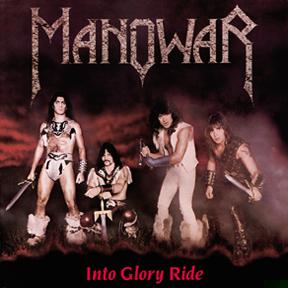
The Ventura quartet whose singer sounded like a rusted portcullis being winched up by hand recorded King of the Dead for Enigma in 1984 under a name borrowed from a mountain pass in Tolkien's Mordor, Cirith Ungol, and it stands with Manowar's Into Glory Ride of 1983 and Manilla Road's Crystal Logic of the same year as a founding record of the branch. None of the three sold much. All three are still in print.
Across the United States a harder and faster variant grew alongside. What Americans later called US power metal, with Jag Panzer's Ample Destruction in 1984 and Riot's Thundersteel in 1988 among its landmarks, split on tempo and voice at the same time, a singer at full stretch over riffs taken straight from speed metal. It shares a name with the European style and very little else.

The Hamburg five who had shouted their way through a speed metal debut in 1985 went looking for a real singer, found an eighteen-year-old called Michael Kiske with an operatic range, handed their founding guitarist Kai Hansen back to his guitar full time and, in 1987 on Keeper of the Seven Keys Part I, turned into Helloween, the band from whose lineage European power metal descends more or less directly. The chorus was the weapon. It was raised over double kick drums like a cavalry pennant over broken ground, and a whole continent of bands followed it.
Power metal has grown into a subject of its own since then, with its own shelf and its own festivals. Melodic heavy metal, as fans and labels use the term now, is the ground left between the branches: the twin guitars and the clean voice of the British wave, a chorus with some of power metal's lift, and none of the harshness of the extreme lines.
| Branch | The line it split on | Records that mark the break | Years |
|---|---|---|---|
| Speed metal | Tempo | Accept, "Fast as a Shark"; Exciter, Heavy Metal Maniac | 1982 to 1983 |
| Thrash metal | Tempo and voice | Metallica, Kill 'Em All | 1983 |
| Doom metal | Weight | Witchfinder General, Death Penalty; Candlemass, Epicus Doomicus Metallicus | 1982 to 1986 |
| Dark heavy metal | Subject and stage | Mercyful Fate, Melissa | 1983 |
| Black metal | Voice and subject | Venom, Black Metal; Bathory, Bathory | 1982 to 1984 |
| Epic heavy metal | Subject and length | Manowar, Into Glory Ride; Cirith Ungol, King of the Dead | 1983 to 1984 |
| Neoclassical and instrumental | Technique | Yngwie Malmsteen, Rising Force | 1984 |
| Progressive metal | Structure | Fates Warning, Awaken the Guardian; Queensrÿche, Operation: Mindcrime | 1986 to 1988 |
| European power metal | Voice and chorus | Helloween, Keeper of the Seven Keys Part I | 1987 |
| Death metal | Voice | Possessed, Seven Churches; Death, Scream Bloody Gore | 1985 to 1987 |
Fingers, clocks and concept albums
The Swedish guitarist who landed in Los Angeles in February 1983 at nineteen, after a demo tape reached Mike Varney through a column in Guitar Player and Varney flew him over, was Yngwie Malmsteen. Yngwie Malmsteen's Rising Force, a mostly instrumental debut for Polydor in 1984, fired arpeggios off the harmonic minor scale like rounds through a Gatling gun, the barrels turning faster than the ear could follow and every round landing where it was aimed.
Varney's label built a whole shelf on that approach, with Tony MacAlpine, Vinnie Moore and the partnership of Marty Friedman and Jason Becker in Cacophony, whose 1987 album went out under the blunt title Speed Metal Symphony. In that corner of the family the guitar was the singer. Nobody needed a microphone.
Progressive rock had been in the family from the start. Rush gave the whole first side of 2112 in 1976 to a single suite of about twenty minutes, and the young Americans who grew up on that record and on the British wave at the same time carried its long forms and its odd time signatures into heavy metal, most completely on Fates Warning's Awaken the Guardian, released on Metal Blade in 1986.

The Bellevue quintet that told a single continuous story across fifteen tracks in May 1988 was Queensrÿche, and Operation: Mindcrime, released on EMI, runs like a bomb with a clock strapped to its casing, the plot wired from one song into the next and the tension ticking under every chorus until the last track goes off. Dream Theater released When Dream and Day Unite the following year. Progressive metal had its own shelf by the end of the decade.
Greasepaint, guillotines and the southern road
The stage was the last line, and it had been cut before most of the others. The Detroit-born singer who had himself hanged on stage every night of the tour behind Killer in 1971 and 1972, and who moved on to a guillotine for the Billion Dollar Babies tour in 1973, was Alice Cooper. Shock rock, a show of executions, snakes and stage blood built around songs closer to hard rock than to metal, taught every later band that a stage could carry as much of the message as the amplifiers.
Kiss brought greasepaint in 1974. The Los Angeles band that hurled raw meat into the front rows and strapped a circular saw to its singer's codpiece arrived in 1984 as W.A.S.P., and it took the shock line as far into heavy metal as it ever went. The costume line ran the other way, into the lipstick and hairspray of Hollywood, and glam has a story of its own.
Southern heavy metal is a younger split and a blurrier one. Pantera from Texas, with Cowboys from Hell in 1990, Corrosion of Conformity with Deliverance in 1994 and Down with NOLA in 1995 took the Sabbath riff back into the heat it had come from, soaked it in whiskey and swamp water and let it swing again. It is the one split in the whole family that ran backwards, towards the blues rather than away from it.
The nineties brought a third wave of splits, most of them along a line nobody had counted: texture. Paradise Lost named an album Gothic in 1991 and gave a style its name, Skyclad brought a guest fiddle into its 1991 debut, Therion put a choir and an orchestra at the centre of Theli in 1996, and the industrial bands bolted drum machines to the riff. Every one of them is heavy metal by descent. Few of them are heavy metal by sound.
The one split in the whole family that ran backwards, towards the blues rather than away from it.
The trunk that refused to split
While the branches went off in every direction, a large part of the audience never moved at all. The music that stayed on the trunk, twin guitars, a clean high singer, the gallop and the march and the leather, came to be called traditional heavy metal, or trad metal in shorter conversation, and the name records a refusal rather than a style: heavy metal as it stood before the splits, played by people who saw no reason to cut anything away.
That refusal has its own history of revivals, from the Swedish bands of 1997 to the young groups of the 2010s who play the old rules without irony. It also sharpens the question every fan eventually asks about the far ends of the family. Nu metal, metalcore and the styles built on them carry the word metal and sit four or five splits away from Paranoid, and whether they count depends on which line a listener treats as the one that matters.
A subgenre is a complaint that won. Speed metal said the parent was too slow, doom said it was too fast, prog said it was too simple, and every one of them ended up with a rack of its own in the shop and a new generation complaining about it.
Declan Rourke, KaosMetal
The honest answer is that the schism was never total. A thrash fan, a doom fan and a power metal fan still own at least one record in common, and it was made before 1981. The sound divided, but the look held together far longer, the denim and the patches, the logos, the sleeves painted by the same handful of artists, and that shared kit is the whole subject of the culture around the music.
The sound divided. The jacket never did.
