
A riff is judged on one thing, and cleverness is not it. The question is whether the body has already moved by the time the mind is asked for an opinion.
That is the test a doctor runs with a rubber hammer on the soft spot under the kneecap. He taps the tendon, the leg swings out, and the man on the couch has no vote in the matter; he can watch the hammer coming, brace himself, and the leg goes anyway. The greatest metal riffs work at precisely that level of consent. Each of them is three or four seconds of a plectrum tearing across wound strings, and each of them has landed its verdict before anybody in the room has decided anything.
The parts they are built from are few, and they are laid out one at a time in the chapter above. The other half of the trade is what happens when a player stops naming the parts and starts hitting people with them.
The greatest metal riffs that carry the tune
The guitarist who wrote the most copied four bars in the music on two strings and never needed a third was Tony Iommi, and "Paranoid", cut in a rush at Island Studios in a single day in June 1970, runs a single bar of hammered eighths at a tempo nearer punk than blues, with a vocal melody sitting above it that never once doubles the guitar. A beginner can hold the shape inside an hour. Nobody has improved on it since.
The Stourbridge four who wrote a seven minute song on a debut album pressed to a thousand white label copies were Diamond Head, and the opening of "Am I Evil?", from Lightning to the Nations in 1980, is a funeral march in octaves that takes its time arriving, holds the same figure through four repeats, and gives a young Metallica the template for half its early catalogue. Slow is a decision, not a limit. The riff is a tune anybody can hum, which is why a generation of drinkers has hummed it.
Not every one of them shouts. The guitarist who wrote the most durable hook of his career with almost no distortion anywhere on it was Adrian Smith, and Iron Maiden opened Somewhere in Time in 1986 with it: "Wasted Years" runs a clean arpeggio across the top strings, a figure so exposed that one sloppy finger would sink the whole song. It carries a stadium anyway. Weight is not the same thing as gain.
A riff that has to be argued for has already lost the argument.
The riffs that carry the clock
Some riffs are not a melody at all. They are the timekeeping, moved off the drum kit and onto a guitar, and the earliest great one belongs to Deep Purple: on "Highway Star", the opening track of Machine Head in March 1972, Ritchie Blackmore hammers one note in unbroken eighths while the bass walks underneath and changes the harmony around him, so that the guitar sounds like a needle stuck on a gauge and the movement all comes from below. Every stroke of it is the same. Everything else in the song moves.
The drummer who put two bass drums under a three chord riff in 1979 and set the tempo the whole of thrash would later work at was Phil Taylor, and Motörhead built "Overkill" on top of him, a riff that does not so much repeat as refuse to stop, ending twice and starting again both times as if the band had been hauled back to the kit by the collar. The trick is in the mismatch. The guitar is playing rock and roll and the drums have already left for another decade.
Velocity is the other way to carry the clock, and the practitioner who made an entire style out of a wrist was James Hetfield. The title track of Master of Puppets, released by Elektra in March 1986, runs its main figure in chromatic steps down from the open low string, every note struck with a downstroke at a tempo that grinds the point off a plectrum inside two minutes. Alternate picking would be easier. It would also be a different song.
The riffs that carry the weight
Weight in a riff is mostly silence. The German band that understood this earlier than most was Accept, and the title track of Balls to the Wall, released by RCA in December 1983, is three notes and a hole, a slow figure that breaks the bar in half and leaves the second half open for a hall to shout into. The riff is doing half the work. The room is doing the rest.
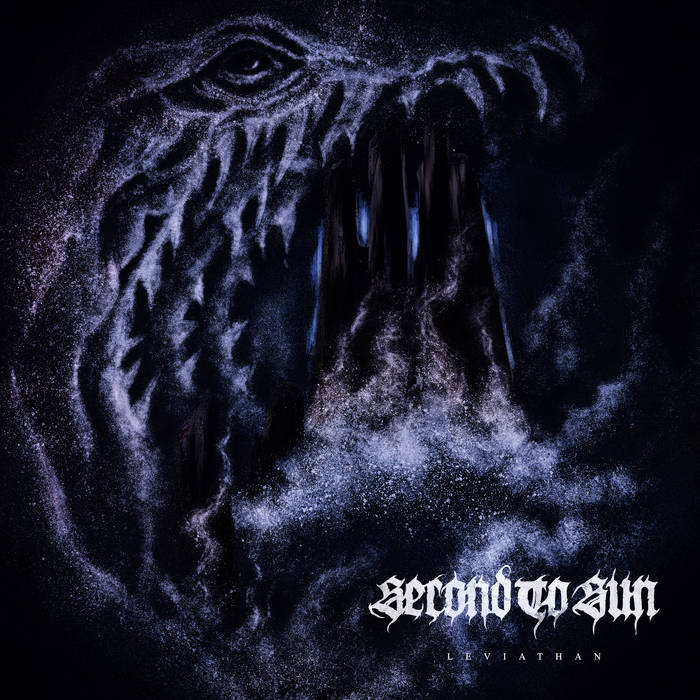
Thirty four years later the same trade was still open. The Atlanta band that took the marching foot off the riff and put a swell under it instead was Mastodon, and "Blood and Thunder", which opens Leviathan in 2004, rolls rather than chugs, a figure that lifts and drops across the bar like a deck under a following sea and never lands twice in quite the same place. Nearly every riff named here leans on the heel of the picking hand, and that grip has a trade of its own, set out under palm muting.
The riffs that carry an argument
A few riffs refuse to stay still long enough to be a hook. The guitarist who had been sacked out of the biggest band of the decade before it had a record in the shops was Dave Mustaine, dismissed in April 1983. "Holy Wars... The Punishment Due", the opening track of Megadeth's Rust in Peace in September 1990, changes its own material three times before the first verse, drops into a separate slow section halfway through and comes back out at speed, so that the figure a listener hums afterwards is a composite of four things that never occur in the same minute. Most riffs are a statement. This one is a case being made.
The pair who answered it that same autumn were Glenn Tipton and K.K. Downing. After the drum intro that opens Painkiller, released by Columbia in September 1990, Judas Priest bring in a chromatic figure played in unison by both guitars and the bass, with no harmony anywhere in it, a single line delivered by three instruments at once so that the attack lands like a rail dropped flat onto concrete. Nothing about it is subtle. It was written by men in their late thirties who had been told they were finished.
| Riff | Band | Year | The trick |
|---|---|---|---|
| Paranoid | Black Sabbath | 1970 | One bar, two strings, a vocal that refuses to double it |
| Highway Star | Deep Purple | 1972 | One repeated note while the bass moves the harmony |
| Overkill | Motörhead | 1979 | Two bass drums under a rock and roll riff |
| Am I Evil? | Diamond Head | 1980 | A march in octaves, slow enough to be hummed |
| Balls to the Wall | Accept | 1983 | Three notes and a gap left for the hall |
| Master of Puppets | Metallica | 1986 | Chromatic descent, every note struck downward |
| Wasted Years | Iron Maiden | 1986 | A clean arpeggio carrying a stadium song |
| Holy Wars... The Punishment Due | Megadeth | 1990 | A riff that argues instead of repeating |
| Painkiller | Judas Priest | 1990 | Two guitars and a bass on one chromatic line |
| Blood and Thunder | Mastodon | 2004 | A rolling figure that never lands twice the same |
By common consent the canon has hardly moved since the nineties, and the reason is not nostalgia. It is that a riff only enters it by doing something no earlier riff had done to a listener's spine, and the obvious moves were taken early: the one note drone, the chromatic walk, the octave march, the silence. What is left to a young band is the rolling figure, the odd bar length and the tuning nobody has slackened yet.
Every riff named here can be played badly by a fifteen year old inside a month, which is not a complaint against any of them. It is the whole point. The hardest figure in the music to write is the one that sounds as though it had been lying there all along, waiting for somebody to pick it up.

