
Late in 1975, during the sessions for Sad Wings of Destiny, the Birmingham five recorded a song Joan Baez had written about an old lover's telephone call, left it off the album and cut it again two years later for Sin After Sin, and by then the band that had fitted a folk singer's memoir with twin guitars and a siren was Judas Priest. Heavy metal cover songs start there. Most of them are theft, and the good ones are open theft.
In the age of sail a merchantman taken at sea was seldom sunk. A prize crew rowed across, the owners' men were pushed below hatches or over the side into their own boat, the colours came down and another flag went up, and the ship was sailed into the captor's harbour, condemned by a prize court and, if she was quick enough, taken into the captor's navy under a new name, where she often fought harder than she had ever traded. Same hull, same timbers, other guns.
That is the test for every version below. A cover that only copies the original is a ship towed into port and left to rot at the quay. A cover worth keeping works the guns harder than the owners ever did.
Heavy metal cover songs that took full ownership
The 1975 take of "Diamonds and Rust" surfaced only in February 1978, on The Best of Judas Priest, a compilation the band's first label, Gull, put together from its two albums after the band had left for CBS. The 1977 recording is the one that counts. Priest strips the acoustic lilt off Baez's melody, stands the verses on a marching riff and hands the chorus to Rob Halford at a pitch no folk club ever heard, and, in Halford's own account, it opened the door for the band on American radio. Plenty of listeners still take it for Priest's own. That is a song taken whole.
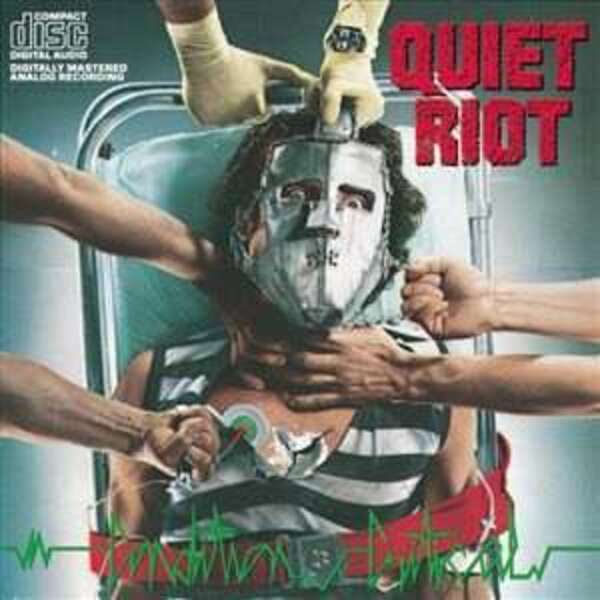
The Los Angeles quartet that carried two Slade singles into the American charts and made its fortune on the first of them was Quiet Riot, and the story most often told is that Kevin DuBrow did not want to record "Cum On Feel the Noize" at all and sang it in the hope of wrecking the take. The take survived him. Slade had never broken America, so for most of the buyers the song arrived with no owner attached. On Condition Critical in 1984 the band tried the same move with "Mama Weer All Crazee Now" and got a much smaller return, stalling at 51 on the Hot 100. A trick that depends on surprise works once.
The New York five who took a girl group's teenage tragedy of 1964 and played it in full make-up at the tempo of a street fight were Twisted Sister. "Leader of the Pack", a number one for the Shangri-Las, opened Come Out and Play, released by Atlantic in November 1985, and climbed no higher than 53 on the Hot 100 and 47 in Britain, smaller than the joke deserved. The joke was obvious. The playing under it was not a joke, and the record still sold less than the one before.
A cover that only copies the original is a ship towed into port and left to rot at the quay.
B-sides, where the record collection shows
The East London five who filled the backs of their singles with the records they had grown up on were Iron Maiden, and the list reads like the inside of a sixth former's bedroom. Jethro Tull's "Cross-Eyed Mary" sat behind "The Trooper" in 1983 and picked up more American radio play than most of the band's own songs. Nektar's "King of Twilight" backed "Aces High" in 1984, Golden Earring's "Kill Me Ce Soir" and Stray's "All in Your Mind" went behind "Holy Smoke" in 1990, and the whole set was gathered in November 2002 as Best of the 'B' Sides. None of it was chosen to sell. All of it was chosen to confess.
The Bay Area four who took a traditional Irish ballad that Thin Lizzy had already claimed and electrified in 1972 and claimed it a second time were Metallica. Their "Whiskey in the Jar", on Garage Inc. in 1998, won the 2000 Grammy for Best Hard Rock Performance, and it keeps Lizzy's twin guitar figure while hammering the tune flat under Lars Ulrich's drums. A song taken twice is still a song taken. Nobody has returned it.
Sometimes the original writer comes looking for what was taken. The Los Angeles band that rewrote the words of Nancy Sinatra's 1966 hit on its 1985 debut and kept Lee Hazlewood's melody underneath was Megadeth, and a decade later the songwriter noticed. The song vanished from pressings for years, came back in 2002 with bleeps over the rewritten lines and returned in 2018 sung with the original words. Dave Mustaine's liner notes in 2002 pointed out that Hazlewood had banked the royalties for close to ten years before he objected. The words went back to their author. The tune stayed exactly where it was.
Metal songs taken the other way
In the Portuguese bullring nobody kills the bull. Its horns are sheathed in leather, and at the end of the fight eight men on foot walk out to meet its charge with bare hands, the man in the lead taking the full weight of the head in his chest while the others throw themselves onto the neck and the tail until the animal stands still. The charge is all there. Only the points are covered.

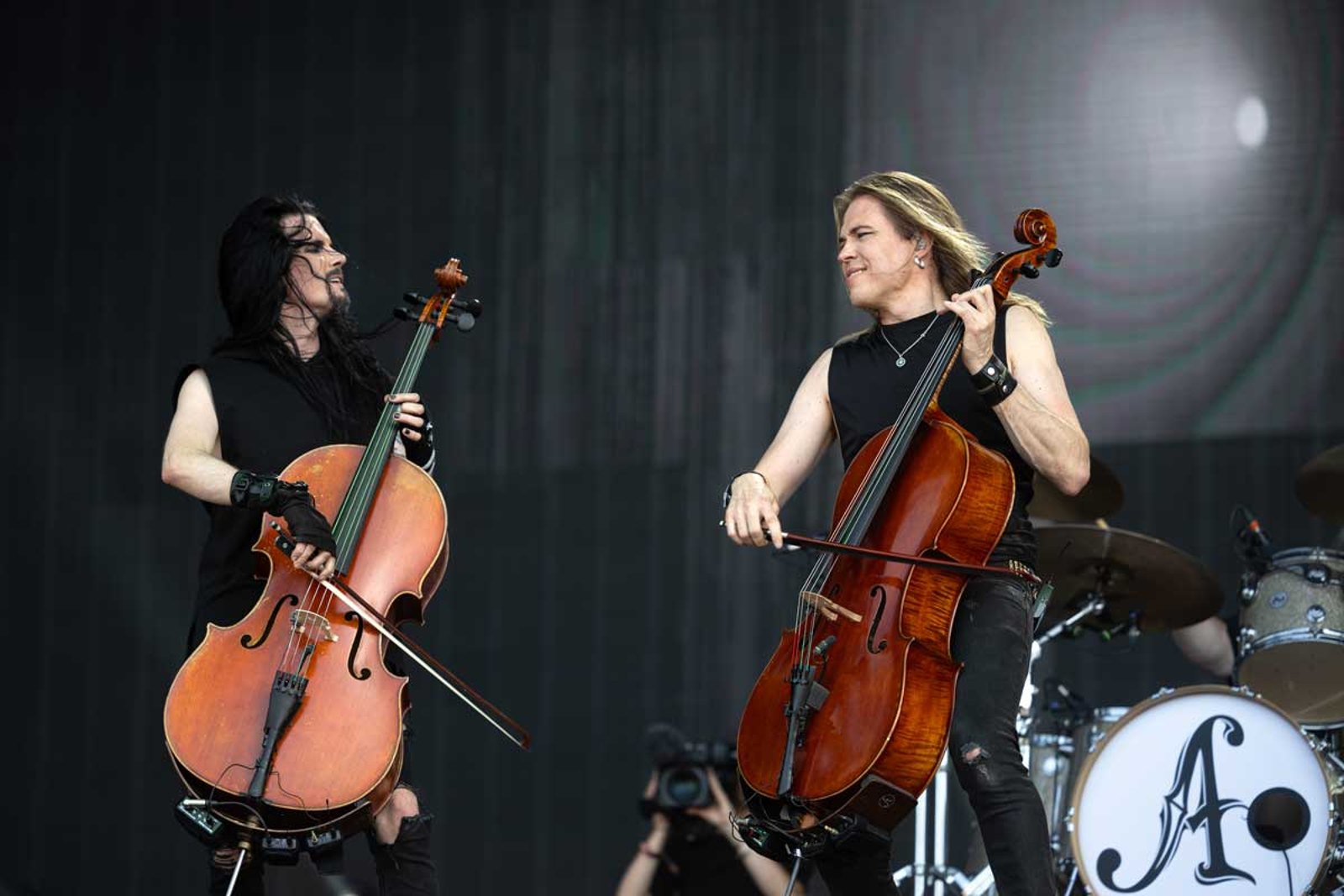
The four cellists out of the Sibelius Academy in Helsinki who played eight Metallica songs without a guitar, a drum or a voice were Apocalyptica, and Plays Metallica by Four Cellos, released in 1996, keeps every riff at its full charge and sheathes only the points. They had not expected anybody to buy it. A label employee who had heard them play the songs live in 1995 talked them into the studio. "Enter Sandman" on four bowed strings still knocks the listener flat.
Other versions sheathed the whole animal. In January 1997 the crooner who had taken Little Richard and Fats Domino songs up the pop chart in the fifties released an album of hard rock and metal songs arranged for a big band, In a Metal Mood: No More Mr. Nice Guy, and walked onto the American Music Awards in a leather vest and a dog collar beside Alice Cooper, and that singer was Pat Boone. Trinity Broadcasting took his weekly gospel programme off the air after thousands of complaints. A month later its own viewers voted for his return.
Four years on the singer who put a Slayer song at the centre of an album of songs written by men and sung back from a woman's side was Tori Amos. Her "Raining Blood", on Strange Little Girls in 2001, trades Slayer's guitars for piano and a hush, and keeps every bit of the menace. By her own account, a bassist from Beck's band had played her Reign in Blood first, and his name was Justin Meldal-Johnsen. Nothing in it is louder than a piano. Nothing in it is gentler than the original.
| Song | Written for | Taken by | Year |
|---|---|---|---|
| "Diamonds and Rust" | Joan Baez | Judas Priest | 1977 |
| "Cum On Feel the Noize" | Slade | Quiet Riot | 1983 |
| "Cross-Eyed Mary" | Jethro Tull | Iron Maiden | 1983 |
| "These Boots" | Nancy Sinatra | Megadeth | 1985 |
| "Leader of the Pack" | The Shangri-Las | Twisted Sister | 1985 |
| "Enter Sandman" | Metallica | Apocalyptica | 1996 |
| "Whiskey in the Jar" | Traditional, via Thin Lizzy | Metallica | 1998 |
| "Raining Blood" | Slayer | Tori Amos | 2001 |
What a borrowed song gives away
The covers that last share one habit. They do not flatter the original, they rebuild it for a different room, and they leave the band's own fingerprints all over it, which is why "Diamonds and Rust" is on any honest reading a Judas Priest song now and why nobody hearing four cellos mistakes them for Metallica. Heresy of that kind is the whole art, and the covers that stayed faithful to the letter are the ones nobody plays. Copies disappear.
The albums that carried these songs, weighed against fifty years of the music, belong to that part of the story, and hardly any of them made the cut on the strength of a borrowed track. A cover is a footnote to a record, however loud.
The originals come first on any shelf, and for heavy metal's own they start with the heavy metal albums that define the genre. Every band above learned on somebody else's songs. The best of them made those songs earn their keep.
