
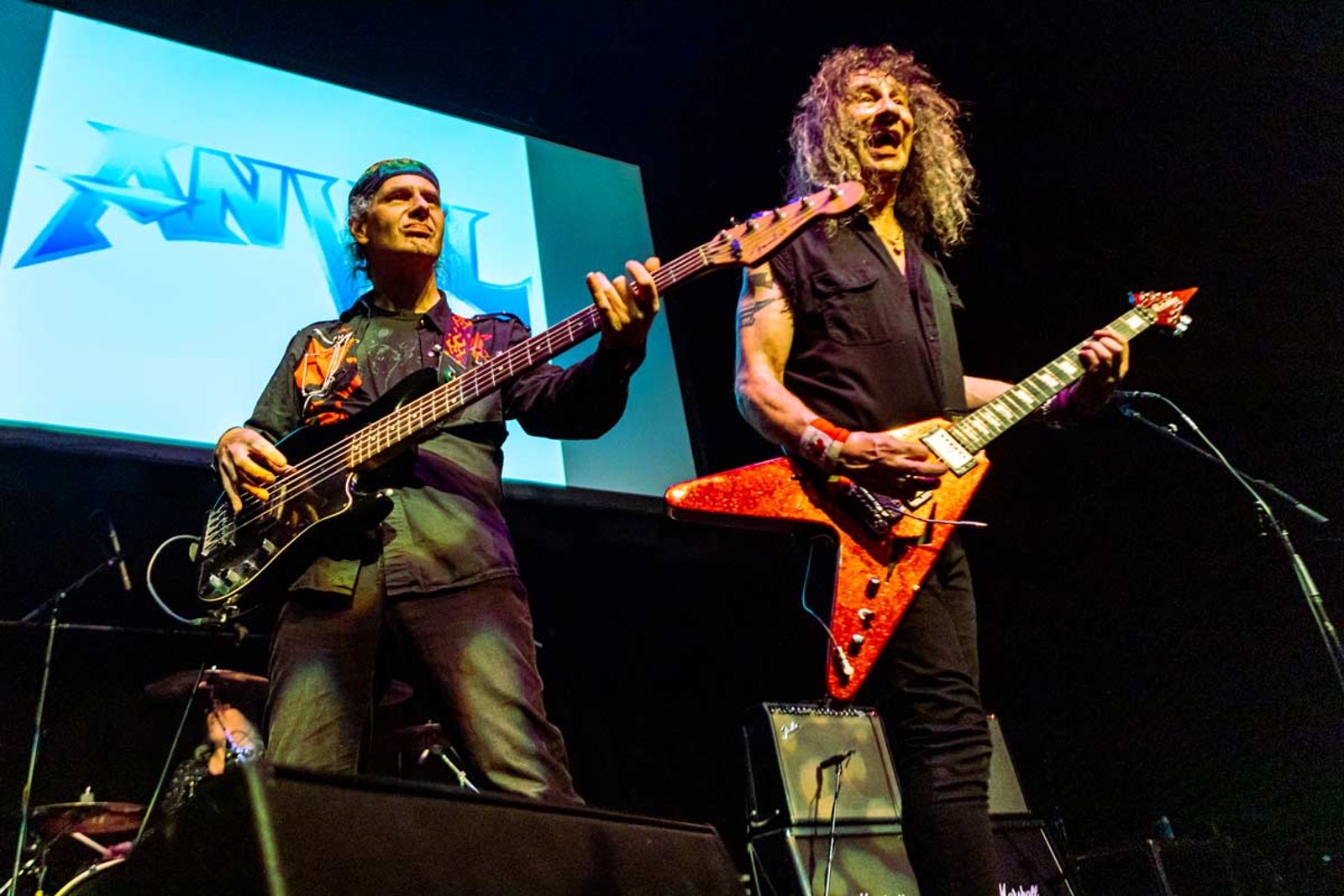
In January 2008 a film about a Canadian band that had not troubled a chart since 1983 was shown at a festival in Utah, and within eighteen months that band was playing to more people than it had seen in twenty years. Nothing on the record had changed. The songs were the same songs, the line-up was the same two men it had been since school, and the only new element in the whole arrangement was a camera that had been left running for three years.
Lay a sheet of paper over a memorial brass set into a church floor, hold it flat and work a block of wax across it with the side of your hand, and the figure comes up out of the stone without a single line being invented: the knight, the hound at his feet, the lettering round the edge, and also the crack where four centuries of boots have worn the metal through. The rubbing flatters nothing. A heavy metal music documentary that is any good works the same way, and the wear is the part nobody can fake.
That is the whole difference between these films and the features beside them. A drama invents a band, a budget and an ending, and usually invents all three badly, while a camera left in the room takes what is there: the van, the unpaid invoice and the forty seven people who turned up. Most of these films cost almost nothing. Several were made by people the bands had known for years.
The camera nobody had asked for
The form starts in a car park with borrowed equipment. The two men who talked Metrovision, the public access station where Krulik worked, out of a video camera, drove to the Capital Centre outside Washington on 31 May 1986 for a Judas Priest and Dokken show and simply pointed it at whoever would talk were Jeff Krulik and John Heyn, and the seventeen minutes they came back with have outlived nearly every professionally financed rock film of that decade. They shot for one afternoon. They had no release, no rights and no plan.
A hide pitched at the edge of a marsh works because nothing in it moves. Sit inside the canvas long enough and the birds that flushed at the first footfall come back to the water, and within an hour they are doing in front of the lens exactly what they do when nobody is there at all. Those seventeen minutes are a hide made out of a car park: the subjects are half cut, entirely unbothered and talking to a stranger with a camera as though the camera were furniture.
What happened to the tape is half the story. With no distributor to sell it, the film spread as dubs handed between traders until the picture had worn to a grey mush, and the pair later built a companion piece, Heavy Metal Picnic, releasing it in 2010 out of home video shot at a 1985 field party in Potomac, Maryland. The chroniclers here were amateurs. The professionals were shooting videos nobody now watches.
The heavy metal music documentary as fieldwork
Two decades later somebody brought a discipline to it. The Canadian who finished a master's degree in anthropology and then turned the whole apparatus of fieldwork onto his own record collection was Sam Dunn, and Metal: A Headbanger's Journey, made with Scot McFadyen and Jessica Joy Wise and first shown in 2005, is built like a thesis: a question, a method, a set of interviews gathered in the field and a genealogy of the subgenres drawn out as a chart.
Access is the whole currency of the form, and it is almost never bought.
That chart did more work than the film did. It went up on bedroom walls and into arguments for twenty years, and that half the objections to it are furious is the best attestation of how seriously this music takes its own borders. Dunn followed it with Global Metal in 2008, which went to Brazil, Japan, India, Indonesia, Israel and China to ask what the music does where it was not invented, and with the series Metal Evolution in 2011.
What a band lets in when it has nothing left to lose
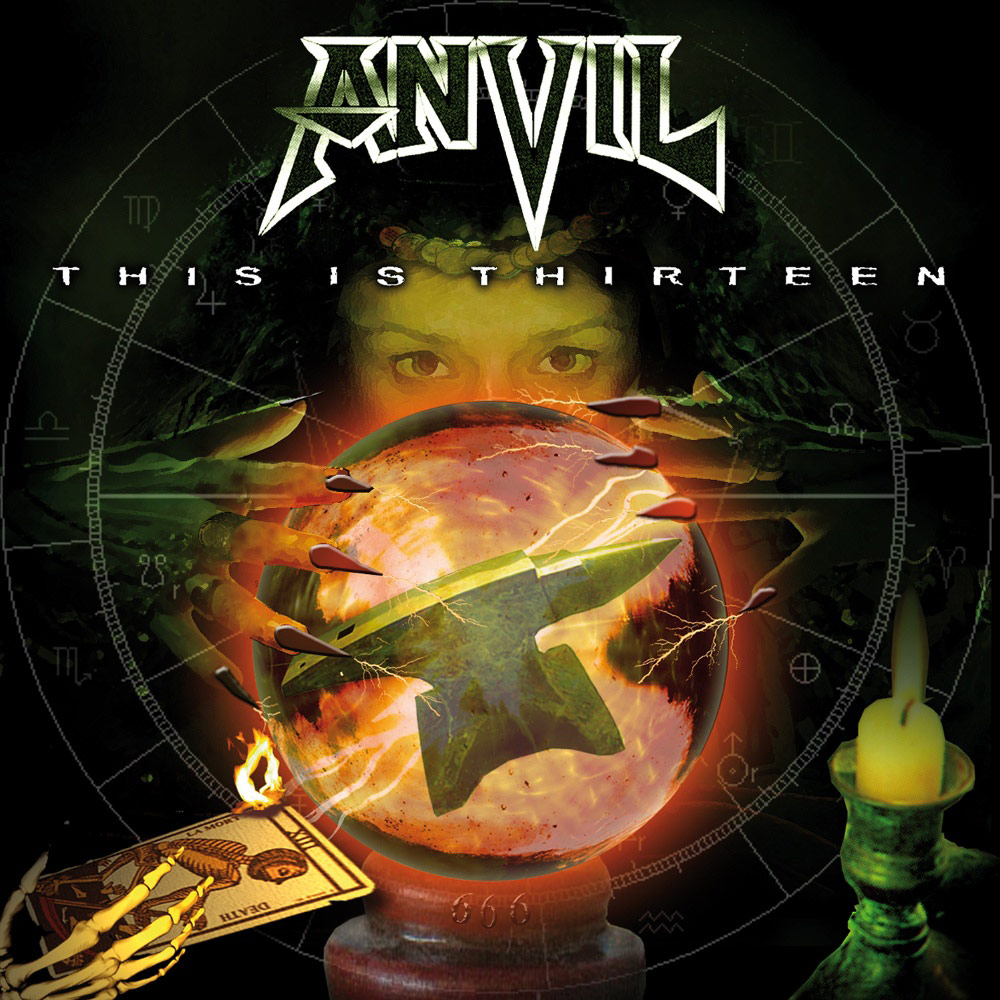
Access is the whole currency of the form, and it is almost never bought. The film-maker who had carried the band's equipment as a sixteen-year-old roadie on their 1982, 1984 and 1985 tours, and came back twenty years later with a camera and no conditions attached, was Sacha Gervasi. Anvil! The Story of Anvil follows Steve Kudlow and Robb Reiner through a catastrophic European tour, a telesales job, a kitchen argument and the making of a thirteenth album nobody had ordered. Nobody in it is performing. They had stopped expecting anyone to watch.
At the other end of the money the same thing happened by accident. The two documentary makers hired to shoot promotional footage for a record label, and who ended up with two years of tape and a film the band could have buried and did not, were Joe Berlinger and Bruce Sinofsky, and Some Kind of Monster caught Metallica in a rented barracks with a bassist walking out, a singer in rehab and a performance coach named Phil Towle drawing forty thousand dollars a month. The cameras kept running for seven hundred and fifteen days, from April 2001 into the release of the album the sessions produced in 2003. The spectacle of it is not the point. The point is that the tape kept rolling through the parts a press officer would have cut.
Both work because the subjects had lost whatever it is that makes people careful. One band had nothing left to protect and the other had so much that protecting it had become the illness, and in both cases the camera got in where an authorised biography would have been handed a line-up photograph and shown the door. The sleeves, the jackets and the logos are set out in the longer account. These films take the part nobody designed.
The ones shot where the music was dangerous
Some of these films were shot under fire. The Baghdad four who had managed a handful of concerts in a city at war, and whose rehearsal room was wrecked by a rocket in 2006, were Acrassicauda, and Heavy Metal in Baghdad, made by Suroosh Alvi and Eddy Moretti for Vice and released in 2007, follows them out of Iraq into exile in Syria, then Turkey, and finally the United States. Long hair was a risk there. The film records what that actually costs.
Other films turned into obituaries without meaning to. The director who took a crew up to the Sunset Strip in 1987 and filmed the clubs at the exact height of their confidence was Penelope Spheeris, and The Decline of Western Civilization Part II: The Metal Years, released in 1988, holds interview after interview with musicians certain that the boom would hold. Four years later the scene was finished. The film did not predict it, which is precisely why it is evidence and not argument.
| Year | Film | Made by | What it got |
|---|---|---|---|
| 1986 | Heavy Metal Parking Lot | Jeff Krulik, John Heyn | An audience talking with nothing at stake |
| 1988 | The Decline of Western Civilization Part II | Penelope Spheeris | A scene at its most confident, four years before it fell |
| 2004 | Some Kind of Monster | Joe Berlinger, Bruce Sinofsky | The biggest band in the music failing in a rented room |
| 2005 | Metal: A Headbanger's Journey | Sam Dunn, Scot McFadyen | Fieldwork, and the subgenre chart it produced |
| 2007 | Heavy Metal in Baghdad | Suroosh Alvi, Eddy Moretti | What the music costs where it is banned |
| 2008 | Anvil! The Story of Anvil | Sacha Gervasi | Persistence, with none of the flattery |
| 2008 | Until the Light Takes Us | Aaron Aites, Audrey Ewell | The Norwegian scene in its own words |
| 2022 | Dio: Dreamers Never Die | Don Argott, Demian Fenton | Sixty years of singing, told through the work |
What the camera is for
On any honest reading the form has one recurring weakness, and it is the authorised portrait. A film made with a band's approval, its manager's notes and its label's archive reaches for the triumphant montage every time, and the tour bus, the gold disc and the crowd shot from behind the drum riser have been cut together so often that they now carry no information at all. Access bought with approval is not access. It is a longer advertisement.
The practitioner who does this well stops arranging things and starts waiting, and the reward for waiting is the moment nobody would have written: a drummer refusing to speak, a guitarist crying in a kitchen, a teenager in a car park explaining exactly what the music is for. Everything else in this culture was designed by somebody, the painted monsters of the heavy metal mascots most of all. These films are the one place it is not.
