

Heavy metal's rebellion anthems almost never name the enemy, and the blank where his face should be is the whole reason they still fill halls half a century on. The adversary in these songs hangs from the rafters like a papier-mâché piñata at a children's party, a figure with a painted grin nobody could pick out of a line-up, and three thousand people take turns at it blindfold, the chorus for a stick, until the paper ribs split and the thing comes down in pieces on the floor. Nobody asks whose face it was.
The singer in eyeliner and a live snake who drew the blueprint in the spring of 1972 was Alice Cooper. Released as a single on 26 April 1972 and sitting at number one in Britain for three weeks that August, "School's Out" put a boot through every classroom blackboard in the country and kicked the summer term out into the car park, and in its whole length it names no headmaster, no school and no town. It did not have to.
The grammar does the recruiting. The verse of a rebellion anthem is sung in the singular, one kid and one grievance, and the chorus switches to the plural the moment the drums land, so that a room of strangers who came in separately, from different streets and different quarrels, walks out as a single unit sworn against an enemy it has never been introduced to. The switch is the oldest trick in the form. It has never stopped working.
Those are the rebellion themes heavy metal would keep for good: a doorway with a father standing in it, a desk with a teacher behind it, a throne, a cell, and a world vague enough to be taken on in a single chorus. The dole queue of 1980 and the crowd rising against its keepers already have their place in the full chapter on the style's subjects. The anthem is a different animal. It is built to be shouted, not read.
The rebellion themes heavy metal chose: the doorway, the desk, the throne
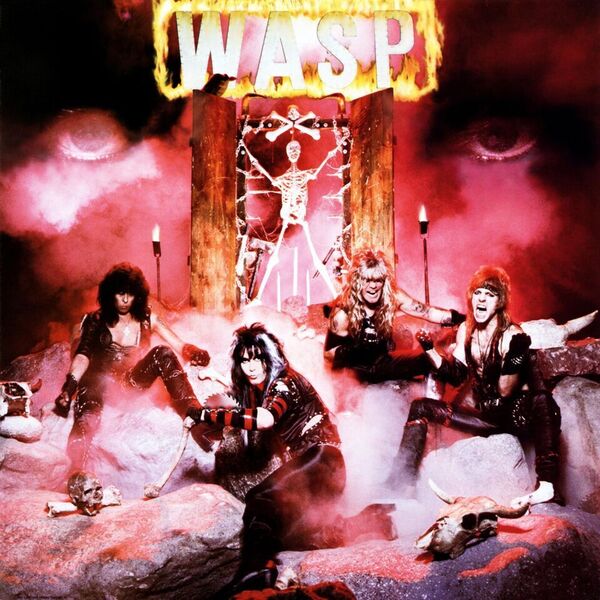
The Los Angeles four who set a nobody against the whole grown-up world, on a buzz-saw riff and a gang chorus, were W.A.S.P., and "I Wanna Be Somebody", the first single from the band's debut W.A.S.P., released by Capitol on 17 August 1984, reached only number 77 in Britain while tearing the roof felt off every club it was played in. The song never says who is keeping the singer down. It does not need to. Blackie Lawless shouts the demand as if the room owed him a name, and every teenager in it hears a father, a landlord or a foreman in the silence where the villain should be.
The throne had gone the same way six years earlier. The band that took the argument all the way to regicide was Rainbow, and on "Kill the King", from Long Live Rock 'n' Roll in 1978, Ronnie James Dio sends a crown rolling off the dais and across the flagstones of a court with no name, no country and no century. A chess king would serve as well. That is the point.
The cell came next. On The Number of the Beast, released by EMI in March 1982, Iron Maiden's "The Prisoner" borrowed its title and its spoken opening from the 1967 television series in which a secret agent resigns and wakes in a seaside village as Number Six, questioned week after week by a Number Two who is never the same man twice. The jailer changes every episode. The refusal never does, and the band drives it round the exercise yard at full gallop until the fade.
Choruses built for a hall to hold
The Birmingham band that sat down to write a stadium chant on purpose, lifting the stamp and clap of Queen's "We Will Rock You" and pulling leather over it, was Judas Priest. "Take On the World", released as a single on 5 January 1979 from Killing Machine, forced its way to number 14, the band's first entry in the British Top 40, and kicked its way onto Top of the Pops that same winter. Its enemy is the entire planet, which is to say nobody at all.
Its rhythm is boots on boards, a hall packed so tight that the crowd works like grapes trodden in a stone vat, skins splitting under thousands of heels until the juice runs from the spout, every foot doing the drummer's job and the singer only telling it when to press. Priest had found the engine room of the form. It was the audience.
Rise like Lions after slumber / In unvanquishable number.
Percy Bysshe Shelley, The Masque of Anarchy, 1819
Four years later the chant learned to speak to one listener at a time. Opening Holy Diver in 1983, Dio's "Stand Up and Shout" drives a riff like cavalry at full tilt straight at a life laid out in advance by other people, the job, the queue, the obedient years, and tells the listener to rip the plan in half in front of whoever handed it over. Who handed it over, the song never says. Dio sings it like an order shouted from the saddle.
The form outlived its decade. Accept cut the same refusal to speed metal proportions on "Fight It Back", from Balls to the Wall in 1983, and Skid Row carried it to the end of the eighties with "Youth Gone Wild" in 1989, a chorus that a whole generation of teenagers sewed onto its jackets and carried like a banner. In neither song does the enemy get a surname.
When the enemy got a face
Some writers could not resist filling in the blank, and the song then aged with the face they painted on. The singer who spent the early eighties hearing himself condemned from pulpits, and who answered on Bark at the Moon in 1983 with a song written with Jake E. Lee and Bob Daisley, was Ozzy Osbourne: "Rock 'n' Roll Rebel" takes the preachers' charge of devil worship, tears the charge sheet in two and flings the pieces back over the pulpit rail.
Judas Priest filled the blank too, on Turbo in 1986, with "Parental Guidance", a sneer aimed at the Parents Music Resource Center, the Washington committee that had put the band's own "Eat Me Alive" on its Filthy Fifteen the year before and wanted a warning sticker on every record like it. Saxon had done it earlier and smaller: the title song of Strong Arm of the Law, in 1980, came, in Biff Byford's telling, from the police pulling over the band's big American car more than once, one of those times on London Bridge. These songs are sharper than the anthems. Crowds shout them less.
The band that aimed its bluntest single of the nineties at named culprits was Iron Maiden again. Released on 13 April 1992 as the first taste of Fear of the Dark, "Be Quick or Be Dead" tore into the financial scandals on that spring's front pages, the collapse of the BCCI bank and the pension funds found plundered after the death of the press baron Robert Maxwell. Its single sleeve showed Eddie throttling a suited figure widely read as Maxwell himself. It reached number two in Britain. A face painted on the enemy dates the song to the week the paint went on.
A face painted on the enemy dates the song to the week the paint went on.
What the anthem leaves out
The one rebellion in the catalogue that needed a leader, a manifesto and a body count also needed a whole record to hold it, and Queensrÿche's Operation: Mindcrime, in 1988, sits with the heavy metal concept albums, where the enemy is given a name, a plot and a gun. The anthems never asked for any of that. They asked for a chorus, a room and three minutes, and they got a salvo of fists in return every night the song was played.
No quarter is given in "Take On the World", and no name is given either. Forty-seven years after it first went out, the song still starts the same argument in every hall it reaches, and nobody in the hall has ever lost it.
