
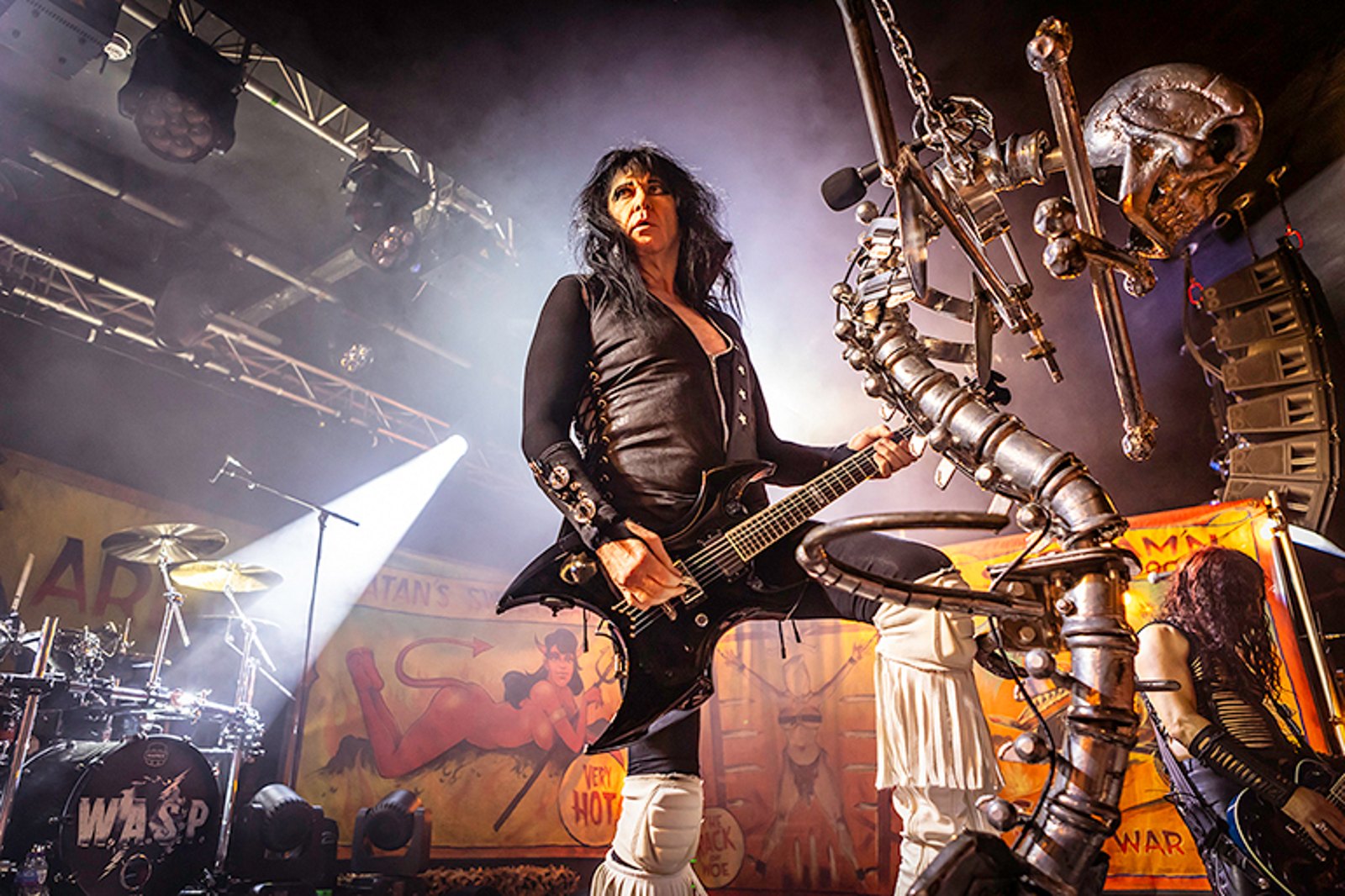
On 10 November 1981 the four painted faces that had filled American arenas on greasepaint and pyrotechnics put out a fantasy about a young hero recruited by an ancient order to stand against evil, called it Music from "The Elder", and watched the faithful who had queued for the spectacle stay at home. The painted faces belonged to Kiss. The producer who had talked them into it, two years after building The Wall for Pink Floyd, was Bob Ezrin. The record never went on the road.
A concept album is a domino run set out across a school hall floor over three weekends, every song stood on its end a finger's width from the next and the plot the single push at one end, so that on the night it runs, forty minutes of tiles slamming flat in a clattering wave from wall to wall, nothing in music looks grander. Knock one tile out of line and the wave dies halfway, thousands left standing to attention. Radio only ever wants one tile.
The Elder was scrambled twice. Casablanca shuffled the running order on the American pressing to lead with the harder songs, which broke the story apart before anyone had heard it, and the single sent out on its own, "A World Without Heroes", a slow ballad co-written with Lou Reed and sung by Gene Simmons, carried none of the plot with it. The rout was total: it became the first Kiss studio album in years to miss a gold record, and three more of the band's later studio albums have gone the same way since.
Heavy metal took up the form regardless. A style that already sang about battles, gods and haunted houses, the themes of heavy metal at large, was always going to want forty minutes for a single story, and the form had arrived years before Kiss fumbled it.
Heavy metal concept albums before the arena learned the plot
The rock opera came first, with The Who's Tommy in 1969. The singer who dragged a whole album of plot onto a hard rock stage before heavy metal had written its own rules was Alice Cooper. Released in early 1975, the date given as both 28 February and 11 March, with Ezrin producing, Welcome to My Nightmare walked a child called Steven through a single night of bad dreams, set Vincent Price's voice inside "The Black Widow" and carried the story on to a television special and a tour of more than a hundred and twenty cities.
That fixed the parts list for everyone who followed: a narrator, a villain, a spoken passage and a stage big enough to act it on. Six years later Ezrin handed the same parts list to Kiss. The difference was the songs.
Operation: Mindcrime and the radio play
The Washington five who got it right, seven years after The Elder, answered to the name Queensrÿche. Released by EMI on 3 May 1988, Operation: Mindcrime is built like a radio play, with a hospital bed and a nurse's voice before the first riff, a television preacher and a news bulletin in the gaps between songs, and at its centre "Suite Sister Mary", ten minutes of Michael Kamen's strings and choir hammered into a duet over the guitars.
The voice that answered Geoff Tate from the far side of that duet belonged to Pamela Moore, cast as Sister Mary. It gave the record a second lead voice and a script to share between them.
The record lasted for a plainer reason. Its songs stand up out of order. "Eyes of a Stranger" and "I Don't Believe in Love" went out as singles, and a listener who has never read a word of the story hears two hard, clean songs with a chorus apiece, played on rock radio without the plot around them. The band then played the whole album start to finish on the tour that followed, and the film of it came out that November as Operation: LIVEcrime.
Eighteen years on, the sequel tried to set the whole thing up again. Operation: Mindcrime II, released on 4 April 2006, brought the assassin out of prison to hunt the man who had made him, and the villain in its one scene still worth hearing, "The Chase", turned out to be Ronnie James Dio. He sang Dr. X on the record and sang the part live exactly once, in Los Angeles that October, while on every other night of the tour a recorded Dio glared down from a screen over an actor miming the words.
A story can be continued. A record, it turned out, cannot.
One author, one story: W.A.S.P. and Savatage
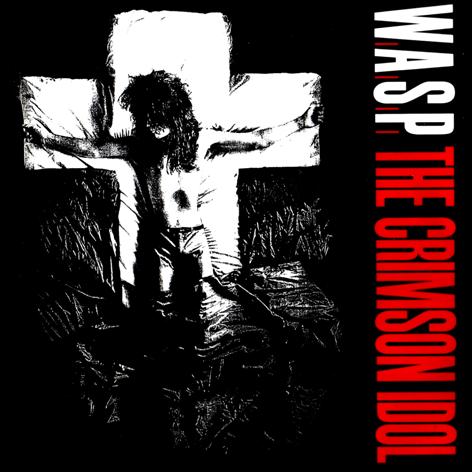
The man who wrote, produced and played most of the record that turned W.A.S.P. into a one-man campaign was Blackie Lawless. The Crimson Idol, released in June 1992 after nearly three years of work that had started out as a solo album, follows the rock star Jonathan Steel from a loveless house to the top of the charts and over the edge, with Lawless on vocals, guitar, bass and keyboards, Bob Kulick on lead guitar, and Frankie Banali and Stet Howland sharing the drums.
Its sharpest song is its angriest. "Chainsaw Charlie (Murders in the New Morgue)" feeds the record business through a butcher's mincer in the shape of a smiling executive who signs the hero and bleeds him white, and it works as a furious single with or without the tale around it. Lawless recorded the whole album again as Re-Idolized, released on 2 February 2018 with the film shot for the original record finally cut to its running order.
The Florida band that sent a cellist into the ruins of Sarajevo was Savatage. Dead Winter Dead, released on Atlantic in the autumn of 1995 while the Bosnian war was still being fought, sets a young Serbian soldier and a Muslim girl on opposite sides of the siege and puts an old man with a cello in the square between them, a figure drawn from Vedran Smailović, who played in the rubble of his own city in 1992 after a mortar shell tore into a queue for bread.
One piece of the album walked out of the story altogether. The producer who carried it off into a second career was Paul O'Neill, whose Trans-Siberian Orchestra recorded the instrumental "Christmas Eve (Sarajevo 12/24)" again in 1996, a single that only ever reached number forty nine on the Hot 100 Airplay chart yet still turned it into a fixture of American Christmas radio, the one tune from any heavy metal concept album that millions hum every December without knowing where it came from.
A comic book, a hypnotist and the long form now
The antihero who lent his whole arc to Iced Earth was Spawn, Todd McFarlane's murdered soldier sent back from hell, and The Dark Saga, released in July 1996 with the comic's own artwork on the sleeve, turned a monthly paper superhero into a heavy metal record without once stopping to explain him.
The darkest of the decade came out of Seattle. Nevermore made Dreaming Neon Black, released on Century Media in January 1999, into the story of a man coming apart after the woman he loved vanished into a religious cult and was lost to the water, and Warrel Dane sang it from inside the grief rather than over the top of it. No hit came off it. None was wanted.

Three years later the form went to the therapist's couch. Released by Elektra on 26 October 1999, Metropolis Pt. 2: Scenes from a Memory by Dream Theater lays a man called Nicholas under past-life regression until he watches Victoria Page murdered in 1928, and the band plays its seventy seven minutes like a detective story, the clues planted in the early songs and the killer held back to the last scene.
| Album | Band | Year | The story | Songs standing alone? |
|---|---|---|---|---|
| Welcome to My Nightmare | Alice Cooper | 1975 | A child's night of bad dreams | Yes |
| Music from "The Elder" | Kiss | 1981 | A young hero and an ancient order | Barely |
| Operation: Mindcrime | Queensrÿche | 1988 | An addict turned assassin | Yes, two singles |
| The Crimson Idol | W.A.S.P. | 1992 | The rise and fall of Jonathan Steel | Yes |
| Dead Winter Dead | Savatage | 1995 | The Bosnian war and a cellist | One became a Christmas standard |
| The Dark Saga | Iced Earth | 1996 | Spawn | Mostly |
| Metropolis Pt. 2: Scenes from a Memory | Dream Theater | 1999 | A 1928 murder | Built to be heard whole |
| Operation: Mindcrime II | Queensrÿche | 2006 | The assassin's revenge | One scene, one guest |
The ghost stories told across a whole record, the haunted houses and the rituals in which the plot is acted out as much as it is sung, sit with occult rock and the occult in metal lyrics, where the staging came before the script.
Set against the single albums that did the job without a plot, most of these records lose, and where they rank among the rest is argued in the broader chapter. Two do not lose, by common consent: Operation: Mindcrime and The Crimson Idol, the records whose songs outlived the story told around them.
