
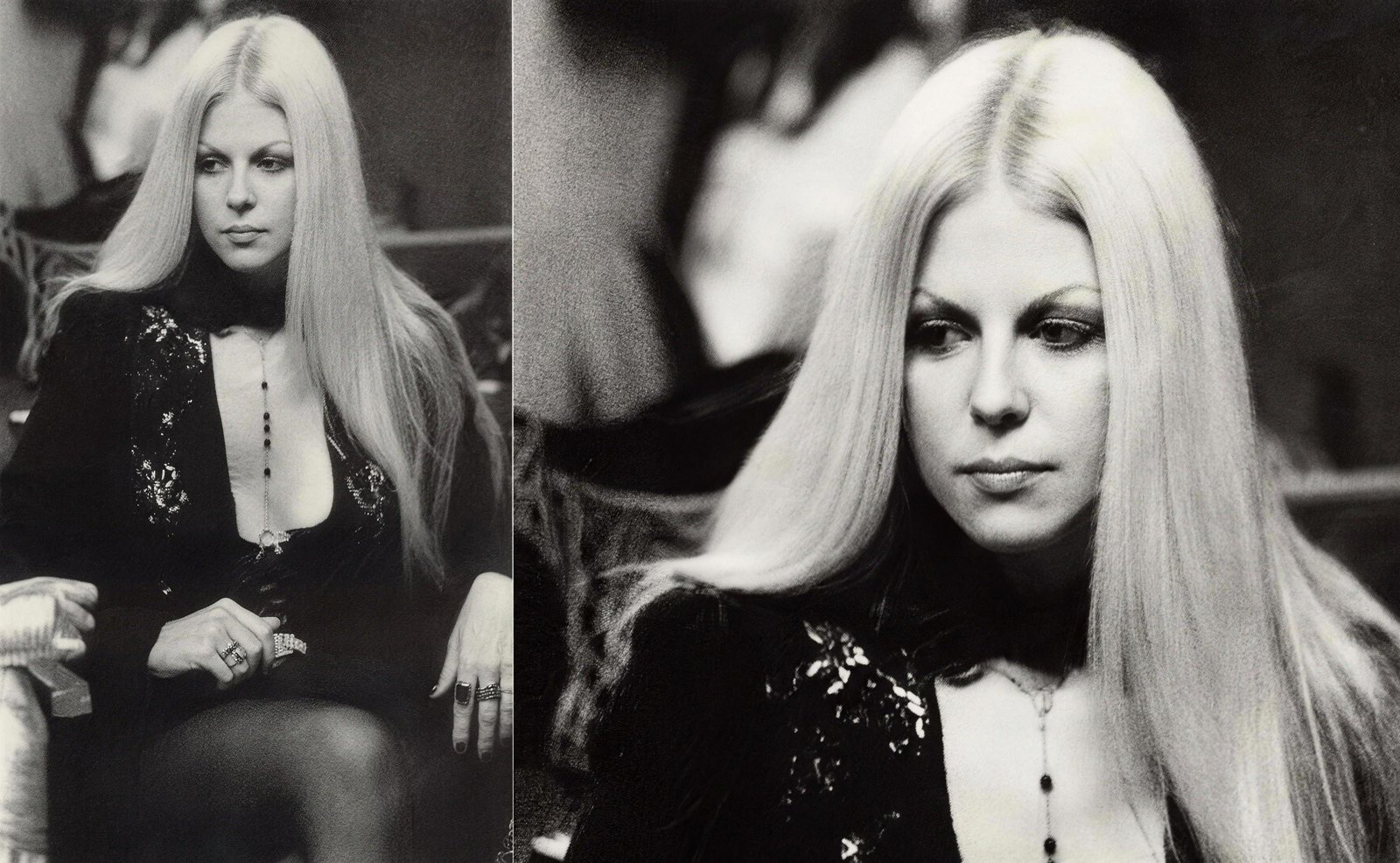
Thirteen minutes of chanting and litany, a priest intoning and a congregation answering him line by line, closed the first album Mercury Records issued for a Chicago band on 15 June 1969, and the sleeve assured anyone holding it that this was the first black mass ever set down on a record.
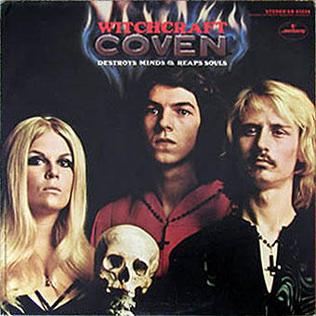
The Chicago outfit that put it there, fronted by a trained singer who called herself Jinx Dawson and carrying a bassist who went by Oz Osborne, was Coven, and Witchcraft Destroys Minds & Reaps Souls opened on a song called "Black Sabbath", eight months before a Birmingham quartet released its debut under the same two words. No publicist could have arranged it.
An Esquire feature of March 1970, under the cover line "Evil lurks in California", ran a photograph of Charles Manson holding a copy of the album alongside a line from an interviewed Sunset Strip regular calling it full of black mass stuff, and Mercury tore the pressing off the racks and struck it from its catalogue within weeks. The record became a rumour. Rumours sell better.
Occult rock works the way Pepper's ghost worked on the Victorian stage from 1862 onwards: an actor lit in a pit below the footlights, a sheet of plate glass tilted across the boards, and a spectre walking among the living cast that the whole house could see and nobody could touch, solid enough to draw screams from the gallery and made from nothing but lamplight and a reflection. The chant on the Coven record is that spectre. It is really on the tape, and the people casting it stand just out of sight.
Every other subject in the style, war and myth and the open road, can be sung as a story, and the full catalogue of them is in the lyrics chapter. The occult is the one that asks to be staged. The bands that took it on wrote rites, vows and invocations where their neighbours wrote verses.
Occult rock before it had a name
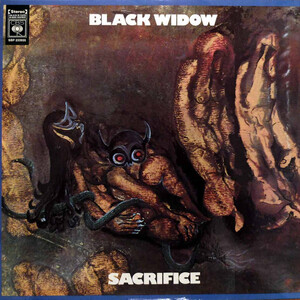
Coven had put the rite on tape. The English band that put it on a stage, a Leicester group that had spent the late sixties playing soul as Pesky Gee!, turned in 1969 into Black Widow. The live show behind Sacrifice closed on a mock ritual in which Kip Trevor, robed, raised a knife over a woman playing the demon Astaroth on an altar, a spectacle British tabloids followed from town to town with exactly the delighted horror it was built to provoke.
Released by CBS in 1970, the album reached number 32 on the Official UK Albums Chart on the strength of "Come to the Sabbat", a flute and organ invitation to a witches' gathering, built as a chant an audience could pick up by its second chorus over a rhythm closer to a folk dance than a riff. Nothing in it menaces. All of it invites, which was the point.
Black Widow's songs work like a property dagger from a theatre's prop cupboard, the blade sliding back into the hilt on a spring as it comes down: the plunge is real, the front rows gasp on cue, the steel vanishes into the handle, and the woman on the altar gets up for the encore without a mark on her. The trick was never hidden. It was the show.
The Long Island five whose producer and co-manager Sandy Pearlman had been writing a private mythology since the late 1960s, a cycle of poems about a shape-shifting agent of hidden powers called Imaginos, played that mythology in fragments for two decades as Blue Öyster Cult. "Astronomy", on Secret Treaties in 1974, belongs to the cycle, and the whole of it finally reached a record in 1988 as Imaginos. The occult here is not a ritual. It is a secret history, told in instalments to a congregation that bought every one.
Crowley in the runout groove
Aleister Crowley, the English occultist who died in 1947, reached the records through a side entrance. The guitarist who had "Do what thou wilt" cut into the runout groove of one side of Led Zeppelin III in 1970, and "So mote be it" cut into the other, and who bought Crowley's old house on the shore of Loch Ness that same year, was Jimmy Page of Led Zeppelin. To the pulpits of 1970 the name was anathema. To a guitarist it was a signature.
Later bands put him in the lyric itself. "Mr. Crowley", on Ozzy Osbourne's Blizzard of Ozz in 1980, addresses the magus with a string of questions, and Randy Rhoads's guitar smashes straight through the funeral organ introduction Don Airey built alone in the studio. Iron Maiden opened Seventh Son of a Seventh Son in 1988 with "Moonchild", which took its title from the novel Crowley wrote in 1917 and published in 1929. By then the magician had become a character, like Dracula before him.
Mercyful Fate and a vow sworn in verse
The Copenhagen five that carried the rite furthest into the song itself were Mercyful Fate, and "The Oath", on Don't Break the Oath, released by Roadrunner in 1984, is written as an initiation: a vow sworn in the first person and in order, heaven renounced clause by clause, King Diamond's falsetto rising on each promise like a celebrant lifting the cup. The vows read like a catechism turned inside out. It is liturgy with twin guitars.
"A Dangerous Meeting", which opens the same album, stages a séance at which the spirits answer too well, and Hank Shermann and Michael Denner hack the table to kindling with riff after riff before the first chorus arrives. Mercyful Fate never asked the listener to believe. It asked the listener to attend, the way a theatre asks.
The record closes on "Come to the Sabbath", a title that repeats Black Widow's invitation of 1970 almost exactly, and the resemblance is the whole history of the subject in miniature. Fourteen years had turned the witches' round of a folk-rock band into a hard-driving heavy metal set piece for twin guitars and falsetto. The costume had changed. The invitation had not.
Why, this is hell, nor am I out of it.
Christopher Marlowe, Doctor Faustus
Mercyful Fate never asked the listener to believe. It asked the listener to attend, the way a theatre asks.
The revival that took the name
The words occult rock stuck as a label only at the end of the 2000s, when a wave of bands went back to the organ, the flute and the 1970 guitar tone of that lineage and brought the grimoire with them. The Dutch band built around the guitarist Selim Lemouchi, with his sister Farida at the microphone, recorded as The Devil's Blood, and around The Time of No Time Evermore, released by Ván Records in September 2009, Lemouchi told interviewers the songs were rites rather than entertainment, the stage an altar for as long as a set lasted. The records neither prove nor disprove him. They sound like a band in the vanguard of something it would not name.
The Toronto quartet with a flute at the front, played by the singer Alia O'Brien, goes out as Blood Ceremony, and "Oliver Haddo", on Living with the Ancients, released by Rise Above in 2011, is named after the magician in Somerset Maugham's novel The Magician of 1908, a thinly disguised portrait of Crowley. The occult arrives twice removed, through a novel about a real man, set to a riff out of 1970. The disciples knew their sources.
The loudest of the revival bands turned the whole business into pantomime. The Swedish group led by a singer made up as a skeletal anti-pope, with the rest of the line-up masked and nameless, released Opus Eponymous on Rise Above in 2010 as Ghost, and within a decade was filling the largest halls in the business with masses sung for applause. The hooks owe an audible debt to Blue Öyster Cult and the pop radio of the seventies, the imagery comes out of a church-supply catalogue, and the whole apparatus is built so that the congregation can sing along to a black mass and go home to bed. Nobody in the audience mistakes it for worship. Nobody is meant to.
Behind all of it sits the same bargain. The occult bands took the most frightening material their audience had inherited and dressed it for performance, and whether any single musician meant a word of it is a question the records cannot settle and do not need to. Where these bands reached for the grimoire, a larger share of their neighbours reached for the history shelf, and the battlefield keeps its own songbook, gathered under heavy metal songs about war.
The Coven mass is still there on the second side. Nobody has yet found a way to play it as background music.
