
I am the enemy you killed, my friend.Wilfred Owen, Strange Meeting
The best heavy metal songs about war keep two registers strictly apart. The guitars, the drums and the voice are allowed every ounce of volume the band can raise, while the dead are named, dated and counted in plain words, because a battle that actually happened needs no help from an amplifier to be terrible. The records that break that rule sound like recruiting posters. The ones that keep it have lasted.
Most of them are built the same way. A single guitar, a snare in a march pattern or a recorded voice opens the song quietly, and then the whole band comes in at once, like a company brought from order arms to a single volley on one shouted command, every rifle discharging in the same half second so that the line answers as one weapon and not as forty. The rest of the arrangement is cooling time.
The Birmingham quartet that wrote the first great one, at a time when young Americans were still being drafted for Vietnam, was Black Sabbath, whose "War Pigs" put generals and politicians in the dock over a riff that marches and stalls and marches again. The subject belongs to the words behind the riffs as a whole. The records that came after it went to particular battles, and the best of them follow.
Flanders, 1917: two bands and one salient
The Third Battle of Ypres, which took its popular name from the village of Passchendaele, ran from 31 July to 10 November 1917 in Belgian Flanders. Heavy rain and shellfire turned the ground into deep mud, and men and horses drowned in flooded craters. Casualty estimates run into the hundreds of thousands on each side, and historians still dispute the exact totals.
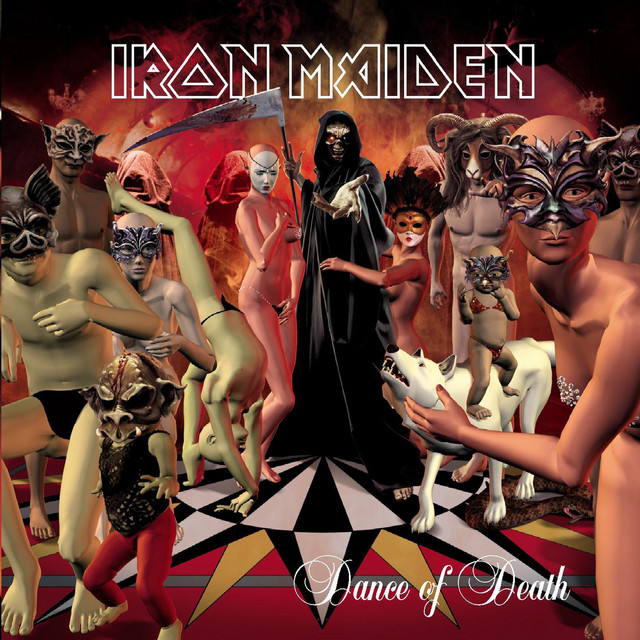
The East London band that gave that battle eight and a half minutes, an orchestra and three guitars was Iron Maiden, and "Paschendale," music by Adrian Smith and lyrics by Steve Harris, from Dance of Death, released by EMI in September 2003, tells it through one soldier who does not come home. Dave Murray, Smith and Janick Gers run the main riff like the blades of a gang saw in a stone mill, three steel bands set parallel in one swinging frame and drawn through the same block together, cutting it into slabs at every stroke. The drums build a barrage under them. The words stay in the trench.
The Swedish band that went back to the same salient five years later was Sabaton, and "The Price of a Mile", from The Art of War in 2008, sets the ground gained against the lives it cost, a few miles of Belgian mud and a count nobody has settled. Where Maiden's song is a single man's account, Sabaton's is a ledger read aloud over a keyboard fanfare and a chorus built for a festival field. Both work. They do not work the same way.
Set side by side, the two songs about the same few miles of Flanders show how much of the job is arrangement. Maiden stretches its song through changes of tempo and lets the orchestra carry the grief between the verses, while Sabaton keeps the tempo up and the chorus high and asks a crowd to shout it back. One is written to be listened to alone. The other is written for fifty thousand people at once.
The Volga, 1942: a German band sings Stalingrad
The Battle of Stalingrad was fought from August 1942 to February 1943 on the Volga, in the city and the ruins it became. Estimates of the dead, the wounded and the captured on both sides together approach two million. Of the roughly ninety-one thousand German soldiers taken prisoner at the surrender, only five to six thousand ever saw home again.

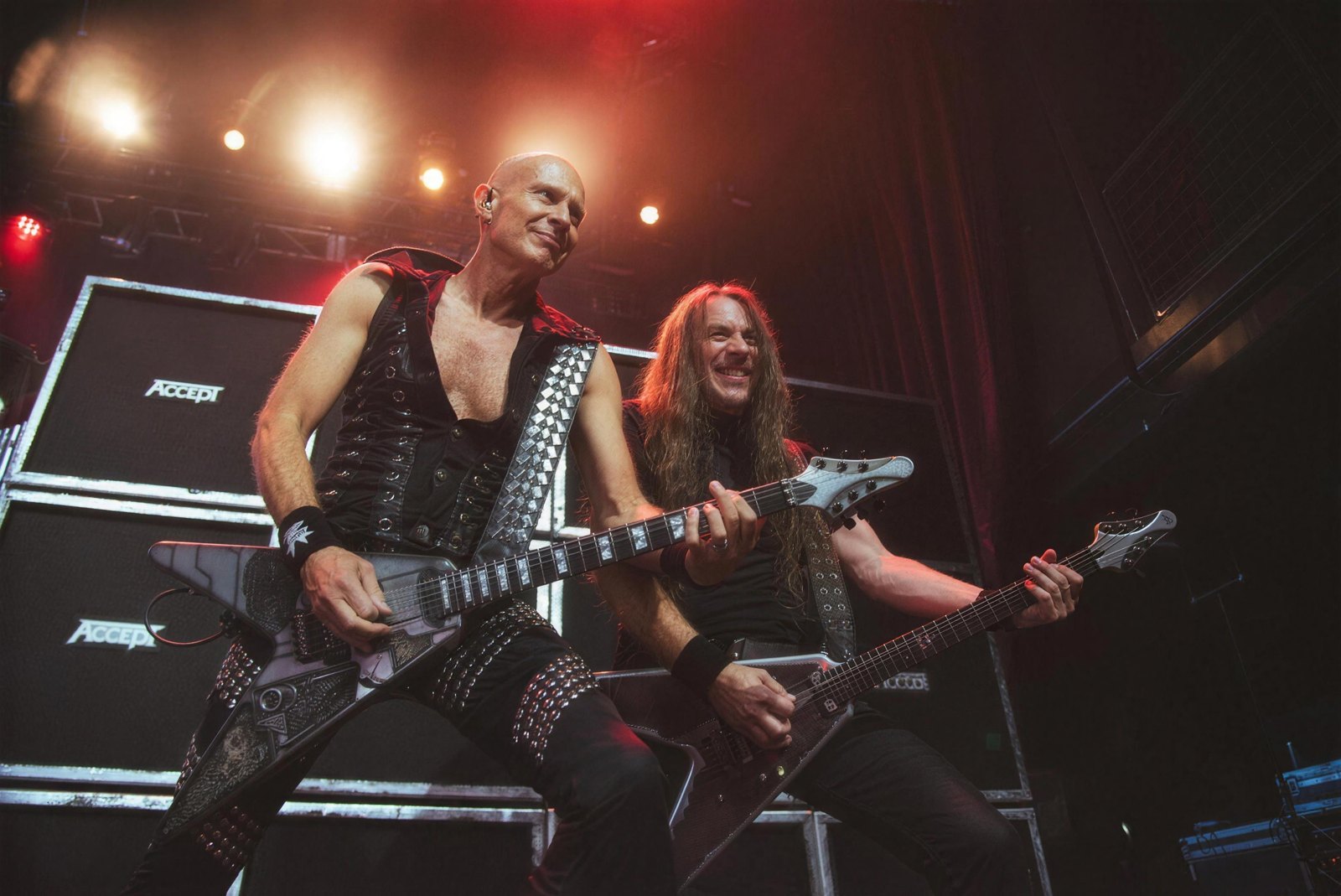
The Solingen veterans who named a whole album after the city were Accept, and Stalingrad, released by Nuclear Blast on 6 April 2012 with Andy Sneap producing, opens its title song on a slow, heavy march before the band breaks into full onslaught. The coda works a guitar recreation of the melody of the old Soviet state anthem into the riffing, a detail reviewers of the record have singled out. The singer who carried it was Mark Tornillo, only the second album into his time with the band. That a German band chose this battle and told it without a trace of the victor's swagger is the point of the record.
Pennsylvania, 1863: half an hour for three days
The Battle of Gettysburg was fought from 1 to 3 July 1863 in southern Pennsylvania, and its killed, wounded, captured and missing on both sides together are usually put at around fifty thousand. On the third day a Confederate attack across open fields, remembered as Pickett's Charge, was repulsed with heavy losses.
The Florida band that spent more than half an hour on those three days was Iced Earth, and the "Gettysburg (1863)" trilogy that closes The Glorious Burden, released in 2004 with Tim "Ripper" Owens singing, runs to roughly thirty-two minutes across its three parts, one for each day, with a full orchestra scored in behind the guitars. Owens, Judas Priest's singer from 1996 to 2003, moves from narrator to mourner across the three parts, and the guitars keep the march grinding under him even where the strings swell over the top. It is the longest of all these songs and the most patient. The dirge of the last part does not hurry the ending.
The airmen and the ones who came home
The trio that wrote a whole album's title song about the crew of a wartime bomber, taking its cue from a Len Deighton novel, was Motörhead, and "Bomber", released by Bronze in 1979 and dedicated to Deighton by Lemmy, runs at the speed of an engine on full throttle and never once lands. RAF Bomber Command lost 55,573 aircrew killed in the Second World War. Lemmy's bass and Fast Eddie Clarke's guitar hammer the one riff into the ground for under four minutes, and the song never pretends to be anything but noise in the sky. The song does not mention the number. It does not need to.
Iron Maiden turned to a war fought in the living room on television with "Afraid to Shoot Strangers", from Fear of the Dark in 1992, sung from the side of a soldier sent to the Gulf in 1991 who has to talk himself into firing, a point of view Bruce Dickinson has confirmed in interviews when introducing the song live. The song starts as a ballad and ends in full cry. The soldier's doubt survives the volume.
| Song | Band | Year | War and date |
|---|---|---|---|
| "War Pigs" | Black Sabbath | 1970 | Vietnam, then being fought |
| "Bomber" | Motörhead | 1979 | Second World War, the air war |
| "Afraid to Shoot Strangers" | Iron Maiden | 1992 | Gulf War, 1991 |
| "Paschendale" | Iron Maiden | 2003 | First World War, Flanders, 1917 |
| "Gettysburg (1863)" | Iced Earth | 2004 | American Civil War, July 1863 |
| "The Price of a Mile" | Sabaton | 2008 | First World War, Flanders, 1917 |
| "Stalingrad" | Accept | 2012 | Second World War, 1942 to 1943 |
A battle that actually happened needs no help from an amplifier to be terrible.
What heavy metal songs about war do that films cannot
A war film can show the mud. A song cannot, so the good ones hand the work to the rhythm, the snare roll that belongs to a parade ground, the tempo that climbs as the attack goes in, the riff that splits the quiet open like a boot going through a rotten duckboard, and the long instrumental passage where the words stop because a man in the story has stopped speaking.
Across fifty years the rule holds. The music gets the noise, the speed and the scale, the snare that marches, the chorus that the faithful shout back at a festival, the guitars at full volume. The history gets a date, a place and a count, and the good songs let the count stand without dressing it up.
The songs that stand longest are the ones that give the listener a single person to follow, a soldier in the mud, a gunner in a turret, a man told to fire on strangers, rather than an army to admire. Paranoid, which opens on "War Pigs", still sits first among the sixteen records that make up the parent chapter of any heavy metal collection. Half a century on, the oldest war song in the style is also one of its angriest.
Which lines from all of this hold up on the page, set apart from the riff, is a different question, taken up in the best heavy metal lyrics. These riffs carry the weight of real graves. The good ones carry it without once pretending to be the war.
