
And for all this, nature is never spent; There lives the dearest freshness deep down things.Gerard Manley Hopkins, God's Grandeur (1877)
The modern heavy metal bands are not a revival, a tribute or a museum wing. They are the working present of a style that was declared finished in 1992, sold arenas without radio from about 2015 onward, and now puts new records into the upper reaches of national album charts in Germany, Sweden, Britain and France in the same weeks as everything else. The obituaries were filed. Nobody withdrew them.
A coppice stool is older than any of the poles standing on it. The woodman cuts the whole clump off level with the ground in winter, and the root, which may have been in that soil since before the parish had a name, throws up a dozen straight new poles in a single season, so that the wood is cut to the ground and older than the man cutting it at the same moment. Every pole is new. Not one of them is a beginning.
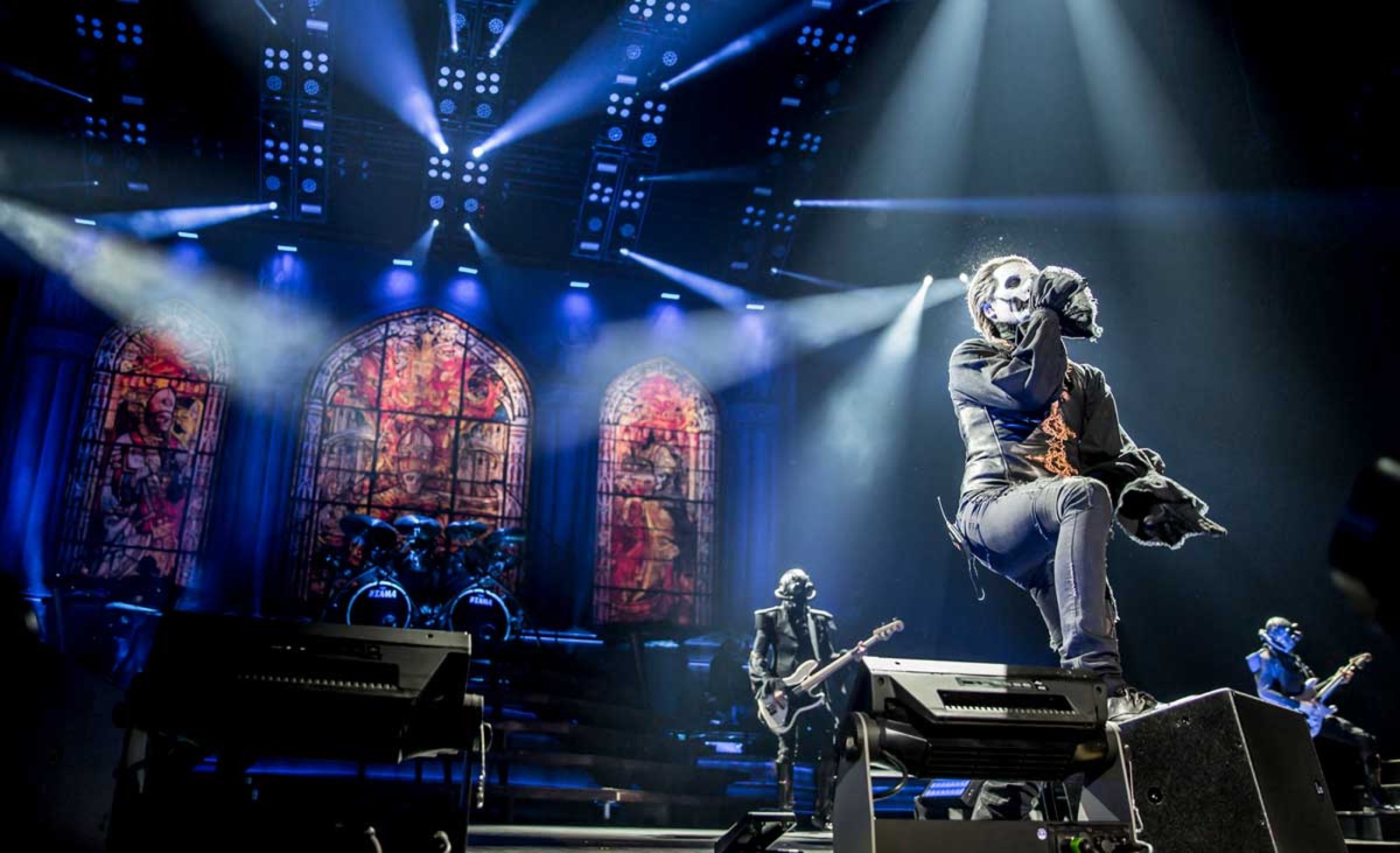
The band that came out of Linköping, Sweden, in 2006 with a masked singer, a Latin liturgy and a pop chorus is Ghost, built around the songwriter Tobias Forge behind a rotating cast of anonymous "Nameless Ghouls." The pattern it set is the one most of this generation works to: build the spectacle first, sell it from a stage rather than through a radio playlist, and let the record follow the tour instead of the other way round. Radio never spearheaded any of this. The halls did it on their own.
The modern heavy metal bands that fill the halls

"Cirice" is where the method became visible. Released on Meliora in August 2015, it opens on a clean figure held far longer than a rock single should hold anything, drops a riff underneath it at the two-minute mark and then hands the whole song to a chorus written to be sung by a hall rather than shouted by a pit. It won the Grammy for Best Metal Performance the following February. That is not a sentence anybody expected to write about a band in corpse paint.
Growth of that kind looks slow and then looks total. A cistern fills without any drama at all, a foot of brown water a night against the walls, and the yard that could be crossed dry in March is standing water by June, with the last dry stone showing for one week before it goes under too. Nobody watched the halls get bigger. One season they simply were.
The Falun band that took the twentieth century's battles as its subject and a hall full of raised fists as its instrument is Sabaton, formed in 1999, and it now headlines festivals across Europe on a repertoire that is effectively a history syllabus set to a marching tempo. Powerwolf works the same ground in Germany with an organ, a choir and a church vocabulary, and Call of the Wild reached number two on the German album chart on its release in July 2021.
Both of those bands were consecrated by festival crowds long before any national broadcaster noticed them. The inheritance is plain enough in the material: a chorus a room can learn on first hearing, a tempo between a march and a gallop, two guitars in harmony and a voice that sings rather than shouts. Which older bands drew that map is set out in the heavy metal groups that made it. The map has not been redrawn. It has been walked over harder.
Radio never spearheaded any of this. The halls did it on their own.
The ones who rebuilt the instrument
A second line of modern bands changed what the guitar does. The French four whose rhythm section plays against the riff rather than under it are Gojira, formed in the Landes in 1996, and their method, a picked figure over a kick drum pattern that lands on none of the obvious beats, has been copied by enough younger bands to count as a school rather than a signature. Nothing in it swings. Everything in it turns over.
The Atlanta four who wrote long songs with three singers and no interest in a chorus went out as Mastodon, and Trivium in Florida spent two decades moving between the harmonised twin lead of 1982 and the rhythmic language of the cores until the two stopped being separable. Purists argued about both for years. The argument has been quietly settled by the bills they headline.
The infrastructure under all of it is new and almost invisible. A band with one album can now sign to Nuclear Blast, Century Media, Napalm or High Roller, press a first vinyl run of around two thousand copies, and cross Europe on a support slot arranged between two festivals, which is a machine no band of 1983 had access to at any price. Nobody has to post cassettes any more. The reach a seven-inch used to buy now arrives with the first record.
The young bands still arriving
The Portland band that recorded as Idle Hands before a trademark dispute forced a rename plays heavy metal riffs under a voice out of a gothic rock record and answers to Unto Others, and "Downtown", from Strength, released by Roadrunner in September 2021, sets a baritone against a twin lead and refuses to choose between the two traditions it is standing in. The combination should not work. It has been working for three albums.
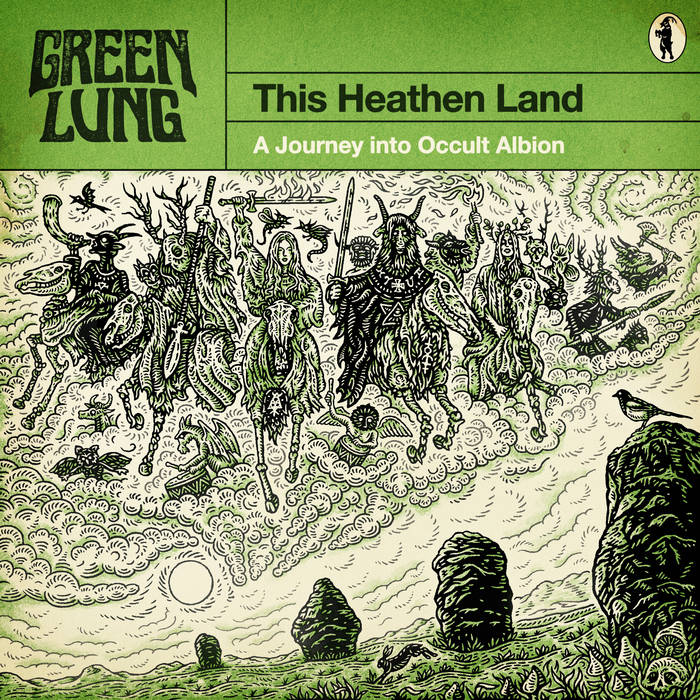
The London five who put a Hammond organ and English folk horror behind a heavy metal riff call themselves Green Lung, and This Heathen Land, released by Nuclear Blast in November 2023, moved them from small rooms onto main stages inside a single festival season. Their subject is a countryside, not a battlefield. The riffs underneath it are entirely conventional, and that is the point.
The youngest band on this list had not released an album when it was already opening for the men who invented the form. Tailgunner, formed in 2022, put out Guns for Hire on Fireflash Records in July 2023, a record made entirely of 1981 parts by musicians born two decades after them, and "Guns for Hire" itself gallops for four minutes without one modern production trick anywhere in it. There is no irony in it at all. Irony is what the previous generation had to get over.
Around those three stands a wider company. Spirit Adrift in the United States writes long songs with a doom pedigree, Tribulation in Sweden plays the style through a gothic filter, Smoulder in Canada takes its subjects from fantasy novels, and every one of them is a practitioner of rules laid down before its members were born. The map now runs well past the old capitals, down through Latin America and the Mexican heavy metal bands that have been at it since the eighties. Nobody is waiting for a British paper to name them.
| Band | Country | Start with | What it does |
|---|---|---|---|
| Ghost | Sweden | Meliora (2015) | Spectacle first, chorus written for a hall |
| Sabaton | Sweden | The Great War (2019) | History at a marching tempo |
| Powerwolf | Germany | Call of the Wild (2021) | Organ, choir and a church vocabulary |
| Gojira | France | Magma (2016) | Rhythm written against the riff |
| Unto Others | United States | Strength (2021) | A baritone over a twin lead |
| Green Lung | England | This Heathen Land (2023) | Folk horror and a Hammond organ |
| Spirit Adrift | United States | Ghost at the Gallows (2023) | Long songs cut out of doom |
| Tailgunner | England | Guns for Hire (2023) | 1981 parts, played straight |
What the present decade actually proves
The old bands have not left the field either, which is the part the story usually leaves out. Judas Priest put Invincible Shield to number two on the British album chart in March 2024, the band's highest UK placing ever, more than fifty years after its first record, and Iron Maiden, Saxon and Accept have all made albums in this decade that their audiences bought rather than tolerated. Two generations are on the same bills. Sometimes three are.
What the modern heavy metal bands prove is narrower and more useful than a revival narrative. A riff that holds a song up without help, a voice that sings, two guitars in harmony and a chorus a room can learn have turned out to be a durable set of tools rather than a period style, and they work in Portland, in Falun, in Bayonne and in London with no adjustment at all. The tools were never the problem. The decade that mislaid them was.
