
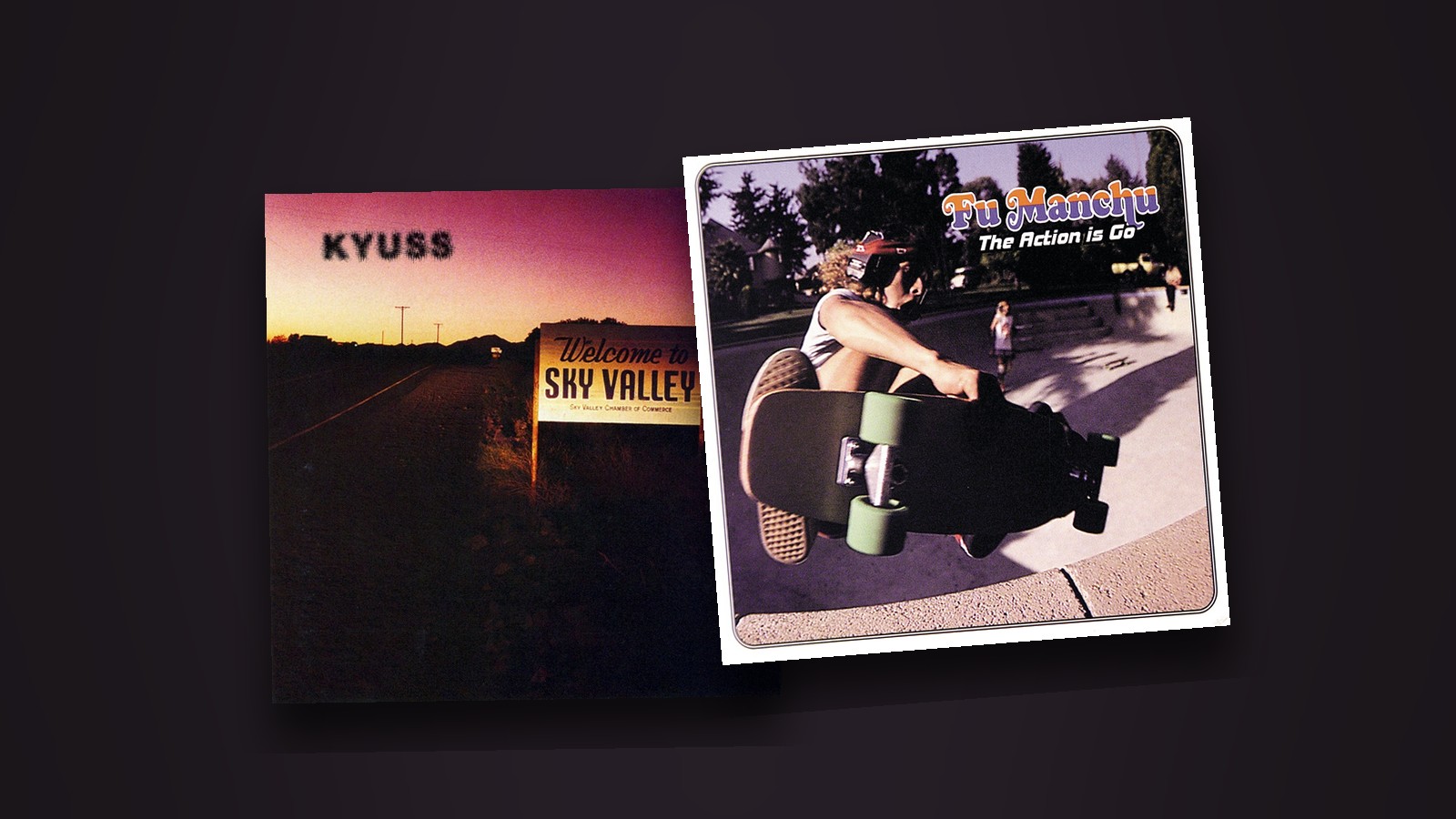
On 11 November 1993 Chameleon Records shut down, and the third album by Kyuss, recorded at Sound City in Van Nuys early that year, was left finished and without a label. Elektra, Chameleon's partner in the venture, took the band on, and Welcome to Sky Valley reached the shops on 28 June 1994, more than a year after its last note was put on tape. By then the ground it would set was already broken.
We read the founding stoner metal albums as tyre tracks in a farm lane after the spring rain. The first vehicle through, a truck loaded heavy and driven slowly, sinks its wheels into ground that is still soft and presses two deep ruts and a herringbone of tread into the mud; then the weather turns, the sun bakes the lane hard as fired clay around those marks, and every tractor and car that comes down the same lane for the next thirty years drops its wheels into the grooves the first truck left, whether its driver steers for them or not. Each record below pressed one mark into a genre that was still wet, and each mark hardened before anyone thought to argue with it.
This is a chronology, not a ranking: the records in the order they arrived, with label, producer, two songs and the one thing each fixed in place. How the desert and the labels produced them is told in chapter three of our history of the genre; here we follow the tread.
1991 and 1992: the first wheels in soft ground
Recorded at Subterranean Sound in Long Branch, New Jersey, produced by Dave Wyndorf with his guitarist John McBain, and released in Europe by the German label Glitterhouse in 1991 before Caroline issued it in America the following year, Spine of God, the debut of the New Jersey band Monster Magnet, was the first of these records into the shops, and it fixed the psychedelic drift at the far edge of the sound. "Nod Scene" and the title track run past six and eight minutes, and The Philadelphia Inquirer heard grunge, metal and late sixties acid rock "loaded with feedback noise". The shops did not agree.
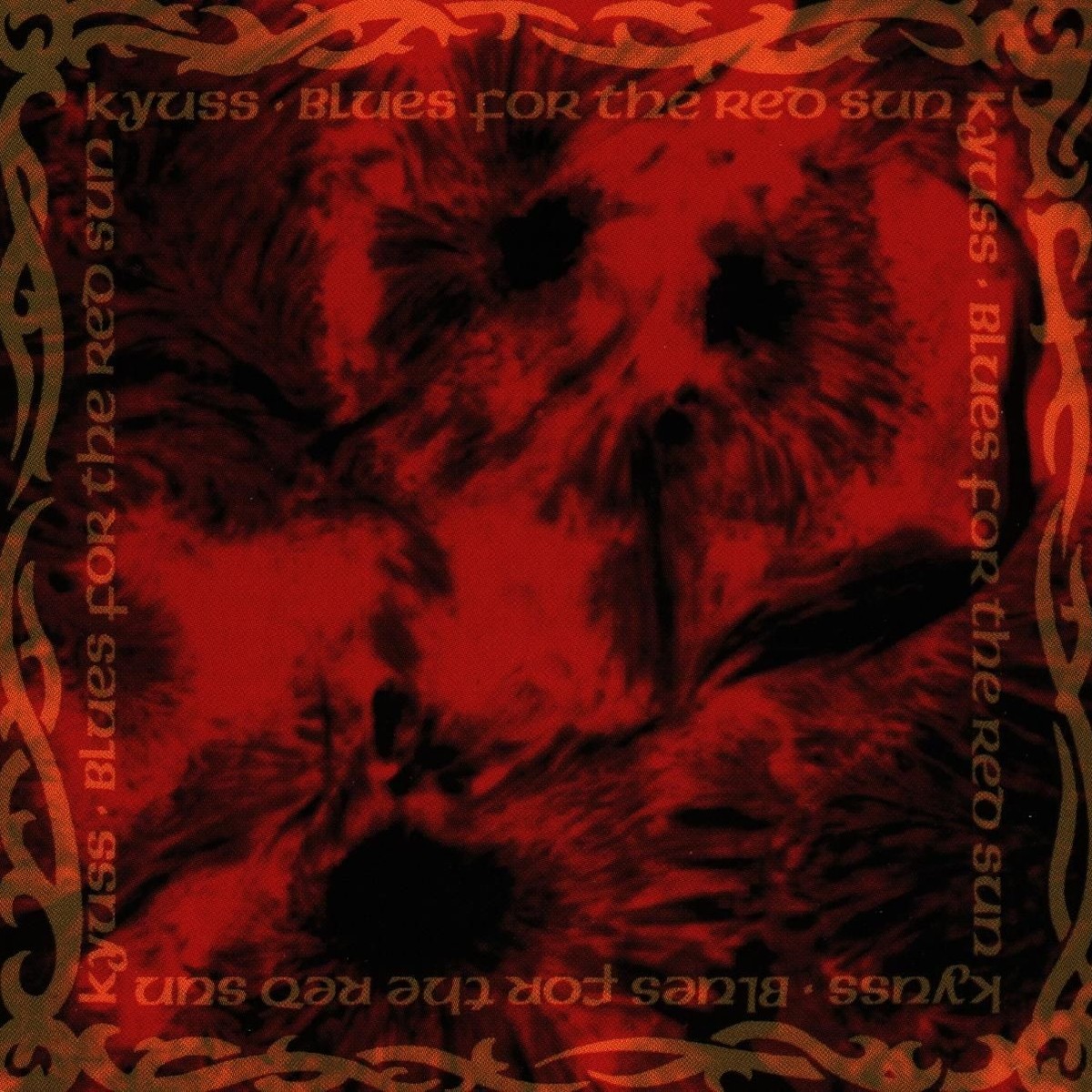
Chris Goss of Masters of Reality produced it with the band at Sound City, and Dali released it on 30 June 1992, but what Blues for the Red Sun fixed was less a production style than a piece of equipment. Josh Homme tuned down to C and, by Andrew Earles's account in Gimme Indie Rock, played his guitar through cabinets built for bass, so that the riff of "Green Machine" and the opening "Thumb" come out of the speakers with the bottom end of a bass rig welded underneath them and Nick Oliveri's bass shoving up from below. Martin Popoff called the result an "uncompromising bassquake". It is the deepest rut in the genre. Every fuzz band since has run its wheels in it.
In the north of the same state, the San Jose trio called Sleep, Al Cisneros on bass and voice, Matt Pike on guitar and Chris Hakius on drums, recorded at Razor's Edge in San Francisco with Billy Anderson engineering, sent the tape to Earache as a demo and saw the British label release it as Sleep's Holy Mountain, in November 1992 in Europe and March 1993 in America. Where Kyuss fixed the tone, this record fixed the riff at the centre of the song: the Black Sabbath riff, taken whole and dragged uphill in low gear on "Dragonaut" and across the ten and a half minutes of "From Beyond", a debt the trio paid in the open that same year with a cover of Sabbath's "Snowblind" for an Earache tribute album, and the 2009 reissue of the record carries it as a bonus track.
1994: Welcome to Sky Valley in three movements
Recorded with Scott Reeder, formerly of The Obsessed, in place of Oliveri, and produced again by Goss with Joe Barresi engineering, the album that waited a year on the shelf fixed the long form. The original compact disc carried its ten songs as three indexed tracks headed I, II and III, with a short hidden fourth, so the skip button moved a listener from movement to movement and never from song to song.
The first movement opens on "Gardenia", written by drummer Brant Bjork, and the second closes on "Demon Cleaner", the single; between them sits "Space Cadet", on which Reeder plays acoustic bass. Eduardo Rivadavia, writing for AllMusic, heard a range "from furious metal to psychedelic grooves", and Ultimate Classic Rock heard three suites spanning "everything from metal to psychedelia", two readings that meet on the point that matters here: after Welcome to Sky Valley a stoner record no longer had to be heavy at a single speed. Bjork left once the recording was done.
It is remarkable how easily and insensibly we fall into a particular route, and make a beaten track for ourselves... How worn and dusty, then, must be the highways of the world, how deep the ruts of tradition and conformity!
Henry David Thoreau, Walden
1995 to 1998: the tracks run east and across the sea
Produced by Wyndorf at the Magic Shop and Electric Lady in New York and released by A&M on 21 March 1995, Dopes to Infinity fixed something the underground had never asked for, a stoner single that radio would play. "Negasonic Teenage Warhead" became Monster Magnet's first hit, the album reached number 51 on the British albums chart, and "Look to Your Orb for the Warning" carried the drift of the debut onto a major label's budget.
Rebuilt after Eddie Glass and Ruben Romano left in the wake of the third album to form Nebula, with Bjork on drums and Bob Balch on lead guitar, and recorded partly at Sound City, the room of both Kyuss records, the fourth album by the Orange County quartet Fu Manchu was produced by Jay Noel Yuenger of White Zombie and released by Mammoth on 7 October 1997 as The Action Is Go, and what it fixed was speed. Most of its fourteen tracks stop inside four minutes, "Evil Eye" and "Urethane" among them; Brad Davis added a theremin, Yuenger played organ and Minimoog, and AllMusic heard "punk energy, classic rock drive, psychedelic crunch" at once. Where Kyuss had pressed the ruts with a loaded truck, this was a lighter car taken down the same lane flat out, wheels locked in the grooves at a speed nobody had tried, the dried mud tearing loose and flying up behind it. The tracks were not its own. The speed was.
Recorded from 2 to 15 June 1998 at the Square Centre in Nottingham with Dave Chang producing, and released by Rise Above in Britain on 26 October 1998, Time Travelling Blues, the second album by the London quintet Orange Goblin, fixed the European lane. Ben Ward sings "Blue Snow" and "Solarisphere" over the guitars of Joe Hoare and Pete O'Malley, and the title track runs past thirty minutes, half of it silence before the hidden "Sober Up".
Sweden drove the same lane with a death metal guitarist at the wheel. Formed in Halmstad in 1993 by Michael Amott after he left Carcass, Spiritual Beggars recorded Mantra III with Fredrik Nordström producing at Studio Fredman in Gothenburg in July 1997 and released it through Music for Nations in 1998, with Christian "Spice" Sjöstrand on vocals and bass, Ludwig Witt on drums and Per Wiberg newly added on organ, Mellotron, Rhodes and clavinet. Fu Manchu had borrowed a producer to play its organ; the Swedes made the keyboard player a member, and on "Homage to the Betrayed" and "Monster Astronauts" he belongs to the line-up. In support of the record the band then toured Europe with Fu Manchu.
2000 to 2002: Dopethrone and the deepest groove
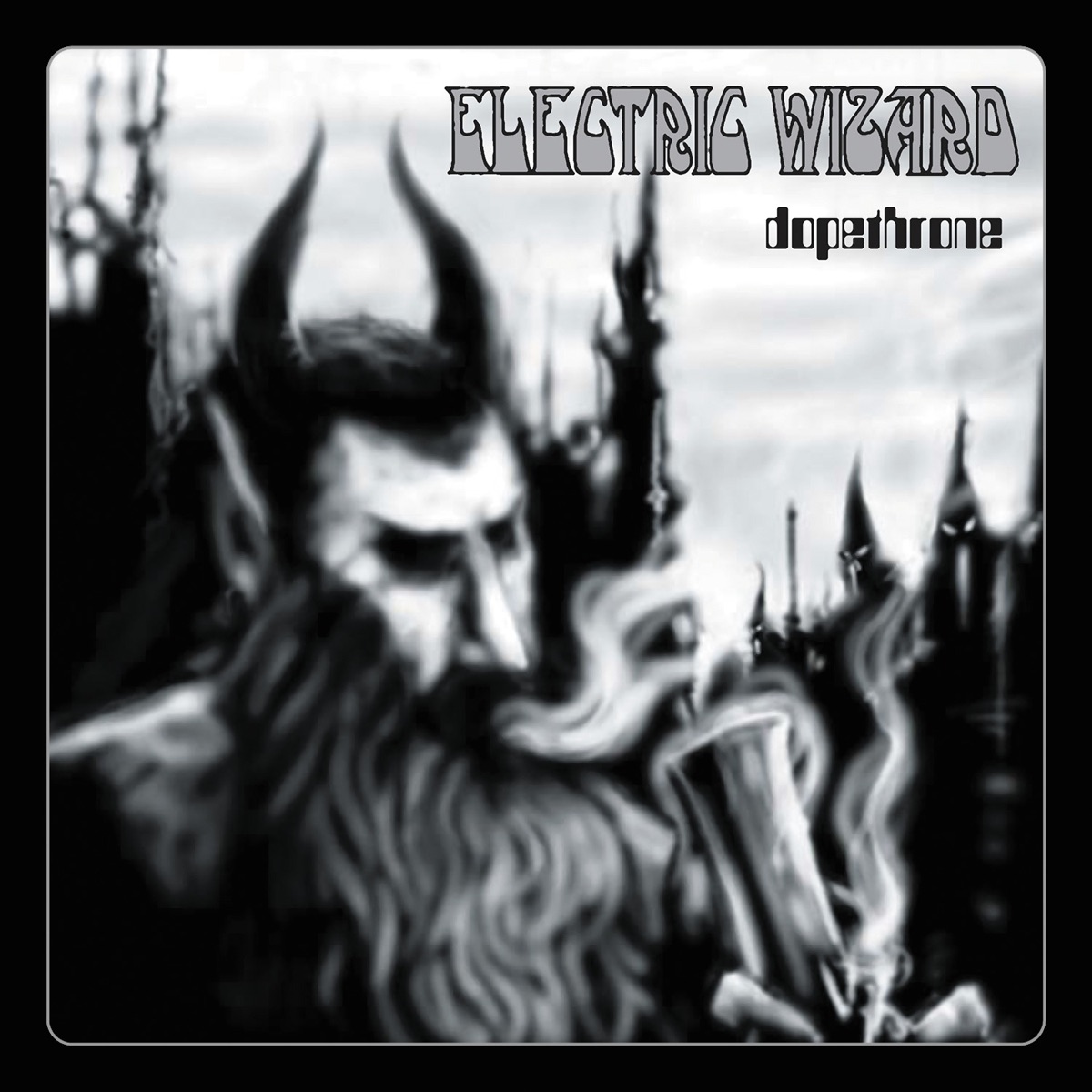
Recorded at Chuckalumba Studios in May and June 2000 with Rolf Startin producing, with only three songs written before the Dorset trio walked in and the fifteen minutes of "Weird Tales" built on the studio floor, Dopethrone, the third album by Electric Wizard, was released by Rise Above on 25 September 2000 and fixed the branch where stoner metal turns back towards doom. Greg Kot of the Chicago Tribune heard early seventies Black Sabbath and Motörhead in it rather than American stoner rock. Jus Oborn, Tim Bagshaw and Mark Greening drove the heaviest load of all down the lane at a crawl, a leaden dirge in first gear on "Funeralopolis" and the twenty minutes of the title track, and sank the ruts so deep that nothing lighter has climbed out of them since. Terrorizer named it the album of the decade in December 2009.
Produced by Billy Anderson with the band, the engineer of Sleep's Holy Mountain ten years before, and released by Relapse on 28 May 2002, Surrounded by Thieves was the second album by High on Fire, the trio Matt Pike formed after Sleep, and it fixed the road out, where the Sabbath riff of 1992 comes back weighted for metal proper. Isaiah Violante of Pitchfork heard "old-school metal" in it, with "all the meaty sloth of Black Sabbath and Saint Vitus". "Eyes & Teeth" opens it and "Hung, Drawn and Quartered" went out on a seven-inch split with Mastodon. The guitarist who pressed the riff into wet ground in 1992 came back down the same lane a decade later in a heavier machine and tore the ruts wider.
| Year | Record | Label | Producer | Fixed in place |
|---|---|---|---|---|
| 1991 | Monster Magnet, Spine of God | Glitterhouse | Dave Wyndorf, John McBain | The psychedelic drift |
| 1992 | Kyuss, Blues for the Red Sun | Dali | Chris Goss, Kyuss | Guitar through bass cabinets |
| 1992 | Sleep, Sleep's Holy Mountain | Earache | Sleep, Billy Anderson | The Sabbath riff at the centre |
| 1994 | Kyuss, Welcome to Sky Valley | Elektra | Chris Goss, Kyuss | The album in movements |
| 1995 | Monster Magnet, Dopes to Infinity | A&M | Dave Wyndorf | The radio single |
| 1997 | Fu Manchu, The Action Is Go | Mammoth | Jay Noel Yuenger | Speed |
| 1998 | Orange Goblin, Time Travelling Blues | Rise Above | Dave Chang | The European lane |
| 1998 | Spiritual Beggars, Mantra III | Music for Nations | Fredrik Nordström | The keyboard player as member |
| 2000 | Electric Wizard, Dopethrone | Rise Above | Rolf Startin | The stoner doom branch |
| 2002 | High on Fire, Surrounded by Thieves | Relapse | Billy Anderson, High on Fire | The road back to metal |
Ten records across a dozen years, by eight bands. The bands who drove the lane afterwards, sorted by the ground they came from, are set out in A List of Stoner Metal Bands, by Scene. The mud has not softened.
