
What stoner metal is, and where it parts company with doom
Thirty-nine thousand copies. That was the total Billboard reported for Blues for the Red Sun in January 1994, eighteen months after Dali Records released it on 30 June 1992 as the second album by four young musicians from the low desert east of Los Angeles who called themselves Kyuss, and by every measure the record industry of the day cared about it was a commercial failure. We begin with the number because it holds the whole argument in small. A record that sold that few became the founding document of a genre that now fills festivals on two continents, and the distance between those two facts is what this chapter sets out to cross.
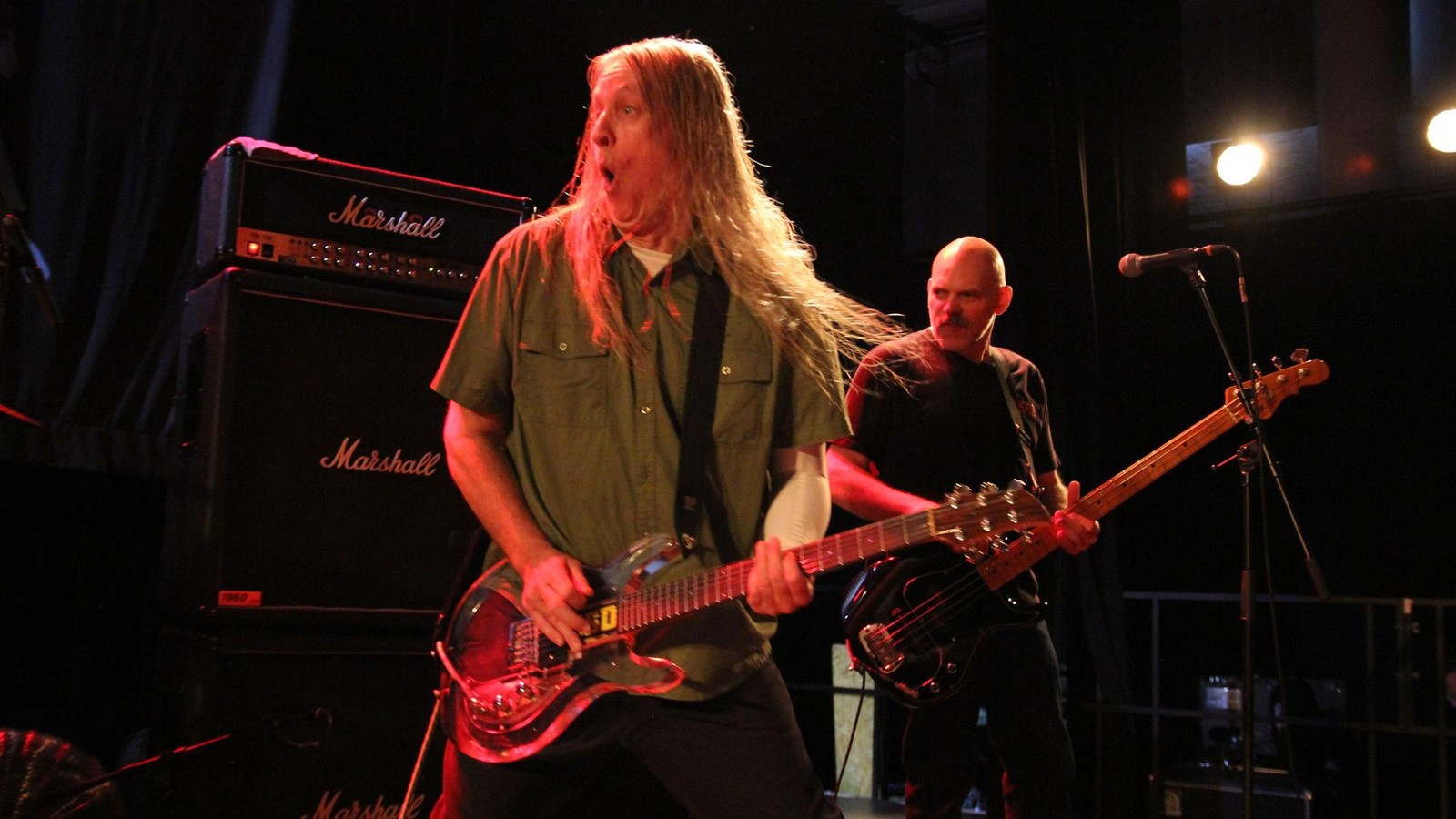
Stated plainly, stoner metal is heavy music built on the Sabbath riff but played for groove rather than for dread. The tempo sits between slow and middling, the guitars are tuned down and driven through fuzz pedals and overdriven valve amplifiers until guitar and bass occupy the same thick band of low frequencies, the songs lean on repetition and long jams, and the debt runs as much to the psychedelic and blues rock of the late sixties, to Blue Cheer and Hawkwind, as to Black Sabbath itself. Stoner rock and stoner metal name the same bands from two ends, the first stressing the seventies inheritance and the second the weight, and the press has never kept the terms apart. The word arrived late, probably from a Roadrunner compilation of 1997 subtitled Music for Stoners.
The difference from doom is not mainly one of tempo, although stoner bands do tend to move faster than the doom bands this history has followed so far. It is a difference of intention. Doom writes about grief, guilt and the approach of death, and it uses its slowness to hold the listener inside that dread for as long as the song can bear it; stoner metal takes the same low, weighted riff and turns it outward, towards the desert, the highway, outer space and the smoke of a long night, and it uses repetition not to oppress but to put a room into a trance. The common ancestry, from the Birmingham quartet to the American bands who took up its slowest songs, is set out in how doom metal began; here we follow the branch that left the funeral early.
Doom is a dirge written for a grave. Stoner metal is the same leaden riff lifted into the bed of a pickup truck and driven out past the last streetlight, where nobody is mourning anything and the only question left is how long the song can keep rolling before the fuel runs out. That is the split, and it opened first in one valley in southern California, in the dark.
The generator parties of the low desert
Born out of the hardcore punk scene of the Coachella Valley, a chain of resort and farm towns strung along the interstate between Palm Springs and Indio, the generator parties took shape in the middle of the 1980s, after Mario Lalli, who had formed his first group, Dead Issue, in 1981 while still at school, came back from a year in Los Angeles and began hosting nights powered by a petrol generator in box canyons, empty swimming pools and abandoned nudist colonies, so that the bands had something to plug into. The parties drew larger crowds through the decade and ended the way such things end, busted by local law enforcement often enough that they wound down and disappeared.
Nobody paid at a generator party, and so nobody in the dark had any reason to pretend that a band was good.
Lalli's own band Yawning Man, formed around 1986 in a shared house in La Quinta with guitarist Gary Arce, drummer Alfredo Hernandez and Lalli's cousin Larry, played long instrumental jams at those gatherings and did not release a studio album until 2005. The younger musicians who would become Kyuss were in the audience first and on the generator's cable afterwards. Josh Homme told Billboard in January 1994 that playing out there "was the shaping factor for the band": there were no clubs, so a band could only play for free, and a crowd that did not like what it heard said so.
We should be precise about the object at the centre of all this, because the romance attached to it later obscures what it was. A petrol generator dragged onto a dry lake bed and run flat out to feed amplifiers built for clubs is a crude, loud, stinking machine that throws off heat and noise in equal measure, and the music that came off those nights took both properties and turned them into a method: the fuzz of a valve amp pushed past its limit and the shimmer of hot air over an engine block reaching the crowd as a single wave, the riff held on one chord for as long as the tank held out, the bass swallowing the treble the way the desert night swallowed the light from the stage. That is not a metaphor for stoner metal. It is the machine the genre was built on.
Kyuss: four albums and a guitar through a bass rig
Formed in Palm Desert in 1987 as Katzenjammer, renamed Sons of Kyuss in 1989 after a creature from Advanced Dungeons and Dragons, and shortened to Kyuss after a debut EP in 1990, the quartet of Josh Homme on guitar, John Garcia on vocals, Brant Bjork on drums and Nick Oliveri on bass released its first full album, Wretch, through Dali in 1991.
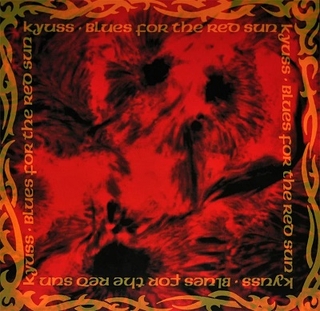
Chris Goss of Masters of Reality produced Blues for the Red Sun with the band at Sound City Studios in Van Nuys, and what he captured was a technique rather than a style. Homme tuned down and ran his guitar through bass amplifiers, and stripped the treble off the instrument the way the desert sun strips paint from a car bonnet, until what came out of the speakers on "Thumb" and "Green Machine" was less a guitar part than a pressure front moving across the room. AllMusic called the album a major milestone in heavy music, and in 2017 Rolling Stone placed it at number 41 among the greatest metal albums ever made. None of that praise sold records in 1992.
Oliveri left in 1992 and Scott Reeder took over on bass for Welcome to Sky Valley, recorded at Sound City in early 1993 and released by Elektra on 28 June 1994. The original CD pressed its ten songs into three long tracks so that "Gardenia", "Demon Cleaner" and "Space Cadet" had to be heard as parts of a sequence. Bjork left once the recording was finished, and Alfredo Hernandez, the drummer from the generator nights, played on ...And the Circus Leaves Town, released on 11 July 1995. Before the year was out Kyuss had broken up. Four albums in five years, and a genre left behind in the sand.
Sleep and Monster Magnet: the same idea in two other places
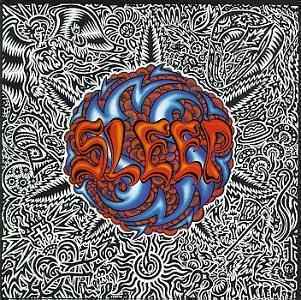
The desert did not have the idea to itself. In the north of the state, the trio from San Jose called Sleep, Al Cisneros on bass and vocals, Matt Pike on guitar and Chris Hakius on drums, recorded Sleep's Holy Mountain with engineer Billy Anderson in San Francisco and saw Earache release it in Britain in November 1992 and in America the following March. The record was so openly built on Black Sabbath that its 2009 reissue added the band's version of "Snowblind", and it placed Sleep beside Kyuss at the head of what the metal press had started calling stoner metal.
On the other coast, the band that Dave Wyndorf founded in Red Bank, New Jersey, in 1989 came at the same sound from the direction of space rock and sixties psychedelia. Monster Magnet put out Spine of God in 1991 through the German label Glitterhouse, signed to A&M, and reached radio with "Negasonic Teenage Warhead" from Dopes to Infinity in 1995. Then the stoner sound reached television. Powertrip, released in 1998, entered the Billboard 200, the American album sales chart, at number 97 and was certified gold on 25 January 1999; its single "Space Lord" climbed to number three on the Mainstream Rock chart, and its video was the first ever aired on MTV's Total Request Live, on 14 September 1998. No band in this chapter came closer to the mainstream in the nineties.
| Year | Band | Record | Label |
|---|---|---|---|
| 1991 | Monster Magnet | Spine of God | Glitterhouse |
| 1992 | Kyuss | Blues for the Red Sun | Dali |
| 1992 | Sleep | Sleep's Holy Mountain | Earache |
| 1994 | Kyuss | Welcome to Sky Valley | Elektra |
| 1996 | Fu Manchu | In Search Of... | Mammoth |
| 1996 | Spiritual Beggars | Another Way to Shine | Music for Nations |
| 1997 | Orange Goblin | Frequencies from Planet Ten | Rise Above |
| 1998 | Monster Magnet | Powertrip | A&M |
| 2000 | Electric Wizard | Dopethrone | Rise Above |
Fu Manchu: the riff on four wheels
Born out of an Orange County hardcore punk band called Virulence, formed in 1985 and renamed in 1990, the quartet built around guitarist and singer Scott Hill stood slightly apart from the desert bands from the start. Fu Manchu came from the coast rather than the valley, it kept a punk band's appetite for speed long after it had taken on the fuzz, and it filled its songs and sleeves with muscle cars and drag racing instead of smoke and outer space. Its debut, No One Rides for Free, came out on the Los Angeles independent Bong Load in 1994 with Brant Bjork of Kyuss producing, and Daredevil followed on the same label in 1995.
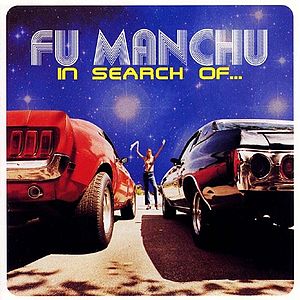
In Search Of..., released by Mammoth on 27 February 1996 and produced by the band with Brian Jenkins in Hollywood, is where the formula locked. Hill, lead guitarist Eddie Glass, bassist Brad Davis and drummer Ruben Romano pressed their riffs flat and wide like tyre tread laid across hot tarmac, and on "Regal Begal", "Asphalt Risin'" and "Neptune's Convoy" the groove runs over the listener rather than sinking into him. CMJ New Music Monthly heard down-tuned, fuzzed-out riffage in the heavy tradition, Kerrang! gave the record four out of five, and the sleeve set a visual code that a decade of stoner artwork went on copying.
The line-up broke the following year. Glass and Romano left in 1997 to form Nebula, and Hill replaced them with Bjork on drums and Bob Balch on lead guitar. The Action Is Go, produced by Jay Yuenger of White Zombie and released on 7 October 1997, is in AllMusic's reading a record with punk energy, classic rock drive and psychedelic crunch at once. King of the Road followed in February 2000, produced by Joe Barresi at Monkey Studios in Palm Desert, so the coast band recorded its most road-bound album in the valley of the generator parties; it carried a cover of Devo's "Freedom of Choice", and USA Today later called it a stoner milestone.
Bjork left after California Crossing in 2001, and with Scott Reeder, a drummer who shares his name with the Kyuss bassist but is a different musician, the line-up of Hill, Balch, Davis and Reeder settled and has held ever since. The band later moved its catalogue to its own label, At the Dojo, and the double album The Return of Tomorrow arrived in 2024, three decades after the debut. We say it bluntly: Fu Manchu is the clearest proof in the genre that stoner metal is not simply doom played in a better mood. Its songs are fast, its subjects are chrome and asphalt, grief has never been its subject, and it is still heavy, because the weight was always in the tone and never in the tempo.
Doom carries the riff towards a grave. Stoner metal carries it to the next party, and the difference was never how slowly the song moved so much as where the song believed it was going.
Ilse Brandt, KaosMetal
Man's Ruin, MeteorCity and the ten-inch economy
A genre whose founding album had sold thirty-nine thousand copies in its first eighteen months could not live on major labels, and it did not. Founded in San Francisco in 1994 by the poster artist Frank Kozik, Man's Ruin Records put out more than two hundred singles and albums in seven years, most of them limited ten-inch EPs in sleeves Kozik drew himself, pulled off the schedule the way posters come off a press, one run, gone, and the next already drying. Man's Ruin issued Kyuss's cover of Black Sabbath's "Into the Void" in 1996, after the band had split, and in December 1997 a split EP that joined the dead band to the new one and put the name Queens of the Stone Age on a record for the first time. Fu Manchu, Acid King, Orange Goblin and Electric Wizard all passed through its catalogue. A change of distributor and the loss of its lease in the dot-com boom finished it at the end of 2001.
The second house of the genre came from further inland. MeteorCity was founded in 1997 in Albuquerque, New Mexico, by Jadd Shickler and Aaron Emmel, and its first release, the 1998 compilation Welcome to MeteorCity, gathered unsigned bands working in the Kyuss manner alongside new projects from the first wave, among them John Garcia's Unida. Thirteen years later the label would put out an early album by a young band from Massachusetts that the last section of this chapter returns to.
Europe takes the fuzz: Rise Above, Orange Goblin and Spiritual Beggars
In Britain the path ran through a single label. Founded in London in 1988 by Lee Dorrian, the former Napalm Death singer who went on to front Cathedral, and paid for at the start through the Enterprise Allowance Scheme, a government grant for unemployed people who set up a business, Rise Above Records took its name from a Black Flag song and spent its first releases on hardcore. Its founder's growing obsession with slow music turned it towards doom, towards the American bands of the eighties and the Swedish school of epic doom metal, and in the middle of the nineties towards the younger British bands who had heard Kyuss and Sleep and wanted the groove as well as the weight.
Two of those bands arrived together. Orange Goblin, formed in London in 1995 as Our Haunted Kingdom, shared a seven-inch single with Electric Wizard on Rise Above in 1996 and then issued Frequencies from Planet Ten in 1997, Time Travelling Blues in 1998 and The Big Black in 2000, with Ben Ward singing on every record the band has made; on 22 January 2025 the quartet announced that it would split at the end of its thirtieth anniversary tour. Electric Wizard, the trio from Dorset, took the other road: Dopethrone, released by Rise Above on 25 September 2000, dragged the stoner riff back down into doom's cellar and buried the groove under a wall of distortion, and Terrorizer later named it the best album of the decade.
The Swedish answer came from a guitarist who had just left a grindcore band, and nothing shows more clearly how far the fuzz had travelled by 1994.
Sweden supplied the other European pole. Formed in Halmstad in 1993 by Michael Amott after he had left the British grindcore band Carcass, and before he founded Arch Enemy, Spiritual Beggars released its self-titled debut in 1994, then Another Way to Shine in 1996, which was nominated for a Swedish Grammy, and Mantra III in 1998 on Music for Nations. The continent also built the genre its meeting places: Roadburn, started in 1999 in the Dutch city of Tilburg by Walter Hoeijmakers and Jurgen van den Brand as an offshoot of their stoner rock webzine of the same name, which later outgrew the stoner label it was founded on.
After the desert: the 2000s and the present
The guitarist of Kyuss took the riff to the radio. Queens of the Stone Age reached number one on the Billboard Modern Rock Tracks chart with "No One Knows" from Songs for the Deaf in 2002. The others kept to the underground. Garcia and Bjork revived the old songs as Kyuss Lives! in 2010, Homme and the former Kyuss bassist Scott Reeder sued over the name in March 2012, and after a court barred the name from recordings that August the band continued as Vista Chino.
The records that carried the genre past its founders came from further north. Red Fang, the quartet formed in Portland, Oregon, in 2005, released its self-titled debut on Sargent House in 2009, won an audience with the video for "Prehistoric Dog" in 2010 and moved to Relapse for Murder the Mountains in 2011. The Massachusetts band Elder, formed in the middle of the 2000s and led by guitarist and singer Nick DiSalvo, issued Dead Roots Stirring through MeteorCity in 2011 and Reflections of a Floating World in 2017, which Rolling Stone ranked fifth among the metal albums of that year, stretching the desert riff past the ten-minute mark before the band moved to Berlin.
Europe answered in kind. Monolord, the Gothenburg trio of Thomas V Jäger, Mika Häkki and Esben Willems, formed in 2013 with the same three members it still has, released Empress Rising through RidingEasy on 1 April 2014 and moved to Relapse for No Comfort in 2019. Mars Red Sky, formed in Bordeaux in 2007, has worked the psychedelic end of the seam from its 2011 debut to Dawn of the Dusk in 2023, and in Kyiv Stoned Jesus released Seven Thunders Roar on 21 March 2012, whose sixteen-minute "I'm the Mountain" had, by September 2026, drawn more than sixteen million views on a single YouTube upload. A song that long, from a band nobody in the Coachella Valley had heard of: the method outlived the machine.
Stoner metal therefore answers its own question. It is the Sabbath riff with the grief taken out and the fuzz turned up, a music that survived on ten-inch singles, mail-order labels and festivals run by webzine editors until it reached every continent that owns a fuzz pedal. The same riffs, slowed, soured and crossed with hardcore punk in the bars of New Orleans, produced something much uglier, and that branch is the subject of the sludge chapter.
