
I felt a funeral in my brain, / And mourners, to and fro, / Kept treading, treading, till it seemed / That sense was breaking through.Emily Dickinson, Poems: Third Series
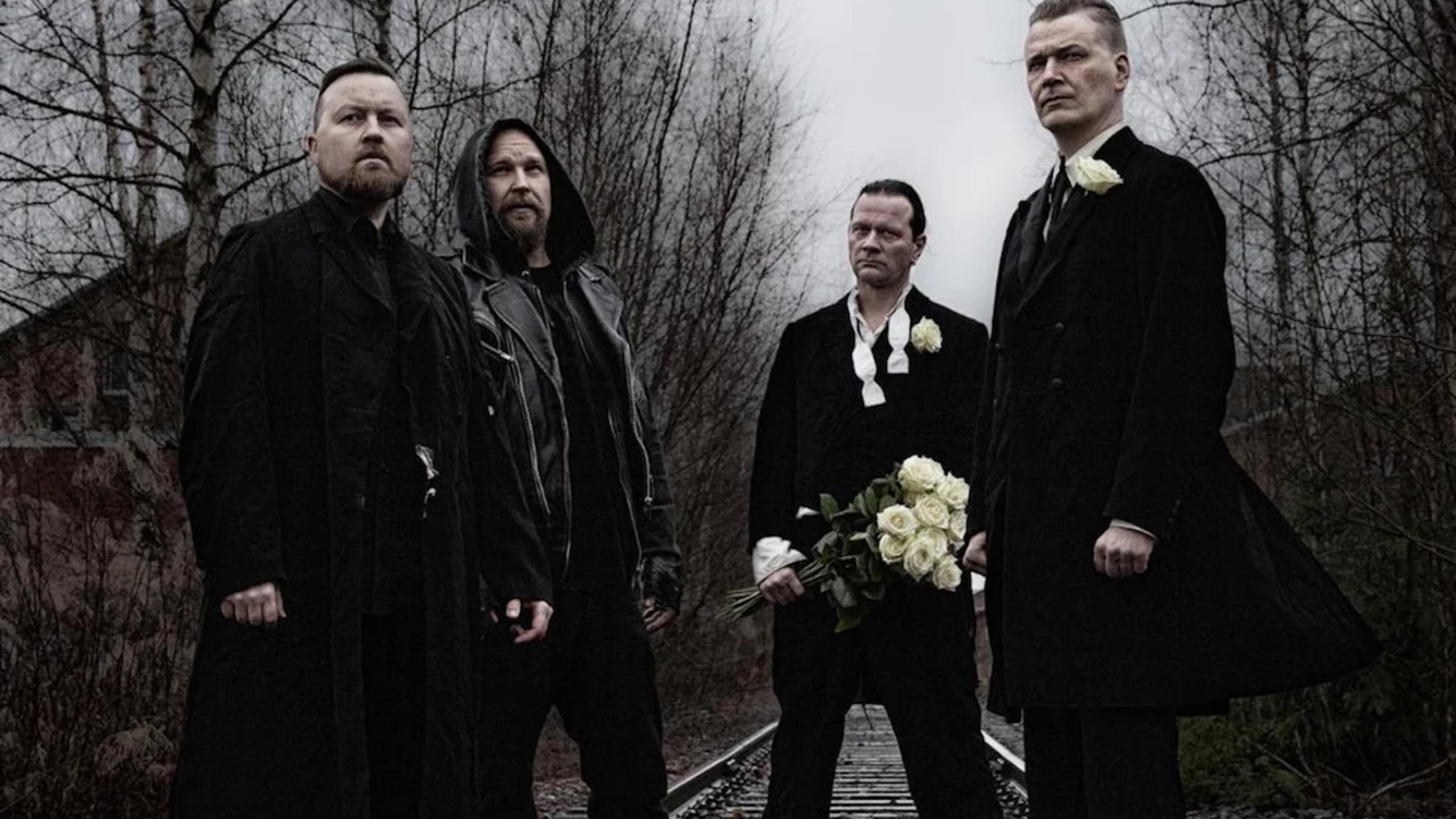
Formed in 1990 in the south-west of Finland, recorded in the autumn of 1992 and dissolved in the spring of 1993, more than a year before its only album reached a record shop, the band called Thergothon took the oldest instinct in doom, which was to play slower than anybody in the room wanted, and drove it past the point at which a song still moves forward at all. A year after that album appeared, the four Finns in Skepticism laid the sound of an organ underneath the same slowness and made it permanent. Funeral doom metal is what the two bands left standing. It is the slowest music in fifty years of slow music, and we think it is also the most misunderstood branch of the family, heard by newcomers as an exaggeration of doom rather than as a separate discipline with its own strict rules about time.
Those rules are few, and none of them is negotiable. The tempo is set not by the heartbeat or the tapping foot but by the time a struck chord takes to die away, and the voice sits so low, in the mix and in the throat, that it reads less as a singer than as the floor of the room.
Funeral doom does not play a song slowly. It removes the reason a song would ever need to arrive.
What the name means: tempo, organ and the held chord
The name has two stories behind it, and neither has been settled. One traces it to Funeral, the Norwegian band formed in Drammen in 1991 by Thomas Angell and Anders Eek, whose 1995 debut Tragedies set a female voice over death doom played at a crawl. The other traces it to the keyboard tone on Skepticism's first album, which to many listeners in the middle of the 1990s sounded less like a metal record than like the instrument at the front of a chapel during a burial. Decibel, writing about that album for its Hall of Fame, treated the new tag as a way of setting the hypnotic Finnish approach apart from the more conventional doom death running alongside it.
Musically, the name is exact, and for a reason that has little to do with lyrics about grief. A funeral cortege moves at walking pace because it is carrying something, and the whole procession behind the hearse, the family, the priest, the neighbours in their dark coats, must slow to the speed of the six people bearing the coffin on their shoulders; the music that took the name is organised the same way, every instrument slowed to the pace of the heaviest thing in the arrangement, which is the held chord. The guitarist strikes it and lets it ring. The drummer waits until the note has nearly gone before placing the next kick and cymbal, so that the beat stops being a pulse the body can follow and becomes a series of footfalls set a long way apart. The organ or synthesiser, playing sustained tones that do not decay, fills the space the guitar leaves as it fades, and that is the whole mechanism of the style: the keyboard is the pallbearer, holding the weight level while everybody else takes the next step.
Everything else follows from that arrangement. Riffs in the thrash sense mostly disappear, replaced by minor key figures of a few notes stretched across a minute or more, and songs of fifteen or twenty minutes stop being indulgence and become the minimum length in which a structure played at this pace can complete a single turn. The production is wide and wet with reverb, because a chord that has to ring for eight seconds needs a room to ring in. It is not slow for effect. It is slow because the structure collapses at any other speed.
Thergothon and the record released after the band had gone
The band titled its first demo in the invented language of H. P. Lovecraft's Cthulhu stories and put out Fhtagn nagh Yog-Sothoth in November 1991 in a run of 600 copies, a tape licensed to labels in the United States and Poland that carried a slowness few in the Finnish underground were attempting. By October and November 1992, when Niko Skorpio on vocals and keyboards, Mikko Ruotsalainen on guitar and Jori Sjöroos on drums recorded their album with the engineer Markus Patrikainen, the second guitarist Sami Kaveri had already gone, and in the spring of 1993, with the tapes finished, the three decided to stop.
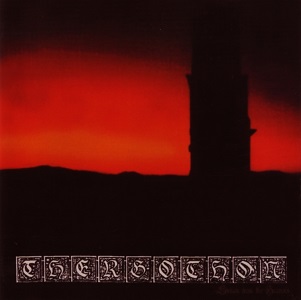
Released by the Italian label Avantgarde Music on 15 June 1994, Stream from the Heavens runs a little under forty-one minutes across six tracks, and it reached the shops as the work of a band that no longer existed. "Elemental" and "Yet the Watchers Guard", each close to nine minutes, carry the weight of the record, and Skorpio's growl is answered in places by a clean voice, the sleeve crediting the drummer Sjöroos with vocals as well. In 2014 Decibel placed the album ninth among the hundred best doom records ever made.
The album did its work slowly. Reissued on CD by Avantgarde at the turn of the century and pressed on vinyl for the first time in 2004 by the Belgian label Painiac, in 500 copies, the only record the Finnish trio made became, in this corner of the underground, a founding charter. Its makers had moved on. Skorpio and Sjöroos formed This Empty Flow, which drifted from shoegaze into trip hop, and Sjöroos later wrote songs for the Finnish pop group PMMP.
Skepticism and the organ that sets the pace
Formed in Riihimäki in 1991 and made up today of Matti Tilaeus on vocals, Jani Kekarainen on guitar, Eero Pöyry on keyboards and Lasse Pelkonen on drums, the quartet that gave funeral doom its liturgy passed through a seven inch single, "Towards My End", in 1992 and the demo Aeothe Kaear in 1994 before signing to Red Stream, the small label that released all of its studio records up to 2008. The Finnish four have treated the band as an institution, and their sound has changed the way an old church changes, by addition, never by demolition.
Recorded in 1994 and released by Red Stream in 1995, Stormcrowfleet runs fifty-seven minutes across six pieces, and from the opening "Sign of a Storm" it is plain that the keyboard is not colouring the guitars but leading them, with a pipe organ tone that Decibel, inducting the record into its Hall of Fame as entry number 110 in 2014, describes as funnelled through an amplifier cabinet so that it could carry the band's whole low end. The drums under it land like spadefuls of earth on a lowered coffin, each placed no sooner than the gravedigger's arm allows, and Tilaeus growls from so far back in the mix that he sounds less like a frontman than like the voice of the ground. "By Silent Wings" draws its figure out so far that the ear stops hearing melody and starts hearing masonry. Decibel makes the point that matters: an organ carrying the harmony and the low end together is what set this band apart from the doom death groups of 1995.
The man at the keyboard has always refused the reading the genre's name invites. Looking back on the album for Decibel in July 2020, Pöyry said his instrument was his own keyboard with bass pedals, still his main instrument, and he rejected the idea that the music was about sadness or depression, calling it a purely aesthetic choice: "slow, heavy and dark is beautiful to my ears." It explains why Skepticism never needed a mythology to justify the tempo, and why their records sound composed rather than acted out as mourning. The funeral in the name is the pace and the timbre, not the subject.
What came after Stormcrowfleet is a catalogue of additions. Lead and Aether, recorded in the autumn of 1997, followed in 1998, then Farmakon in 2003 and Alloy in 2008, all on Red Stream. Seven years of silence were broken by Ordeal, issued by Svart Records in 2015 with a DVD and recorded live on stage at Klubi in Turku on 24 January 2015, the night every new song on it was played in public for the first time. A band that composes at the speed of a burial chose to premiere a whole album without a second take. Companion, their sixth full-length, followed on Svart in 2021.
England, America and Australia: the first map
Funeral doom was never only Finnish. In the same years, bands in three other countries reached something close to it by different roads, most of them starting from death doom metal, the British and American hybrid of the early 1990s, and slowing it until the death metal elements stopped carrying the songs and merely haunted them. The Australian band diSEMBOWELMENT, whose only album Transcendence into the Peripheral came out on Relapse in 1993, is the usual example of the crossing point, moving between blast beats and passages of near stillness.
| Year | Band | Country | Record | Label |
|---|---|---|---|---|
| 1993 | diSEMBOWELMENT | Australia | Transcendence into the Peripheral | Relapse |
| 1994 | Thergothon | Finland | Stream from the Heavens | Avantgarde Music |
| 1994 | Esoteric | England | Epistemological Despondency | Aesthetic Death |
| 1995 | Skepticism | Finland | Stormcrowfleet | Red Stream |
| 1995 | Funeral | Norway | Tragedies | Arctic Serenades |
| 1999 | Worship | France and Germany | Last Tape Before Doomsday | Cassette demo |
| 2001 | Shape of Despair | Finland | Angels of Distress | Spikefarm |
| 2005 | Mournful Congregation | Australia | The Monad of Creation | Weird Truth |
Formed in 1992 by Greg Chandler, who has sung on every record and added guitar from 1999, the English band Esoteric came at the style through the psychedelic records of Pink Floyd and Spacemen 3 as much as through Morbid Angel and My Dying Bride. Epistemological Despondency, recorded at Rich Bitch Studios in June 1994 and released that October as a double CD by Aesthetic Death, runs eighty-nine minutes, with three guitarists laying swirling effects and speech samples over riffs slowed until they subside under their own weight. Where Skepticism built a chapel, Esoteric filled its nave with smoke until the altar could no longer be seen. The band has made records at that scale ever since, as recently as A Pyrrhic Existence in 2019.
The New Jersey band Evoken, founded in April 1992 by the guitarist Nick Orlando, with Vince Verkay on drums from the start and the guitarist and vocalist John Paradiso joining in 1994, took the American road into the style and is among the earliest death doom bands in the United States still active. From Embrace the Emptiness in 1998 to Mendacium in 2025, its patience with its own pace has carried it through more than three decades.
The fourth founding band went fifteen years without playing a note in public. Formed in 1993 around the guitarist and vocalist Damon Good, Mournful Congregation released Tears from a Grieving Heart in 1999 and The Monad of Creation in 2005. The Australians gave their first concerts in 2009, the year of The June Frost, and when The Book of Kings followed in 2011, Rae Amitay, reviewing it for Last Rites that December, singled out a melodic line of heartbreaking simplicity and acoustic guitar work of real craft, proof in her reading that funeral doom could carry a tune without letting go of the dirge beneath it.
Shape of Despair, Worship and Tyranny: the second generation
By the turn of the millennium the style had a second generation that knew the founding records by heart. The Finnish band Shape of Despair, formed in 1995 as Raven and renamed in September 1998 to avoid confusion with a British hard rock band, was built around the guitarist and keyboard player Jarno Salomaa and gave funeral doom its gentlest face. On Angels of Distress, released by Spikefarm in 2001, Natalie Koskinen's voice hangs over the slow riffs like a veil laid across a catafalque, while Pasi Koskinen, at the time the singer of Amorphis, takes the lead vocals. After Illusion's Play in 2004 the band was silent for eleven years, returning with Monotony Fields on Season of Mist in 2015.
The story of Worship, a French and German duo, has to be told plainly. Founded at the end of the 1990s by the Frenchman Max Varnier, who called himself Fucked Up Mad Max, and the German Daniel Pharos, known as The Doommonger, the pair released the demo Last Tape Before Doomsday on cassette in 1999. Varnier died in 2001. In 2003 Pharos decided that the band would go on and set about finishing the full-length the two had been preparing, and Dooom came out on Endzeit Elegies in 2007.
The Finnish duo Tyranny, Matti Mäkelä and Lauri Lindqvist, both formerly of Wormphlegm, with Mäkelä also a guitarist in the death metal band Corpsessed, stand at the opposite pole from Shape of Despair, with almost nothing melodic to soften the weight. Their debut Tides of Awakening appeared in 2005, and its successor took a decade: Aeons in Tectonic Interment, released by Dark Descent Records on 18 September 2015, is five tracks and just over fifty-one minutes from the leaden, choking end of the style, a record that presses the last trace of consolation out of each chord before it lets the chord ring.
A slow band plays the riff at half speed. A funeral doom band plays the silence after the riff at full length, and makes you wait through every second of it.
Andrzej Sawicki
Ahab and Loss: the sea and the American south
The German quartet Ahab carried funeral doom out of the chapel and onto open water. Founded in 2004 by the guitarists Christian Hector and Daniel Droste, both formerly of Midnattsol, the band took its name and its first subject from Herman Melville's Moby-Dick, quoting the novel directly in its lyrics, with songs that roll like a long swell passing under a whaler's hull, lifting the whole vessel and setting it down again a minute later. The Call of the Wretched Sea, released by Napalm Records in 2006, was the first full-length of a band that kept widening the frame, as far as The Boats of the "Glen Carrig" in 2015, drawn from a sea novel by William Hope Hodgson.
No band has taken the grief in the genre's name more literally than Loss, the Nashville quartet built around the vocalist and guitarist Mike Meacham. Despond, the band's first album for the Canadian label Profound Lore, arrived in 2011 as funeral doom with the consolations stripped out: The Obelisk heard in it an almost total absence of hope, and even the two-minute piano piece that gives the album its title keeps to the low notes, with a drone beneath them. Six years later the producer Billy Anderson recorded Horizonless with the band in their home state, and Profound Lore released it on 19 May 2017.
Where Skepticism's organ lifts the harmony, Loss lower it into the ground and stand on it.
Bell Witch, Mirror Reaper and the long form now
The American duo Bell Witch, formed in 2010 by Dylan Desmond on bass and vocals and Adrian Guerra on drums and vocals, removed the guitar from funeral doom altogether and gave its melodic line to Desmond's bass. Longing followed in 2012 and Four Phantoms on Profound Lore on 28 April 2015. Guerra left the band in 2015. He died in May 2016. Jesse Shreibman took over the drums and added a Hammond organ, which brought back the organ tone Skepticism had put at the centre of the style two decades earlier.
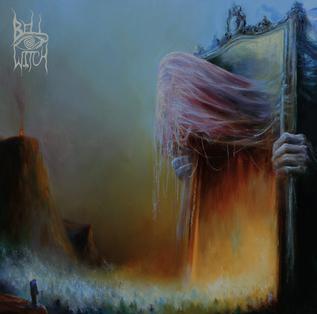
Released by Profound Lore on 20 October 2017, Mirror Reaper is a single composition of eighty-three minutes, divided into parts on CD and vinyl only because the formats demanded it, and recorded at Hallowed Halls with the producer Billy Anderson. The organ holds the harmony level much as Pöyry's keyboard did in 1995, while the six-string bass lets each chord sink and does not so much fill the room as lower its ceiling, a few inches at a time, for the best part of an hour and a half. A brief passage built from vocals Guerra had recorded for the previous album and never used marks the turn at the centre of the piece, and Erik Moggridge sings over its closing section. Metacritic's aggregate stood at 85, Pitchfork gave the album 8 out of 10 and PopMatters named it the best metal record of 2017.
Bell Witch have since pushed the long form further than anyone. Future's Shadow Part 1: The Clandestine Gate, released by Profound Lore on 21 April 2023, is again a single piece, eighty-three minutes long, the first of a planned triptych in which, as Desmond has explained, the parts stand for dawn, noon and sundown, and the end of the third is meant to overlap the beginning of the first so that the whole could play on a loop without end. That is where funeral doom stands in the 2020s. A style first set down on a tape of 600 copies now measures its ambitions in hours, and its next step, the riff held so long that it stops being a riff at all, belongs to the drone chapter.
