
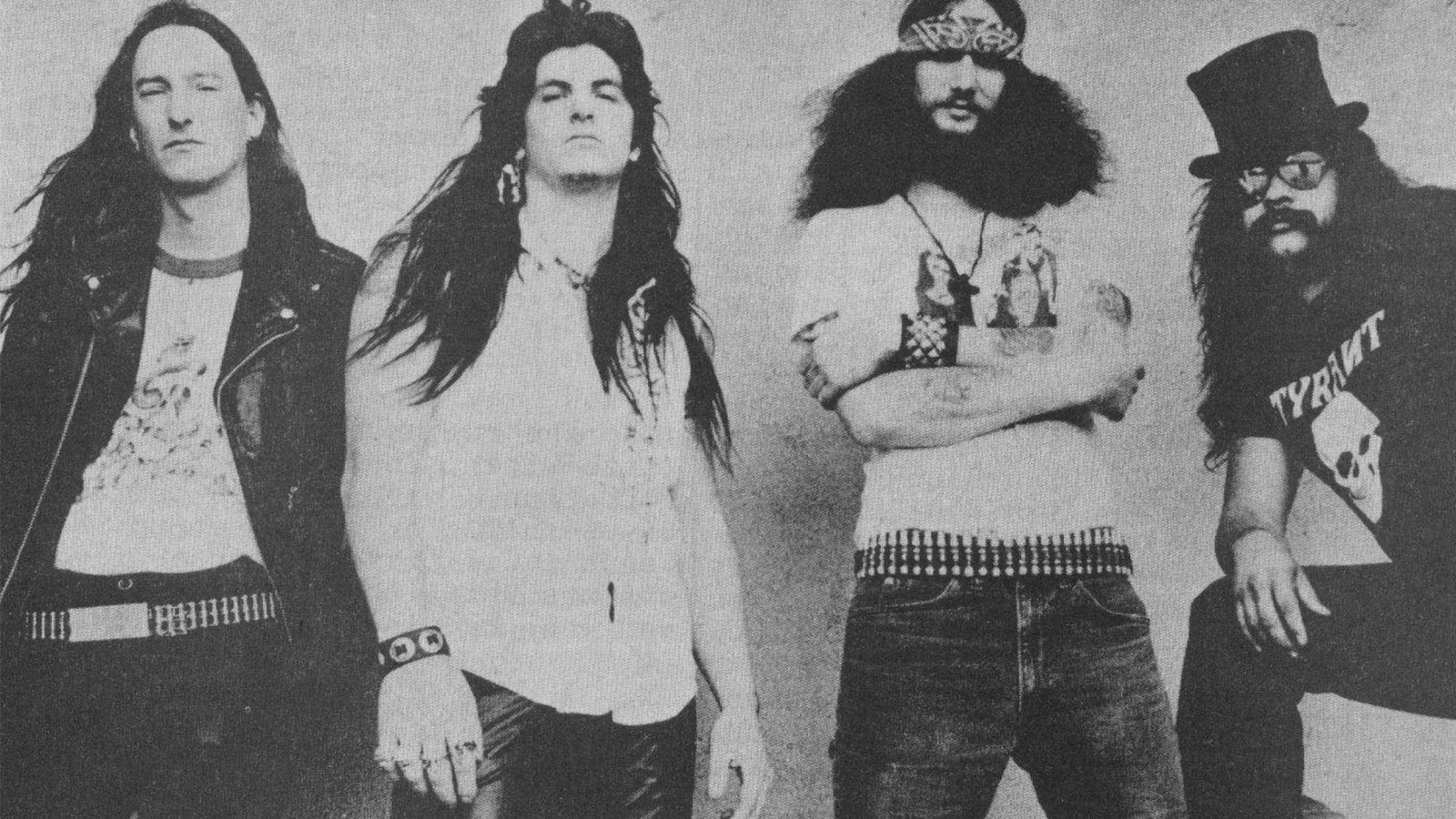
On 16 and 17 August 1982, at Total Access Recording in Redondo Beach, Saint Vitus recorded the five songs of their first album, and SST Records, tied up in its lawsuit with Unicorn Records until late in 1983, did not release them until early 1984. That gap tells us what doom metal was at the start of the decade that named it: a music with no market, recorded cheaply by people who were in no hurry because nobody was waiting for them. The four Los Angeles men who had called themselves Tyrant until 1980, and who then took their new name from the Black Sabbath song "St. Vitus Dance", were playing slower than anyone in American metal at the precise moment American metal had decided speed was the only virtue it had left, and the record that came out of those two days, with "White Magic/Black Magic", a "The Psychopath" running past nine minutes and "Burial at Sea" past eight, did not so much enter the market of 1984 as block the road through it.
We followed where doom metal came from in the previous chapter, from Black Sabbath slowing the blues to a crawl to Pentagram spending the seventies around Washington without ever putting out an album. The eighties are the chapter in which that inheritance became a genre, and the way it happened resembles the raising of a stone circle far more than the founding of a scene: a handful of crews who did not know one another, on two coasts of America and in a Swedish commuter town, each hauling one enormous block into position by hand, with no machinery, no money and nobody watching, and only at the very end of the decade did anyone step far enough back to see that the stones stood in a ring. Every record in this chapter was raised that way. None was lifted by a crane.
"It is Stonehenge!" said Clare. "The heathen temple, you mean?" "Yes. Older than the centuries; older than the d'Urbervilles!"
Thomas Hardy, Tess of the d'Urbervilles
A metal band on a hardcore label
SST Records, the label Black Flag guitarist Greg Ginn had set up in 1978 to release his own band and which by the early eighties carried a large share of the American hardcore that mattered, was the least likely home on the continent for a band that worshipped Black Sabbath. Spotted by Black Flag at a live show, Saint Vitus were taken on by Ginn, as guitarist Dave Chandler put it in a video interview filmed in London in 2017, because they were the complete opposite of what was popular in metal, and the line-up that carried that opposite onto punk bills, Scott Reagers singing, Chandler on guitar, Mark Adams on bass and Armando Acosta on drums, went out on the road with Black Flag in front of crowds who had paid for ninety second songs and were handed nine minute ones.
The crowds did not take it well. Decibel, the American metal monthly, has described a band that spent most of its touring life getting spat on alongside Black Flag, the Mentors and the Brood, and the quartet that hardcore could not digest answered the only way it knew, by refusing to speed up by a single beat, standing on one chord for long enough that the pit in front of the stage stopped moving and looked up at the amplifiers as if something in them had failed. Nothing had failed. The Walking Dead, a three song EP, and the second album Hallow's Victim both followed on SST in 1985, both recorded at Total Access with the label's house producer SPOT and with Joe Carducci, and on the title track and the seven and a half minute "Mystic Lady" the same four men went on dragging their riffs across the floor of a scene that wanted them gone. Hallow's Victim was the last record Reagers made with the band for ten years; he left early in 1986, in the middle of a tour by Decibel's account.
Trouble, Metal Blade and the white metal sticker
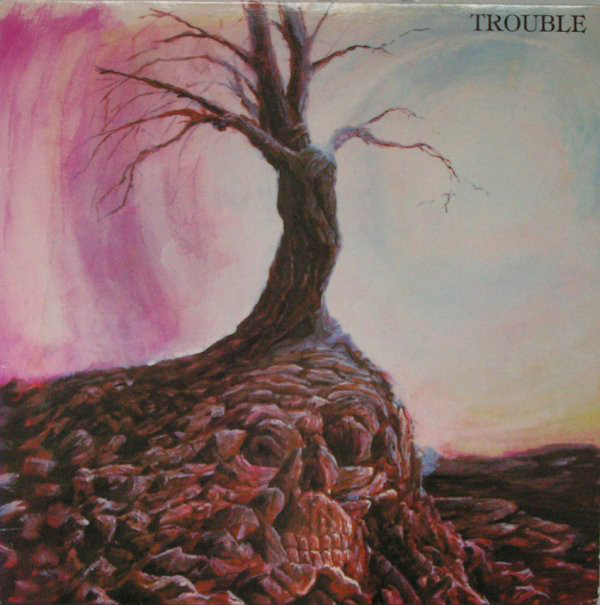
Halfway across the country a second block was already moving. Founded by guitarist Rick Wartell while he was still at high school in the Chicago area at the end of the seventies, and rebuilt in 1981 through an advertisement in the music paper Illinois Entertainer that brought in guitarist Bruce Franklin, singer Eric Wagner and drummer Jeff Olson, Trouble recorded a concert in Chicago on 5 February 1983, and Olson posted the tape to Brian Slagel, whose Metal Blade Records had grown in Los Angeles out of the Metal Massacre compilations of unsigned bands. The debut followed in March 1984, recorded the month before at Track Record Studios in Los Angeles, finished inside a week including the mixes by Wartell's recollection, and produced by Bill Metoyer and Slagel with the band, with Sean McAllister on bass and the two guitars of Franklin and Wartell pulling each riff between them like two men leaning on the same rope.
Metal Blade sold the five from Illinois as white metal, a marketing term built as the mirror image of the black metal Venom had named two years earlier, because Wagner took his lyrics straight out of the King James Bible: "The Tempter" works from the fourth chapter of Matthew, and the song "Psalm 9" sets its verses directly. The German magazine Rock Hard gave the record three out of ten, AllMusic later gave it four and a half stars, and between those two numbers sits the whole difficulty Trouble posed to the metal writers of 1984, who had a column for speed, a column for Satan and no column at all for a band singing scripture at the tempo of a dirge. The Skull came in 1985, its lyrics shaped, by the band's account, by Wagner's substance abuse and by tension inside the group. Ron Holzner then replaced McAllister, Olson left to study at the Berklee College of Music, Dennis Lesh drummed on Run to the Light in 1987, which critics received as a disappointment, and three quiet years passed before Rick Rubin signed the band to Def American and produced a second self-titled album with drummer Barry Stern in 1990.
Witchfinder General stops, Pentagram surfaces
In England the band that had come nearest to the same idea set its stone down and walked away. Formed in Stourbridge in 1979 by singer Zeeb Parkes and guitarist Phil Cope inside the new wave of British heavy metal, the movement of young bands that rebuilt British metal out of pub back rooms and independent singles at the turn of the decade, Witchfinder General made Death Penalty in 1982 for Heavy Metal Records and Friends of Hell in 1983, and dissolved at some point in 1984. AllMusic later wrote that their influence on the emergence of doom could not be ignored. That is a sentence about 1990, not about 1984. In 1984 nobody in Britain picked the stone up.
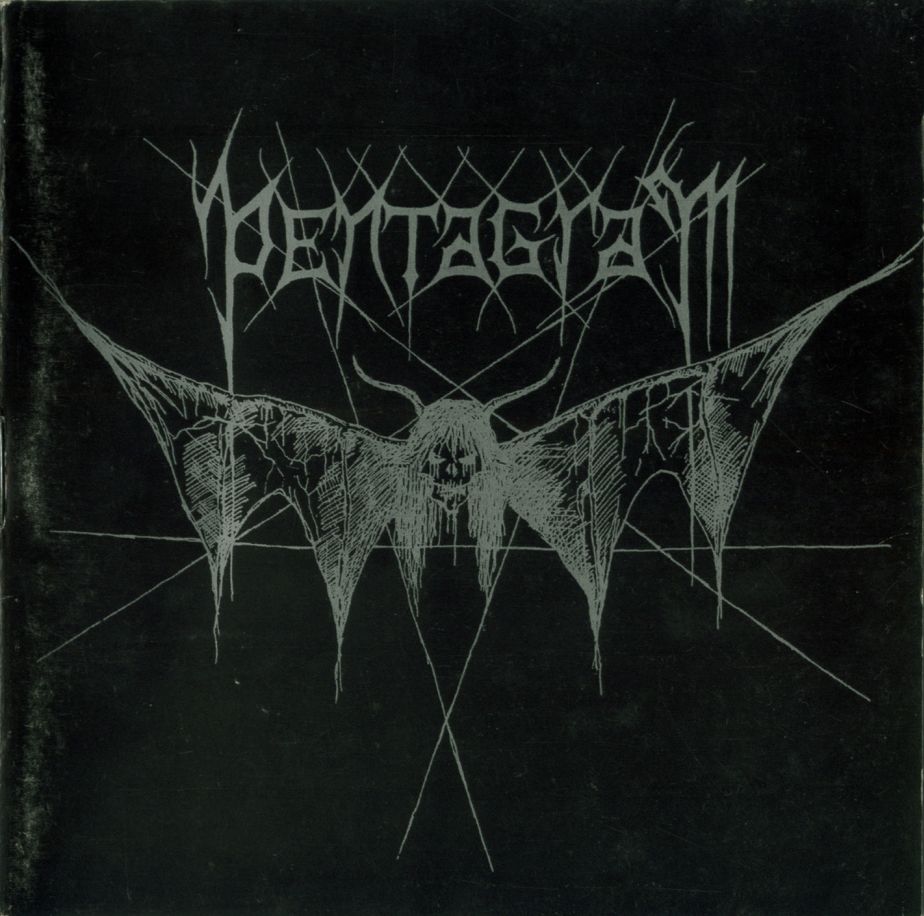
The American forebears had meanwhile spent more than a decade without an album of their own. Bobby Liebling, singer of Pentagram since 1971, joined Death Row, a band that guitarist Victor Griffin and bassist Lee Abney had formed in Knoxville, Tennessee, in 1980, and the group went back to the old name; sessions cut in 1981 and 1982, with vocals and guitars redone in 1984, finally came out in 1985 on the band's own Pentagram Records as a self-titled album with Martin Swaney on bass, the drum tracks Joe Hasselvander had laid down on those early sessions, and "Relentless", "All Your Sins" and "Sign of the Wolf (Pentagram)" among its songs. Reviewing it for AllMusic, Eduardo Rivadavia called it "a raw, untainted slab of pure doom metal", and Peaceville reissued it in 1993 as Relentless. Day of Reckoning followed in 1987 on a small label called Napalm Records with Stuart Rose drumming on all but "Burning Savior", and with "Madman" and "When the Screams Come" among its seven songs, after which the band folded.
The eighties did not lack doom records. They lacked anyone willing to release them while they were still new.
Down the same stretch of the East Coast the story repeated itself almost note for note. Scott Weinrich, known as Wino, had led The Obsessed in Potomac, Maryland, since the late seventies, the band having grown out of the Warhorse he started in 1976, released the Sodden Jackal EP on Invictus in the spring of 1983, placed "Concrete Cancer" on Metal Blade's sixth Metal Massacre compilation, and in 1985 recorded a full album for Metal Blade that the label then left on the shelf. Stone quarried, shaped and left lying at the edge of the pit for five years. The Obsessed broke up, and in 1986 their singer went west.
Wino crosses the continent
The singer from Maryland with an unreleased album behind him arrived in California to replace Scott Reagers, and the line-up he completed, Weinrich, Chandler, Adams and Acosta, became the longest lasting Saint Vitus ever had. It is also the one on which the band's reputation mostly rests. The riffs were still Dave Chandler's; what changed was the man delivering them, a singer who had already spent ten years on club stages with no record deal to show for it.

Recorded in 1986 at Total Access with Joe Carducci producing and released by SST in October that year, Born Too Late is the record most writing on the band names as its best, and in March 2010 Decibel inducted it as number 61 in its Hall of Fame of canonical records, singling out the title track as the song that captured the band's quarrel with the rest of the world. "Born Too Late" is a statement of exile set to a riff that does not advance so much as lower itself onto the listener, one leaden chord at a time, each held until the room has taken the full load before the next is let down, while "Clear Windowpane" and "Dying Inside" take the same slowness into Chandler's lyrics about acid trips and drink. The long-haired anachronisms who had been jeered on hardcore bills had written their answer, and it ran at half the speed of the question.
Thirsty and Miserable, a 1987 EP, took its title from the Black Flag song it covered, a debt paid back to the house band of the label, and Mournful Cries followed on SST in 1988 before the band moved, around 1989, to Hellhound Records, a German label founded in 1988, distributed through Noise Records and run until 1996 under the slogan "The Heaviest Label On Earth". Hellhound matters to any honest account of doom metal history because it made slowness its whole catalogue, from Saint Vitus to the Maryland doom bands it signed in the early nineties, and in 1990 it issued Saint Vitus's V and a live album, then gave the shelved 1985 recordings of The Obsessed their release at last.
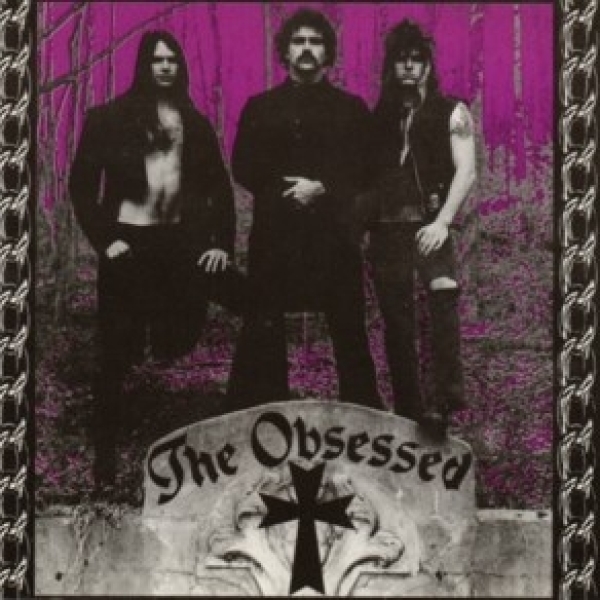
That release pulled Wino back east. He left Saint Vitus in 1991 to re-form The Obsessed, who put out Lunar Womb on Hellhound the same year and signed to Columbia for The Church Within in 1994, while Saint Vitus recruited Christian Linderson of the Swedish band Count Raven and recorded C.O.D., produced by Don Dokken, in 1992. The records Weinrich made with the band between 1986 and 1990 still sit at the base of everything American doom built afterwards.
Epicus Doomicus Metallicus

The Swedish bass player whose previous band had just broken up, Leif Edling, formed Candlemass in 1984 in Upplands Väsby, a commuter town north of Stockholm, with drummer Matz Ekström, and in February 1986 took his songs into Thunderload Studios in Stockholm with producer Ragne Wahlquist, Mats Björkman and Klas Bergwall on guitars and a borrowed voice in Johan Längqvist, who sang the album as a guest and did not formally join the band for another thirty-two years. The French label Black Dragon released the result on 10 June 1986 under a title in mock Latin that translates as epic doom metal, which is the name the style has carried ever since.
We have used the image of standing stones throughout this chapter, and Epicus Doomicus Metallicus is where it stops being a comparison. Edling wrote each song as if quarrying a single upright out of the hillside whole, levering it onto rollers and hauling it up the ramp by main force across minutes rather than seconds, then tipping it into its socket so that it stands and never shifts again, and the album names its own method in "Black Stone Wielder", set between "Solitude", the opening lament that became the band's signature, and the long "Demon's Gate" and "A Sorcerer's Pledge", songs weighted like monoliths raised by a crew with ropes and nothing else. Metal Hammer has called the record genre-defining, each of its songs virtually a template for how to do epic doom metal, and AllMusic has called it a pillar of classic eighties metal.
Candlemass sold almost nothing in 1986, and handed the whole genre its name in the title.
The stone stood. Almost nobody came to look. The album sold poorly, Black Dragon dropped the band before the year was out, and Längqvist was replaced by Messiah Marcolin, who performed in a monk's habit, turned down Edling's working title "Gothic Stone" in favour of Nightfall and proposed the inclusion of Chopin's funeral march. Recorded at Thunderload between July and September 1987 with Lars Johansson on lead guitar and Jan Lindh on drums, Nightfall came out on Axis Records on 9 November 1987, and produced the singles "Samarithan" and "At the Gallows End". Metal Forces called it an essential buy for any true metal fan. Ancient Dreams in 1988 reached number 45 in Sweden and number 174 on the Billboard 200, the main American album chart, which is as close as eighties doom came to commercial daylight, Tales of Creation reached number 48 in Sweden in 1989, a live album followed in 1990, and in 1991 disputes inside the band ended the Marcolin era.
Dream Death, Revelation and the turn of the decade
By the late eighties smaller crews had started working their own stones in places with no scene at all. Four teenagers from the Pittsburgh area calling themselves Dream Death recorded Journey into Mystery at Gamut Studios in Latrobe, Pennsylvania, and the independent New Renaissance Records released it on 16 October 1987. In Decibel's reading, the record stood in thrash and doom at once, a thrash engine run with the brake held halfway down so that the grooves dragged and the breakdowns sank, and after the band broke up drummer Mike Smail and guitarist Terry Weston founded Penance in Pittsburgh in 1990, turning towards traditional doom, while Smail also played on Cathedral's first album.
The Washington and Maryland region, which had already given the decade Pentagram and The Obsessed, produced a third block. Revelation, started in Baltimore in 1986 by singer and guitarist John Brenner with drummer Steve Branagan, recorded Salvation's Answer in June 1990 and saw it issued early in 1991 by the young English label that also carried the band on Dark Passages, its doom compilation of that year, after which the band moved to Hellhound, then signing one local doom act after another, for Never Comes Silence in 1992. Three bands from one corridor of the East Coast: the American tradition had a home.
The last stone raised before the decade turned came from Texas. Formed in Arlington in early 1987 by guitarist John Perez after he quit a thrash band to play slowly, Solitude Aeturnus took on singer Robert Lowe in 1988, lengthened a name first chosen in honour of the songs called "Solitude" by Black Sabbath and Candlemass, and in January 1990 recorded Into the Depths of Sorrow at Dallas Sound Lab, an album that Roadrunner did not release until July 1991, a year and a half late, which by now was the normal fate of a doom record. The debt to Candlemass was written into the name, and the lineage closed on itself in 2007, when Lowe became the singer of Candlemass.
| Year | Band | Record | Label |
|---|---|---|---|
| 1982 | Witchfinder General | Death Penalty | Heavy Metal Records |
| 1984 | Saint Vitus | Saint Vitus | SST |
| 1984 | Trouble | Trouble (later Psalm 9) | Metal Blade |
| 1985 | Saint Vitus | Hallow's Victim | SST |
| 1985 | Trouble | The Skull | Metal Blade |
| 1985 | Pentagram | Pentagram (later Relentless) | Pentagram Records |
| 1986 | Candlemass | Epicus Doomicus Metallicus | Black Dragon |
| 1986 | Saint Vitus | Born Too Late | SST |
| 1987 | Candlemass | Nightfall | Axis |
| 1987 | Pentagram | Day of Reckoning | Napalm Records |
| 1987 | Dream Death | Journey into Mystery | New Renaissance |
| 1988 | Saint Vitus | Mournful Cries | SST |
| 1988 | Candlemass | Ancient Dreams | Active |
| 1989 | Candlemass | Tales of Creation | Music for Nations |
| 1990 | Saint Vitus | V | Hellhound |
| 1990 | The Obsessed | The Obsessed (recorded 1985) | Hellhound |
Cathedral, 1990
The man who finally stepped back far enough to see the ring had come from the fastest band in Britain. Lee Dorrian had founded the label Rise Above Records in 1988, and in July 1989 he left Napalm Death, the grindcore band he had fronted, tiring of the punk scene and wanting nothing to do with the death metal direction the group was taking. That year in Coventry he formed Cathedral with guitarist Garry Jennings of the thrash band Acid Reign and bassist Mark Griffiths, who had worked as a roadie for Carcass, and the influences the band named were the stones of this chapter one by one: Black Sabbath, Candlemass, Pentagram, Trouble and Witchfinder General. It was Rise Above that put out Dark Passages in 1991, and Dorrian told Terrorizer in April 2012 that the point was simple: if people asked what doom was, there would be a record to point at.
On 6 and 8 October 1990, at Rhythm Studios, Cathedral recorded the demo released on tape that year as In Memorium, and by the summer of 1991 they had signed to Earache Records and were at Workshop Studios in Redditch recording Forest of Equilibrium, released that October. That signing changed the scale of everything described above. Saint Vitus had waited two years for SST, The Obsessed five years after Metal Blade shelved them, Pentagram more than a decade for anyone, and now a label that had sold grindcore to a generation was distributing a band slower than any of them. What came after runs in several directions at once, into the British death doom bands of the early nineties, and into the fuzz that Wino's old records helped seed, which is where the stoner chapter picks up the thread. The ring had been built. The nineties would walk into it.
