
The verdict first: the roll of true epic doom metal bands is far shorter than the tag suggests: Candlemass built the form, Solitude Aeturnus is the one band that wore all of it for a whole career, and nearly everyone after took a single piece and left the rest. The word epic is handed to anything slow with a clean singer. It should not be. Set against the overview of the slow genres, epic doom is a small company.
Picture the great hall of a castle long after its garrison has gone, and along its walls the full harness of plate the first lords of the house rode out in, breastplate, gauntlets and great helm, every piece hammered so thick that no man now living could lift it onto his shoulders, let alone fight in it, so that visitors stand beneath it, look up and go home. That is what Leif Edling hung on the wall in 1986: a trained voice carrying melody over riffs dragged to a walking weight, songs long enough for a story, keyboards behind the guitars, and lyrics from sorcery and myth. Most bands that followed stood under it. Very few put it on.
The founders, and the two that were never epic
Three of the bands long called the big four of doom were never epic, and the two whose debuts appeared in 1984 show why. The Los Angeles quartet Saint Vitus, whose debut was recorded in 1982 and held back until early 1984 by a lawsuit at SST, the punk label run by Greg Ginn of Black Flag, never went near a choir or a sorcerer. Trouble, whose first album appeared on Metal Blade in 1984, took its lyrics from scripture, and with the scripture came trouble and the Christian Doom Question, not the saga. Their weight is real and leaden, but it is the weight of the pavement and the church pew, not of the armoury.
The bass player from Upplands Väsby, Leif Edling, formed Candlemass in 1984, and how the style got its name is told in our chapter on Saint Vitus, Trouble and Candlemass. The short version is money. A demo from November 1985 reached Black Dragon Records in Paris, which offered one album and 1,800 dollars, and in February 1986 the band went into Thunderload Studios in Stockholm with Ragne Wahlquist producing and a guest singer, Johan Längqvist, who would not formally join for thirty-two years.

Released on 10 June 1986 under a dog Latin title meaning epic doom metal, Epicus Doomicus Metallicus sold so poorly that Black Dragon dropped the band that year, and it remains the full harness every later band is measured against, from the opening "Solitude" to "A Sorcerer's Pledge", which closes on synthesisers. Chris Chantler of Metal Hammer called each song a template for the style; AllMusic's Eduardo Rivadavia praised the writing and faulted Längqvist, whose successor Messiah Marcolin sang the next three records. Längqvist returned in 2018 for two more albums.
How dull it is to pause, to make an end, / To rust unburnish'd, not to shine in use!
Alfred Tennyson, "Ulysses", Poems (1842)
Taken apart, the harness has four pieces, and they are our test. The voice, clean and trained, riding over guitars weighted for mass. The length, enough for a dirge to become a narrative. The arrangement, keyboards or a second voice used for grandeur. The lyric, myth and the fall of kingdoms. A band wearing one piece is a doom band with a taste for the epic.
The American line, and the one band that wore all of it
Founded in Arlington, Texas, early in 1987 by the guitarist John Perez, who had walked out of the thrash band Rotting Corpse tired of its limits and steeped in Witchfinder General and Saint Vitus, the quintet first called itself Solitude, after songs of that name by Black Sabbath and Candlemass, and added the Latin word two years later. The line-up that mattered settled in late 1988, when Robert Lowe replaced the singer Kris Gabehardt, and Perez, Lowe, Edgar Rivera, Lyle Steadham and John Covington held together for seven years. Lowe also played the keyboards.
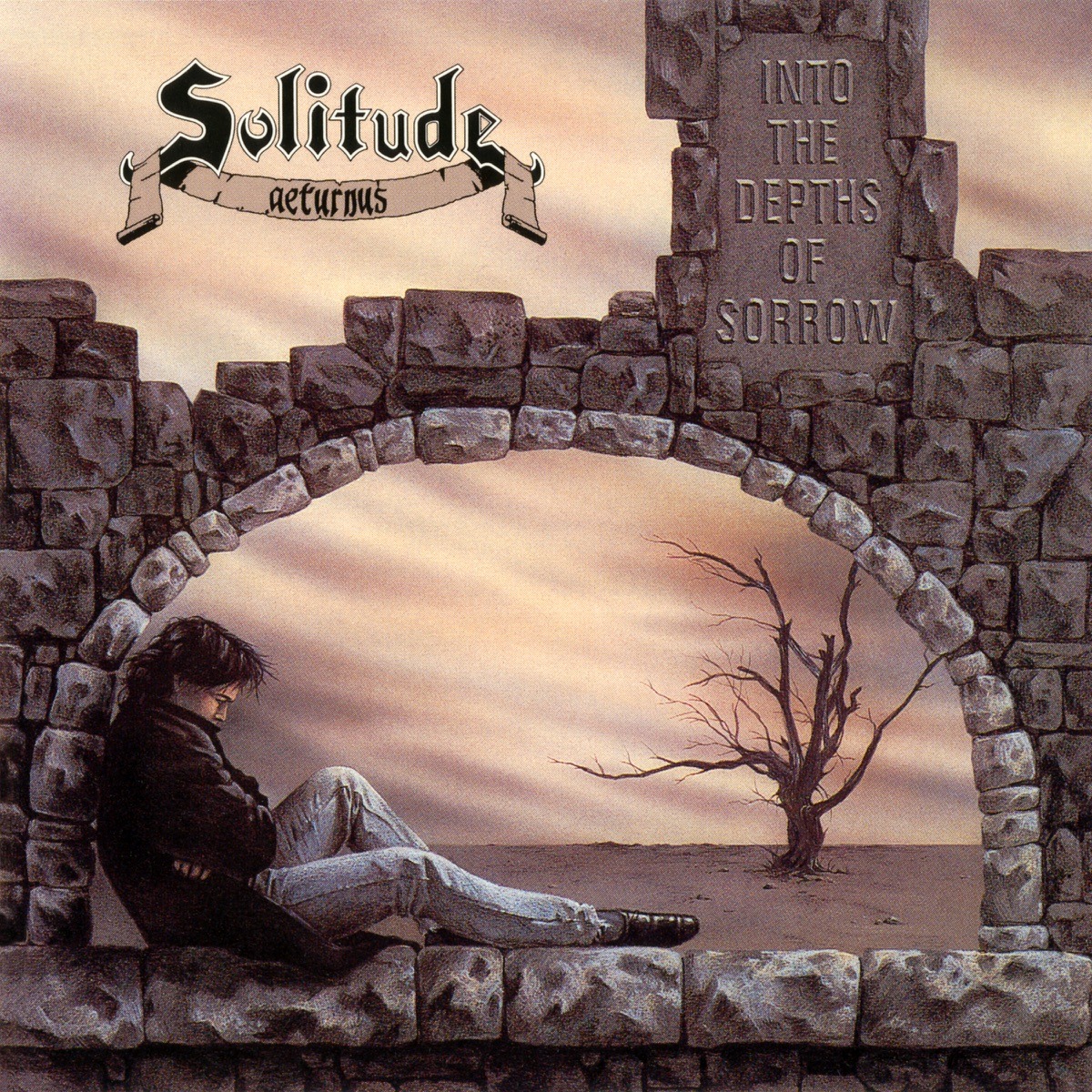
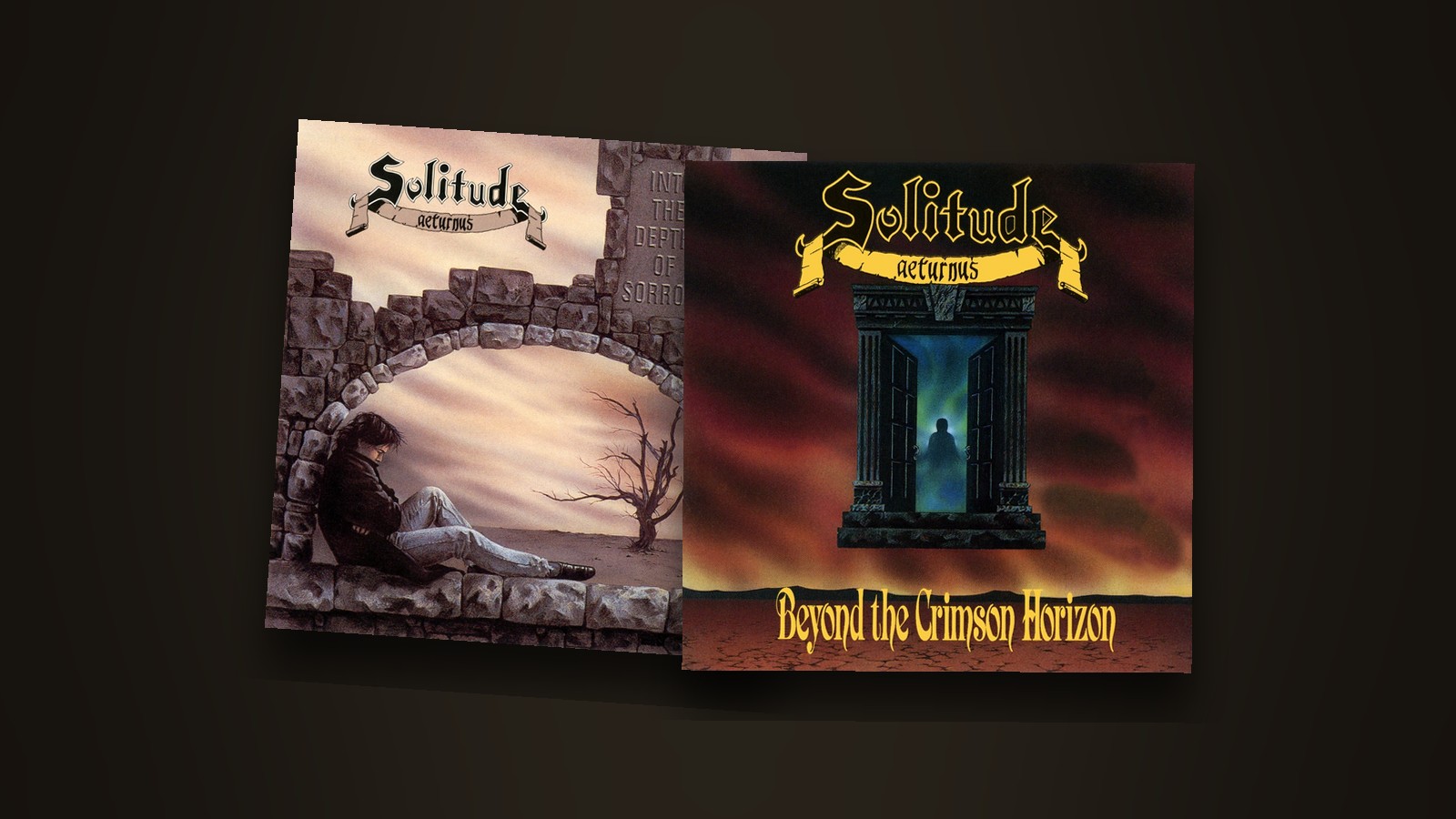
Recorded at the Dallas Sound Lab in January 1990 in seven days for 3,000 dollars, for a small label, King Klassic, that then could not afford to press it, Into the Depths of Sorrow waited eighteen months until Roadrunner released it in July 1991, and it is the one American record of its day that lifted the whole harness off the wall and went into battle in it. Where Längqvist sang a baritone, Lowe goes high, a voice Decibel's Chris Dick later called stratospheric yet gritty, soaring over the twin guitars of Perez and Edgar Rivera and over double bass drumming quicker than doom then allowed, on the two songs from the demo that caught King Klassic's ear, "Opaque Divinity" and "Mirror of Sorrow".
The label money did not last. Beyond the Crimson Horizon, cut in 1992 on a far larger budget, earned a six-week American tour, and Roadrunner dropped the band in February 1993 anyway. The Texans moved to Pavement for Through the Darkest Hour in 1994, then made Downfall in 1996, Adagio on Massacre in 1998 and Alone, the last album, in 2006. By January 2007 Lowe was the one American voice the founders trusted with their own armour: he sang three studio albums for Candlemass before leaving in June 2012.
Most bands came into the hall and stood under the armour. Solitude Aeturnus took it down and wore it for two decades.
The other American who wore most of the harness was Tom Phillips, whose While Heaven Wept, from Virginia, took until 1998 to release its first album, Sorrow of the Angels. Of Empires Forlorn followed in 2003, Vast Oceans Lachrymose on Cruz del Sur in 2009, and Fear of Infinity and Suspended at Aphelion on Nuclear Blast in 2011 and 2014, each moving further towards progressive metal, until the last of them was a single song in eleven parts. The band kept the voice and the grandeur and set the leaden riff a little further down with every record.
Europe, where the harness was shared out
In Europe the harness came down in pieces. Solstice, founded in West Yorkshire in 1990 by the guitarist Rich Walker, made Lamentations in 1994 and New Dark Age in 1998, then waited twenty years for White Horse Hill, working through some ten singers, Phillips briefly among them, which is its own record of how hard this voice is to keep. The Italian Doomsword, founded in 1997 by a singer calling himself Deathmaster, took its pseudonyms from headstones on a sleeve by the American band Warlord and its lyrics from battle, from Resound the Horn in 2002 to The Eternal Battle in 2011.
Three later bands each took a piece or two and left the rest hanging. Isole, formed in Gävle in 1990 as Forlorn, released Forevermore in 2005 and Silent Ruins on Napalm in 2009, Candlemass riffs crossed with the cold melancholy of early Katatonia in David Perri's reading, and growls by the end. The Chilean band Procession, formed in Valparaíso in 2006 around the singer and guitarist Felipe Plaza Kutzbach, released Destroyers of the Faith through High Roller in December 2010, songs of seven to nineteen minutes carried by a clean voice, and To Reap Heavens Apart in 2013. Lord Vicar, formed in Turku by Kimi Kärki after Reverend Bizarre ended in 2007, runs from Fear No Pain in 2008 to the 69 minutes of The Black Powder in 2019, with a singer, Christian Linderson, who had sung on the Saint Vitus album C.O.D. in 1992. It stands nearer to Saint Vitus than to the hall.
The Bavarian quintet Atlantean Kodex, founded in 2005, came closest to the full harness, with The Golden Bough on Cruz del Sur in 2010, then The White Goddess, number 65 in Germany in October 2013, and The Course of Empire in 2019. The Stockholm band Sorcerer, formed in 1988, split in 1992 after two demos and made its first album, In the Shadow of the Inverted Cross, for Metal Blade in 2015. Grand Magus went the other way. JB Christoffersson's trio began on Rise Above in 2001 with a stoner record, found its doom on Monument in 2003, and by Hammer of the North, number 42 in Germany in 2010, had unbuckled the plate and ridden out of the hall in the lighter mail of plain heavy metal.
| Band | Country | First album | Start with |
|---|---|---|---|
| Candlemass | Sweden | 1986 | Epicus Doomicus Metallicus |
| Solitude Aeturnus | United States | 1991 | Into the Depths of Sorrow |
| Solstice | England | 1994 | Lamentations |
| While Heaven Wept | United States | 1998 | Of Empires Forlorn |
| Doomsword | Italy | 1999 | Resound the Horn |
| Grand Magus | Sweden | 2001 | Monument |
| Isole | Sweden | 2005 | Silent Ruins |
| Lord Vicar | Finland | 2008 | Fear No Pain |
| Procession | Chile | 2010 | Destroyers of the Faith |
| Atlantean Kodex | Germany | 2010 | The Golden Bough |
| Sorcerer | Sweden | 2015 | In the Shadow of the Inverted Cross |
| Crypt Sermon | United States | 2015 | Out of the Garden |
The present, to 2026
The founders are still in the hall. The Door to Doom, released on 22 February 2019 with a guest solo by Tony Iommi, reached number 13 in Sweden and 18 in Germany; Sweet Evil Sun followed on 18 November 2022, the EP Black Star on 9 May 2025, and in January 2026 Edling said the band would write a new album and record it in 2027. Forty years after Black Dragon lost interest, the armour Edling forged still fits the men who first wore it.
The American line did not end in Texas. Crypt Sermon, from Philadelphia, released Out of the Garden through Dark Descent in February 2015 and The Stygian Rose on 14 June 2024 with Tanner Anderson on keyboards, a record Angry Metal Guy heard as Candlemass and Solitude Aeturnus doom crossed with traditional heavy metal, the border The Obelisk puts the band on. Of the bands formed after 2010 it most plainly wants the whole harness. The bands that kept only the riff and the plain voice belong to traditional Doom Metal, and What Makes It Traditional is what divides them from this page.
The band that wore all of it has the last word. Solitude Aeturnus went on hiatus in 2011 and reunited in 2023 with the line-up that made Into the Depths of Sorrow, Lowe still at the front, to play Hell's Heroes in March 2024, eighteen years after Alone. The armour is off the wall again. Whether it still fits we will judge when there is a new record to hear.
