
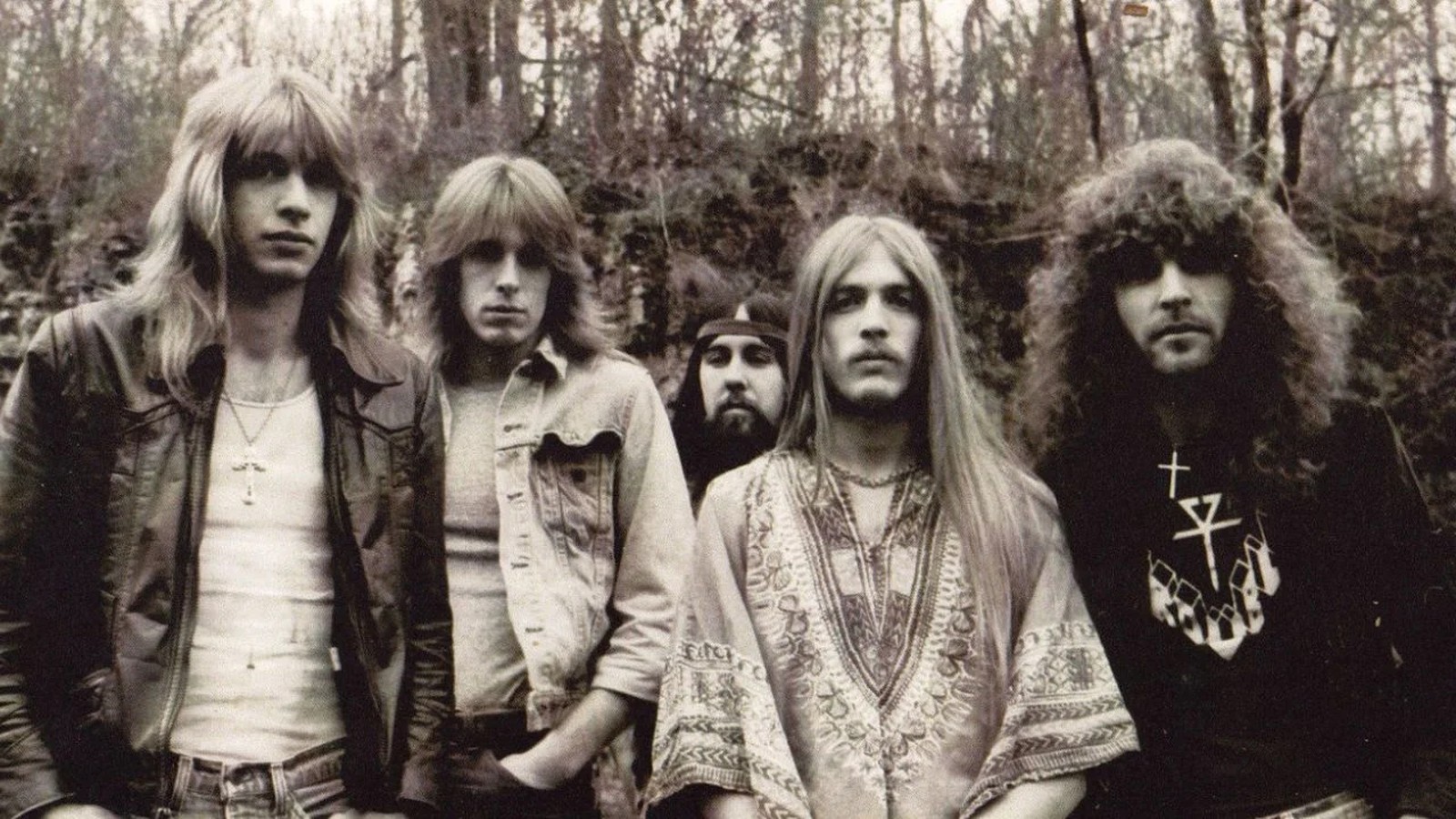
"Metal Blade called us as a “White Metal band” and I just wished they didn't." The singer who said it, backstage in Stockholm to Luxi Lahtinen of Metal-Rules.com in an interview published in January 2004, is Eric Wagner, the main lyricist of Trouble, the Chicago band that Rick Wartell founded as a schoolboy in 1978 and still plays guitar in, and in the same answer he called the tag a question of marketing and complained that it let people believe the band were some sort of religious group preaching about Jesus, when the records he was singing on owed far more to Black Sabbath than to any pulpit. We take him at his word on the intent. On the records themselves, he is only half right.
The half that holds is easy to establish. Trouble were never signed to a Christian label, and Decibel's Adem Tepedelen, in the magazine's Hall of Fame feature on the debut in December 2009, judged them Sabbath disciples rather than Bible thumpers. The half that does not hold is printed on the sleeves: the title track of the 1984 debut sets verses from the King James Version, "The Tempter" takes its name from the Gospel of Matthew, the second album carries a passage from Ephesians on its back cover, and a band that puts scripture on the back of its own record cannot be entirely astonished when its label reads the record. Of the three bands that carried slow, weighted metal through the eighties, Saint Vitus, Trouble and Candlemass, this is the one that has spent its career explaining its lyrics.
A band that puts scripture on the back of its own record cannot be entirely astonished when its label reads the record.
A newspaper advert, a Metal Blade contract and a word for the posters
Started in 1978 by a teenage Wartell, who sang as well as played, and rebuilt in 1981 through an advert in the Illinois Entertainer, the Chicago music paper, which brought in the second guitarist Bruce Franklin, the singer Eric Wagner and the drummer Jeff Olson, the quintet that would carry the name through its classic years settled in 1983, when Sean McAllister replaced the first bassist, Tim Brown. That same year "The Last Judgement" went onto Metal Massacre IV, the compilation series of Brian Slagel's label, Metal Blade Records. The band rehearsed five days a week, Wartell said in a 2013 interview, and had written the songs for the first two albums before they ever went in to record. The rehearsal room had done the editing.
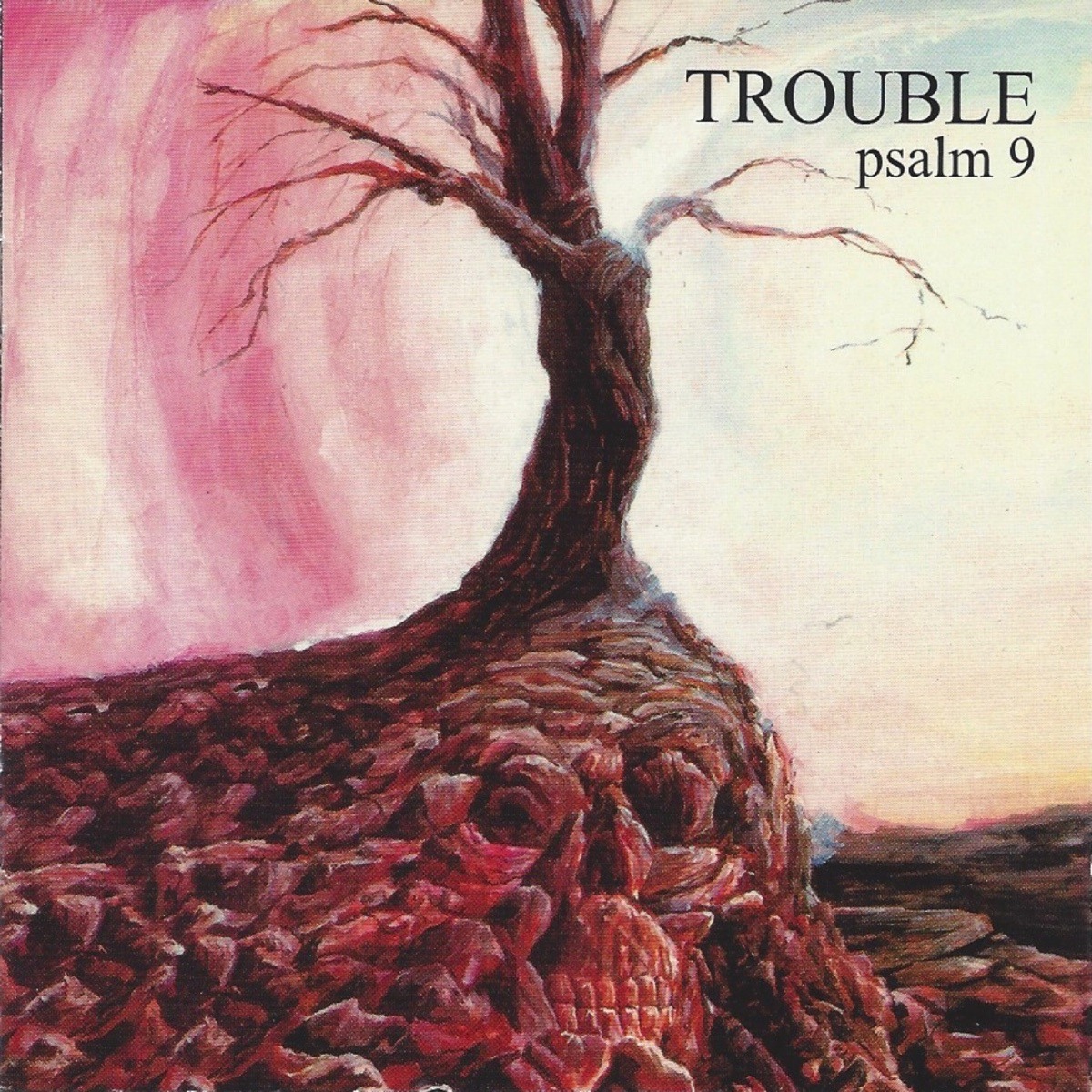
Recorded in about a week at Track Record Studios in Los Angeles in February 1984 with Bill Metoyer engineering and Slagel co-producing, and released by Metal Blade that March under the plain title Trouble, the record now known as Psalm 9 came out in the same year as the first Saint Vitus album, while most of the underground was racing to play faster, and its two guitars move at the pace of oxen dragging a plough through wet clay, harmonising as they turn at the end of every furrow. It opens on "The Tempter", carries the single "Assassin" and ends with the title track tolling out its verses, and Tepedelen wrote that none of the band's contemporaries issued an album remotely as leaden. Twenty years later Dave Grohl wrote in the notes to his Probot project that buying it had been like buying Sgt. Pepper's Lonely Hearts Club Band.
Metal Blade needed a word for the posters, and the one it reached for, in Tepedelen's account a creation of the label and not of the band, was white metal, the mirror image of black metal. Wagner, the main lyricist, gave his version in the notes to the 2006 reissue of the debut: he was brought up Catholic, most of the metal around him was satanic, and he did not get into that. What the label did, in effect, was pitch a revival tent over five young men who had brought a storm in with them, the down-tuned Sabbath riff blowing hard against canvas painted with verses from the Psalms, and for forty years that tent has strained at its ropes without ever quite coming down and without ever once keeping the weather out.
The Skull and the man inside the lyrics
Recorded in 1985 at Track Record and at Preferred Studios in Woodland Hills, and released by Metal Blade on 15 April 1985, The Skull was finished against the clock: Bruce Franklin recalled in February 2021 that the band mixed the whole album in about eight hours, after a day already spent recording vocals, working through the night until about four in the morning. It runs from "Pray for the Dead" and "Fear No Evil" through "The Wish" and "Gideon" to the title track, which borrows the words of the Last Supper and turns them on the crucifixion.
Bill Metoyer, back at the desk, said later that the band had grown in both musicianship and songwriting since the debut, and the German magazine Rock Hard gave the record nine out of ten. The scripture had not gone anywhere, and read against Wagner's own account it is not a sermon. It is a singer raised Catholic reaching for the vocabulary he grew up with, in a scene where nearly all the vocabulary on offer was satanic.
The rhythm section went next. McAllister and Olson both left in 1986, Ron Holzner took the bass, Dennis Lesh played drums on Run to the Light in 1987, and critics who had praised the first two records called the third a disappointment. Then came three silent years.
Rick Rubin and the psychedelic turn
Signed by Rick Rubin, the producer of Slayer's Reign in Blood, to Def American, the label he ran after leaving Def Jam, Trouble recorded their fourth album in 1989 with Rubin producing and Barry Stern on drums, and Def American issued it on 13 February 1990 under the band's own name for the second time. Martin Popoff gave it ten out of ten in his Collector's Guide to Heavy Metal, Eduardo Rivadavia of AllMusic four and a half stars out of five, and "At the End of My Daze", "R.I.P.", "Psychotic Reaction" and "The Misery Shows (Act II)" were all given videos. The scripture was thinning. The riffs were not.
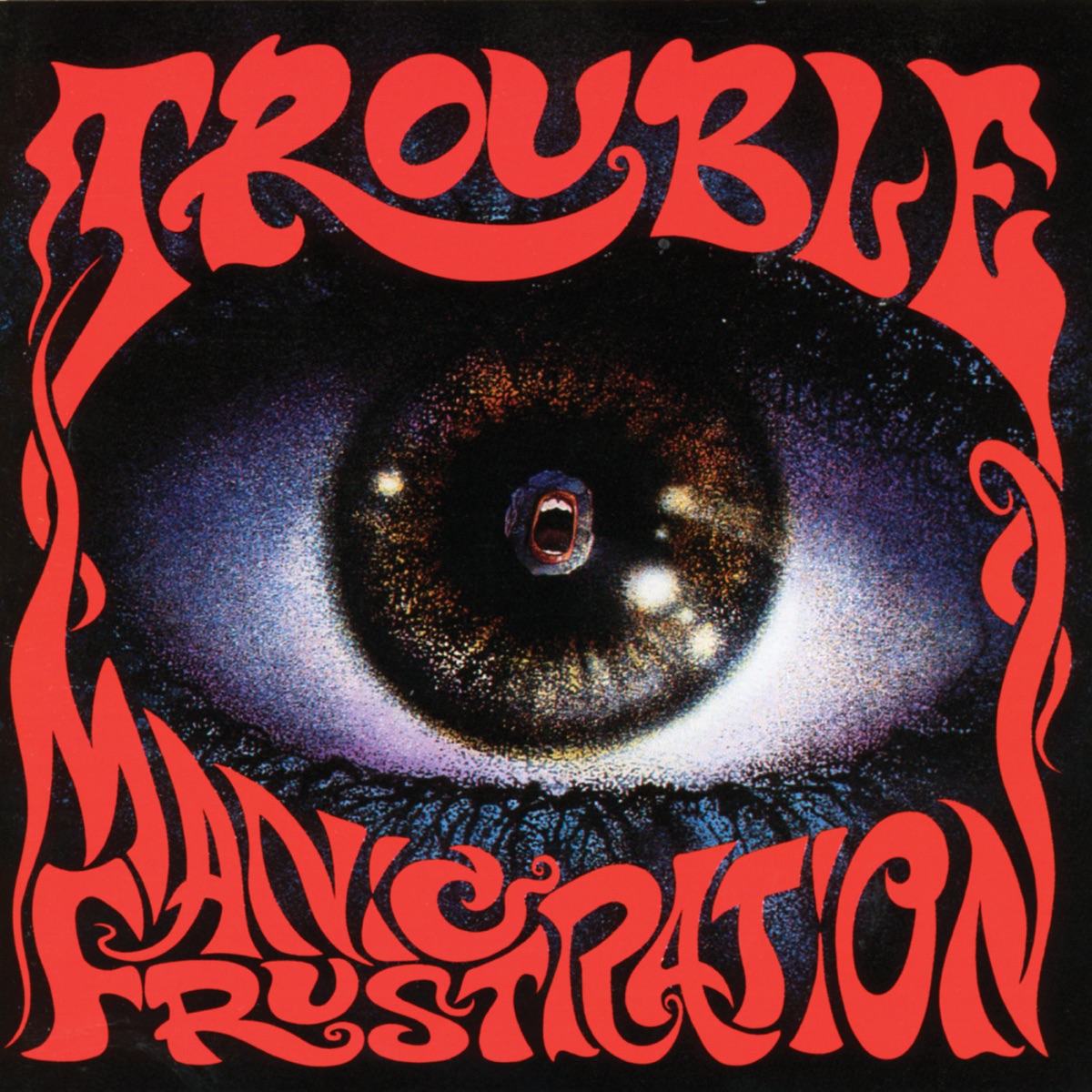
Released on 16 June 1992 and again produced by Rubin with the band, Manic Frustration tore up the funereal tempos of the Metal Blade years and replaced them with eleven shorter, faster songs in a psychedelic key that Colin Larkin's Virgin Encyclopedia of Heavy Rock calls Beatlesque, "Come Touch the Sky", "'Scuse Me" and "Memory's Garden" among them. Wagner told Metal-Rules.com in 2004 that he thought it had sold something like 100,000 copies, though he was not sure, and it was still not enough. Larkin has the band dropped by a record company that was in financial trouble of its own; Wagner's version is that the band got nothing from Def American, and that was why they left.
Plastic Green Head followed on Music for Nations in 1995, with Olson back on drums and covers of "Porpoise Song" by The Monkees and "Tomorrow Never Knows" by The Beatles, and Wagner told the same interviewer that its lyrics carried drug references because he, at least, had started to party more. In 1997 Wagner left to make In the Mushroom for Peaceville with the Anathema guitarist Daniel Cavanagh under the name Lid, the band went largely inactive, and from 1997 to 2000 the Exhorder singer Kyle Thomas stood in for him at four shows.
Eric Wagner, 1959 to 2021
Wagner, Franklin, Wartell, Holzner and Olson came back together on 26 January 2002 for a short set in Chicago, and two years later Wagner sang "My Tortured Soul" on the album of Dave Grohl's Probot project. The reunited band recorded Simple Mind Condition, released in Europe by Escapi Music on 3 April 2007. Wagner left again in May 2008, and Olson followed that July to concentrate on his own band, Retro Grave.
Wagner kept singing. In 2012 he formed The Skull with Olson and Holzner, named after the 1985 album, and he recorded two albums under the name Blackfinger, in 2014 and 2017. In August 2021 The Skull withdrew from a tour with The Obsessed because of the growing COVID-19 situation, and the band then announced that Wagner had been admitted to hospital with COVID-19 pneumonia. Eric Wagner died on 22 August 2021, aged 62. His son Luke confirmed the death, and Blabbermouth reported it on 23 August 2021. His solo album, In the Lonely Light of Mourning, was released by Cruz Del Sur Music in 2022.
Kyle Thomas and the ninth album
Kory Clarke of Warrior Soul held the microphone from 2008 until February 2012, when Kyle Thomas came back as a full member and made his recording debut with the band on The Distortion Field, produced by Metoyer and released in North America on 16 July 2013, with songs such as "When the Sky Comes Down" and "Hunters of Doom". Rob Hultz of Solace joined on bass shortly after.
| Years | Singer | Studio albums |
|---|---|---|
| 1978–1981 | Rick Wartell | none |
| 1981–1997 | Eric Wagner | six, from Psalm 9 to Plastic Green Head |
| 1997–2000 | Kyle Thomas | none (four shows) |
| 2000–2008 | Eric Wagner | Simple Mind Condition |
| 2008–2012 | Kory Clarke | none |
| 2012–present | Kyle Thomas | The Distortion Field, ninth in progress |
Wartell announced in 2014 that work on a follow-up had begun, but recording did not start until July 2022, with Metoyer producing, Thomas, Hultz and the drummer Mark Lira in the line-up and a release pencilled in for 2023. In 2024 Garry Naples of Novembers Doom took over the drums from Lira. The ninth album has not appeared: the only new Trouble record since has been an archive set, Live Dallas, Texas 1990, issued by Hammerheart Records in December 2025, and the ground Trouble broke in 1984 now belongs as much to the Epic Doom Metal Bands that followed it.
So was Trouble a Christian doom band? Not in the sense Wagner was rejecting, a religious group preaching about Jesus with a label to match, and not by the middle of the nineties, when the songs had gone psychedelic and the covers were by the Monkees and the Beatles. On the first two albums the scripture is real, written by a singer raised Catholic in a scene full of satanic poses, and it is not decoration. The tent Metal Blade put up was the wrong shape for the band from the first night. The storm is what lasted.
