
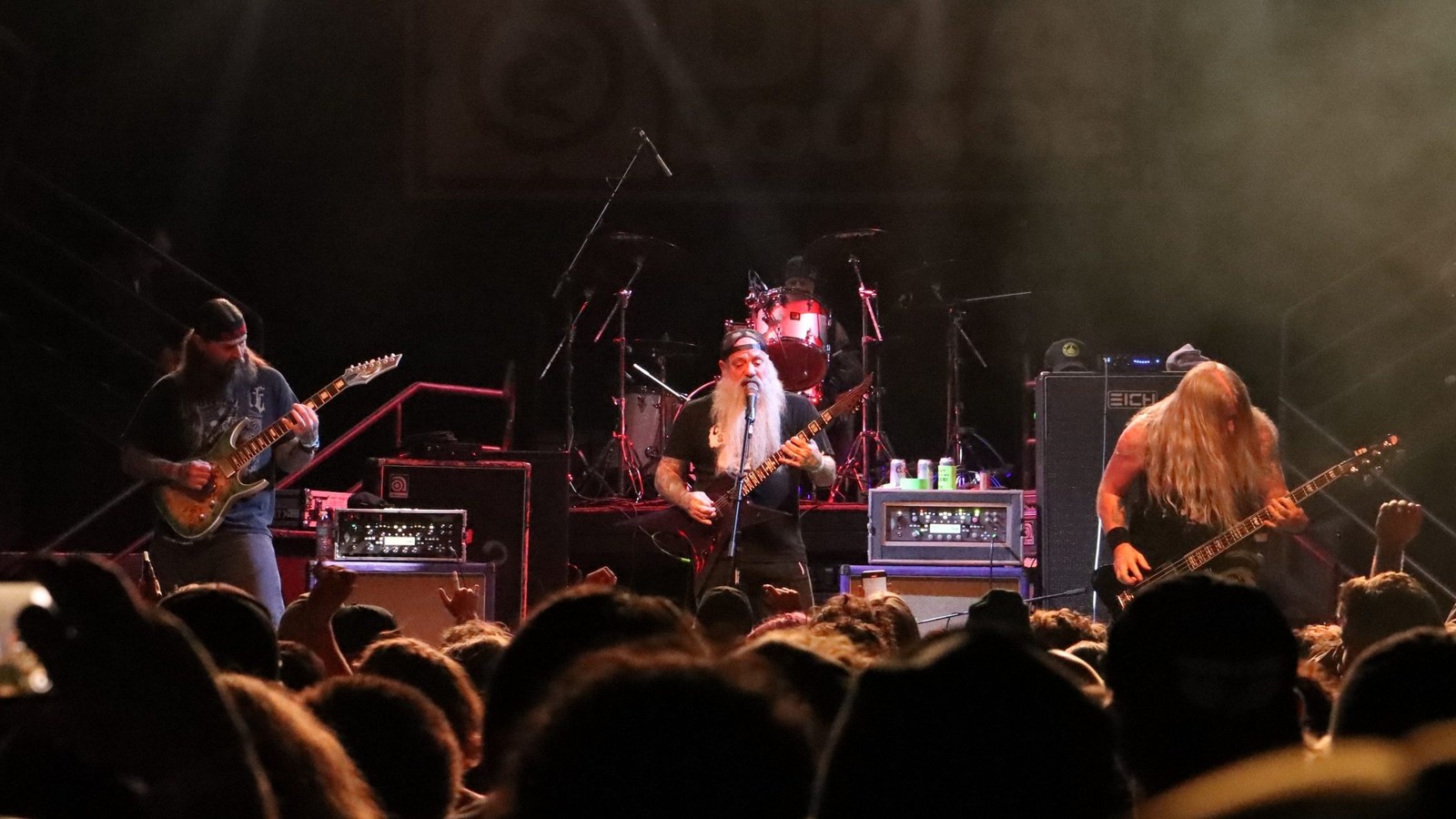
Sludge metal is the ugly half of doom, and on any honest reading it is the half that has aged better. We put the verdict first and spend the rest of this chapter defending it. Traditional doom took the slowness of Black Sabbath and dressed it in robes, candles and the long melancholy of the bands who followed in England, Sweden and Maryland, while sludge took exactly the same slowness and handed it to young men raised in hardcore punk clubs, who had no use for robes at all and who wanted the tempo to crawl only so that the anger inside it would have longer to spread. What came out of that exchange has never been respectable. It has also never lied about where it lives.
This is chapter four of the doom metal story, and it is the chapter where the music leaves the chapel and goes down to the water. Born out of a single side of a Black Flag record in 1984, dragged into shape by a trio from a small Washington timber town, and brought to its full leaden weight in the bars of New Orleans between 1988 and 1995, sludge outlived grunge, which it helped to sire, and outlived nu metal, which borrowed its tunings without ever understanding its misery, and it is still producing records in the 2020s that the tidier branches of doom cannot match for sheer punishment.
Doom mourns. Sludge has neither the time nor the money to mourn, so it seethes instead, at a fraction of the speed of the hardcore it came from.
What sludge metal is
Asked what is sludge metal, we would answer in one sentence before we answer in a thousand: doom tempo, hardcore anger, feedback left running between the riffs, and a voice that screams rather than sings. The tempo is the part it shares with doom, riffs played so slowly that each chord has to be held until it starts to decay, with guitars tuned well below standard and amplifiers pushed until they hum. The anger is the part it took from hardcore punk, and it shows in the lurches, the sudden fast passage that breaks out of a crawl and then collapses back into it, and in the lyrics, which are about addiction, poverty, illness, police and the particular exhaustion of hot, wet cities rather than about wizards or grief made beautiful.
The feedback and the scream are what finally separate it from its neighbours. A doom singer, from Ozzy Osbourne onwards, carries a melody over the riff, however mournful. A sludge singer does not carry anything; he tears at the riff from inside it, with the throat of a hardcore vocalist, and between the verses the guitars are left squealing on their own like a refrigerator motor in a condemned house, a noise nobody switched off because nobody in the room cared whether it stopped. That is not carelessness. It is the aesthetic, and by common consent it is the most reliable test for the genre: if the silence between the riffs is clean, the band is probably doom; if the silence is full of electrical pain, the band is probably sludge.
The word itself was never chosen by the musicians. Jimmy Bower of Eyehategod told Randy Cody of The Metal Den on 5 October 2016 that in the band's first interviews he had compared the music to trudging through a pool filled with peanut butter, that somebody else then came up with the word "sludge", that the band hates it, and that they consider themselves a heavy blues band. The name stuck because no better one arrived.
Where sludge came from: My War and the Melvins
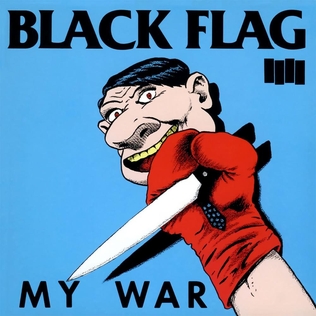
Recorded in December 1983 at Total Access in Redondo Beach and released by SST Records in March 1984, My War was the record on which the most feared hardcore band in California, with Henry Rollins on vocals and Chuck Dukowski already gone from the bass, turned its entire second side over to three songs, "Nothing Left Inside", "Three Nights" and "Scream", each running past six minutes at a tempo that demolished every rule the American hardcore scene had spent four years writing for itself. What was new was a punk band with punk credibility telling its audience that slowness could be a form of violence rather than a retreat from it. Flipper, in San Francisco, had been playing slow and ugly since forming in 1979, three years before their first album, and they deserve the footnote, but it was Black Flag's reputation that made the idea travel.
It travelled north fastest. Formed in early 1983 in Montesano, Washington, by Buzz Osborne, Matt Lukin and drummer Mike Dillard, and named after a supervisor at the Thriftway where Osborne worked as a clerk, the Melvins began as a fast and tight hardcore trio, and Mudhoney's Steve Turner, speaking to the music site Popwell in April 2023, said that My War made them slow down to a crawl almost at once. Dale Crover replaced Dillard on drums in 1984 and has stayed beside Osborne ever since. The Six Songs EP came out on C/Z Records in 1986, Gluey Porch Treatments on Alchemy Records in 1987, and on the second of those the riffs are dragged across the floor like a safe shifted by two men without a trolley, each chord scraping forward a few inches and stopping to gather strength, which is exactly the motion every sludge band since has tried to reproduce.
Osborne and Crover moved to San Francisco in 1988, Bullhead followed on Boner Records in January 1991, and in September 1993 the band's major-label debut Houdini on Atlantic, with Kurt Cobain of Nirvana credited as co-producer on six of its tracks and carrying the song "Hooch", entered the Billboard Heatseekers chart at number 29. Revolver titled a feature on the band "How Melvins Invented Sludge", and while Flipper and Black Flag complicate the word invented, no single band did more to turn one side of an SST record into a working method. Nowhere did that method land harder than in New Orleans, and that is where the story goes next.
New Orleans: where the sludge set
Formed on 20 April 1988 in New Orleans by guitarist Jimmy Bower and drummer Joey LaCaze, with Mike IX Williams taking over vocals from the band's first singer, Chris Hilliard, and guitarist Mark Schultz and bassist Steve Dale completing the line-up, Eyehategod chose to fuse the crawl of the Melvins with the fury of Black Flag and the blues that the city had been playing for a century. Their debut In the Name of Suffering was recorded for around a thousand dollars and released in 1990 on the small label Intellectual Convulsion, before Century Media reissued it on 1 December 1992 and put the band in front of an audience beyond Louisiana.

The record that fixed the genre came next. Recorded at Studio 13, a small studio on the thirteenth floor of an abandoned New Orleans department store a few minutes from where Williams was living, self-produced and released by Century Media in 1993, Take as Needed for Pain is the album on which sludge stops being a tempo and becomes a place: the riffs close over the listener like black bayou water over a dropped boot, warm, thick with silt and entirely patient, and every squeal of feedback between them is something rising briefly to the surface before the mud pulls it back under. The opener "Blank" runs past seven minutes and the title track past six, on a record whose last two songs, "Who Gave Her the Roses" and "Laugh It Off", are over in two minutes or less. Terrorizer named it the number one sludge album in 2009, Metal Hammer listed it among the ten essential sludge albums in 2016, and Rolling Stone placed it at 92 among the hundred greatest metal albums in 2017, three readings across eight years that arrive at the same place.
We blatantly ripped them off. We wanted to be like that, but make it more aggressive, more hardcore, more extreme.
Mike IX Williams on the early Melvins, interviewed by William Archambeault, Antigravity, March 2021
The band's life after that record was hard, and we record it plainly. Dopesick followed in 1996 and Confederacy of Ruined Lives in 2000. Joey LaCaze died on 23 August 2013 of respiratory failure. A self-titled album came out on Phil Anselmo's Housecore Records in 2014, Mike IX Williams underwent a liver transplant on 16 December 2016, and A History of Nomadic Behavior was released by Century Media on 12 March 2021. Williams and Bower have been in the band through all of it.
The man who had been getting into the Melvins at the same time as Bower, by Bower's own account to Decibel in 2011, led the other great New Orleans heavyweight. Cycling through the names ShellShock, Aftershock, Wrequiem and The Slugs before settling on Crowbar in 1991, Kirk Windstein's band put out a self-titled second album on Pavement Music in October 1993, produced by his childhood friend Phil Anselmo of Pantera, and the songs "All I Had (I Gave)" and "Existence Is Punishment" carried a slower, sadder and more melodic sludge onto MTV's Headbangers Ball, the network's weekly metal video show, and into a Beavis and Butt-Head segment. The album reportedly sold around 100,000 copies on an independent label. Crowbar never had Eyehategod's squalor. It had tonnage instead.
From Houma, south-west of New Orleans in the bayou country, Acid Bath formed in 1991 around singer Dax Riggs and guitarist Sammy Duet and released When the Kite String Pops on Rotten Records in 1994, a record that set death growls against a mournful clean voice on songs such as "Scream of the Butterfly", followed by Paegan Terrorism Tactics in 1996. Bassist Audie Pitre died with his parents in a traffic collision on 23 January 1997, and the band ended. In the suburbs, Soilent Green, formed in 1988 with Brian Patton on guitar and Ben Falgoust on vocals from 1993, bolted grindcore blasts onto the crawl and put out Sewn Mouth Secrets on Relapse in 1998.
The city's best-selling export was a side project. Formed in 1991 by Anselmo, Windstein, Bower, Pepper Keenan of Corrosion of Conformity and bassist Todd Strange, Down released NOLA on 19 September 1995 and took it inside the top sixty of the Billboard 200, but its warm Sabbath grooves and Southern rock swing sit closer to the question of what is stoner metal than to the feedback and the scream of Eyehategod.
Neurosis and the atmospheric branch
The other road out of hardcore ran through the Bay Area. Founded in December 1985 in Oakland by Scott Kelly, Dave Edwardson and Jason Roeder, and rooted in the scene around 924 Gilman Street, the volunteer-run all-ages punk club in Berkeley, Neurosis began as a straightforward hardcore band and then, from their third album Souls at Zero on Alternative Tentacles in 1992 and on through Enemy of the Sun in 1993, took the slowness and the weight of sludge and pulled them apart into something far longer, with samples, tribal percussion and keyboards in the gaps.
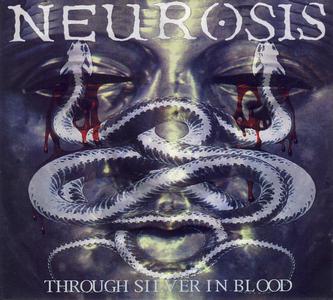
Released by Relapse Records on 2 April 1996, co-produced by Billy Anderson, and running to seventy minutes that open on the twelve-minute title track and close on the ten-minute "Enclosure in Flame", Through Silver in Blood is the record where the atmospheric branch declared itself. Rolling Stone's Steve Smith called it the band's transformative masterpiece, AllMusic gave it five stars, and Fact placed it first among post-metal albums in 2015, so on this record the verdict is not ours alone. It is built like a levee under flood pressure, every riff a wall of packed earth and every sample the sound of water finding the weak point, and when the wall finally gives the listener is simply swept off.
Eyehategod pulls the listener down into the mud. Neurosis builds a wall against the flood and then lets it break on purpose.
Times of Grace, recorded with Steve Albini, followed in 1999, and Fires Within Fires in 2016 was their last record for a decade. What Neurosis proved is that the weight of sludge could be kept and its squalor dropped. A whole generation took that trade.
The second wave beyond Louisiana
While New Orleans was setting the standard, the same crawl was surfacing elsewhere. Out of Salisbury, North Carolina, in 1990 came Buzzov*en, led by guitarist and singer Kirk Fisher, the one member present in every line-up, whose debut To a Frown on Allied Recordings in March 1993 drew the attention of Roadrunner Records, which released Sore in 1994 and then dropped the band. Buzzov*en split at the end of the decade and reunited in 2010. Their shows were known for violence, and on record they played sludge like a bar fight filmed in slow motion, every blow visible on the way in.
Further north, the Boston band Grief formed in 1991 around guitarist Terry Savastano and drummer Pete Donovan, with Jeff Hayward soon joining on vocals, and released Dismal on Common Cause in 1993 and Come to Grief through Vacuum and Century Media in 1994, a record Decibel inducted into its Hall of Fame in 2018. On the far coast, the Santa Ana band 16 formed in 1992 around guitarist Bobby Ferry and singer Cris Jerue, and made Curves That Kick in 1993, Drop Out in 1996 and Blaze of Incompetence in 1997, before resurfacing on Relapse in 2009.
| Year | Band | Record | Label |
|---|---|---|---|
| 1984 | Black Flag | My War | SST |
| 1987 | Melvins | Gluey Porch Treatments | Alchemy |
| 1991 | Melvins | Bullhead | Boner |
| 1993 | Eyehategod | Take as Needed for Pain | Century Media |
| 1993 | Crowbar | Crowbar | Pavement Music |
| 1994 | Buzzov*en | Sore | Roadrunner |
| 1994 | Grief | Come to Grief | Century Media |
| 1994 | Acid Bath | When the Kite String Pops | Rotten |
| 1996 | Neurosis | Through Silver in Blood | Relapse |
| 1998 | Soilent Green | Sewn Mouth Secrets | Relapse |
The 2000s: sludge learns to play
Formed in Atlanta in 2000, Mastodon released Remission on Relapse on 28 May 2002, produced by Matt Bayles, and on songs such as "March of the Fire Ants" the crawl was suddenly carrying the drumming of Brann Dailor and the two guitars of Brent Hinds and Bill Kelliher, a debut Loudwire counted in 2024 among the best progressive metal debut albums. Leviathan in 2004, built around Moby-Dick, took them further, and Kerrang! later counted Remission among the thirteen most essential sludge records. By 2006 it had sold around 49,000 copies in the United States.

Georgia's coast built the second centre. Out of the Savannah band Damad, active from 1993 to 2001, came Kylesa, founded in 2001 by former Damad members including Phillip Cope, with guitarist Laura Pleasants, which added a second drummer in 2006 and reached Static Tensions on Prosthetic Records in 2009. Baroness, formed in Savannah in 2003 around singer and painter John Baizley, released Red Album on Relapse on 4 September 2007, recorded at Jam Room Studio in Columbia, South Carolina, with Cope producing, and the record opens on the seven-and-a-half-minute "Rays on Pinion". Revolver named it the best metal album of 2007, Pitchfork gave it 8.4 and Kerrang! later listed it among the essential sludge records.
Boston supplied the atmospheric continuation. Formed in autumn 1997 by Aaron Turner, who also ran the label Hydra Head, the band Isis released Oceanic on Ipecac on 16 September 2002, again produced by Matt Bayles, with long clean passages, ambient noise and the guest voice of Maria Christopher on three songs including "Weight", and Terrorizer named it album of the year. Isis took the Neurosis road to its end and split in June 2010. We say plainly what the decade cost. Sludge learned to play, to build and to sell, and in doing so it lost most of the squalor that had made it necessary in the first place; the best records of the 2000s are better played than Take as Needed for Pain, and not one of them is as frightening.
Sludge now
The squalor came back, and it came back from Louisiana. Formed in Baton Rouge in 2005, the band Thou spent the next two decades carrying the Louisiana tradition forward through a long run of records and collaborations, and recorded their sixth album Umbilical at Hightower Recording in New Orleans in December 2023 before Sacred Bones released it on 31 May 2024. Primitive Man, the Denver trio of Ethan Lee McCarthy, Jonathan Campos and Joe Linden, released Observance on Relapse on 31 October 2025, six tracks recorded at Bricktop Recording in Chicago with the producer Andy Nelson, on which, by the label's own account, acoustic passages and electronics break into the band's usual weight. Neurosis returned on 20 March 2026 with An Undying Love for a Burning World, released without advance notice on Neurot Recordings, their first record in a decade and their first with Aaron Turner of Isis on guitar and vocals. The band had removed Scott Kelly in late 2019, which became public in August 2022.
The founders are mostly still here. The Melvins released Tarantula Heart in April 2024, and in April 2025 Buzz Osborne put out Thunderball under the name Melvins 1983, with the band's original drummer Mike Dillard back behind the kit. Crowbar's Zero and Below came out in March 2022, and the band spent March and April 2026 on a co-headlining tour of the United States with Eyehategod that ended at Tipitina's in New Orleans on 18 April 2026. Acid Bath announced their return in October 2024, twenty-seven years after Audie Pitre's death ended the band, Kylesa announced their return in August 2024, 16 released Guides for the Misguided on Relapse on 7 February 2025, and on 19 August 2026 Down announced Volume V, due from Nuclear Blast on 20 November 2026. Brent Hinds left Mastodon in March 2025 and died on 20 August 2025 in a motorcycle crash in Atlanta, at the age of 51.
Our verdict from the first paragraph stands. More than forty years after Black Flag slowed down, sludge remains the part of doom that refuses to be consoled, and the reason it has aged better is that it never chose an era to dress up as. The chapter that follows turns in the opposite direction, towards the death doom chapter and the British bands who met the same slowness through death metal rather than hardcore, and arrived at grief instead of rage.
