
In an interview feature with Nick Holmes published on 26 September 2025, Matt Mills of Metal Hammer wrote that Paradise Lost, together with its "fellow Northerners" on the same label, "established the 'death/doom' subgenre". It is the version of the story most readers meet first, and on the one point that matters most it is wrong. The quintet from Halifax walked into Academy Music Studios to begin its second album in November 1990, and in that same November a drummer who had left Chuck Schuldiner's band Death three years earlier was already in a San Francisco studio slowing Californian death metal to a lurch, while a band from New York had already put the whole idea on a record with a growl on top of it and sold almost none of them.
What My Dying Bride, Anathema and Paradise Lost did was something else, and in its way something larger. They did not find the body. They built the mausoleum around it: the cold stone room, the orchestral dressing, the violin, the second voice, and in the middle of it all a catafalque on which the slow corpse of death metal was laid out in state for the rest of the decade to file past. We tell that history here as the fifth chapter of the whole story of doom, sludge and stoner, and we start it where it actually starts, which is not in Yorkshire.
Before the stone room: New York and California
The parts were lying about before anyone assembled them. Celtic Frost had shown in 1984 and 1985 that an extreme band could drop from a gallop to a crawl without losing its menace, Candlemass had given the crawl a liturgy with Epicus Doomicus Metallicus in 1986, and English crust bands, Amebix above all, had shown hardcore listeners that heaviness could be weight rather than speed. Nobody had yet held a death metal growl over a doom tempo for a whole album.
Formed in New York City in 1988 and named after an Amebix song, the band that did it first, Winter, with John Alman on vocals and bass and Stephen Flam on guitar, circulated a demo called Hour of Doom in 1989 and released Into Darkness on the small Future Shock label in 1990, a record on which the riffs do not so much advance as subside, each chord lowered into place like a slab being eased onto a tomb. Future Shock folded soon afterwards. Nuclear Blast reissued the album on CD in 1992, and in 2013 The Village Voice ranked it fourteenth among the best New York hardcore and metal albums ever made. In 1990 almost nobody heard it.
The Californian half of the argument was louder and stranger. Founded in August 1987 in Contra Costa County by the drummer Chris Reifert, fresh from the sessions for Death's Scream Bloody Gore, and the guitarist Eric Cutler, Autopsy had signed to a label in West Yorkshire called Peaceville, released Severed Survival there in 1989 with its first doom passages already cut into the fabric, and then gone further. The band recorded its second album at Different Fur in San Francisco between 20 and 26 November 1990, with Reifert singing from behind his kit and the label's founder, Paul "Hammy" Halmshaw, sharing the production credit, and Peaceville released it on 22 April 1991. Twelve tracks in under thirty-eight minutes, among them "In the Grip of Winter" and "Robbing the Grave".

Mental Funeral is the record that settles the question of precedence, and it did not make friends. AllMusic wrote that it turned Autopsy into "death metal's ultimate love/hate band", Kerrang! called the result "lumbering, unholy, and gross", and three decades later Reifert himself described it as accidental. What it proved was that death metal could be slowed down from inside, by a death metal band, without borrowing a single melody from Sabbath. That is the corpse. Everything else in this chapter is the building raised over it.
Peaceville: the punk label that opened the crypt
The label at the centre of this story was not a metal label at all when it began. Paul Halmshaw, known to everyone as Hammy, was drumming for the anarcho punk band Instigators when he bought his first tape-to-tape machine in 1981, and Peaceville Tapes started life releasing cassettes of punk bands before it became Peaceville Records in Dewsbury in 1987, with a roster that ran through Deviated Instinct, Electro Hippies, Axegrinder and the Bradford crust band Doom. The move towards metal was not forgiven quickly. In a history of the label by Chris Chantler, published online by Metal Hammer on 8 February 2025, Hammy remembered that people "were burning my effigy at punk bonfires".
That parentage explains a great deal. Peaceville came to slow extreme metal with crust ears and no stake in the Florida speed race, and by 1992 it held Autopsy, Paradise Lost, My Dying Bride, Anathema and, from Norway, Darkthrone. Sludge came to heaviness out of hardcore by way of the Melvins and New Orleans, and anyone who has read what is sludge metal will recognise a punk ancestor in that story too. Death doom has one as well. It is this label.
The Peaceville bands did not find the body. They built the mausoleum around it, and they laid death metal out in state for a decade to file past.
Gothic, and the corpse laid in state
Formed in Halifax in 1988 by Nick Holmes, Gregor Mackintosh, Aaron Aedy, Stephen Edmondson and Matthew Archer, the band that gave a later genre its name recorded Gothic at Academy Music Studios between November 1990 and January 1991, with Keith Appleton engineering, with orchestral parts credited to The Raptured Symphony Orchestra and with Sarah Marrion singing against Holmes's growl, and Peaceville released it on 19 March 1991, thirteen months after the far rougher Lost Paradise. The title track, "Eternal" and "Dead Emotion" carry the method: death metal riffs held at a funeral pace, a lead guitar from Mackintosh that climbs above them in long mournful lines, and a woman's voice entering the room as if from a side chapel.
This is the record on which death metal is laid out on the catafalque, candles lit at the head and foot, the stone floor cold enough that no mourner stays long. Chris Chantler wrote in Metal Hammer in April 2020 that the record raised the bar, "introducing arty '80s goth influences to an insular underground", and Decibel made it the fifth album ever inducted into its Hall of Fame in June 2005. Holmes told Music Interview Corner, in remarks Blabbermouth reported on 13 August 2026, that the gothic label was chosen because "it was kind of the only one that we felt fit the music".
The band did not stay in the crypt. Paradise Lost moved to Music for Nations for Shades of God in 1992 and Icon in 1993, and by Draconian Times in 1995, a Top 20 album in the United Kingdom and Germany, Holmes was singing far more than he was growling. One Second in 1997 and Host in 1999 went into synthesisers. Then the long way back. The Plague Within in 2015 brought the growl back, and Medusa in 2017, Obsidian in 2020 and Ascension, released by Nuclear Blast on 19 September 2025, have kept the band close to the weight it started with.
My Dying Bride and the violin at the bier
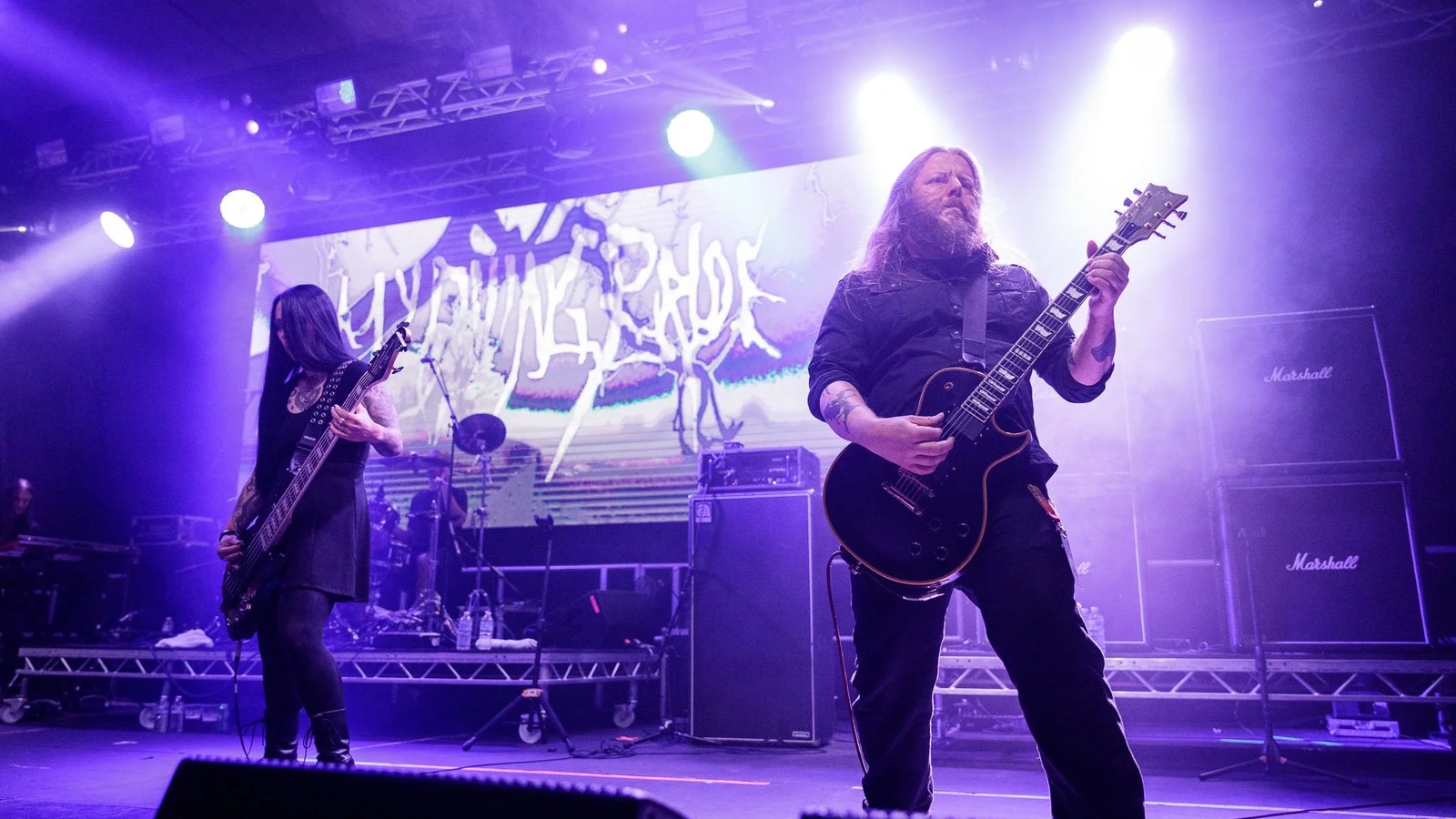
The second of the three took the idea furthest and stayed with it longest. Formed in Bradford in June 1990 by the guitarist Andrew Craighan and the drummer Rick Miah, both out of a band called Abiosis, together with the singer Aaron Stainthorpe and the guitarist Calvin Robertshaw, My Dying Bride released a demo called Towards the Sinister, a single, "God Is Alone", on the French label Listenable, and then, with the bassist Adrian Jackson added, the Symphonaire Infernus et Spera Empyrium EP on Peaceville.

Recorded at Academy Studios between December 1991 and January 1992 with Hammy producing, and released on 26 May 1992 in a sleeve designed by Dave McKean, As the Flower Withers is still recognisably a death metal record slowed to a walk. "Sear Me" runs past nine minutes, "The Forever People" is the nearest thing to a burst of speed, and "The Return of the Beautiful" stretches across five movements and almost thirteen minutes. Martin Powell plays violin as a session musician and Wolfgang Bremmer adds horn, which tells us where the band was already looking.
Turn Loose the Swans, released on 11 October 1993 after sessions in June and July with Robert Magoolagan engineering, is where the violin takes its permanent seat. Powell was now a member on violin and keyboards, "The Crown of Sympathy" runs twelve minutes and fifteen seconds, "Your River" more than nine, and Stainthorpe moves between the growl and a spoken, sung register that his contemporaries would not have risked. Reviewing it for Rolling Stone on 5 May 1994, Daina Darzin called the album "Bram Stoker's Dracula for the ears", a record "diving into melodrama with grace". The violin does not decorate the guitars. It stands over them like the one mourner who will not leave the bier, holding a single line while the riffs are lowered, chord by chord, into the stone.
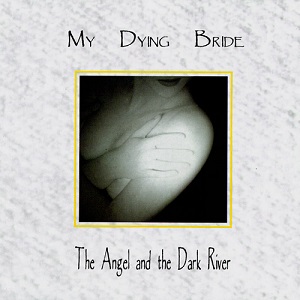
Then the growl went. The Angel and the Dark River, recorded at Academy between December 1994 and January 1995 and released on 15 May 1995, has no death vocal on it at all, opens with the twelve-minute "The Cry of Mankind", which Rolling Stone placed fifty-seventh on its list of the greatest metal songs in 2023, and reached number 61 in Germany. Late that year the band spent three months on the road with Iron Maiden. In October 2011 both this album and Turn Loose the Swans were certified gold by the Independent Music Companies Association, each for at least seventy-five thousand European sales. Like Gods of the Sun followed in 1996, the experimental 34.788%...Complete in 1998, and The Light at the End of the World in 1999 brought the growl back.
The band has outlasted almost every one of its contemporaries. For Lies I Sire in 2009 restored the violin, and The Barghest o' Whitby EP in 2011 is a single piece of twenty-seven minutes. In March 2017 My Dying Bride signed to Nuclear Blast; that year the band withdrew from all four of its festival bookings because of a serious illness in Stainthorpe's immediate family, which he later made public himself. The Ghost of Orion arrived on 6 March 2020 and A Mortal Binding on 19 April 2024. Within weeks of the new album's release every live date of 2024 was cancelled over tensions inside the band. In December 2024 My Dying Bride announced that Mikko Kotamäki of Swallow the Sun would sing at its 2025 shows, and on 9 October 2025 the band confirmed that it had parted ways with Stainthorpe, who had co-founded it thirty-five years earlier; he said publicly that he had neither left nor been kicked out.
Anathema, Katatonia and the doors out of the room

The third of them came from across the Pennines. Formed in Liverpool in 1990 under the name Pagan Angel by the brothers Vincent, Daniel and Jamie Cavanagh with the drummer John Douglas and the singer Darren White, Anathema recorded two demos, signed a four-album deal with Peaceville, released The Crestfallen EP in November 1992 and followed it with Serenades on 15 February 1993. White left in May 1995, Vincent Cavanagh took the microphone for The Silent Enigma later that year, and from there the band walked steadily out of metal and into atmospheric rock with clean voices. On 22 September 2020 Anathema announced an indefinite hiatus.
Sweden supplied a fourth room in the same building. Recorded at Unisound between 4 and 9 April 1993 with Dan Swanö engineering and playing keyboards, and released by No Fashion on 14 December 1993, Dance of December Souls was the debut of Katatonia, and it holds two pieces, "Velvet Thorns (of Drynwhyl)" and "Tomb of Insomnia", that each pass thirteen minutes. Within a few years Katatonia, like all three Peaceville bands, had put the growl away, and by the late nineties the mausoleum had a gothic metal chapel attached to it where most of its builders now worked.
| Band | Record | Label | Released |
|---|---|---|---|
| Autopsy | Severed Survival | Peaceville | 1989 |
| Winter | Into Darkness | Future Shock | 1990 |
| Paradise Lost | Gothic | Peaceville | 19 March 1991 |
| Asphyx | The Rack | Century Media | 13 April 1991 |
| Autopsy | Mental Funeral | Peaceville | 22 April 1991 |
| My Dying Bride | As the Flower Withers | Peaceville | 26 May 1992 |
| diSEMBOWELMENT | Transcendence into the Peripheral | Relapse | 31 March 1993 |
| Rippikoulu | Musta seremonia (demo) | Self-released | 1993 |
| Katatonia | Dance of December Souls | No Fashion | 14 December 1993 |
| My Dying Bride | The Angel and the Dark River | Peaceville | 15 May 1995 |
The slow parts of death metal: the Netherlands, Finland and Melbourne

Not every band that slowed down wanted a violin in the room. Founded in the east of the Netherlands in 1987 by the drummer Bob Bagchus and the guitarist Tonny Brookhuis, and strengthened by the arrival of Martin van Drunen, formerly the singer of Pestilence, Asphyx signed to Century Media and released The Rack on 13 April 1991, recorded at Harrow Production in Losser with van Drunen singing and playing bass, Eric Daniels on guitar and Bagchus on drums, and closing on a title track of nine minutes and six seconds. Last One on Earth followed in 1992, and Kerrang! later ranked it the fifteenth greatest death metal album of the 1990s. Asphyx never claimed to be anything but a death metal band; the slow parts were where it did its heaviest work, and after the 2007 reunion Necroceros in 2021 kept it there.
Finland, where Thergothon was already pushing tempo towards a standstill, produced its own version of the same impulse. Formed in 1990, Rippikoulu was the first death metal band to sing in Finnish, and its 1993 tape Musta seremonia sets, in the words of Svart Records, "faster bursts of chaos" against "slow, doomy passages" across six songs. The guitarist Marko Henriksson died in 1995 and the band went silent. Svart Records reissued the demo in 2010 as one of its earliest releases, and early in 2014, after two decades of silence, the band handed the same label the recording that became the Ulvaja EP, released on 13 June 2014, eighteen minutes in three movements.
The most extreme statement came from the far side of the world. Formed in Melbourne in November 1989 by Renato Gallina and Paul Mazziotta, diSEMBOWELMENT issued two demos, the Dusk EP on Relapse in 1992 and then Transcendence into the Peripheral on 31 March 1993, whose longest piece, "A Burial at Ornans", shares its title with Gustave Courbet's painting of a village funeral and runs fourteen minutes and thirty-eight seconds. The band never played a concert and split shortly after the album came out. AllMusic's Eduardo Rivadavia calls them "doom-grind pioneers", and the phrase is exact: the blast beats break into the slow passages like grave robbers forcing the door of a vault, and when they leave, the silence inside is colder than before.
The blast beats break into the slow passages like grave robbers forcing the door of a vault, and when they leave the silence is colder than before.
The room reopened: 2000 to now
The style never died, it was only left unvisited for a few years. Formed in Jyväskylä in 2000 by the guitarist Juha Raivio, Swallow the Sun released The Morning Never Came in 2003, reached number three in Finland with Hope in 2007 and put out the triple album Songs from the North I, II & III on Century Media in 2015. Raivio's partner, the singer Aleah Stanbridge, died in 2016, and When a Shadow Is Forced into the Light, whose title comes from her own words, went to number one in Finland in 2019. Shining followed on 18 October 2024. The singer of that band, Mikko Kotamäki, now stands on My Dying Bride's stage where Aaron Stainthorpe stood, as close as this history comes to a line of succession.
Formed in the autumn of 2000 and taking its method from the slowest early nineties death metal, the French band Ataraxie released Slow Transcending Agony in 2005 and its fifth album, Le Déclin, on Ardua Music and Weird Truth Productions on 25 October 2024. Founded in 2007 by the guitarist Lasse Pyykkö, formerly of the death metal band Phlegethon, Hooded Menace took its lyrics from horror cinema, above all Tombs of the Blind Dead, and moved from Never Cross the Dead in 2010 through Ossuarium Silhouettes Unhallowed on 26 January 2018 to its seventh album, Lachrymose Monuments of Obscuration, released by Season of Mist on 3 October 2025.
In the United States a younger generation went back to Autopsy and diSEMBOWELMENT rather than to the gothic chapel. Active in Denver since 2012, Spectral Voice released its first full-length, Eroded Corridors of Unbeing, through Dark Descent on 13 October 2017. Formed in Olympia in 2016, Mortiferum followed Disgorged from Psychotic Depths in 2019 with Preserved in Torment on Profound Lore on 5 November 2021, which The Sleeping Shaman described as a massive death metal album "slowed down to a devastating crawl". The founders came back too: Autopsy reunited in 2010 and released Ashes, Organs, Blood and Crypts in 2023, and Winter played Roadburn in 2011.
So the Metal Hammer sentence needs one correction and no more. The Peaceville bands did not establish death doom; Winter and Autopsy did, on records that sold almost nothing. What the three from the north built was the mausoleum, and thirty-five years later Paradise Lost is still growling in it and My Dying Bride still plays there under a Finnish voice. The bands who wanted to go past the catafalque and into the vault itself, where the tempo stopped being a pulse at all, followed Thergothon, and that road is the funeral doom chapter.
