
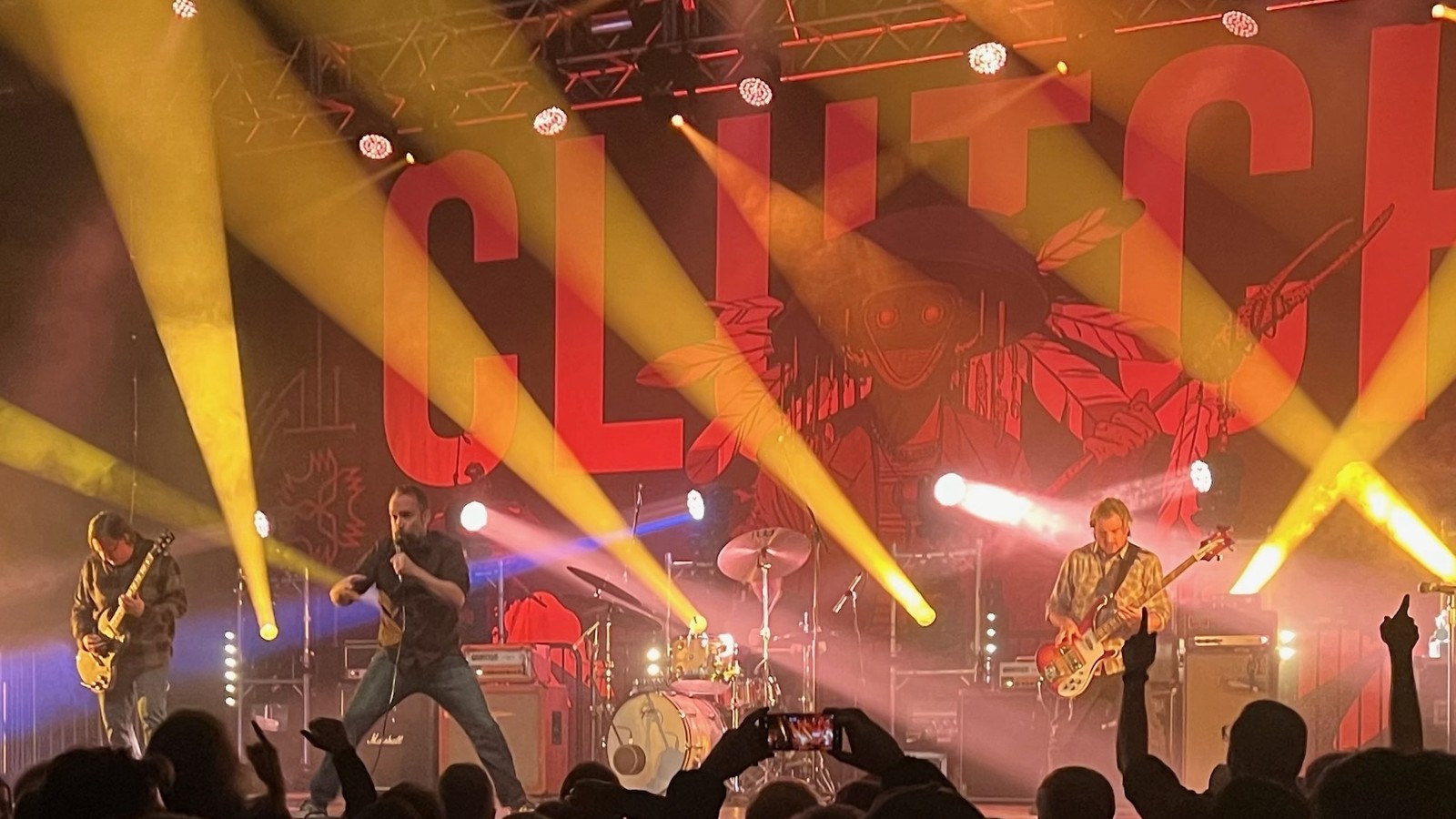
Stoner rock vs stoner metal is not a quarrel about fuzz, low tuning or the Black Sabbath riff, because both sides own all three; it is a quarrel about the voice at the microphone, about the direction in which the tempo leaves the middle of the road, and about who holds the paintbrush when the line gets drawn, and on that test the Maryland quartet that a Canadian metal magazine once scored ten out of ten and the volunteer metal archive names in its rules as a band it will not list, Clutch, stands on the rock side. That is our verdict. The rest of this page defends it.
Picture a county line painted across a highway: a white stripe on the asphalt and a sign on a post, and on the far side a different sheriff, a different sales tax and a different name on the school buses, while the road itself runs on without a seam, laid by the same crew from the same leaden load of aggregate, so that a truck crossing at seventy feels nothing under its tyres at all. The music is the asphalt. The labels, the magazines and the archivists are the crews with the paint, and they do not all paint in the same place. How the road was laid, from Palm Desert to San Jose, is the stoner half of the story; this page stands on the stripe and looks both ways.
Tune the guitars as low as you like. When the singer stops singing and starts roaring, the band has crossed the county line, and no amount of fuzz will drive it back.
Ilse Brandt, KaosMetal
Same asphalt, two jurisdictions
We start with what the two names share, because it is most of the music. The standard encyclopaedic definition does not separate them at all: it files stoner metal and stoner doom as other names for stoner rock, a fusion of doom metal with psychedelic and acid rock, slow to mid tempo, heavily distorted and bass heavy, and it suggests the word may come from a Roadrunner Records compilation of 1997, Burn One Up! Music for Stoners.
The differences sit elsewhere. The first is the voice: the rock side sings, and when AllMusic's John Bush summed up Clutch he heard hard rockers blending funk, Led Zeppelin and metal under vocals indebted to Faith No More, while the metal side hands the song to the riff and lets the vocal snarl or chant underneath it. The second is tempo. The rock side sits at mid tempo and swings; the metal side leaves the middle in one of two directions, dragged down towards the dirge or driven up towards thrash. The third is paperwork, and it matters more than the purists admit.
| Question | Stoner rock | Stoner metal |
|---|---|---|
| The voice | Sung, melody carries the song | Roared, snarled or chanted, the riff carries the song |
| Tempo | Mid tempo, built to swing | Dragged towards doom or pushed towards thrash |
| Typical labels | Tee Pee, Heavy Psych Sounds, band imprints such as Weathermaker, and Nuclear Blast for the retro bands | Earache, Rise Above, Relapse |
| Metal Archives | Named as not accepted in its rules (archived January 2023): Clutch, Fu Manchu, Monster Magnet, Kadavar, Graveyard | Listed: Sleep, and Kyuss as "Stoner Rock/Metal" |
| Examples | Queens of the Stone Age, Clutch, Fu Manchu, Brant Bjork, Kadavar, Graveyard | Sleep, High on Fire, Orange Goblin, Electric Wizard, Monolord |
Clutch, the band parked on the stripe
Formed in Germantown, Maryland, in 1991 by Neil Fallon on vocals, Tim Sult on guitar, Dan Maines on bass and Jean-Paul Gaster on drums, the same four who stand on its stages today, the Maryland quartet came out of the hardcore clubs rather than any desert and made its first album, Transnational Speedway League, for EastWest on 17 June 1993, a record heavy enough that Mörat, looking back in an A to Z of the band for Metal Hammer on 13 July 2016, called it a stark reminder of just how good angry music could sound. Columbia, Atlantic and DRT Entertainment followed, and since 2008 the band has run its own imprint, Weathermaker Music. The Obelisk now calls them Maryland groove rockers.
Blast Tyrant, released by DRT on 23 March 2004 and produced by Machine with the band in Hoboken, is the record that proves the paint is not the road. It entered the Billboard 200 at number 147, "The Mob Goes Wild" reached number 39 on the Mainstream Rock chart, and the same songs drew ten out of ten from Brave Words & Bloody Knuckles, a Canadian metal magazine, and four stars from Classic Rock. One record, both counties. That year Fallon also sang on "Blood and Thunder" from Mastodon's Leviathan on Relapse.
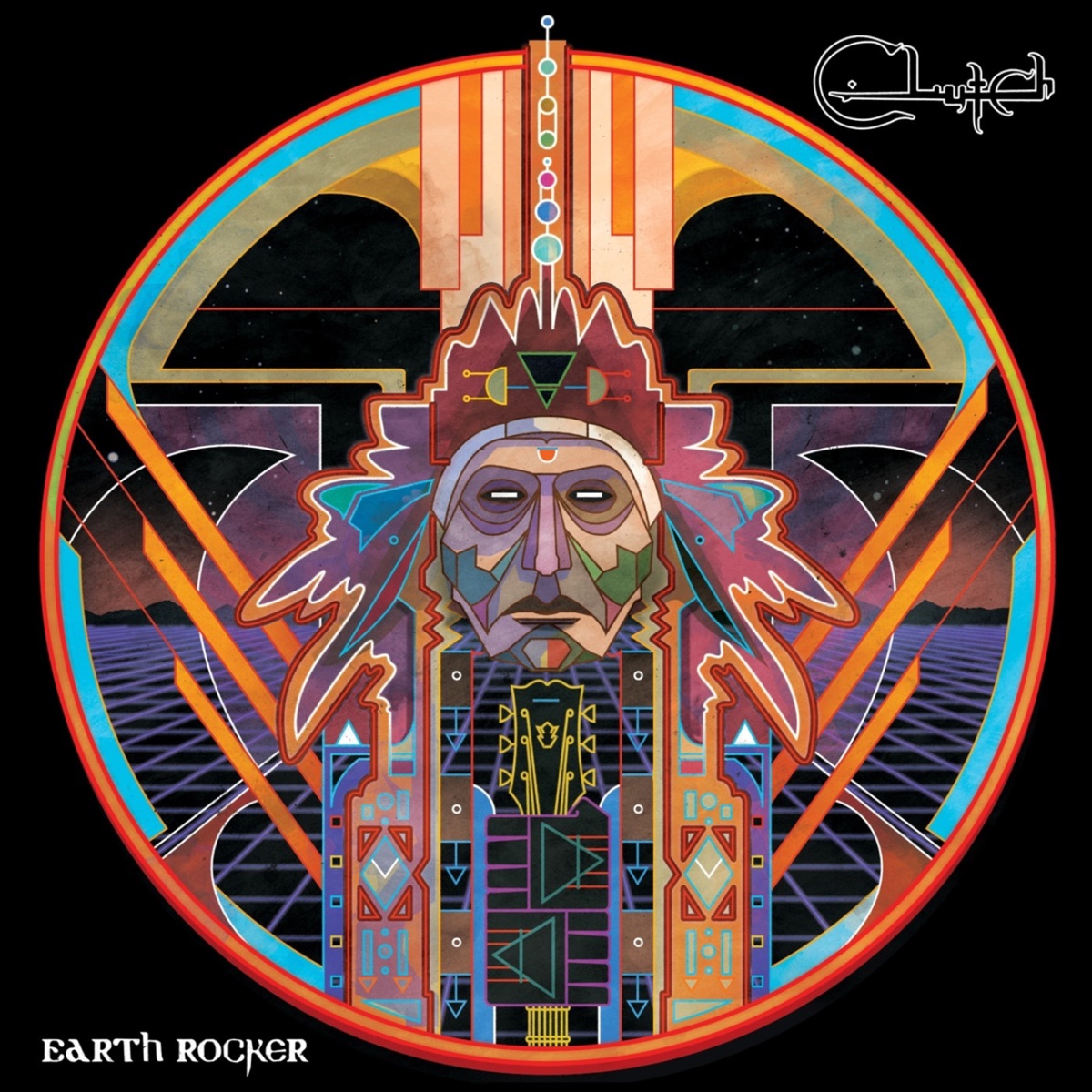
Released on 15 March 2013 with Machine producing again, Earth Rocker entered the Billboard 200 at number 15 and topped the Top Hard Rock Albums chart, and the band was plain about its aim: Jean-Paul Gaster told Hellbound.ca on release day that touring with Thin Lizzy had convinced them too few straight rock and roll records were being made. Metal Injection called the album a consistently rocking and rolling beast, and three years later Mörat, in that same A to Z for Metal Hammer, judged it arguably the band's most accessible record.
The metal press crosses the line to cover Clutch every time. The registration stays where it is. The rules of Metal Archives, the volunteer encyclopaedia of metal bands, in the copy archived in January 2023, give Clutch by name as an example of stoner rock the site does not accept, alongside Fu Manchu and Monster Magnet, and in May 2026 the band was the third headliner of Desertfest London, a festival built for exactly this road. Fallon sings. The swing survives every heavy record.
The rock side of the line
The loudest voice on the rock side belongs to a band that wanted nothing to do with the county at all. Formed in 1996 by Josh Homme after the break-up of Kyuss, Queens of the Stone Age carried the desert sound into the mainstream with Rated R on Interscope in June 2000, while its founder had already refused the label outright: "Stoner rock, to me, is like saying the crucial element is drugs," Homme told Mike Ross of Jam! on 24 November 1999. The Orange County quartet Fu Manchu, grown out of the hardcore band Virulence and renamed in 1990, reached In Search Of... on Mammoth in 1996, and the former Kyuss drummer Brant Bjork played every instrument on his solo debut Jalamanta in 1999 and now records for the Italian label Heavy Psych Sounds.
The retro bands complicate the map without moving the line. Founded in Berlin in 2010, Kadavar spent 2013 to 2019 on Nuclear Blast, and the Gothenburg quartet Graveyard, formed in 2006, has been on the same label since 2011, taking Hisingen Blues and later Peace to number one in Sweden. The Metal Archives rules, as archived in January 2023, name both as examples of psychedelic and occult rock the site will not list. Two crews, two stripes, one stretch of asphalt.
The metal side of the line
The San Jose trio called Sleep is where the metal side begins, with Sleep's Holy Mountain on Earache in November 1992 and a sound its encyclopaedia entry describes as slow, down tuned bass under equally low guitar riffs, repeated until the repetition turns hypnotic. When the band returned with The Sciences on Third Man Records on 20 April 2018, Spin greeted it as a miracle for stoner metal acolytes.
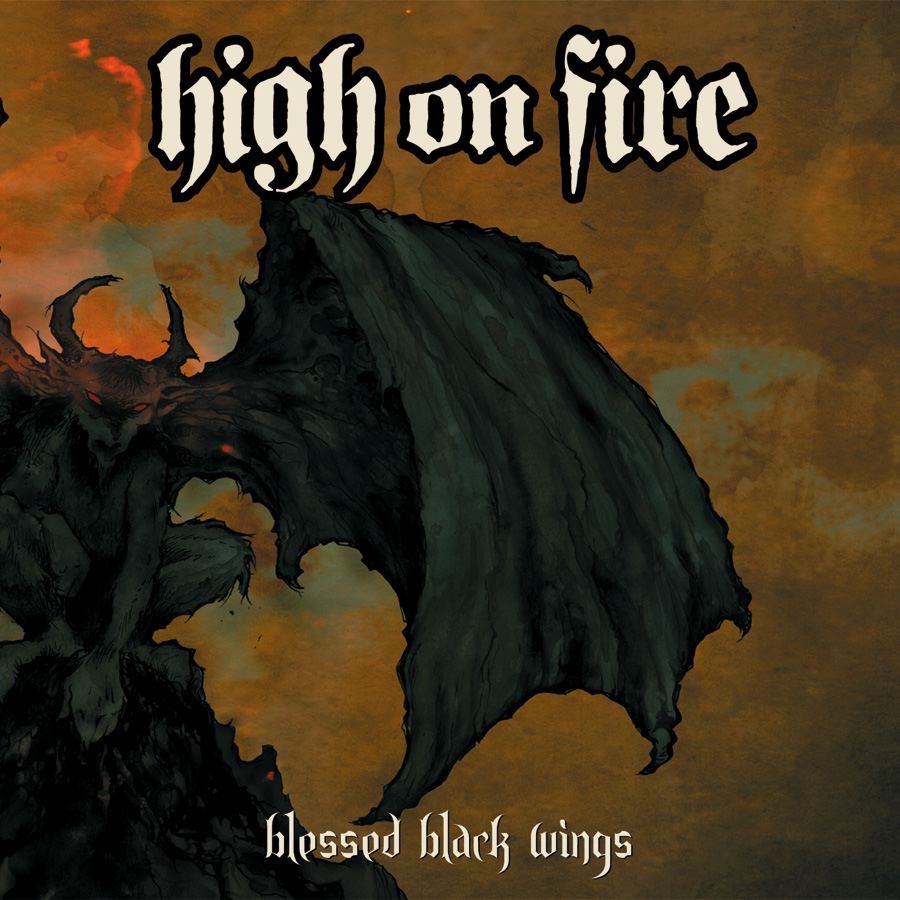
Founded in Oakland in 1998 by Matt Pike after Sleep had fallen apart, High on Fire kept the guitar tone of the trio and swung the riff like a wrecking ball through the wall of the old tempo, signing to Relapse in 2001, recording Blessed Black Wings with Steve Albini for release on 1 February 2005, and winning the Grammy for Best Metal Performance with "Electric Messiah" in February 2019. That is the upward exit from the middle of the road.
The downward exit is older. Electric Wizard, the Dorset band whose Dopethrone Rise Above released in 2000 and AllMusic called a dirge masterpiece, poured the riff like hot pitch over a grave and left it to harden, and Kerrang! heard in the band's lyrics not the smoke of a long night but an indiscriminate spray of bile. The Gothenburg trio Monolord took the same exit a generation later, from Empress Rising in April 2014 to Neverending on Relapse on 29 May 2026, a record The Obelisk called as unabashedly Sabbathian as ever. Graveyard and Monolord share a home city. The county line runs straight through it.
Then there is the band that walked back and forth across the stripe. Formed in London in 1995, Orange Goblin made its early records for Rise Above on a stoner and doom metal footing, began, in AllMusic's reading, to take punk and hard rock into the songs from Coup de Grace in 2002, kept Ben Ward at the microphone throughout, and played its last show on 17 December 2025.
Who holds the paintbrush
The people using the two terms do not agree. The labels sort by audience rather than by sound, which is why Kadavar and Graveyard shared a roster at Nuclear Blast with its death metal bands. The magazines follow the band rather than the category: Metal Hammer gave Clutch a full A to Z feature in 2016, and Spin reached for stoner metal to describe Sleep.
Only one crew paints to a written rule. In the copy of its rules archived on 2 January 2023, Metal Archives accepts only bands its staff deem "metal enough", asks for at least one fully, unambiguously metal album, and says that a band of mostly chugging, fuzz or noodling with minor metal influences is not metal. The same page names Monster Magnet, with Clutch and Fu Manchu, as stoner rock it will not take. The archive does not argue. It paints.
Our own test needs no database. Listen for the voice first, then for which way the tempo leaves the middle of the road, and you will know which county you are in before anyone shows you a sign. The records that taught both sides where the road goes are set out in the Stoner Metal Albums That Set the Sound, and the asphalt under all of them is the same.
