
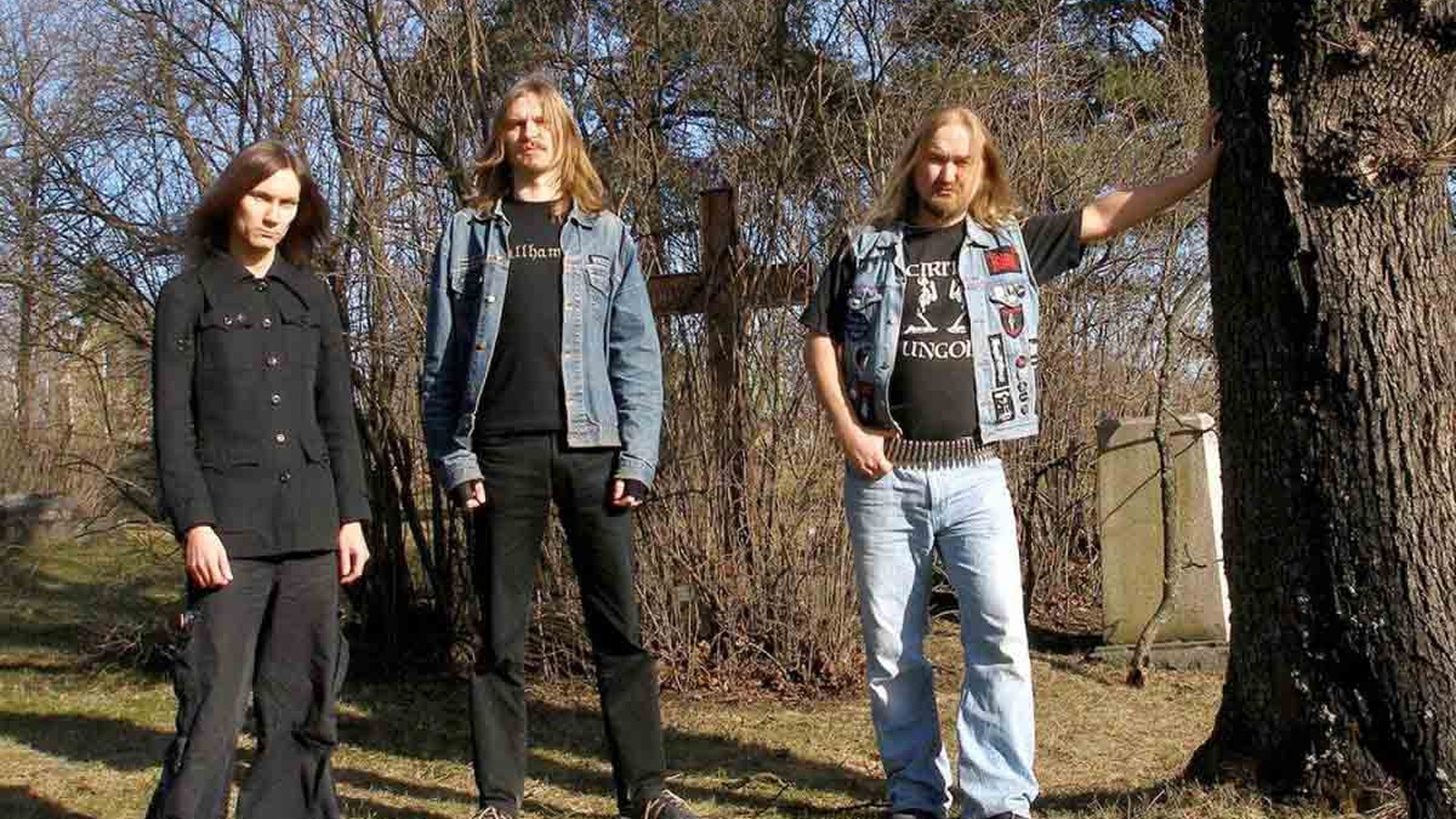
Twenty minutes and fifty-nine seconds. That is the length of "Slave of Satan" as the trio from Lohja released it, in its full version, on a Spinefarm single on 20 April 2005, and the Finnish singles chart took it in at number two. Released on 30 May 2007, "Teutonic Witch", sixteen minutes long, went straight in at number one. None of those figures made Reverend Bizarre a better band than it had been in August 1999, when the same three men recorded their first demo, and that is the difficulty with any list of the top doom metal bands: a chart position, a sales total or a running time tells us where a band stood in a given week, and nothing about whether anyone still walks to it.
So we rank on three tests, stated before the first name. A band must have made at least one record that later bands demonstrably took their bearings from. It must have made more than one record worth the journey, which is why a band with a single album does not appear. And it must have carried slow, weighted metal a measurable distance past the band before it, into a new voice, a new instrument, a new decade or a new country. The order then answers one question only: how much of the road beyond each band could still be travelled if that band were taken away. Our wider roster of doom metal bands reads the genre by generation; this page ranks ten by dependence.
Picture the stations of a pilgrimage road, each shrine built a day's walk from the last, and the road exists as a road only because every shrine still stands: pull one down and the day's walk before it ends in open country, the next roof lies two days off, and most of the pilgrims turn back. Doom has been walked that way since 1970. The ranking below measures traffic, not beauty, and the first stations carry the most of it because everyone after them had to pass through.
Give me my scallop-shell of quiet, / My staff of faith to walk upon, / My scrip of joy, immortal diet, / My bottle of salvation, / My gown of glory, hope's true gage; / And thus I'll take my pilgrimage.
Walter Raleigh, "His Pilgrimage", in The Oxford Book of English Verse
The first three stations
1. Black Sabbath. Released by Vertigo on 13 February 1970, the first album by the four musicians from Aston, Black Sabbath, opens on its title song, a tritone slowed until it stops counting and starts tolling, each blow of it landing like a door shut somewhere below the floor of the room, and on Paranoid, which followed in September 1970 and went to number one in Britain, "Hand of Doom" carried the same dread past seven minutes. Nothing further along can be reached any other way.
2. Candlemass. Founded by the bassist and songwriter Leif Edling in Upplands Väsby, north of Stockholm, in 1984, the Swedish band Candlemass released Epicus Doomicus Metallicus through Black Dragon on 10 June 1986 with the hired singer Johan Längqvist, and "Demon's Gate" and "Crystal Ball" raised their slow riffs block on block like church masonry, and opened epic doom, the path the Finns at our ninth station would take sixteen years on. It ranks second, above Saint Vitus, because more of the later road runs through Stockholm than through Los Angeles.
3. Saint Vitus. Signed to SST, the label Greg Ginn of Black Flag ran for punk records, the quartet from Los Angeles, Saint Vitus, released Born Too Late in 1986 with Scott "Wino" Weinrich newly at the microphone, and "Clear Windowpane" and "The Lost Feeling" set the Sabbath riff down at a pace so weighted that it turns into a refusal, addressed to every metal band of that year that had decided speed was the only virtue left. This is the station of doom as outsiders' music. Every band that plays slowly as defiance has slept here.
The ranking below measures traffic, not beauty.
Stations four to six
4. Cathedral. Formed in Coventry in 1989 by Lee Dorrian after he walked out of Napalm Death, the quintet called Cathedral released Forest of Equilibrium on Earache on 21 October 1991, and "Ebony Tears" and "Serpent Eve" dragged a label known for the fastest music in Britain down to the pace of a dirge. A second road runs out of this station: Rise Above, the label Dorrian had started in 1988, sheltered a generation of British slow music, our eighth station among it. Cathedral stands below the first three only because the road reached Coventry through them.
5. Pentagram. Rehearsing since 1971 around the singer Bobby Liebling, the band that waited fourteen years for a first album, Pentagram, finally put one out on its own Pentagram Records in 1985, with Victor Griffin's guitar driving "Relentless" and "The Ghoul". The age of this shrine is not in question. Its placing is a matter of access: the record of 1985 was the band's own release, built from tapes cut in 1981 and 1982 under the name Death Row and partly re-recorded in 1984, and the road only began to run through it in numbers after Peaceville reissued, renamed and resequenced it as Relentless in 1993, by which time three other shrines had carried the pilgrims past.
6. Trouble. Built in Chicago on the twin guitars of Rick Wartell and Bruce Franklin and the voice of Eric Wagner, Trouble released its debut on Metal Blade in March 1984, the record later known as Psalm 9, and "The Tempter" and the title song set scripture over down-tuned Sabbath riffs bound together by guitar harmonies learned from Judas Priest. Trouble brought a second lead guitar and a theology onto the road. It stands sixth because the band itself turned off towards a faster, psychedelic rock on Manic Frustration, released by Def American in 1992.
Seven to nine: a violin, a wall of fuzz and a Finnish rectory

7. My Dying Bride. Formed in Bradford in June 1990, the Yorkshire band My Dying Bride released Turn Loose the Swans through Peaceville on 11 October 1993, and with Martin Powell's violin now set inside the songs rather than laid across them, Aaron Stainthorpe moved between a death metal growl, the spoken word and a plaintive clean voice on "Your River" and "The Crown of Sympathy", while the opening "Sear Me MCMXCIII" and the closing "Black God" did without guitar, bass and drums altogether. Of the three Peaceville bands of that season, with Paradise Lost and Anathema, it is the one that stayed longest on the doom road, which is why it holds a station and the other two do not.
8. Electric Wizard. Named in Dorset in 1993 and led by the guitarist and singer Jus Oborn, with Tim Bagshaw on bass and Mark Greening on drums, the trio called Electric Wizard recorded Dopethrone at Chuckalumba Studios in May and June 2000, and when Rise Above released it on 25 September 2000, "Funeralopolis" and "I, the Witchfinder" came down in what Mörat of Kerrang! called, in October 2000, an aural landslide, the band playing as if from beneath a layer of pitch poured over the whole room. It opened the loud, occult branch of the road. In our reading, more young bands have set out along that branch since 2000 than along any other in doom.
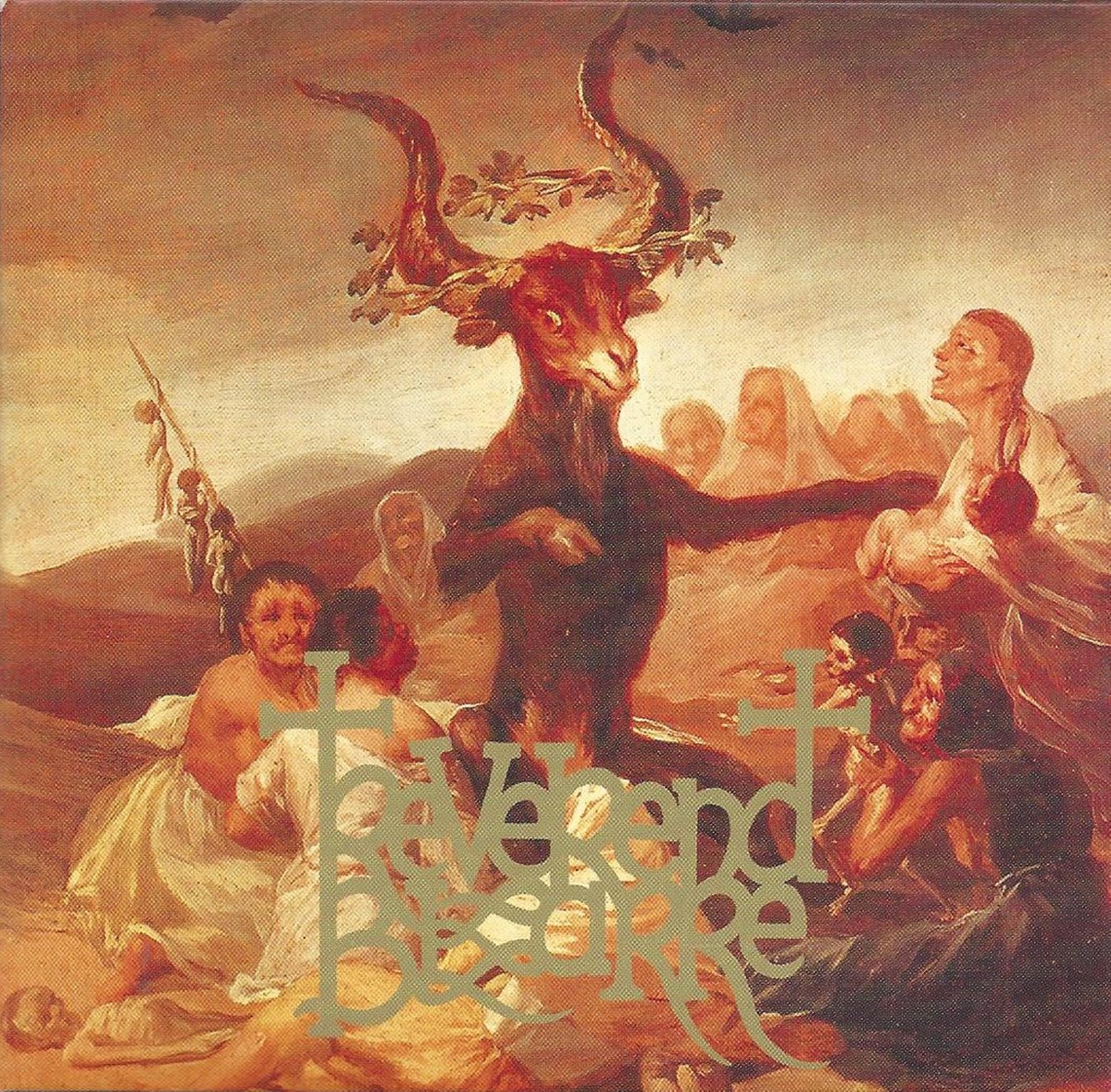
9. Reverend Bizarre. Formed in Lohja in 1994 and settled as a trio of Albert Witchfinder on bass and voice, Peter Vicar on guitar and Earl of Void on drums, the band from southern Finland recorded its debut at Red House in Turku between March and June 2001 and released In the Rectory of the Bizarre Reverend on Sinister Figure in 2002, seventy-four minutes that open on "Burn in Hell!" and close on "Cirith Ungol", twenty-one minutes and nine seconds, a song that runs on long after any rock record would have let it go. The Harbinger of Metal EP followed through Spinefarm in 2003 at almost exactly the same length as the album before it, and II: Crush the Insects in 2005 carried "Doom over the World" and the shorter album version of "Slave of Satan".
What puts the trio on this list is distance, measured in the one direction almost nobody else was walking in the early 2000s. While the genre's energy went elsewhere, these three took the old road of Saint Vitus and Candlemass and extended it by a full day's walk, proving that traditional doom could still be built new, at interminable length, and still reach the top of a national chart. The band ended by choice: the last concerts came in the autumn and winter of 2006, and the double album III: So Long Suckers, released in August 2007, closed the band. Why ninth, then. The shrine stands close to the two it came from, and fewer roads leave it.
The tenth station, and what the road leaves out
10. YOB. Founded in Eugene, Oregon, in 1996 by the guitarist and singer Mike Scheidt, disbanded in January 2006 and brought back in 2008, the trio called YOB recorded The Great Cessation in March and April 2009, and Profound Lore released it on 14 July 2009, sixty-two minutes across five songs, opened by "Burning the Altar" and "The Lie That Is Sin" and closed by a title song that runs past twenty minutes. It is the newest shrine with the traffic to show for it. Three years later the same label released the first Pallbearer album, and in our reading the American doom of the 2010s set out from Oregon.
Thergothon, whose only album opened funeral doom, fails the second test by the letter of it. Sleep and Eyehategod fork away from this road into stoner and sludge. Pallbearer and Bell Witch are the likeliest next stations, and a shrine is ranked only once the bands setting out from it can be counted. The full register, sorted by scene and decade rather than by debt, is A Doom Metal Bands List, by Scene and Decade. This order will change on the day a new shrine goes up far enough past Oregon that the road has to be redrawn to reach it.
