
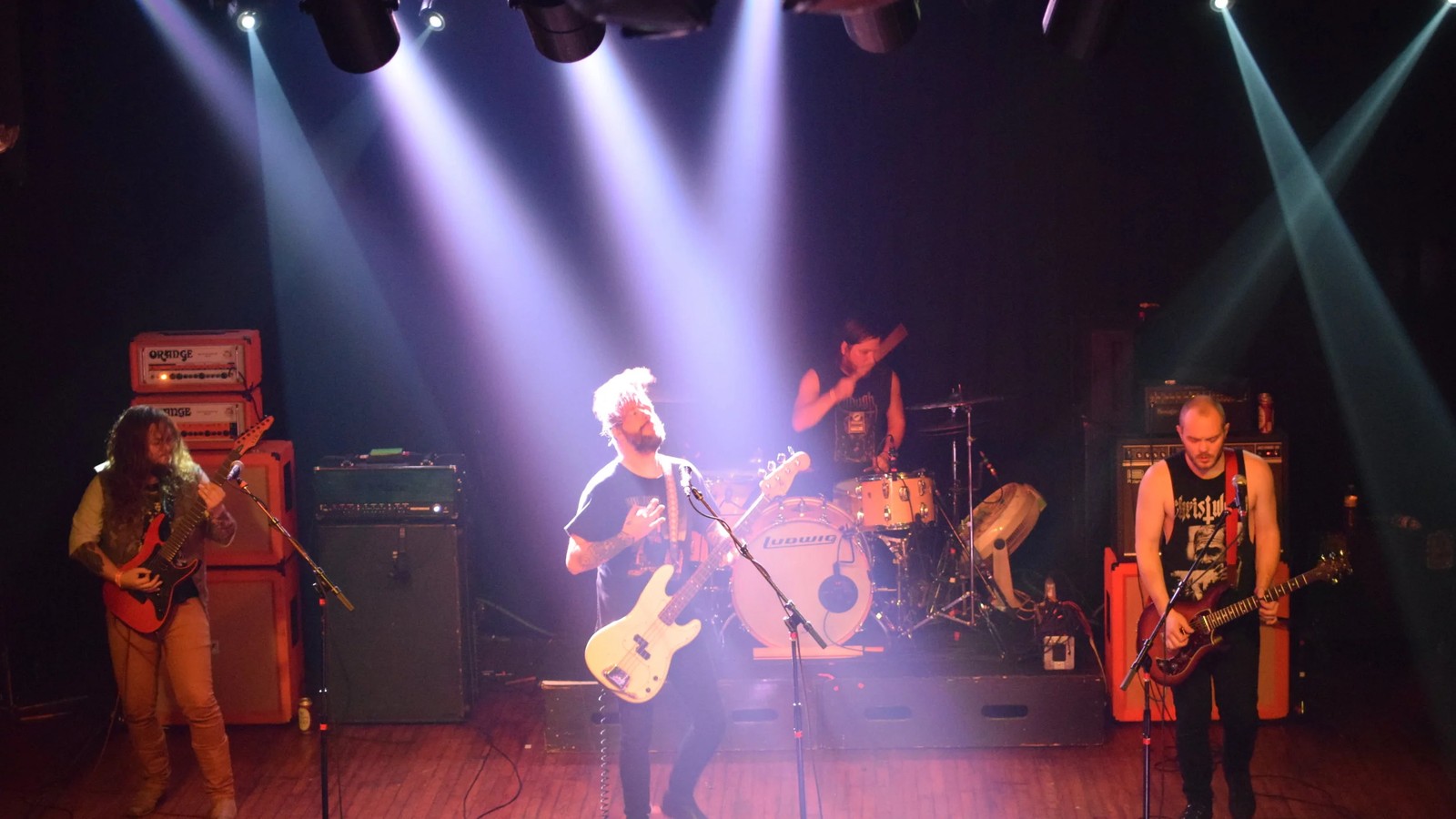
"I've come to terms with it. I've accepted it." The man speaking was Brett Campbell, singer and guitarist of Pallbearer, in an interview with Andrey Henkin published by Rock and Roll Globe on 28 May 2024, and the thing he had come to terms with was a single word: doom, the label fastened to his band since its first album, which he said he was fine to wear even though it is not the only thing the band does. We start with that sentence because it states, more honestly than most critics have managed, the difficulty under every list of doom metal bands, and because the conclusion it draws is, for anyone trying to find a way into this music, the wrong one.
A band does not choose whether it belongs to doom. It is entered on the roll by what it did to tempo and to the weight of a chord, and once the name is cut there it stays, whatever the band says in interviews afterwards. The roll is long by now, running from four young men from Aston who recorded a first album in a single day in November 1969 to bands releasing records in 2026, and a reader coming to it cold needs to know which names carry the weight and why each was cut where it was. That is what this page is for. It is not a ranking.
How to read the roll
We read the names in four generations, and the grouping is the argument rather than a filing system. The founders made slowness a choice instead of an accident and kept it alive through a decade that had no use for it. The nineties split that inheritance four ways inside about three years, into a British revival, a stoner weight, a sludge scream and a death metal mourning. The extremes pushed the tempo so far down that it stopped counting at all, and the present, from the late 2000s to now, took everything the extremes had learned and put the song back. The whole story, told in order and at length, runs from Black Sabbath to now; this page is its roll call, read out one name at a time. Longevity earns nothing on it. What earns a place is having changed what the next band believed a slow song could hold.
The founders: five names cut first
Recorded at Regent Sound in London on 17 November 1969 in one session of about twelve hours, produced by Rodger Bain and released by Vertigo on Friday 13 February 1970, the first album by the quartet from Aston, Black Sabbath, took the blues riff that every British band of the day was playing faster and louder and hauled it the other way, like a siege engine winched up a slope a yard at a time, so that the title song arrives one leaden step after another and makes the listener wait at the top of every phrase. It reached number eight in Britain. On Master of Reality in 1971 Tony Iommi tuned his guitar down, and "Into the Void" and "Children of the Grave" turned a mood into a method. Every band on this page is a footnote to those two records, whether or not it has ever heard them. The original four played their last show at Villa Park in Birmingham on 5 July 2025. Ozzy Osbourne died on 22 July 2025, at the age of 76.
Every band on this page is a footnote to those two records, whether or not it has ever heard them.
Formed in Alexandria, Virginia, in 1971 by Bobby Liebling and Geof O'Keefe, and kept waiting fourteen years for a first album that appeared in 1985 on the band's own label, the band from Virginia called Pentagram is on the roll because it carried the Sabbath riff through the whole of a decade in which nobody in the American record industry wanted it. That album, reissued by Peaceville in 1993 as Relentless, is the place to begin, with "All Your Sins" and "Sign of the Wolf (Pentagram)". Lightning in a Bottle, released by Heavy Psych Sounds on 31 January 2025, was the band's first studio album in close to a decade.
The Los Angeles quartet that began in 1978 as Tyrant, took a new name in 1980 from a Black Sabbath song and signed, against every expectation of the time, to SST, the punk label run by Greg Ginn of Black Flag, recorded its first album in August 1982 and saw it released only in 1984. That was Saint Vitus. The name is cut this deep because of Born Too Late, released by SST in 1986 with Scott "Wino" Weinrich newly in as singer, whose title song turned the band's position as outsiders in both metal and punk into a creed that slow music has recited ever since. The guitarist Dave Chandler is the one member present for all of it.
Founded in Chicago in 1978 by the guitarist Rick Wartell, and settled in 1981 with Bruce Franklin on second guitar and Eric Wagner singing, the Illinois band that its own label marketed as white metal, Trouble, released its first album on Metal Blade in 1984, a record later retitled Psalm 9, and earned the sticker because Wagner sang towards heaven rather than away from it while the twin guitars underneath hammered Sabbath's riffs into something harder. Wagner died on 22 August 2021, aged 62.

Formed in Upplands Väsby, north of Stockholm, in 1984 by the bassist and songwriter Leif Edling, the Swedish band Candlemass recorded Epicus Doomicus Metallicus at Thunderload Studios in February 1986 with a guest singer, Johan Längqvist, who was not yet a member, and when Black Dragon released it on 10 June 1986 the record gave epic doom its name and, having sold poorly, cost the band its record deal before the year was out. Edling built his riffs like rampart walls, raised to be besieged and not to fall, and "Solitude" is where to start. Histories of the genre count Candlemass with Saint Vitus, Pentagram and Trouble as the four bands that kept doom standing through the eighties.
The nineties: doom metal groups go four ways at once

Formed in Coventry in 1989 by Lee Dorrian, who had walked out of Napalm Death that July tired of the punk scene and unwilling to follow the band into death metal, the Coventry band Cathedral released Forest of Equilibrium on Earache in 1991, a funereal debut that dragged British extreme metal, which had spent the late eighties racing towards the shortest and fastest song possible, back down to walking pace. The British revival starts on that record. Dorrian's own label, Rise Above, set up in 1988, became the house for a generation of the slowest records in the country, and Cathedral signed off with The Last Spire in April 2013.
The band that Rise Above made its own came out of Dorset. Named in 1993 and led from the start by the guitarist and singer Jus Oborn, Electric Wizard released Come My Fanatics... in 1997 and Dopethrone in 2000, both on Dorrian's label. More than five thousand miles away, the San Jose trio formed in 1990 out of a band called Asbestosdeath, Sleep, released Sleep's Holy Mountain on Earache in 1992, a record stoner metal counts among its founding documents, and then spent the rest of the decade on a single song.
The New Orleans quintet that formed in 1988 and took the hardcore punk of its members' youth down to the tempo of Saint Vitus, Eyehategod, released Take as Needed for Pain on Century Media in 1993, and it is on the roll for teaching doom to scream. Mike IX Williams tears his voice apart over riffs that stop and lurch forward again without warning, with feedback left running between them like a siren nobody switched off after the raid. It is the sludge branch in one record, and A History of Nomadic Behavior in 2021 showed the method intact.
The fourth direction came from the north of England and from one label. Peaceville released the Halifax band Paradise Lost's Gothic on 19 March 1991, the Bradford band My Dying Bride's Turn Loose the Swans in 1993 and the Liverpool band Anathema's Serenades the same year, and between them the three records laid a death metal growl, and soon a violin and a clean voice, over the lentitude of doom, which is why they are spoken of together as the Peaceville three. Their roads parted quickly: Paradise Lost travelled towards gothic rock and back, and Anathema left metal for atmospheric rock before an indefinite hiatus announced on 22 September 2020.
One band kept the old faith while the others scattered. Formed in Lohja, in southern Finland, in 1994, the trio of Albert Witchfinder, Peter Vicar and Earl of Void called Reverend Bizarre took the line running from Saint Vitus through Candlemass and stretched it to lengths nobody had asked for, from In the Rectory of the Bizarre Reverend in 2002 to III: So Long Suckers in 2007, which reached number six on the Finnish chart as the band came to its end.
| Band | Formed | Start with | Label, year |
|---|---|---|---|
| Cathedral | Coventry, 1989 | Forest of Equilibrium | Earache, 1991 |
| Electric Wizard | Dorset, named 1993 | Dopethrone | Rise Above, 2000 |
| Sleep | San Jose, 1990 | Sleep's Holy Mountain | Earache, 1992 |
| Eyehategod | New Orleans, 1988 | Take as Needed for Pain | Century Media, 1993 |
| Paradise Lost | Halifax, 1988 | Gothic | Peaceville, 1991 |
| My Dying Bride | Bradford, 1990 | Turn Loose the Swans | Peaceville, 1993 |
| Anathema | Liverpool, 1990 | Serenades | Peaceville, 1993 |
| Reverend Bizarre | Lohja, 1994 | In the Rectory of the Bizarre Reverend | Sinister Figure, 2002 |
The extremes: where the tempo stops counting
The generation that went furthest down began in Finland. Formed in 1990, recording its only album in the autumn of 1992 and breaking up in the spring of 1993, the trio called Thergothon no longer existed when an Italian label released Stream from the Heavens in 1994, and on that record the tempo stops keeping time and starts keeping vigil. Funeral doom begins there. Formed in Riihimäki in 1991, Skepticism put an organ sound at the centre of Stormcrowfleet, released by Red Stream in 1995, and the organ has set the pace of the band's music ever since.
The other extreme came from the Pacific Northwest and stopped treating the riff as a riff at all. Founded in Seattle in 1998 by the guitarists Stephen O'Malley and Greg Anderson, named after a brand of amplifier and released through Southern Lord, the label that started alongside it, Sunn O))) removed the drummer, removed the pulse and let the held chord occupy the room at a volume meant to be felt through the floor, from ØØ Void in 2000 through Monoliths & Dimensions in 2009 to a self-titled tenth album released by Sub Pop on 3 April 2026.
O'Malley's other band pushed the same idea somewhere uglier. Formed in New York in 2000 with the singer Alan Dubin, the bassist James Plotkin and the drummer Tim Wyskida, Khanate released its first album on Southern Lord in 2001 and built its songs out of single blows left hanging in the air like the report of a field gun rolling across an empty valley, the music living in the seconds before the next shell lands, while Dubin screams into the gap. The band split in 2006, returned, and released To Be Cruel on Sacred Bones in 2023.
Pallbearer and the return of the song
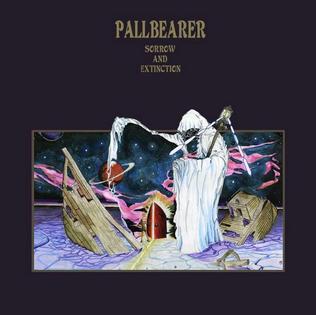
Formed in Little Rock, Arkansas, in 2008 around Campbell, the bassist Joseph D. Rowland and the guitarist Devin Holt, the Arkansas quartet Pallbearer recorded its first album across 2010 and 2011 with Zach Stine on drums, and Sorrow and Extinction, released by Profound Lore on 21 February 2012, five songs in just under forty-nine minutes opening on the twelve minutes of "Foreigner", did the thing twenty years of extremes had made unfashionable: it carried the melody back onto ground that funeral doom and drone had levelled to rubble, and handed it to a clean voice to hold. Pitchfork scored it 8.4 and put it first on its list of the forty best metal albums of 2012.
The second Pallbearer album is where the name was cut in full. Mark Lierly had taken over the drums, Billy Anderson produced at Type Foundry in Portland, and Foundations of Burden, released by Profound Lore on 19 August 2014, entered the Billboard 200, the main American album chart, at number 90 and topped Decibel magazine's album of the year list, with "Worlds Apart" and "Vanished" laying the band's voices in harmony over riffs that take their time and then fall with the whole of their weight. Heartless followed on 24 March 2017, mixed by Joe Barresi, with "I Saw the End" and "Thorns" pulling the songs tighter.
Pallbearer's move to Nuclear Blast brought Forgotten Days on 23 October 2020, produced by Randall Dunn, and Mind Burns Alive on 17 May 2024, produced by the band, with a saxophone by Norman Williamson on "Endless Place". Campbell was right about that record: synthesiser and saxophone are not what doom was built from. He was wrong about what follows. A band that spends five albums proving a slow song can carry a tune and still fall with its full weight does not stand outside doom; it rewrites the entry. Profound Lore released a new mix of Foundations of Burden on 7 November 2025, and in 2026 the band played that album in full across North America, on tours it called the record's last.
A band that spends five albums proving a slow song can carry a tune and still fall with its full weight does not stand outside doom; it rewrites the entry.
The present: names still being cut
A war memorial in a market square is cut in one campaign and then left open at the base, a smooth band of stone beneath the last name where the mason will one day come back, and the roll of doom reads the same way: five names from the first campaign cut deep and weathered dark, a longer column from the nineties below them, and underneath those a run of fresh letters still pale from the chisel, each one struck the way a doom riff is struck, a single blow, a long wait for the dust to settle, and only then the next. The present generation is that pale run of letters.
Among the first of the fresh names is the Oregon band around the guitarist and singer Mike Scheidt. Founded in Eugene in 1996, broken up in 2006 and re-formed in 2008, YOB released The Great Cessation on Profound Lore in 2009, Clearing the Path to Ascend on Neurot in 2014 and Our Raw Heart on Relapse on 8 June 2018. Scheidt wrote that album after a serious illness in early 2017. From Richmond, Virginia, formed in 2008 and fronted by the singer Dorthia Cottrell, Windhand gave Relapse three albums between Soma in 2013 and Eternal Return in 2018, the last of which reached number three on Billboard's Heatseekers chart for new artists.
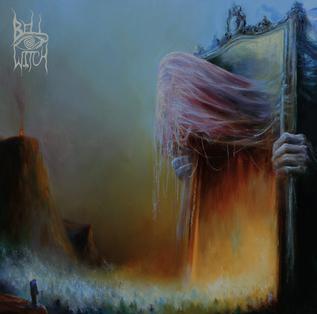
Formed in Seattle in 2010 by the bassist and singer Dylan Desmond and the drummer Adrian Guerra, the duo called Bell Witch made the longest single statement of the present generation. Mirror Reaper, released by Profound Lore on 20 October 2017, is one composition of eighty-three minutes for bass, drums, voice and Hammond organ, with no guitar at all, recorded with Jesse Shreibman on drums after Guerra had left the band. Guerra died on 17 May 2016, and vocals he recorded in earlier sessions are on the album. Future's Shadow Part 1: The Clandestine Gate, another single track of eighty-three minutes, followed on 21 April 2023 as the first part of a planned three.
Nobody gets to carve their own name on this stone, and nobody gets to scratch it off afterwards. The records do the cutting.
Ilse Brandt, KaosMetal
Three more names were cut in the 2010s. Formed in Denver in 2012, Khemmis put twin guitar harmonies and clean singing over doom weight on Hunted, released by 20 Buck Spin in 2016 and placed first on Decibel's list of the forty best albums of that year, and released a self-titled fifth album on Nuclear Blast on 12 June 2026. The project the guitarist and singer Nate Garrett started in Mesa, Arizona, in 2015, Spirit Adrift, released six albums in a decade, dropped the last of them, Infinite Illumination, through 20 Buck Spin without warning on 10 April 2026 and played its last show in Montreal on 28 May 2026, the closing night of the Decibel Magazine Tour. Out of Gothenburg, formed in 2013, Monolord released Neverending, its first album since Your Time to Shine in 2021, through Relapse on 29 May 2026.
The newest names on the stone come from Italy and Ohio. The quartet from Cittadella formed in 2014 around the singer Sara Bianchin, Messa, calls its music scarlet doom and took it from Close on Svart in 2022 to The Spin on Metal Blade on 11 April 2025. In Cleveland the singer Gwyn Strang and the guitarist Sean Bilovecky lead Frayle, which followed 1692 in 2020 with Skin & Sorrow on 23 September 2022 and moved to Napalm for Heretics & Lullabies on 10 October 2025. Neither band sounds like Candlemass. Both are on the roll for the reason Pallbearer is: each found something a slow song could still carry.
What the stone leaves out
A roll that tried to hold everyone would hold nobody, and some omissions here are deliberate. The Stourbridge band Witchfinder General and the Texans of Solitude Aeturnus belong to the fuller history. Crowbar and Neurosis are sludge and post-metal before they are doom. Kyuss is the founding band of stoner metal, not of doom, and Type O Negative is a gothic question that needs its own answer. A first roll call has to be short enough to read aloud in one sitting.
The records that carry each of these names, one sleeve at a time, are gathered in the essential albums; start with the founders and work down the stone. The base of it is still smooth. The mason has not finished.
