
Fourteen years. That is how long the second album by 16, Drop Out, waited between its first release in 1996 and the Relapse reissue of April 2010, and it had already sat on a shelf for close to two years before that first release. The critics liked it. The band stayed home. Those are two different facts, and the gap between them is what this page means by underrated.
Picture a river barge that went down in a flood below a mill town, its hold stacked with wooden crates stencilled, nailed and tarred shut, lying for years under a weighted blanket of sediment while the town upstream forgot what it had ever ordered, until a dry summer drops the water, a salvage crew winches the crates onto the bank black with mud, and somebody finally takes a claw hammer to a lid and finds the goods inside perfectly dry. That is an underrated sludge record. The river did not ruin it. The river only stopped it being delivered.
Every crate below comes with the paperwork of how it sank: a label that went bust, a band that split before the second year of touring, a master left on a shelf for two years, a record that reached a label only five years after the band stopped. None of them repeats the canon set out in the essential doom albums or in our sludge rankings, and that is the whole point, because the famous crates were opened long ago. Each one gets its date, its label and two songs to play first.
A record does not become minor because it went unsold. It becomes minor only if, played again twenty years on, it gives back less than was put into it, and the records that sank for reasons of paperwork almost always give back more.
Ilse Brandt, doom editor, KaosMetal
Dystopia and 16: the crates from the mid nineties
Formed in Orange County in 1991 and cut down to a trio by 1994, the crust trio whose drummer turns up in the line-ups of half a dozen other heavy bands, Dystopia, recorded the five songs of Human = Garbage in sessions that ran from September 1992 to February 1994, with Jim Barnes producing alongside the band, and released them as a 12-inch through Life Is Abuse, Common Cause and Misanthropic Records, the sort of small punk imprints that press what the band can afford and not one sleeve more. The artwork was cut from magazines the band found in alleys and bins. Budget art department. "Stress Builds Character" and "Hands That Mold" both run past five and a half minutes, which in crust counts as a prog epic. A CD with split tracks and an unreleased song bolted on arrived in 1998 or 1999, and Tankcrimes pressed the record as a double LP in 2014, twenty years after the first run.
The Santa Ana band that had to change its name because a punk group called Fifteen got there first, 16, made its debut, Curves That Kick, for Pushead's Bacteria Sour label in 1993, toured Japan the following summer and then recorded a second album that sat unreleased for nearly two years. Drop Out finally came out through Pessimiser and Theologian on 8 April 1996. It drew good notices, and the band answered them by playing locally and hardly touring at all. "Trigger Happy" opens the record and "Pumpfake" follows it, and the closing song, named after the band, drags on past nine minutes, which is a band signing its own name very, very slowly.
Iron Monkey and the year that ran out
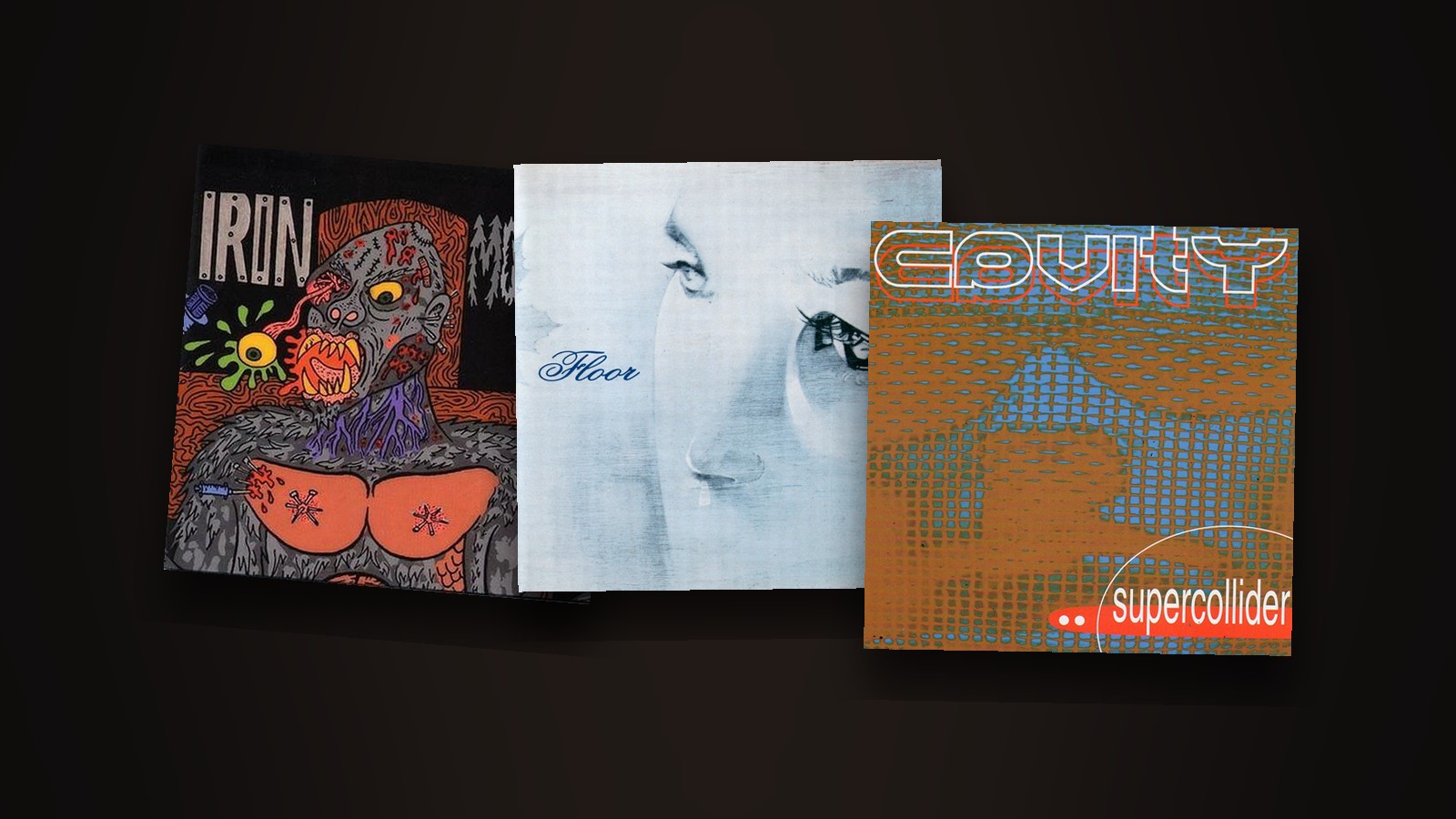
Assembled in Nottingham in 1994 and picked up by Earache, the label down the road, after a 1996 debut on the tiny Union Mill imprint, the band named after a primate and a metal, Iron Monkey, released Our Problem on 8 September 1998, produced by Andy Sneap at Backstage Studios, with cover art by the underground cartoonist Mike Diana. It opens on "Bad Year" and "Supagorgonizer", runs sixty-four minutes, parks the twenty minute "9 Joint Spiritual Whip" near the end and then plays five tracks of silence, thirteen seconds each, before the final song. Sixty-five seconds of nothing. On a sludge record, that is the ballad.
The problem was the calendar. In July 1999 the band shared a split with Church of Misery on Man's Ruin and played the Dynamo festival in the Netherlands, a guitarist left, and in September 1999 Iron Monkey split, citing personal and industry problems, so the record never got a second year on the road. The singer Johnny Morrow died of a heart attack in the summer of 2002. The recognition came afterwards and on paper: Terrorizer placed Our Problem seventh in its top twenty sludge albums, across issues 187 and 188 in 2009. The band re-formed in 2017 without Morrow and has made two albums for Relapse since.
When Man's Ruin went under: Cavity and Noothgrush
Started in Miami in 1992, the sludgecore crew that later fed its players into Torche and Black Cobra, Cavity, made its second album for exactly the right label at exactly the wrong moment. Supercollider came out on Man's Ruin in 1999, ten songs opening on the six and a half minute title track and "Set in Cinders". Man's Ruin was the artist Frank Kozik's label, screen printed sleeves, most editions at five thousand copies or fewer, and by the end of 2001 it was dead, sunk by a botched move from the distributor Mordam to RED and by the loss of its lease at the height of the dot-com boom. The licences went back to the bands in 2002. Hydra Head reissued Supercollider soon after with an extra song, which is the salvage crew turning up on time for once, and Cavity broke up in 2003 anyway.
Founded in the Bay Area in the spring of 1994 around the bassist Gary Niederhoff and the drummer Chiyo Nukaga, the Oakland sludge band whose best record spent nine years as more rumour than product, Noothgrush, recorded the six songs of Erode the Person with Bart Thurber at House of Faith in Oakland on 24 November and 17 December 1997, as an LP for two German labels that never put it out. The songs surfaced instead on a self-released CD of the same name, 500 copies sold on tour in 1999, and the band ceased to exist in April 2001. The first label release came from Throne Records on 5 August 2006, an anthology under the same title, five years after there was a band to tour it. The title song lasts ten minutes and forty-three seconds and "Deterioration" lasts nine, both of them long enough to erode the patience of anyone who came for powerviolence. In 2011 Southern Lord put out the compilation Live for Nothing and Noothgrush came back to the stage, and in 2012 it took on as singer Dino Sommese, the drummer and vocalist of Dystopia, which means two of the crates on this page share a pair of lungs.
Floor, the last crate up
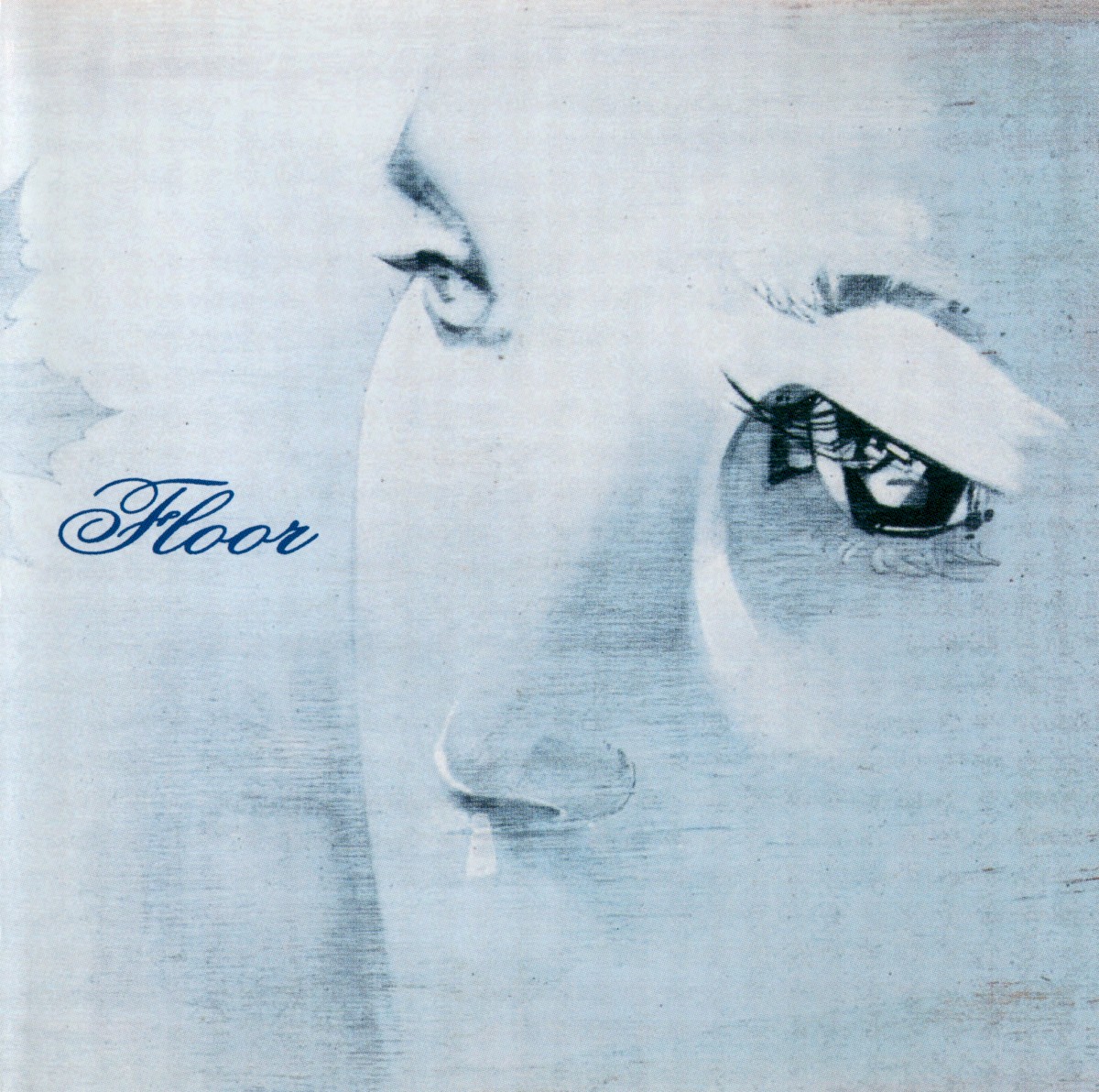
Formed in Miami in 1992 by the guitarists Steve Brooks and Anthony Vialon, who also played in Cavity, and who did without a bass guitar and tuned two guitars so low that one loose string, the one Decibel calls the bomb string, hangs off the neck like a washing line in a gale and goes off under the riffs like a charge under paving, the trio that spent a decade breaking up and re-forming, Floor, finally released its first full album on No Idea Records on 31 May 2002, recorded in Tampa in the summer of 2001 with Mark Nikolich engineering. Thirteen songs in thirty-two and a half minutes, opening on "Scimitar" with "Downed Star" third. In Chris Dick's reading for Decibel, which took the record into its Hall of Fame in 2013, the band had floundered for years without an accepting ear, filed as sludge-pop by puzzled writers and as weirdos by its own scene. It split in 2003.
Then the water went down. Robotic Empire gathered the whole career into Below & Beyond, an eight CD and ten LP box, in 2010; the band re-formed to tour it and found that its audience had grown while it was away; and Season of Mist released Oblation in April 2014 to a Metacritic score of 77. Brooks had long since started Torche. Floor is the rare leaden crate that was hauled up, opened and sold while the crew that nailed it shut was still standing on the bank to sign for it.
Underrated is not a verdict on the record. It is an accident report on the delivery.
Six crates on the bank
| Released | Band, album | Label | Two songs | Why it sank |
|---|---|---|---|---|
| 1994 | Dystopia, Human = Garbage | Life Is Abuse, Common Cause, Misanthropic | "Stress Builds Character", "Hands That Mold" | Small punk 12-inch |
| 8 April 1996 | 16, Drop Out | Pessimiser, Theologian | "Trigger Happy", "Pumpfake" | Shelved for nearly two years; the band barely toured |
| 8 September 1998 | Iron Monkey, Our Problem | Earache | "Bad Year", "Supagorgonizer" | Band split in September 1999 |
| 1999 | Cavity, Supercollider | Man's Ruin | "Supercollider", "Set in Cinders" | Label collapsed at the end of 2001 |
| 1999 tour CD; 5 August 2006 | Noothgrush, Erode the Person | Self-released; Throne | "Erode the Person", "Deterioration" | No label release until five years after the band ended |
| 31 May 2002 | Floor, Floor | No Idea | "Scimitar", "Downed Star" | Band split in 2003 |
Six crates, then, with the mud still drying on them. I still go through the used bins for a Kozik screen print from Man's Ruin, and the bins still win. Play these in the order of the table and the silt comes off one lid at a time, and when the ears want a measure of the cargo that was delivered on schedule and opened by everybody, it is kept in the Best Doom Metal Albums of All Time.
