
The doom metal chord, as this page argues it, is a chord with its third taken out, and almost everything the genre means by weight is carried by the two notes left standing and by a third note that no hand on the guitar is playing. We hold to that verdict with the exceptions in view, the minor chords, the diminished shapes, the stacked fourths of Tony Iommi, because each is heard against the bare fifth and chosen for how much harsher it sounds beside it. Remove the fifth and the music loses its floor. Add the third under heavy distortion and the floor cracks.
Defined in Esa Lilja's 2009 doctoral study Theory and Analysis of Classic Heavy Metal Harmony as a fifth or a fourth with possible octave doublings, and written with the figure five after its root, so that E5 means E and B and nothing more, the power chord is three stones set on the neck: the root, the fifth seven semitones above it, the root again twelve semitones up. It stands like a cairn on a bare hillside, each stone held up only by the other two, no third wedged between them, and one stone pulled loose brings the whole marker down into a heap that points nowhere. The sleeves and the slackened strings belong to the chapter it belongs to; here we stay with the shape the fretting hand makes.
Distortion turned the missing third from a shortage into a law. An amplifier driven into clipping creates new frequencies at the sums and differences of the notes fed into it, and for a fifth those tones fall back onto the harmonic series of the root. Robert Walser wrote in Running with the Devil in 1993 that the resultant tones of power chords "create additional low frequencies, adding weight to the sound", and the spectra measured for Lilja's study at the Helsinki University of Technology showed the distorted fifth sounding a fundamental one octave beneath the root actually played, with a strong major third that no finger holds down.
| Shape | Notes, built on G | Semitones above the root | Character |
|---|---|---|---|
| Power chord, G5 | G, D, G | 7, 12 | Most consonant: added tones belong to the root |
| Inverted power chord | D below G | 5 | Same two notes, same low tone on the root |
| Flat fifth, the tritone | G, D flat | 6 | Splits the octave exactly in half |
| Minor triad | G, B flat, D | 3, 7 | Rough: added tones point to another root |
| Diminished triad | G, B flat, D flat | 3, 6 | Dissonant, the tritone inside it |
| Diminished seventh | G, B flat, D flat, F flat | 3, 6, 9 | Equal steps: any note can act as root |
| Quartal chord | G, C, F, B flat | 5, 10, 15 | Extremely dissonant beside the power chord |
Why the third came off the pile
Heard through an overdriven amplifier, the minor triad is the first chord to fail. Hermann von Helmholtz wrote in the nineteenth century that the minor triad is "very decidedly less harmonious than the major triad, in consequence of the combinational tones", and Lilja's spectra show what distortion does to that objection: an A minor chord throws off tones belonging to the harmonic series of A, C and F, its low components grind against one another like scree under a boot, and the root the ear is searching for sinks out of reach. Pete Townshend told Matt Resnicoff of Guitar Player, in the October 1989 issue, that none of the shapes he played with loud distortion had a third, because he heard the third in the distortion.
The hands that shaped doom obeyed that law. On "Die Young", from the Black Sabbath album Heaven and Hell of 1980, Iommi's two guitar parts build major triads on the sixth and seventh degrees of the Aeolian mode and leave the tonic, where a minor triad belongs, as a bare power chord, which Lilja reads as the minor triad being too rough to carry the home degree. Where Iommi did strike a minor third at full gain, the roughness became the point: the first downbeat of "Supernaut", on Black Sabbath Vol. 4 in 1972, is either E minor or E7♯9, and by Lilja's analysis the two are nearly impossible to tell apart by ear, because distortion lays a major third and a minor seventh over both.
Remove the fifth and the music loses its floor. Add the third under heavy distortion and the floor cracks.
The loose stone: the tritone and the diminished shapes
Set six semitones above the root instead of seven, the fifth becomes the tritone, the interval that divides the octave into two equal halves in equal temperament and that most theorists from the Middle Ages to the end of the Renaissance treated as unstable and refused to count as a consonance, and a cairn stacked on it leans from the moment the stones are placed. Laid over a minor third, the same interval makes the diminished triad, a root, a minor third at three semitones and a diminished fifth at six, which common practice harmony counted as dissonant precisely because the tritone sits inside it.
Stack one more minor third on top and the stones give up any claim to a base. The diminished seventh chord, on G the notes G, B flat, D flat and F flat, which sounds as E, divides the octave into four equal steps of three semitones, and the American composer Vincent Persichetti wrote that in chords built from equidistant intervals any member can function as the root. In the Aeolian mode, which Walser counted among the two most common in heavy metal, the triad on the second degree is diminished, and Lilja suggests that metal's habit of building progressions on the roots of a pentatonic scale may come from steering around such degrees.
Two fingers lifted: Iommi's fourths
The guitarist who made the shapes had lost the tips of two fingers on his fretting hand in a sheet metal factory at seventeen, and by his own account in his autobiography Iron Man he used the injured fingers mainly for fretting chords rather than single-note solos. Lilja named one habit of that hand. Iommi's quartal chords, stacks of perfect fourths, are typically made by starting from the power chord position and lifting two fingers off the fretboard.
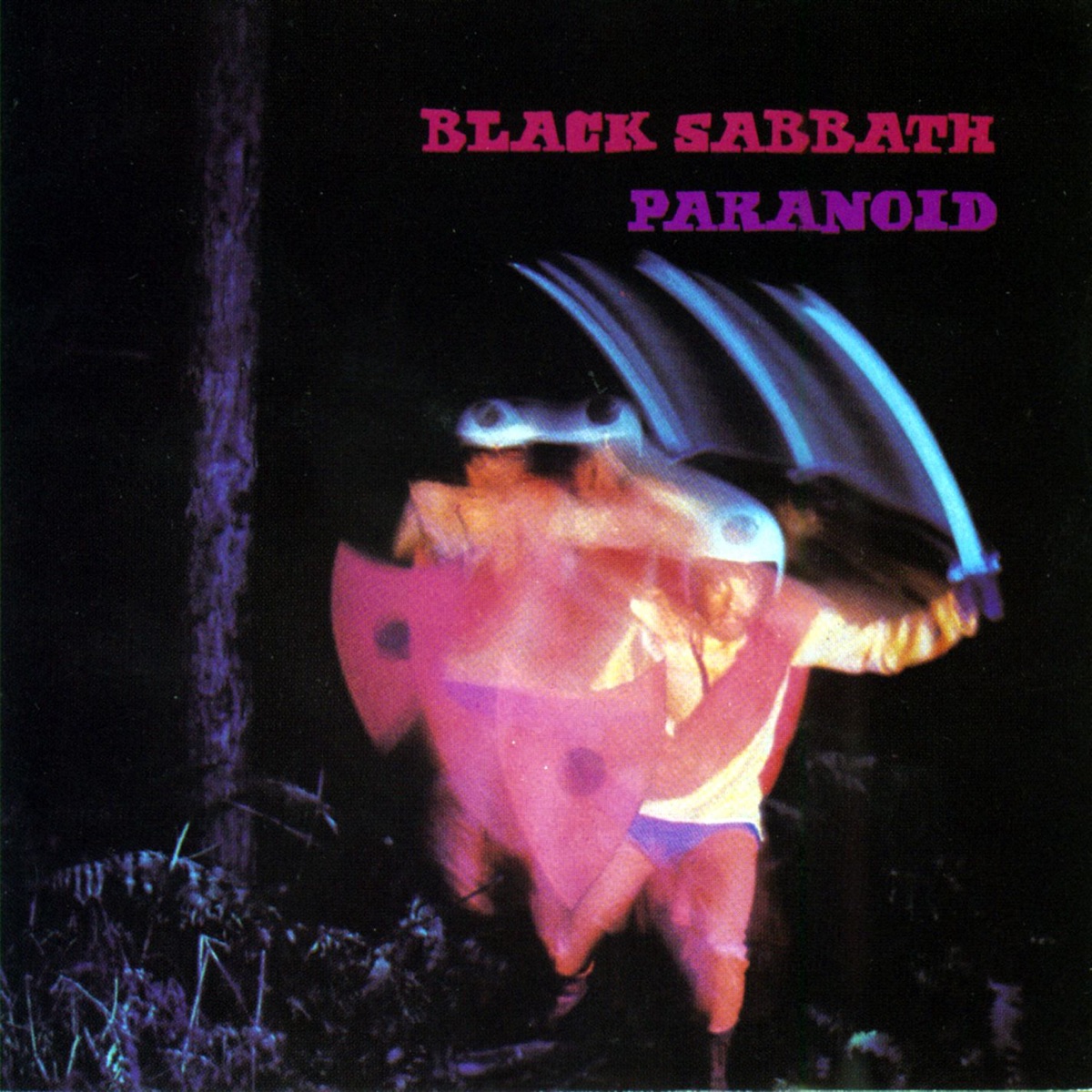
The clearest demonstration sits on Paranoid, released by Black Sabbath in September 1970. On "Fairies Wear Boots" the guitar plays a one-bar riff that includes the quartal chord G, C, F and B flat, while Geezer Butler's bass runs across two bars, holding up the first degree beneath it in the first bar and the seventh degree in the second, so that the same stack of fourths, unmoved by a single fret, is heard as two different harmonies. Here the cairn is at its barest: a column of fourths that means nothing until a stone is set beneath it, and then means whatever that stone decides.
and the remains / Of the unfinished Sheep-fold may be seen / Beside the boisterous brook of Green-head Gill.
William Wordsworth, Michael, 1800
Boris and the chord held past its decay
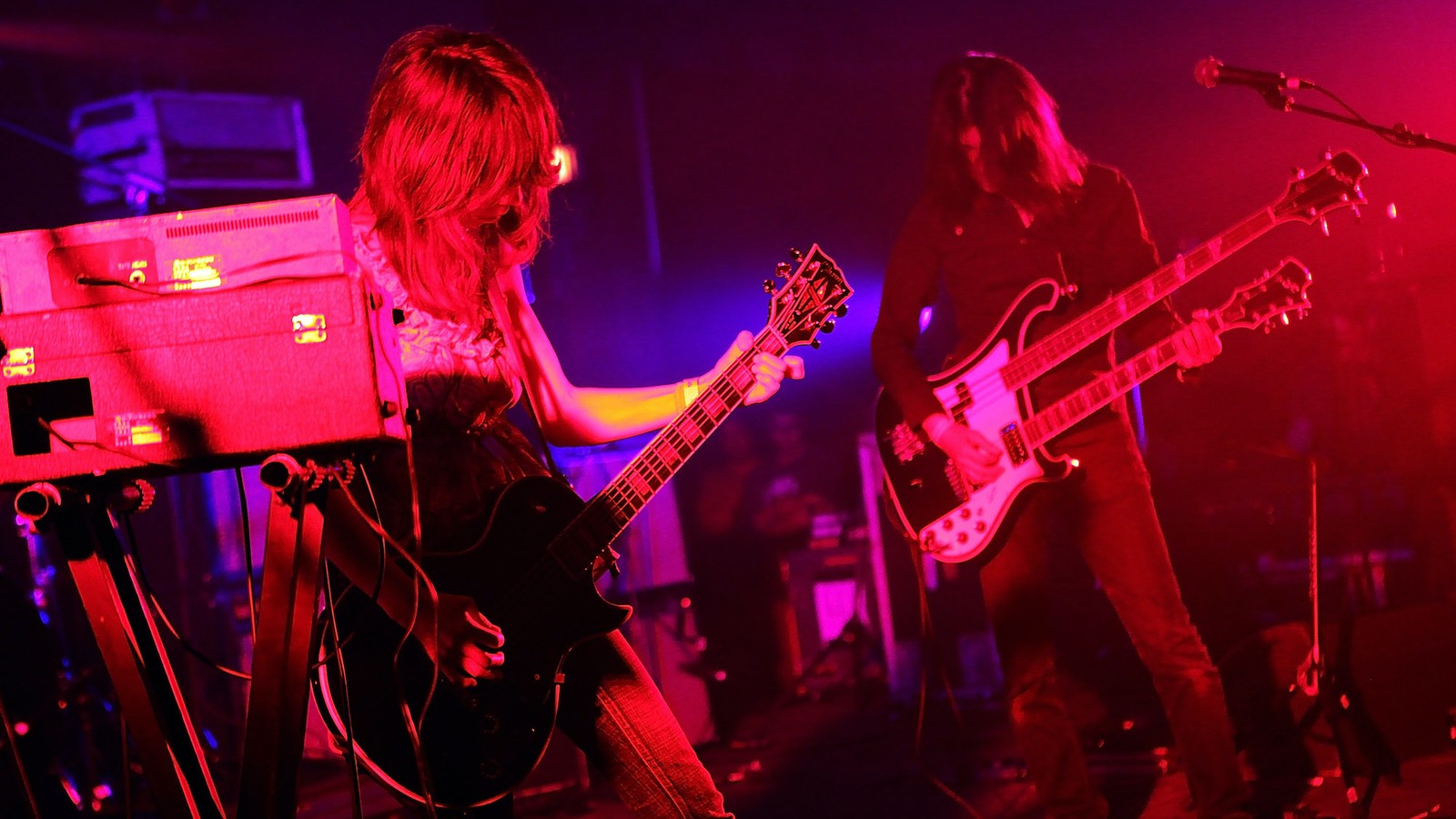
Formed in Tokyo in 1992 and fixed since 1996 as Atsuo on drums, Wata on guitar and Takeshi on bass and guitar, the trio, Boris, builds its harmony the way a cairn is built, every player bearing on the other two. Takeshi plays a double-necked bass and guitar, and on the First Act instrument he described to MusicRadar in August 2017 the four bass strings carry the same note names as the four lowest strings of the guitar neck, so a power chord rooted on the upper neck finds its bass note under the same fret on the lower one. His guitar neck runs into Sunn Model-T heads from 1973 to 1975, and his reason for them reads like a description of the power chord: "There's a lot of headroom, so even when turning it up really loud it still holds together quite well."
Wata holds her chords past the point where a plucked string would let them go. Her main distortion, she told the same magazine, is an Elk Big Muff, a Japanese copy of the Electro-Harmonix circuit that she values as "thick and heavy", and she plays with an EBow, the handheld magnet that keeps a string vibrating, which in her words "can create various expressions of sustain". On Boris at Last -Feedbacker- in 2003 held sound became the shape of a whole record, which Treble's Jeff Terich heard building "from hazy sheets of guitar" into a crushing peak and then total noise.
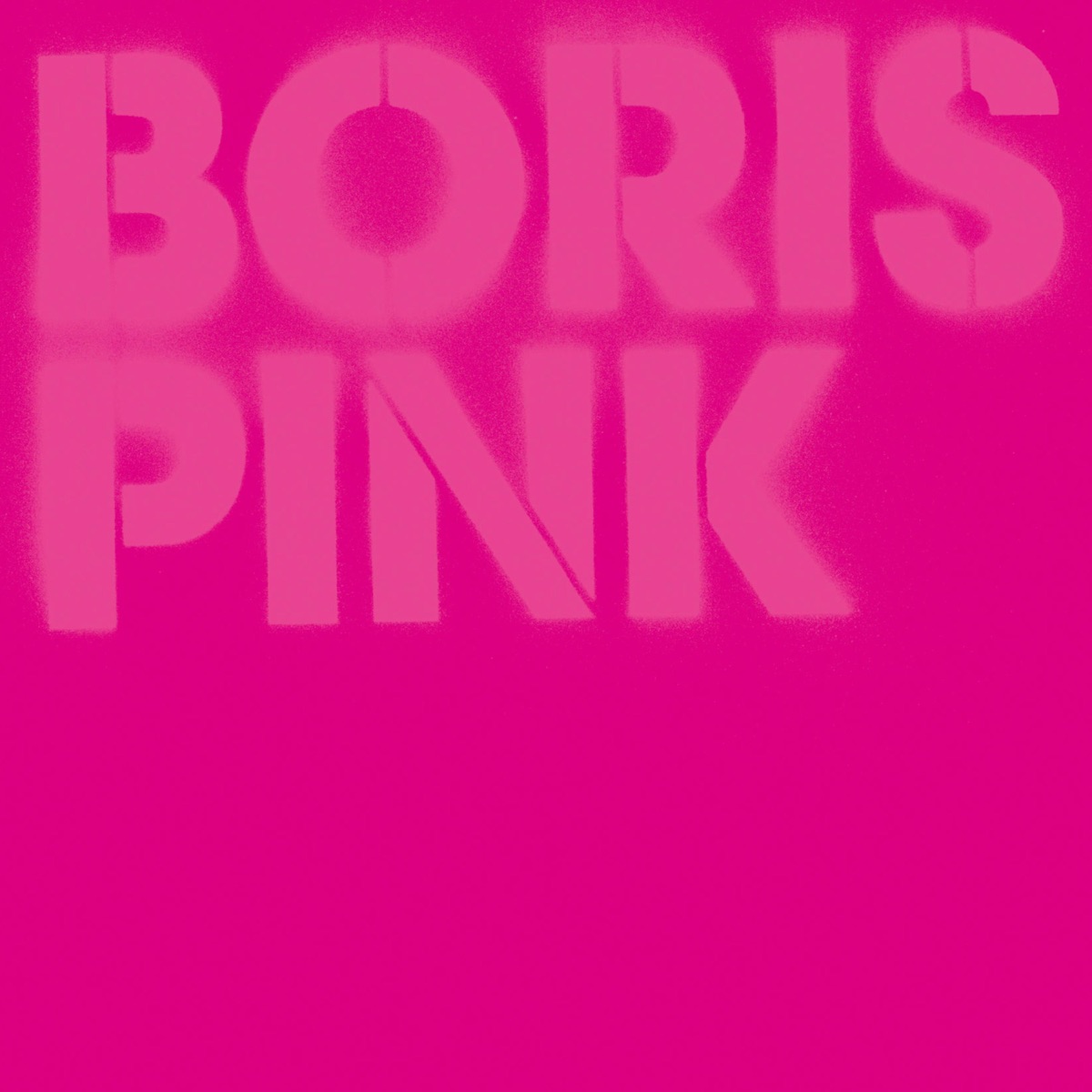
The song Boris is most loved for is one of their densest. Released in Japan by Diwphalanx in November 2005 and in America by Southern Lord in 2006, Pink opens with "Farewell", seven and a half minutes that Invisible Oranges called "bombed-out shoegaze perfection" in June 2017 and Treble called "a dense, shoegaze dirge" in January 2022, two readings years apart that file it under the style of blurred, heavily treated guitars at overwhelming volume. The trio dragged that weight into Altar, its collaboration with Sunn O))), released by Southern Lord on 31 October 2006.
What the cairn marks
A cairn on a hillside is never built for its own sake. It marks a path, a summit or a grave, and it stands only while each stone keeps bearing on the others. The doom chord keeps the same terms, root and fifth and octave pressed so hard together by distortion that they sound a fourth stone beneath them, a leaden fundamental tolling an octave under the hands, and every other shape in the genre, the minor triad kept off the tonic, the tritone, the diminished seventh with no base, the fourths that change meaning with the bass, is heard as a stone set crooked against that marker.
The verdict stands where it began. Distortion made the third the most expensive note a heavy band can play, and the genre built its geological weight from what remained. The scene's jokes about its interminable chords belong to the Doom Metal Meme, and Why It Will Not Die.
