
Doom metal has more subgenre names than it has borders, and our verdict, which the rest of this page defends, is that a doom subgenre is real only when it changes what the music is made of. Change the voice, the pulse, the picking hand or the record collection the riff was learned from, and a line appears that anybody can hear inside the first minute of an album. Change only what floats on the surface, the colour of the guitar tone, the length of the song, the depth of the reverb, and what appears is a label, which a band can wear on one record and take off on the next. By that test sludge, stoner doom, death doom, gothic doom, funeral doom, drone and black doom are real branches. Psychedelic, progressive, atmospheric and epic doom are not branches at all. They are light on the water.
The picture we keep in front of us when we draw this map is a big river near the end of its course. Carrying more silt than its current can shift, such a river slows as it nears the sea, drops its load into its own bed, chokes the main channel it cut over centuries and breaks sideways into a fan of distributaries, each forcing its own route to open water and each carrying a different share of the silt. That is what happened to the slowness Black Sabbath put on tape in 1970. For fifteen years it ran in a single channel, kept by a handful of bands in Maryland, Illinois, Los Angeles and Stockholm, and then, between 1987 and 1995, it took on silt from every bank at once, hardcore punk from one side and death metal from the other, blues fuzz from the Californian desert and pure amplifier hum from the Pacific Northwest, until the old course could no longer hold it and the delta opened. The whole journey from source to sea is told in the slowest music in metal; this page is the chart of the mouth.
Charts of this kind usually fail in one of two ways: they give every name its own box and pretend that thirteen subgenres are thirteen musics, or they refuse the names and call everything doom. We do neither. For each of the thirteen names, from traditional doom to the post-metal border where fresh water meets salt, we give the line it draws and the records that cut it, and we say plainly which are channels and which are only a change in the light.
A doom subgenre is real when it changes what the music is made of. When it changes only the light on the surface, it is a label, and one band can wear three of them in a single year.
The test, and the whole delta on one table
We put four questions to a record. What does the voice do: sing a melody over the riff, roar underneath it, scream from inside it, shriek above it? What does the pulse do: walk, crawl, slow until the beat dissolves, or cease to exist? What does the picking hand do: play riffs in the blues shapes Tony Iommi left behind, tremolo pick like a black metal guitarist, or strike a chord once and let the amplifier do the rest? And where was the riff learned: from the seventies, from hardcore clubs, from the death metal demo network? A different answer to any of the four cuts a new channel. A different answer to anything else, song length, keyboards, lyrics about the cosmos, moves the light on the water and nothing more. Hybrid tags such as blackened sludge are left out of the table: each is two of its rows side by side, and a delta does not name every sandbar.
| Branch | Where the line falls | Founding records | Present-day names |
|---|---|---|---|
| Traditional doom | Clean melodic voice over blues-shaped riffs at walking pace | Saint Vitus, Saint Vitus (1984); Pentagram, Pentagram (1985) | Pallbearer, Khemmis |
| Epic doom | Overlay: operatic voice and ceremonial arrangement | Candlemass, Epicus Doomicus Metallicus (1986) | Crypt Sermon, Candlemass |
| Stoner doom | Blues fuzz, bass-heavy tone, a voice that still sings | Sleep, Sleep's Holy Mountain (1992); Electric Wizard, Dopethrone (2000) | Windhand, Monolord |
| Sludge | Hardcore scream, feedback, sudden lurches in tempo | Melvins, Gluey Porch Treatments (1987); Eyehategod, In the Name of Suffering (1990) | Primitive Man, Thou |
| Death doom | Death metal growl under the slow riff | Winter, Into Darkness (1990); Paradise Lost, Gothic (1991) | Hooded Menace, Spectral Voice |
| Gothic doom | Growl traded for a clean baritone or a female voice | Type O Negative, Bloody Kisses (1993); Theatre of Tragedy, Theatre of Tragedy (1995) | Draconian |
| Funeral doom | Pulse slowed until the beat nearly dissolves; harmony still moves | Thergothon, Stream from the Heavens (1994); Skepticism, Stormcrowfleet (1995) | Bell Witch, Mournful Congregation |
| Drone | Riff progression abandoned; sustained tone is the composition | Earth, Earth 2 (1993); Sunn O))), ØØ Void (2000) | Sunn O))), Khanate |
| Black doom | Tremolo picking and shriek at doom tempo | Katatonia, Dance of December Souls (1993); Bethlehem, Dark Metal (1994) | Mizmor, Forgotten Tomb |
| Psychedelic doom | Overlay: repetition, chant, cosmic lyrics | Om, Pilgrimage (2007) | YOB, Om |
| Progressive doom | Overlay: shifting metres, long composed forms | Confessor, Condemned (1991) | Elder, Pallbearer |
| Atmospheric doom | Overlay: keyboards and space around the riff | Anathema, The Silent Enigma (1995) | Shape of Despair, Swallow the Sun |
| Post-metal (the border) | Crescendo and release replace sustained weight | Neurosis, Through Silver in Blood (1996); Isis, Oceanic (2002) | Cult of Luna |
The main channel: traditional and epic doom
Traditional doom is not a branch. It is the river before the delta, and every other channel on this page is measured by how far it has wandered from it. Defined by a clean, melodic voice carried over riffs cut in the blues shapes of the first Black Sabbath albums, at a tempo that walks rather than crawls, it was kept alive through the years when nobody wanted it by a small order of bands: Pentagram, playing since the early seventies and without an album until 1985, Saint Vitus, whose debut came out on the punk label SST in 1984, and Trouble, whose first album of the same year was later reissued as Psalm 9. The line is the easiest on the map to hear and the hardest to police: a singer who sings, and a riff Tony Iommi would recognise as his own descendant.

Epic doom is the same river dressed for a state occasion. Written by the bassist Leif Edling and sung by a session vocalist, Johan Längqvist, the 1986 debut of the Stockholm quartet Candlemass, Epicus Doomicus Metallicus, released by the French label Black Dragon, took the Sabbath riff, slowed it further and set over it a voice trained on heavy metal, so that "Solitude" and "A Sorcerer's Pledge" sound less like songs than like coronations. We file epic doom as an overlay, with some reluctance: the operatic voice changes the surface and leaves the riff underneath untouched.
The main channel is fuller now than at any time since the eighties. The Arkansas quartet Pallbearer, signed to Profound Lore for Sorrow and Extinction in 2012, proved that a young American band could sing clean over slow Sabbath-descended riffs without irony and be taken seriously, and Khemmis followed from Denver with Hunted in 2016. Neither band has left the old channel. Both have dredged it deeper.
Fuzz on one bank, fury on the other: stoner doom and sludge
The first two channels to break away ran in opposite directions, and the quickest way to tell them apart is the throat. Stoner doom took the riff back to the blues and the fuzz pedal, turned the bass up until it swallowed the guitar, and kept a singer who still sings. Its founding record came from the San Jose trio Sleep, whose Sleep's Holy Mountain, released by Earache in 1992, played the early Sabbath riff as if it were liturgy and the fuzz as if it were incense; eight years later the Dorset band Electric Wizard, on Dopethrone, dragged the same fuzz down into tape hiss and horror films.
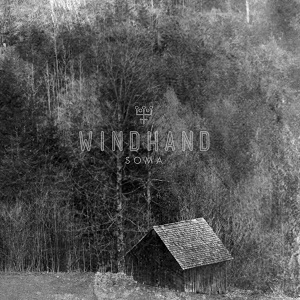
The Virginia quintet that has come nearest to redrawing this channel in the last fifteen years is Windhand. Formed in Richmond in 2008, picked up by Relapse after a self-titled debut on Forcefield Records in 2012, and fronted by the singer Dorthia Cottrell, the band released Soma on 17 September 2013: six songs across seventy-five minutes, closing on "Boleskine", which runs for thirty minutes and twenty-nine seconds without once lifting its tempo. The line Windhand draw is the stoner line exactly: fuzz, a voice that sings, and weight that comes from duration rather than from any scream.
What came next is why Windhand belong on a map. With Jack Endino, producer of the first Nirvana album, at Soundhouse Studios, Grief's Infernal Flower arrived in September 2015 with Cottrell, in Jason Heller's First Listen review for NPR on 9 September 2015, sounding "more forceful than ever", and it reached number seven on the Billboard Heatseekers chart for developing artists. Eternal Return, again with Endino in October 2018 and the first record without the founding guitarist Asechiah Bogdan, let in a grunge influence that Pitchfork and The Obelisk both noted, and reached number three. Grunge is not a doom subgenre. It is silt carried in from a neighbouring river, and the delta took it without changing course.

Sludge broke from the opposite bank. Born in hardcore punk clubs, where the Washington trio Melvins had already slowed the music to a crawl on Gluey Porch Treatments in 1987, and brought to its full leaden weight in New Orleans by Eyehategod, whose debut In the Name of Suffering appeared in 1990, sludge keeps the tempo of doom and throws away its manners: the singer screams from inside the riff, the feedback is left squealing between the chords, and the pulse lurches without warning out of a crawl into a burst of speed and back. A stoner band plays the riff as a pleasure. A sludge band plays it as a sentence being served.
The growl and the veil: death doom and gothic doom
Death doom draws its line with the voice alone, and it is the cleanest cut on the map. Put a death metal growl under a slow riff and the music changes category inside a bar, whatever the guitars are doing, which is why the New York trio Winter, whose only album Into Darkness came out on Future Shock Records in May 1990, belongs to death doom rather than to sludge. Within three years three bands on the Yorkshire label Peaceville had fixed the shape of the music.

The Halifax quintet Paradise Lost released Gothic on 19 March 1991, and it set a guest female voice and orchestral sections against Nick Holmes's growl and Gregor Mackintosh's grieving lead guitar, drawing two lines at once: the one that defines death doom, and the first sketch of the one that would separate gothic doom from it. My Dying Bride added violin and a funereal romanticism on As the Flower Withers in 1992, and Anathema followed on Serenades in 1993. The gothic branch opened when the growl was traded away: Type O Negative put a clean baritone over doom riffs on Bloody Kisses in 1993, and Theatre of Tragedy set a soprano against a growl on their 1995 debut. That channel is real by our test, because it changes the voice. When the tempo rises and the riff stops carrying the weight, gothic doom has become gothic metal and left the delta.
Where the current stops: funeral doom and drone
At the edges of every delta lie backwaters where the current slackens until the channel stands still. Funeral doom and drone are those backwaters, and the line between them is the finest on the map. Funeral doom slows the pulse until the beat nearly dissolves but keeps the harmony moving, so that a song still travels from one chord to the next: the Finnish band Thergothon fixed the form on Stream from the Heavens in 1994, Skepticism gave it an organ and a church-sized dirge on Stormcrowfleet in 1995, and the bass and drums duo Bell Witch stretched it across a single track of more than eighty minutes on Mirror Reaper in 2017.
Drone takes the last step and removes the song. Dylan Carlson's band Earth abandoned riff progression on Earth 2, released by Sub Pop in 1993, letting sustained chords stand for minutes at a time, and Sunn O))), on ØØ Void in 2000, made the amplifier hum itself the composition, a tone held so long and so loud that it stops being heard and starts being felt through the floor. Drone answers the question about the pulse with a refusal. Funeral doom crawls. Drone stands.
Prophet's Island contained one thousand five hundred acres of land thirty years ago; since then the river has added seven hundred acres to it.
Mark Twain, Life on the Mississippi
Black doom: the shriek at walking pace
Black doom answers the question about the picking hand, which is why it counts as a channel and not a mood. Set the tremolo picking and the shriek of black metal at doom tempo and the result belongs to neither parent: Katatonia did it on Dance of December Souls for No Fashion Records in 1993, and the German band Bethlehem did it a year later on a debut, Dark Metal, whose title is where the genre term dark metal is usually traced. The one-man Italian project Forgotten Tomb hardened the line on Springtime Depression in 2003, and Mizmor, the solo project of a musician credited as A.L.N., fused funeral doom's elongated weight with black metal blasting on Yodh for Gilead Media in 2016. Frost carried into slow water does not melt. It turns the whole channel cold.
Light on the water: psychedelic, progressive and atmospheric doom
Here the map changes character, because the three remaining names describe no channel at all. Psychedelic doom means repetition, chant and cosmic lyrics; progressive doom means shifting metres and long composed forms; atmospheric doom means keyboards and open space around the riff. Each can be laid over any channel, and the way to learn what such a band is, is to lift the overlay and look at the water underneath. Formed in 2003 by Al Cisneros and Chris Hakius, the bassist and drummer of Sleep, Om made Pilgrimage for Southern Lord in 2007 from bass, drums and chant, and underneath the incense it is stoner doom with the guitar removed. Confessor threw doom riffs into jarring time changes on Condemned for Earache in 1991, and underneath the arithmetic it is traditional doom. None of them cut a new channel.
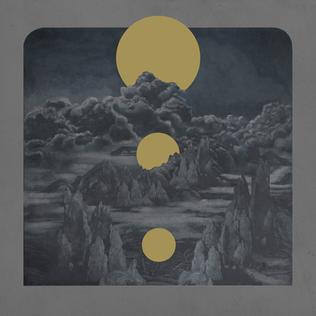
The band that proves the point best is the Oregon trio that psychedelic, progressive, stoner and post-metal writers have all claimed at one time or another, YOB. Led by the guitarist and singer Mike Scheidt, with the bassist Aaron Rieseberg and a drummer who stayed until 2023, YOB made The Great Cessation for Profound Lore in July 2009, produced with Sanford Parker and closing on a title track of more than twenty minutes, then Atma in 2011, and then Clearing the Path to Ascend, released by Neurot Recordings on 4 September 2014, four songs across sixty-two minutes and the album Rolling Stone named the best metal record of that year. In early 2017 Scheidt was taken to hospital with a ruptured colon, and Our Raw Heart, released by Relapse on 8 June 2018, was largely written while he recovered. Those records belong to a second life. Scheidt had formed the band in Eugene in the second half of the nineties and announced its end on 10 January 2006, and he brought it back in 2008 after his next band, Middian, which had made a single album, Age Eternal, for Metal Blade in 2007, split under the cost of a cease and desist from a Wisconsin band called Midian. Dave French took over the drums in 2023.
Listen to what the records actually do and the overlays fall away. Cosmo Lee, reviewing The Great Cessation for Pitchfork in July 2009, heard a ragged, desperate wail in the mould of Dave Mustaine, and in 2014 Zoe Camp at Pitchfork, Ben Myers at Louder and the Blabbermouth critic, all reviewing Clearing the Path to Ascend, described one throat moving between a guttural death holler and a high clean voice, set against riffs that flatten everything standing in front of them and passages that Pitchfork and The A.V. Club both heard as meditation. On that record, where the engineer Billy Barnett added Hammond organ, the closing "Marrow" turns one slow figure over and over for eighteen minutes and forty-eight seconds. The psychedelia is real and the length is real, and neither changes the channel.
Take the psychedelia away from YOB and what remains is a riff at a crawl with a singer who sings over it. That is not a new channel. It is the oldest one, played with an interminable patience.
The mouth of the river: where doom meets post-metal
At the mouth of a delta, fresh water and salt mix for miles before either can be said to have won, and the border between doom and post-metal is that kind of water. Doom holds its weight level from the first bar to the last and does not build. Post-metal is built on the crescendo, the long gathering of force towards a release, and when Neurosis released Through Silver in Blood through Relapse in 1996, and Isis followed with Oceanic for Ipecac in 2002, they took sludge riffs and doom tempos and bent both towards that release, until the weight existed to be broken rather than carried.
The traffic runs both ways: YOB issued their most celebrated album through Neurot, the label run by Neurosis, and Cult of Luna write some of the heaviest slow riffs of the century from the post-metal side. The line holds regardless. When a record keeps its weight level, it is still in the delta, whatever is printed on the spine. When the weight is there only to be demolished at the climax, the record has reached the sea. The founders and heirs keeping each channel open are gathered in the bands you need to know.
