
In 1969, Mercury Records released Witchcraft Destroys Minds & Reaps Souls, the first album by Coven, a band formed in Chicago around the singer Jinx Dawson, a record that opened with a song called "Black Sabbath" and closed on a thirteen minute "Satanic Mass", months before Black Sabbath, the Birmingham quartet that carried the same name, released its own first album in February 1970. It did not stay in the shops for long. In March 1970 Esquire ran a story linking the counterculture's interest in the occult to Charles Manson and the Tate-LaBianca murders, with a mention of the album and its Black Mass material, and the record was pulled from circulation, so the voice on it reached almost nobody at the time. It reached the right people later.
We start there because the term this article is named after, female fronted doom metal, usually arrives with an implied history in which women came late to the slowest music in heavy metal and had to be given a shelf of their own. The record shows the reverse. A woman stood at the microphone of the occult heavy rock from which doom would be assembled before the genre had a name, and in every decade since, from Norway in the early nineties to Utah and northern Italy, the singers who mattered did so by what they did to the weight of the music around them, not by the fact of who was singing. This is an explainer of the term, of that tradition and of the singers' case against the label.
From Ida's top Hephaestus, lord of fire, / Sent forth his sign; and on, and ever on, / Beacon to beacon sped the courier-flame.
Aeschylus, Agamemnon, translated by E. D. A. Morshead
Before the category: Norway and California
Formed in Trondheim in 1992, the six musicians of The 3rd and the Mortal recorded Tears Laid in Earth in July 1994 and released it on the Norwegian label Voices of Wonder on 21 October 1994, sixty-six minutes that close on the eighteen minute "Oceana". The reviewers at Metal Archives, who give it an average of 94 per cent across five reviews, describe what it holds back: three guitarists build atmosphere and melancholy rather than crushing weight or extreme slowness, and Kari Rueslåtten's calm, gentle voice opens and closes the record. It was the band's first full length and its last with Rueslåtten, and it was the record on which the band was first filed as doom metal. It arrived in the same years in which English and American bands were pushing death metal down to the slowest extremity, and it showed that doom could carry its sorrow in melody as well as in extremity.
Formed in California in 1993 by the guitarist and singer Lori S. with the drummer Joey Osbourne and the bassist Peter Lucas, the trio called Acid King went the other way from the Norwegians, down into the fuzz, releasing a self-titled EP on Sympathy for the Record Industry in 1994 and Zoroaster in 1995 before Busse Woods came out on the label Man's Ruin on 1 September 1999 with Brian Hill on bass, a record whose riffs are poured like pitch on a winter road and left to set in the cold. Nobody filed it anywhere but stoner metal. The singer did not change the shelf.
Utah and Toronto: the voice inside the arrangement
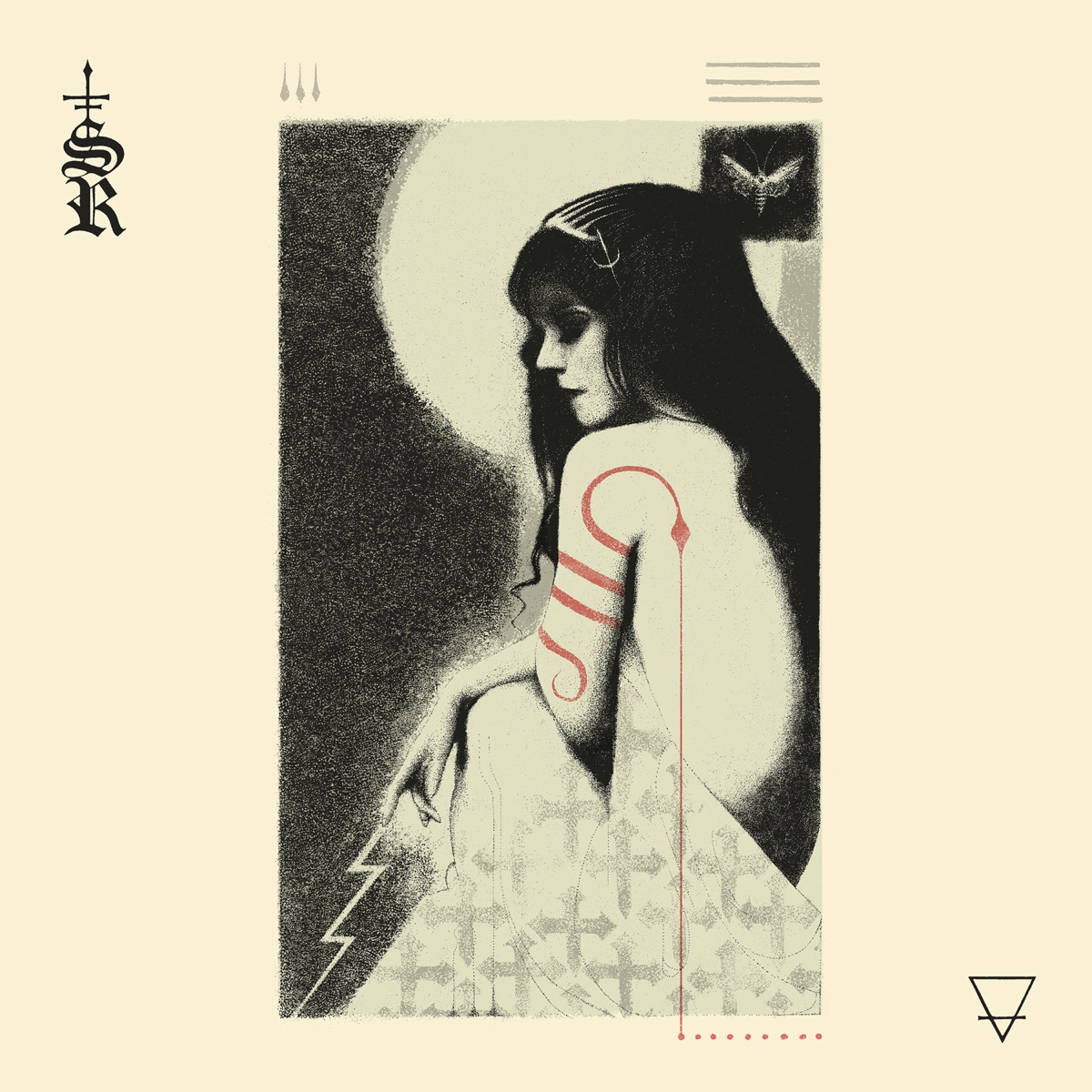
Based in Salt Lake City and led by the guitarist and singer Rebecca Vernon, the Utah quintet SubRosa built its third album around two electric violins, played by Sarah Pendleton and Kim Pack, and released More Constant than the Gods on Profound Lore on 17 September 2013, six songs and more than an hour of music in which "The Usher" alone runs past fourteen minutes. The reviews at Pitchfork, Sputnikmusic and Treble all hear the violins as lead voices rather than colour: they carry the melody across the riffs like a hot wire drawn through wax. Three of the five members are credited with vocals. When Decibel published its hundred greatest metal albums of the 2010s in 2019, the record stood at number 35.
The Toronto band Blood Ceremony, whose singer Alia O'Brien also plays flute and organ, put the question of the label on the record in 2016. Interviewed by Kim Kelly for Noisey on 24 March 2016, the day before Rise Above released Lord of Misrule, O'Brien gave the band a name of its own: "We are trickster rock. That's a new label." Kelly answered that it beat "'female-fronted occult stoner rock' or whatever", and O'Brien agreed at once. We take her label seriously, because it names the spirit of the music and leaves the singer's sex out of the description entirely.
No record shop has ever needed a rack marked male fronted doom.
Messa: a voice held level over the drag
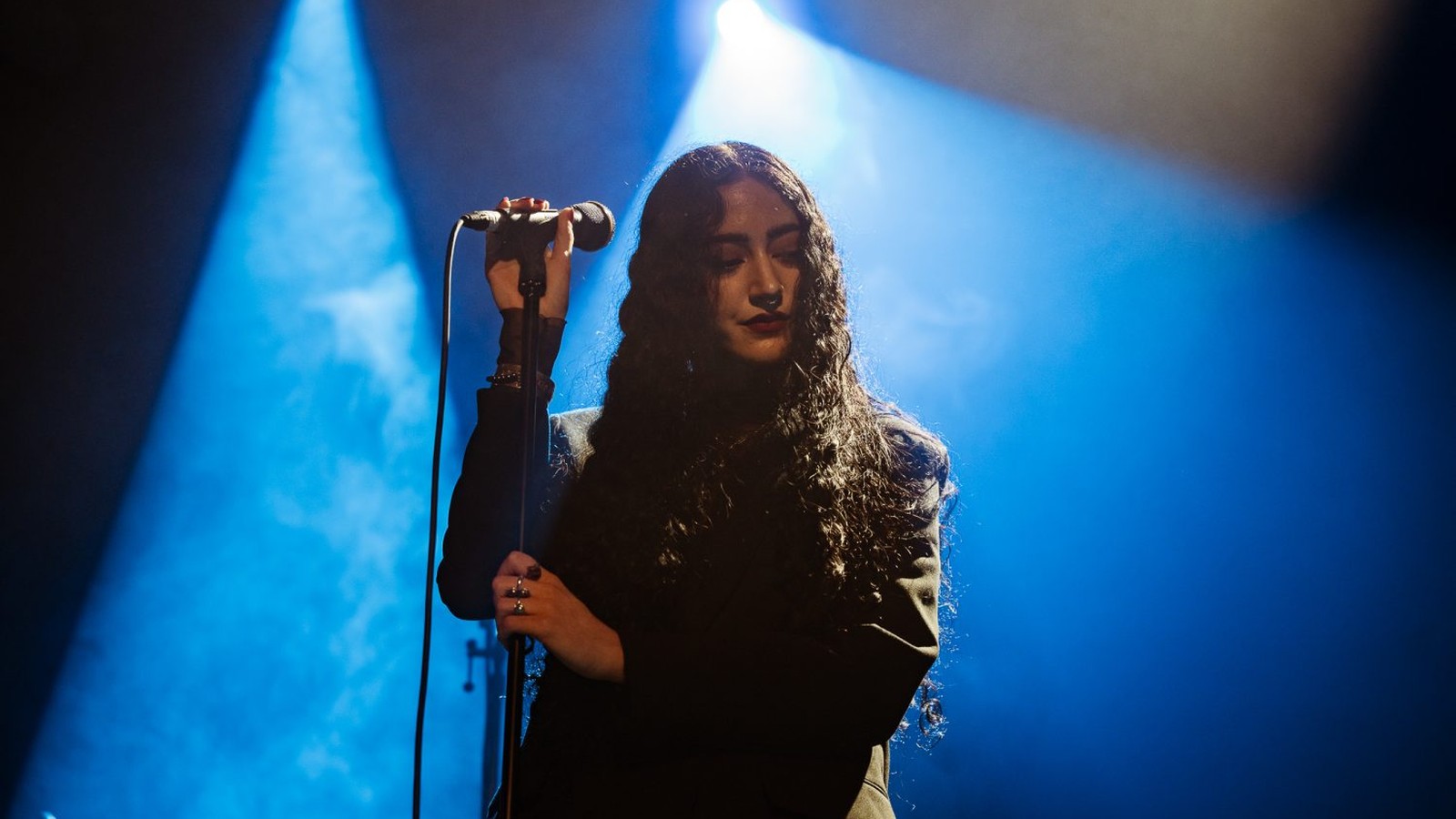
Formed in early 2014 in Cittadella by four musicians who told Veil of Sound in March 2022 that none of them had played doom before, the quartet Messa, with Sara Bianchin singing, Alberto Piccolo on guitar, Marco Zanin on bass and Rocco Toldo on drums, released Belfry on Aural Music on 6 May 2016, stayed with that label for Feast for Water on 6 April 2018, moved to Svart Records for Close on 11 March 2022, and gave what it played the name scarlet doom, a term that takes in traditional doom, jazz, drone and dark ambient under one heading.
The records widened with each step. On Feast for Water a Rhodes piano runs under "Leah" and "She Knows" and "Tulsi" breaks into blast beats; on Close, Giorgio Trombino plays duduk and saxophone, and in the label's own description the oud and eastern phrasing come into "Pilgrim" while "Rubedo" and "Dark Horse" build into blast beats and saxophone. Through all of it the critics converge on one quality of the singing, and it is not volume. The Obelisk heard "vocal command" across quiet and heavy stretches alike in JJ Koczan's review of 26 February 2018, and JR Moores, reviewing the fourth album for Bandcamp Daily on 11 April 2025, called it "carefully controlled". Control is the word. The riffs subside, the arrangements thicken underneath her, and Bianchin's line stays strung across the top of the song like a rope drawn taut over a gorge that keeps widening beneath it, which is precisely what keeps an hour-long record from sinking into its own silt.
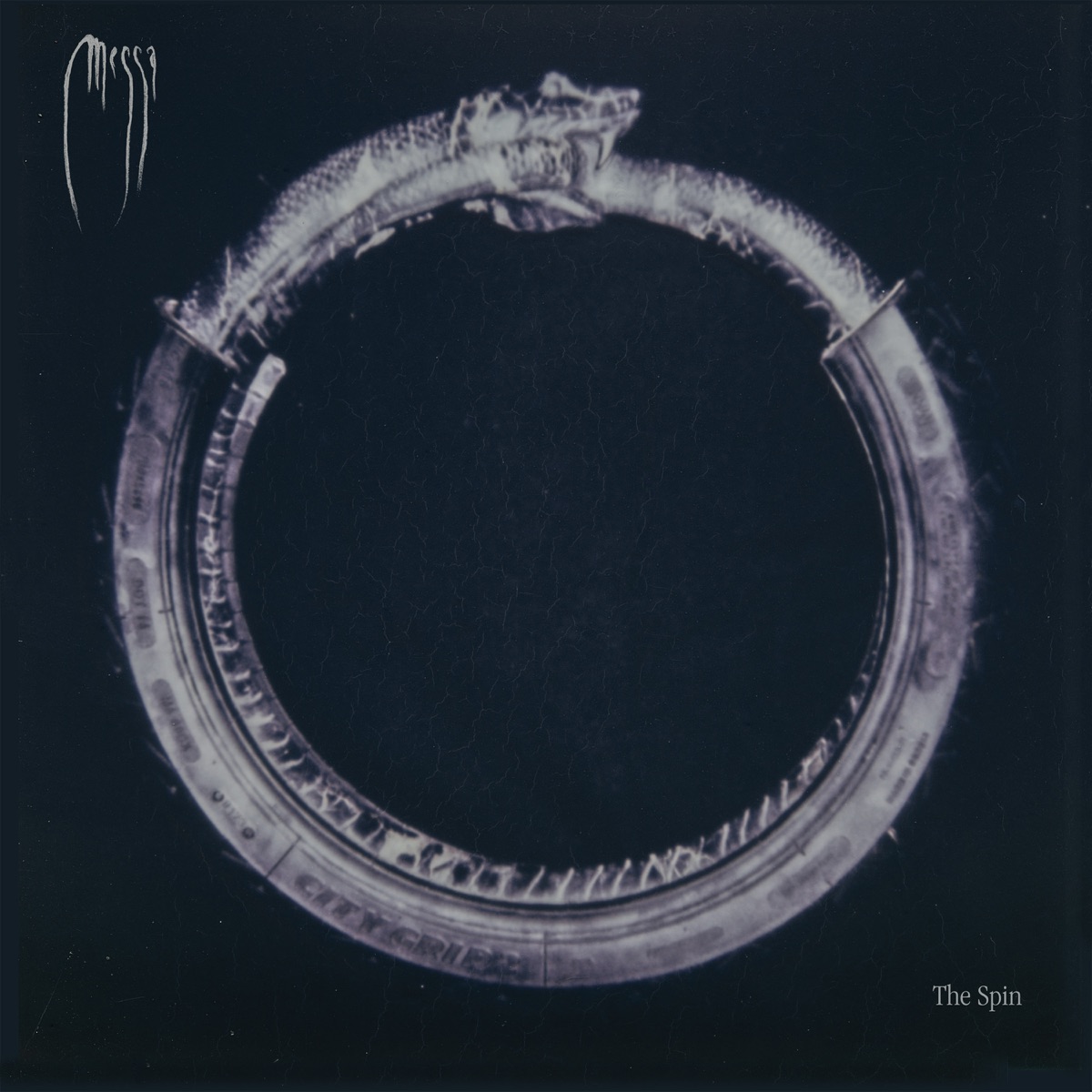
The Spin, released by Metal Blade on 11 April 2025, is shorter at forty-two minutes, drawing on the goth rock and post-punk of the 1980s, with old synthesisers beside the guitars. The band told New Noise, in an interview published the day before release, that "vocals are fundamental" and that in mixing it had followed the records of that decade, in which "vocals are in the spotlight". "Void Meridian" opens on a synth line, "Fire on the Roof" answers its synth-driven verses with a hard rock chorus and "Immolation" begins as a fragile piano ballad before, in Moores' reading, the guitars tear it open for the arena. Bianchin told Distorted Sound in August 2025 that while rehearsing some of these songs she thought she could never play them live, and that past a certain point the singer exorcises what a song carries: "You let the pain free." We read the mix decision as the band's plainest statement of the principle this article is about: a voice placed at the front not as a novelty but because the songs were built to be carried by it.
The trouble with the label
The criticism of female fronted as a category has come, for more than ten years, from the singers the category describes and from the writers who cover them. Floor Jansen of Nightwish told Metal Nation Radio, in an interview reported by Blabbermouth on 13 April 2015, that her two bands, Nightwish and ReVamp, sat under the same label while sounding nothing alike, and she put it plainly: "I would say, get over it and just call it 'symphonic metal.' It doesn't really [matter] who is singing." Emma Cownley made the argument at length in Harpy on 12 June 2018 under the headline "There's No Such Thing as 'Female-Fronted' Music", and returned to it in Metal Hammer on 3 January 2020 by asking whether the term would finally die that year. It did not. Tatiana Shmayluk of Jinjer, interviewed in the issue of Metal Hammer that Louder, the magazine's website, reported on 12 January 2026, put it bluntly: "We are still getting compared to artists that have nothing to do with us."
A genre label tells a listener what the music does, how fast, how heavy and what it inherits, and female fronted tells a listener only who is standing at the microphone, which in doom is the least informative fact available, because the weight of this music lives in the riff, the tuning and the tempo, and a singer's gift is measured by what she does to that weight. Every voice on the records above worked like a signal fire on a headland, a single blaze lit by hand and fed by one keeper, visible across open water for miles because it burns on its own fuel, and female fronted is the stone tower the industry built on the same cliff to replace all those fires with one standard lamp, a light that turns on schedule, announces only that someone is there, and is seen, on any honest reading of the records, a good deal less far than any of the fires it was meant to supersede. The fires are still lit.
What the term is still good for
We keep the phrase in our title because listeners use it when they go looking for music, not for a quarrel. The honest answer is a door rather than a shelf. Behind it stand a 1969 occult rock album that closed on a thirteen minute Mass, a Norwegian debut that was the band's first to be filed as doom, a stoner trio led by its guitarist since 1993, a Utah quintet whose two violins carried the melody across the riffs, and a quartet from northern Italy whose fourth album pushed its singer to the front of the mix on purpose. No two of these bands share a sound. That is the point.
The records themselves, band by band, with each singer credited for what she sings, are gathered in the Female Doom Metal Bands. In every case the riff, not the singer, decides where the record belongs.
