
Black Flag released My War on SST Records in March 1984, and the second side of it holds three songs that each run past six minutes. Hardcore punk had spent the previous five years proving that a song could be over before the singer had finished spitting. Side two of My War took that proof out to the car park and reversed over it, slowly, three times, and a good part of the short-haired congregation has still not forgiven the band.
Everyone agrees that is where sludge metal was conceived. Nobody agrees on who was born. The question of the first sludge metal band is a question about paperwork, and the paperwork is a disgrace: sludge's birth certificate carries three names crossed out one after another and a fourth written over them with a biro pressed so hard it went through to the desk, which is also a fair description of how a riff by the Melvins lands on a snare drum. This page is about how the other three got struck off. The family history around it sits in the chapter it belongs to.
Three names crossed out, a fourth written over them, and the pen went through to the desk.
Three names crossed out
Formed in San Francisco in 1979, a punk band in which two bass players took turns at the microphone and neither of them saw any reason to hurry, Flipper released Generic Flipper on Subterranean Records in April 1982, and its long dirge "(I Saw You) Shine" crawls at a pace the hardcore crowd around them took as a personal insult, which was the idea. Harry Sword's 2021 book Monolithic Undertow credits that record with the genesis of sludge metal.
Then comes the objection. There is no metal on it. Flipper were slow punk with a grudge and a sense of humour, and a first sludge metal band that never played a metal riff is a baby registered under the wrong species. First name, crossed out.
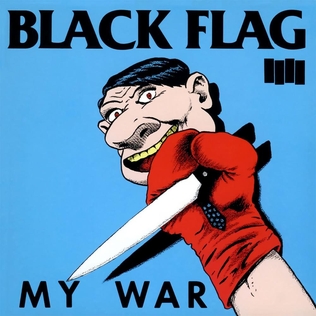
Recorded as a trio in December 1983, with Greg Ginn playing the bass parts himself after Chuck Dukowski had been pushed out, and released as the first of the three studio albums Black Flag put out in 1984, My War runs six fast songs on its first side and then drags "Nothing Left Inside", "Three Nights" and "Scream" through the tar on its second, and Mudhoney's Steve Turner has said that this record, once it came out, made the Melvins drop from tight hardcore to a crawl. That is the precedent. It is not a sludge band. Black Flag gave the crawl one side of vinyl and went back to being a hardcore band with longer hair. Second name, crossed out.
The doom quartet that had started life in Los Angeles as Tyrant in 1978, Saint Vitus, sat on the same label: SST, the company run by Black Flag's guitarist, released the band's self-titled debut in early 1984, some eighteen months after the August 1982 sessions, and J. J. Anselmi, in his 2022 book Doomed to Fail, called its title track quite possibly the first sludge metal song on record. Punk label, slow band, punk bite on a doom song. Close. But Saint Vitus were a doom metal band before that record and after it, and a child already registered with another family cannot be claimed by this one. Third name, crossed out.
The claimants, by date and by record
| Band | Formed | First record that counts | Sludge from the start? |
|---|---|---|---|
| Flipper | 1979 | Generic Flipper, April 1982 | No, slow punk |
| Black Flag | 1976 | My War, March 1984 | One side of one record |
| Saint Vitus | 1978, as Tyrant | Self-titled debut, early 1984 | No, doom metal |
| Melvins | 1983 | Gluey Porch Treatments, 1987 | From the first album on |
| Eyehategod | 20 April 1988 | In the Name of Suffering, 1990 | Yes |
| Buzzov*en | 1990 | To a Frown, 1993 | Yes |
| Crowbar | 1990, named in 1991 | Obedience thru Suffering, September 1991 | Yes |
| Neurosis | 1985 | Souls at Zero, May 1992 | No, hardcore until the third album |
The trio out of a Washington timber town, formed in early 1983 as a fast hardcore band and slowed to a crawl by the middle of the decade, recorded Gluey Porch Treatments in October 1986 at Studio D in Sausalito with Mark Deutrom producing, and Alchemy Records released it in 1987 on vinyl only, opening with the six minutes of "Eye Flys" and then scattering short, heavy fragments such as "Big as a Mountain" and "Heavyness of the Load" across the rest of it.
In Louder, Rich Hobson hears the Melvins taking My War to its logical extreme and being heavy in a literal, physical sense. At AllMusic, Ned Raggett hears drawn-out syllables sinking into murk. Two critics, one verdict: the record sounds as if the tape was left out in the rain overnight and came back in weighing twice as much. And unlike the three crossed-out names, this was a band that by then played nothing else. That is the fourth name on the certificate.
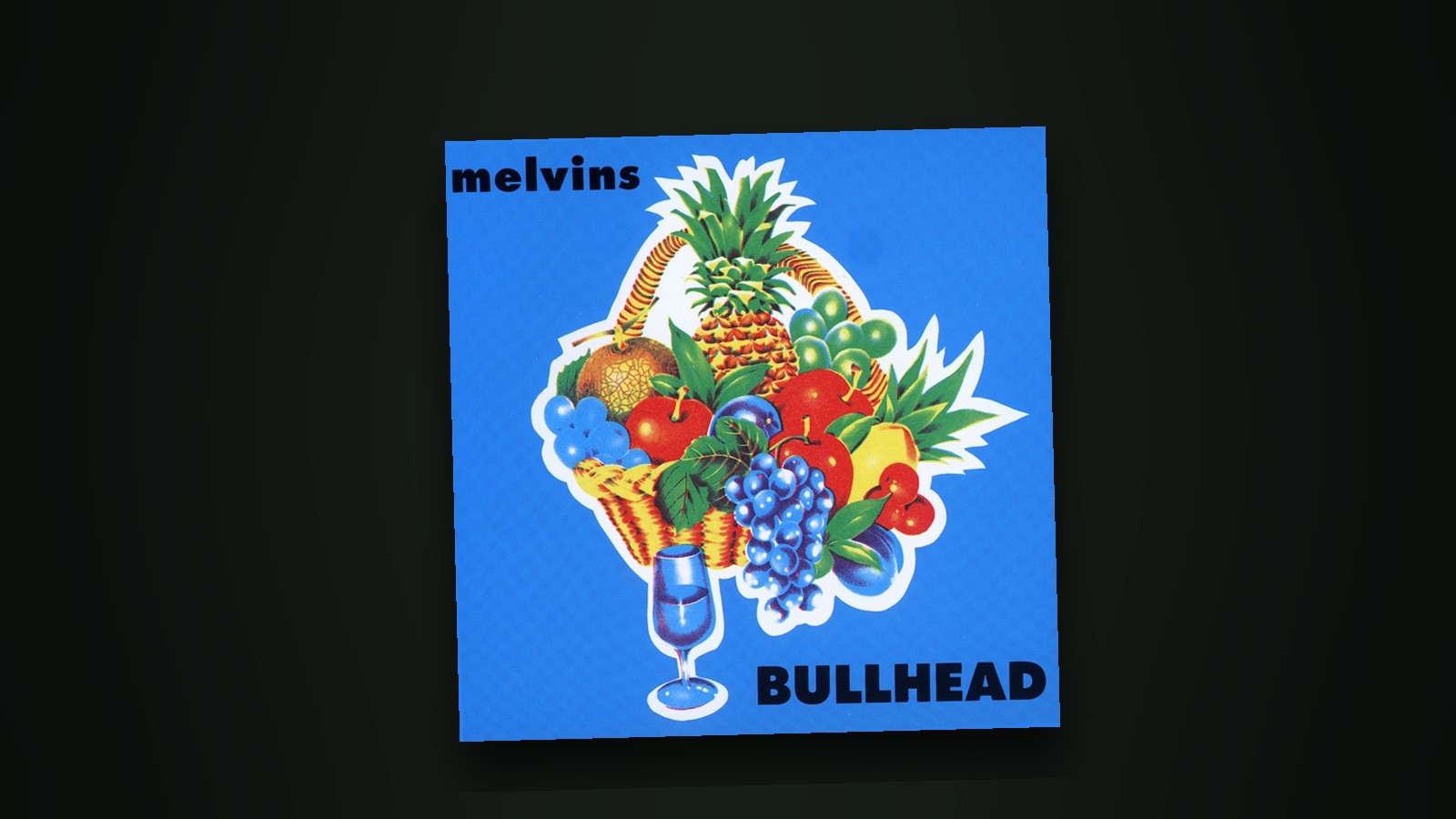
Bullhead, where the ink goes on thick
Gluey Porch Treatments was the birth. Bullhead is where the name was written in, and written heavily. Recorded in 1990 with Jonathan Burnside producing and engineering and Lori Black on bass, and released by Boner Records on 28 January 1991, the Melvins' third album cut the running order to eight songs, let them run longer than the bursts on the debut, and began with "Boris", eight and a half minutes of a riff so slow it seems to be towing the rest of the band behind it on a rope.
Rolling Stone put Bullhead at number 60 on its 2017 list of the 100 greatest metal albums and read it as the record on which the Melvins came out as a metal band: longer songs, a tighter feel, a production less fried than before. The same entry hears a sloth-speed riff in "Boris" and calls "Zodiac" razor-sharp, which makes it the fast one, flattening anything foolish enough to stand in front of it. The earlier records had the idea in bursts. This one holds it for thirty-five minutes.
It is also the record the bands that came after it were answering. "Your Blessened", in Rolling Stone's reading, pointed the way to the sludge with melodies that Torche and Baroness would make years later, and a whole Japanese band walks around under the name of its opening track. I have filed my own copy under grunge, doom and sludge in three different decades, and the record has not cared once. A third album still lending its song titles to other bands thirty-five years on is not a footnote in the register. It is the ink.
The objection from New Orleans, and from North Carolina

Formed in New Orleans on 20 April 1988 by a guitarist and a drummer who wanted to be slower and nastier than every fast band in town, Eyehategod recorded In the Name of Suffering at Festival Studios in Kenner for about a thousand dollars, and the small French label Intellectual Convulsion released it in 1990, pressing somewhere between 1,500 and 2,000 copies before going under, after which Century Media reissued the album on 1 December 1992.
Here is the awkward date. The first pressing carries a 1990 copyright on its label, which puts it in the shops before Bullhead reached them in January 1991. If the prize goes to the first band founded as sludge and nothing else, Eyehategod have a real case, and William York at AllMusic hears the band's ugliness at its rawest on this debut. The case collapses on its own witness. Mike IX Williams told Antigravity in March 2021 that he and Jimmy Bower had been listening to the early Melvins and set out to sound like that, only more aggressive and more extreme, and he admitted they ripped the Melvins off outright. A child who writes his father's name on the form is not the father.
The rest of the queue arrived after the form was filed. Crowbar, which went through several names before a label warning settled it on the present one in 1991, released Obedience thru Suffering on 26 September 1991, eight months after Bullhead, and its leader Kirk Windstein has said he does not even like the word sludge. Buzzov*en, formed in Salisbury, North Carolina, in 1990, had no album until To a Frown in March 1993. Neurosis had been a hardcore band since 1985 and slowed to a leaden crawl only on their third album, Souls at Zero, released by Alternative Tentacles on 19 May 1992. All three are family. None of them is on the first line of the form.
The verdict: the Melvins, on the evidence
The first sludge metal band is the Melvins. Not because they were the first to play slowly, since Flipper beat them by years, and not because they were the first to put the crawl out on a punk label, since Black Flag and Saint Vitus both did that in 1984. They win because, from Gluey Porch Treatments in 1987 onward, slowed hardcore turned into metal was their whole method rather than a side or a phase, and because Bullhead in January 1991 had sired half a scene before most of the other claimants had pressed an album at all.
Black Flag slowed down for one side. The Melvins never sped back up. That is the whole case, and it fits on the back of a ticket.
Jonah Pike, KaosMetal
Eyehategod get the honourable mention they have earned: the first band to press a sludge album after the Melvins had shown the way, and the band that dragged the style south and made it nastier. They are the eldest child, not the parent.
What grew out of that paperwork is laid out record by record in the Sludge Metal Albums That Made the Style. Start with Bullhead. Then play side two of My War straight after it, and listen to a name being crossed out in real time.
