
Rumour is a pipe blown by surmises, jealousies, conjectures.William Shakespeare, Henry IV, Part 2, Induction
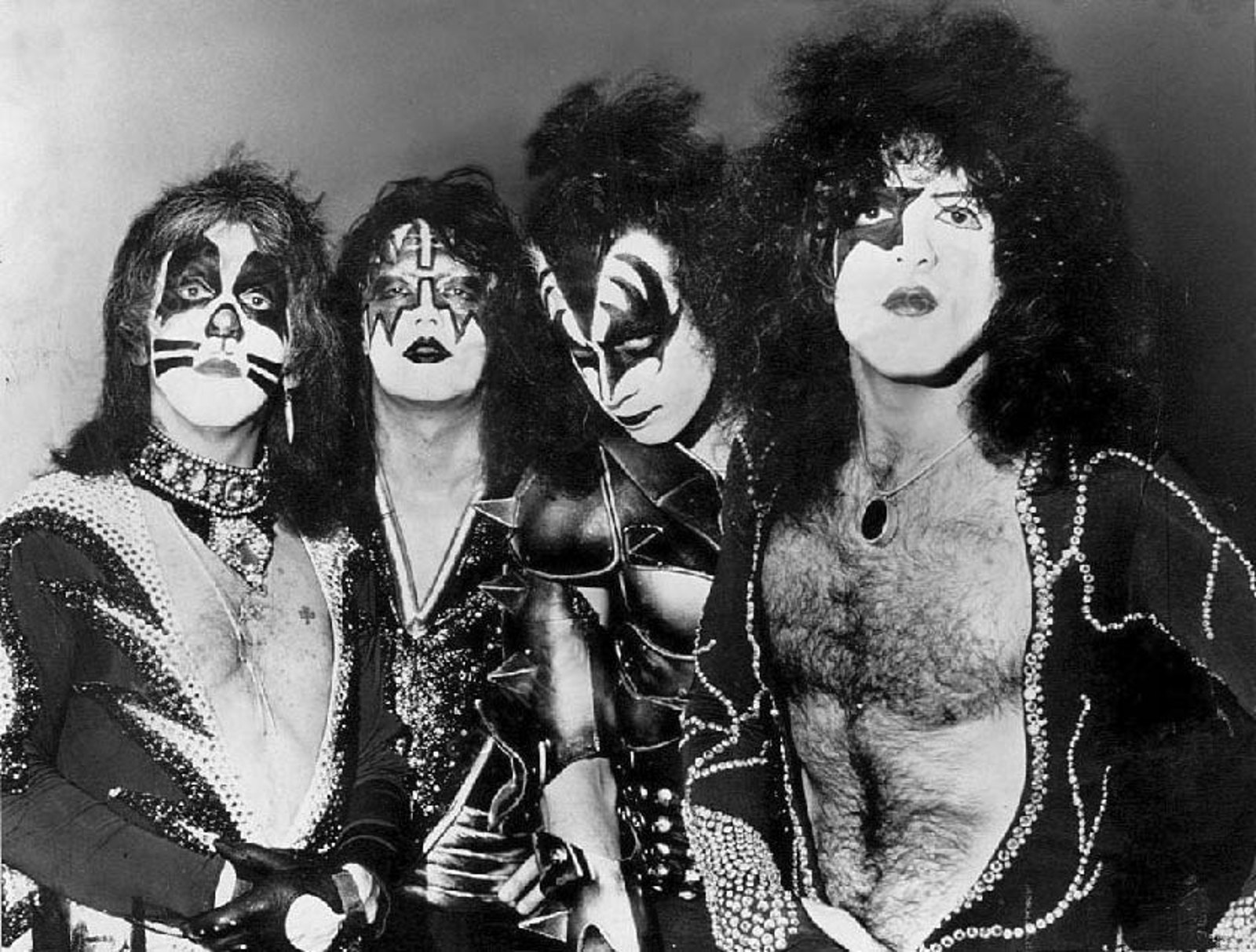
The New York four whose name was said from a thousand pulpits to stand for Knights in Satan's Service were Kiss, and it stands for nothing of the kind. AC/DC does not stand for Anti-Christ, Devil's Children. Rock music does not kill houseplants, and nobody ever bit the head off a live chicken on a stage in Toronto. Every one of those heavy metal myths has been denied by the people it concerns, some of them for fifty years, and every one of them is still being repeated tonight in a school corridor by a boy who heard it from a boy.
In 1567 the surgeon who was handed a bezoar at the French court, a stone taken from the stomach of a goat and sold across Europe as the cure for every poison, and who was told the king had paid a fortune for it, was Ambroise Paré. He did not argue. He found a cook in the royal kitchens under sentence of death for stealing silver, offered him the stone in place of the rope, fed him the poison and waited; the cook died in seven hours, and Paré wrote the stone down as worthless. A myth in this music has to be tested the same way, by giving it the poison and waiting, because arguing with it has never once worked.
The trials, the sermons and the sticker belong to the full chapter. What the myths need is smaller: a date, a name, a document and the patience to watch the stone fail. The record shows that each of these stories can be traced to a source, and the source is almost never a fact.
The acronyms, and the ruler on the map
The Hereford businessman who laid a ruler across a map of his county in 1921, found that churches, standing stones and hilltop camps fell into straight lines, and announced in The Old Straight Track four years later that prehistoric surveyors had set them out, was Alfred Watkins. A ruler on a crowded map will hit three churches by chance from any starting point, which Richard Atkinson later showed by drawing the same lines through telephone boxes and calling them telephone box leys, and the acronym myth works on the same principle. Hand a believer four letters and he will find the devil in them. Four letters will spell whatever he came looking for.
Kiss has been denying it since the middle of the 1970s. Paul Stanley has said the name came to him in a car, with Gene Simmons and Peter Criss beside him, and stood for nothing but itself, and the rumour, which spread by mouth through the catechism of American church youth groups, fed on "God of Thunder", the Destroyer song of 1976 that Gene Simmons sang in his demon paint while spitting stage blood and breathing fire at the front rows. The tongue that fed a second rumour, that it had been grafted from a cow, is his own, and he has called that one his favourite.
The Sydney band whose initials were read by the same congregations as Anti-Christ, Devil's Children was AC/DC, and the letters had come off the rating plate of a household appliance, a sewing machine or a vacuum cleaner depending on which member of the family is telling it. "Highway to Hell" in 1979 settled the matter for the accusers and unsettled nothing for anyone who asked the band, for whom, in the band's own telling, the road in the title was the Canning Highway, running down to Bon Scott's favourite pubs in Fremantle. The letters were read for what the reader brought to them. That is all an acronym myth has ever been.
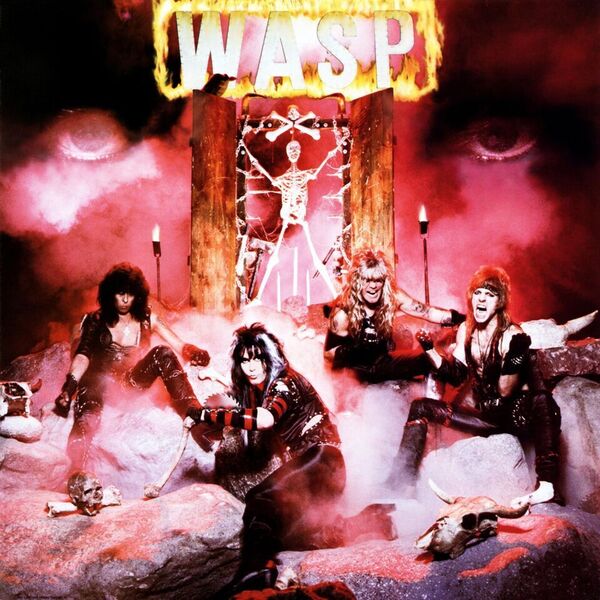
The Los Angeles band that strapped a sawblade to its singer's codpiece, printed We Are Sexual Perverts round the label of its own first record and then let the rumour run for forty years was W.A.S.P., and Blackie Lawless, asked what the letters mean, has answered We Ain't Sure, Pal. The debut of 1984 carried "I Wanna Be Somebody", a song about wanting a name, on a sleeve that handed the world four initials to misread, and the rumour was the spearhead of every objection the band ever faced. The band never corrected the room. The room was buying tickets.
The band never corrected the room. The room was buying tickets.
The plants that died of Led Zeppelin
The laboratory myth has one source and one book. The Denver music student who spent 1968 to 1970 playing records to squash, corn, petunias and marigolds in her college's growing cabinets, and reported that the plants given rock leaned away from the loudspeaker and sickened while those given Indian classical music leaned towards it, was Dorothy Retallack, and her book The Sound of Music and Plants came out from a small California publisher in 1973. Nobody replicated it. The cabinets were not matched for light, water or temperature, and no controlled study has ever brought the result back.
It was put to the test in November 2004, when the television programme MythBusters raised plants in seven greenhouses on a roof under matched conditions and gave each a different soundtrack, and the plants under death metal grew best of all, with silence coming last. The result, attested by the crew's own measurements and nothing more, is no better science than Retallack's. It is, however, the only replication anyone ever attempted, and it went the wrong way for the myth. The myth is still told.
The chicken, Toronto, 13 September 1969
The band-fed myth is the hardest of the heavy metal myths to kill, because the band is the one feeding it. The singer whose group played the Rock and Roll Revival at Varsity Stadium in Toronto on 13 September 1969, on a bill with John Lennon's Plastic Ono Band, and who found a live chicken on the stage in the middle of the set, was Alice Cooper. He threw it into the crowd on the reasoning that a bird has wings. The crowd tore it to pieces and threw the pieces back, and the papers had him biting off its head.
The man who telephoned him the next day and told him not to deny a word of it, because the press loved it and the audience now believed the chicken, was Frank Zappa, whose label had signed the band. Cooper took the advice and has spent fifty years neither confirming nor denying, which is the most efficient heresy in the trade: a lie the accused declines to correct because it sells more tickets than the truth. The chicken is still the first thing most people know about him.
A myth about a band is the one record the band never has to press again. The fans re-press it every night for nothing.
Declan Rourke, KaosMetal
Heavy metal myths against the record
| The claim | Where it came from | What the record shows |
|---|---|---|
| Kiss stands for Knights in Satan's Service | American church youth groups, mid-1970s | Paul Stanley named the band; the letters spell a word |
| AC/DC stands for Anti-Christ, Devil's Children | The same circuit | The letters came off an appliance's rating plate |
| W.A.S.P. stands for We Are Sexual Perverts | A phrase printed round the label of the 1984 debut | Lawless, when pressed: We Ain't Sure, Pal |
| Rock music kills plants | Retallack, 1973 | One unreplicated experiment; the 2004 re-run went the other way |
| Alice Cooper bit a chicken's head off | Toronto newspapers, September 1969 | Thrown into the crowd; Zappa advised silence |
| Gene Simmons had a cow's tongue grafted | Playground rumour, 1970s | His own |
| The advisory sticker is required by law | Assumed from the printing | A voluntary label agreed between record companies |
Every one of these stories was cheaper to believe than to check. An acronym needs no library card, a dead petunia needs no control group and a chicken in a newspaper needs nobody to have been at the show, and the stories travelled on the school bus and through the youth group, where a claim is tested by how well it frightens and by nothing else. The bands, for the most part, laughed. A few of them sold the rumour back to the room at the merchandise stall.
The most durable of them is a rectangle. It is widely assumed that a law put the black and white warning in the corner of a sleeve there, and the real paperwork behind it, an agreement between record companies and nothing more, sits with the Parental Advisory sticker. No statute. No court. A rumour with a logo.
