
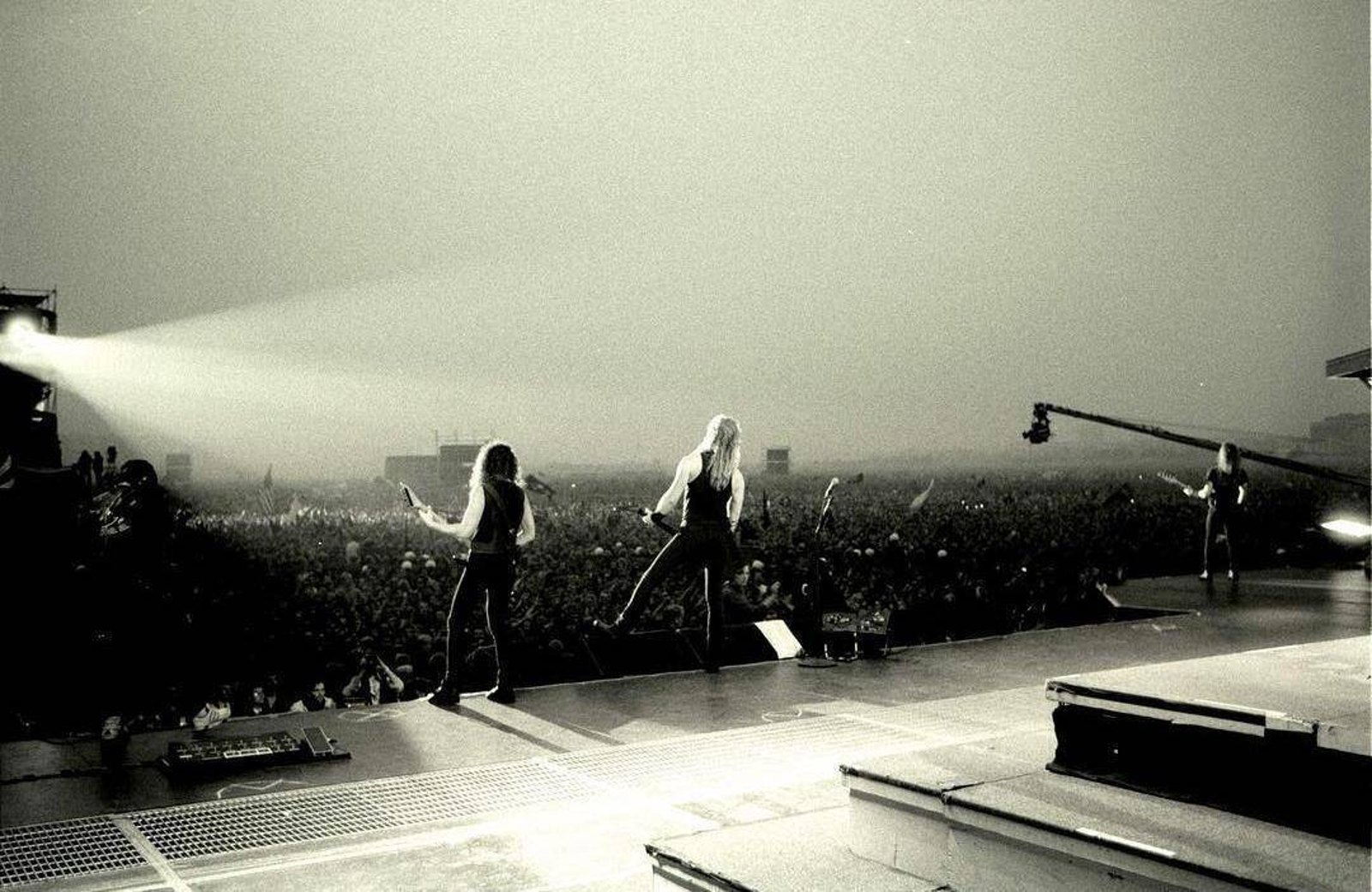
Heavy metal scenes were built by rooms before they were built by records. A band can form in any bedroom on earth, but a scene needs a club willing to book the noise, a shop that stocks the imports, a disc jockey or a fanzine to name what is happening and enough spare wages in the district to pay for a ticket, and wherever those four things met, the style took root in the local accent. Nowhere did it grow the same way twice.
In the age of sail, a cargo ship crossing the ocean without freight rode on ballast, earth and gravel shovelled into the hold from some foreign riverbank, and dumped it on the quay before loading for the voyage home. Within a season the botanists found plants on those heaps that nobody had sown, weeds from another continent whose roots were already splitting the harbour cobbles. Heavy metal travelled as ballast. It crossed on import records, dubbed cassettes and the one tour that happened to stop in town, it was tipped onto the quay without anyone meaning to plant it, and what came up in each port was a local strain, shaped by the soil and the weather far more than by the seed.
The trumpet player turned promoter who ran a blues night in a back room of the Crown, on Station Street in Birmingham, and who gave a local quartet then still called Earth some of its first regular bookings in 1968 and 1969, was Jim Simpson, and the map of the music begins in his room. Read as a chronicle, the story of heavy metal, in order, runs as a procession of records from 1970 to the latest reunion. Read as a map, it is a list of rooms like that one.
Heavy metal scenes begin in the back rooms of Birmingham
Built on car plants, tool rooms and a thousand small engineering works, the Birmingham of 1968 handed its teenagers the two things a scene needs most, wages to spend on amplifiers and a working week so loud that nobody at home complained about rehearsals, while its clubs, Mothers in Erdington above a furniture shop and the blues nights at the Crown, put a stage within a bus ride. It had no record companies. That was the catch.
Every band that meant business had to be signed from London. Earth, renamed Black Sabbath, went to Vertigo, the Judas Priest of the Black Country pub back rooms went to a small London concern called Gull in 1974, and the city's lasting export turned out to be a pattern the whole map would repeat for half a century: a provincial scene grows the music, and a capital somewhere else prints the money.
A provincial scene grows the music, and a capital somewhere else prints the money.
The next generation broke the pattern by region. Tyneside had Neat Records, run out of Impulse Studios in Wallsend by David Wood, which put out Venom, Raven and the first Tygers of Pan Tang single; Sheffield had Def Leppard pressing its own first EP; Stourbridge had Diamond Head; and Wolverhampton had a label founded in 1978 with the unanswerable name Heavy Metal Records. Each region pressed its own vinyl and posted it out itself.
Five thousand miles west, the Sunset Strip ran the opposite model: one mile of clubs where, by the middle of the eighties, bands often bought blocks of tickets from the venue and sold them on themselves for the right to play, which turned the stage into a rented shop window for record company scouts. It worked for about a decade.
Radio masts, bar trails and a flea market across America
The disc jockey who put Judas Priest, Scorpions, UFO and Rush into heavy rotation on San Antonio radio in the middle seventies, years before most American stations would touch them, was Joe Anthony of KMAC and then KISS-FM, and his playlists turned a military and ranching city in south Texas into the first American market where a British metal band could fill a large hall. Promoters called it the heavy metal capital of the world. The bands kept coming back.
Texas then paid for its own. The Arlington four built around two brothers whose father owned Pantego Sound, a studio between Dallas and Fort Worth, put out four albums between 1983 and 1988 on Metal Magic, the family's own label, as Pantera, while Houston raised Helstar and Austin the time-signature puzzle called Watchtower.
Chicago worked from the suburbs inward. Its bands played a ring of bars and teen nights beyond the city limits, the Thirsty Whale in River Grove chief among them, and signed with whoever answered the demo, which for Trouble in 1984 meant Metal Blade in Los Angeles, two thousand miles away. Chicago had the audience. The labels lived elsewhere.
Detroit and Flint belong to the prehistory. What Michigan and the Rust Belt added in the eighties was a recession that slammed the gates on plant after plant, with Michigan's unemployment above fifteen per cent in 1982, and a trail of bars from Detroit through Cleveland to Pittsburgh where Seduce and Halloween from Detroit and Destructor and Shok Paris from Cleveland played to the men who still had a pay packet.

The Long Island bar band that had played several thousand club dates across the New York suburbs between 1973 and 1982, most of them in rooms full of eighteen-year-olds drinking legally, was Twisted Sister, and after all of it their debut, Under the Blade, came out in September 1982 on Secret, a small British label, because no American company would sign them. New York paid its bands by the night and never by the record. Then the state raised the drinking age, to nineteen in 1982 and to twenty-one in 1985, and the bar trail began to empty.
Brooklyn had L'Amour, the club on 62nd Street in Bensonhurst that booked heavy bands from 1978 to 2004, and across the river in New Jersey a record stall at a flea market, run by Jon Zazula, grew into Megaforce Records. Riot, Manowar and Virgin Steele all came out of the same state and the same shortage of local labels.
New York paid its bands by the night and never by the record.
Tokyo pays in bonus tracks
Japan was a market before it was a scene. Western bands found in Tokyo and Osaka an audience that bought the album, the single, the tour programme and the import, and they recorded that audience for the world: Judas Priest taped Unleashed in the East in Tokyo in February 1979, and Iron Maiden's Maiden Japan came from a Nagoya hall on 23 May 1981. The Japanese pressing grew a bonus track. The fans learned to expect it.
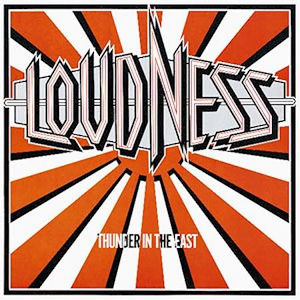
The Osaka quartet built around the guitarist Akira Takasaki signed with Atco in the United States and in 1985 put Thunder in the East into the Billboard 200, the American album chart, as Loudness, the first Japanese metal band to reach it, peaking at number 74. Takasaki's picking hand worked the fretboard like a riveter paid by the piece.
Behind Loudness stood a domestic industry with its own monthly magazine, Burrn!, founded in 1984, its own names in Bow Wow, Earthshaker, Anthem and the greasepainted Seikima-II, and a hall and department store economy in which a local band could earn a living without ever leaving the country. That was the shelter and the trap at once. Visual kei, the painted and backcombed style that X Japan carried to the Tokyo Dome in 1993, grew out of the same shelter.
Oh, East is East, and West is West, and never the twain shall meet.
Rudyard Kipling, The Ballad of East and West
The Low Countries, the Aegean and the Etruscan coast
The Netherlands and Belgium were importers first and bands second. Record shops in two small, open countries brought in American and British metal by the crate, and out of that trade came Roadrunner, started by Cees Wessels in 1980 to distribute foreign records, and Aardschok, the Dutch magazine that from the same year reviewed the music, championed it and then staged it at its own festival, the Aardschokdag, from 1982 in Eindhoven.
The Belgian label that put out Ostrogoth, Killer and a string of foreign bands on fast, cheap vinyl in the first half of the eighties was Mausoleum, and together with the Dynamo club in Eindhoven, whose open air festival began in 1986, it turned the Low Countries into a bridgehead for the whole continent. American and British bands landed there first. Picture, Vandenberg and Crossfire got a stage beside them.
Greece started late, because under the colonels' junta of 1967 to 1974 rock was a suspect import and long hair a police matter, and it made up for lost time by adopting what bigger countries threw away. When the American epic underground of Manilla Road, Warlord, Omen and Cirith Ungol lost its audience at home in the late eighties, the Greek faithful took it in the way a small navy buys a decommissioned destroyer from a larger one, paying cash, repainting nothing and keeping every gun in service for thirty years after the home fleet had sold the hull for scrap.
Athens still runs on that bargain: the Up the Hammers festival, held there since 2006, books the old cult bands, and Battleroar and Sacral Rage carry the sword and sorcery lineage in Greek hands.
Italy built its scene city by city, which is to say it built a dozen. Milan had Vanadium and the speed of Bulldozer, Pesaro had the horror theatre of Death SS, Livorno had Strana Officina, each pressing through small local labels. The Piombino band that had been working on long, operatic songs full of Etruscan ghosts since the middle seventies, and that finally put them on a debut in 1987, was Dark Quarterer, and Italian epic metal, Doomsword and Holy Martyr included, still measures itself against that record.
| Institution | Where | From | What it did |
|---|---|---|---|
| Henry's Blueshouse at the Crown | Birmingham | 1968 | Early bookings for Earth, soon Black Sabbath |
| Neat Records | Wallsend, Tyneside | 1979 | Singles and albums by Venom, Raven and Tygers of Pan Tang |
| Metal Magic | Texas | 1983 | Pantera's first four albums, released by the family |
| Aardschok | Netherlands | 1980 | Magazine, then festival days in Eindhoven |
| Burrn! | Tokyo | 1984 | Japan's monthly metal magazine |
| Melodiya | Moscow | 1964 | Soviet state label; issued Aria's Hero of Asphalt in 1987 |
| Hungaroton | Budapest | 1951 | State label; issued Pokolgép's debut in 1986 |
| Up the Hammers | Athens | 2006 | Festival for the American and European cult bands |
The north, before the extremes
Scandinavia had the rehearsal rooms. Sweden's study associations, adult education bodies funded by the state, rented subsidised practice rooms to teenage bands from the seventies onwards, and the national band contest Rock-SM gave those bands a stage and a prize, which Europe won in 1982 on the way to a record deal.
The Stockholm band that got tired of waiting for a label, built its own studio, founded its own imprint, Thunderload, and recorded its Viking epics there was Heavy Load, and it showed a small country how to close the whole loop, from rehearsal room to pressing plant, without asking anyone in London. Denmark sent Pretty Maids and Mercyful Fate south to Dutch and British labels, and Finland watched Tarot muster a following at home while Oz left for Stockholm in 1983.
Behind the Iron Curtain, a copy of a copy
Behind the Iron Curtain the music arrived second hand and then some. Western albums came in with sailors, students and diplomats' children, were dubbed onto reel-to-reel and then cassette, and passed on until the eighth generation reached a bedroom in Leningrad or Kiev sounding the way a church fresco looks to the restorer who finds it under three centuries of candle soot, the gold gone, the colour gone, and every line of the drawing still exactly where the painter put it. The riffs survived. The production did not.
The state had its own gate. In the Soviet Union a band could play officially only as a licensed ensemble, and the Leningrad Rock Club, opened in 1981 under the eye of the KGB, and the Moscow Rock Laboratory of 1985 existed to bring the underground where it could be watched. Censors worked with pencils. They struck whole verses off typed lyric sheets before a concert was allowed to go ahead.
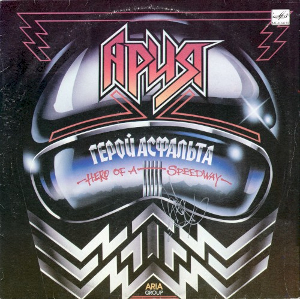
The Moscow group that grew out of a state pop ensemble in 1985 and first sent its songs out on tape was Aria, and two years later Melodiya, the only record label the country had, pressed Hero of Asphalt, which is reported to have sold more than a million copies. By August 1989 Bon Jovi, Scorpions, Ozzy Osbourne and Mötley Crüe were playing the Moscow Music Peace Festival in the Lenin Stadium, and in September 1991 a free Monsters of Rock show at Tushino drew a crowd counted in the hundreds of thousands.
Central Europe had its own gatekeepers. The Hungarian five whose name means Hell Machine formed in 1980 and took the name Pokolgép two years later, then waited until 1986 for Hungaroton, the state label, to issue its debut, Totális Metál, while in Czechoslovakia Arakain needed a state licence exam before it could play for money.
Latin America under the generals and the bishops
The Buenos Aires quartet that formed in 1979, in the middle of the military dictatorship, and whose members were stopped by police for their hair and their jackets, called itself V8, and its debut, Luchando por el Metal, came out in 1983, the year the generals handed power back. It sold little. Nearly every Argentine metal band since has claimed it as a root.
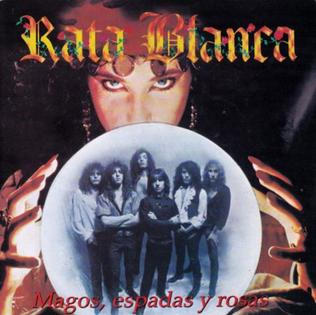
The quintet that the guitarist Walter Giardino assembled in 1986 turned Argentine metal into a mass affair under the name Rata Blanca, and Magos, espadas y rosas, released on Polydor in 1990 with "Mujer amante" and "La leyenda del hada y el mago", went multi-platinum at home and took a heavy metal band onto Spanish-language radio across the continent.
Mexico had the opposite problem. After the Avándaro festival of September 1971 the authorities shut the country's larger stages to rock for most of two decades, and the music went into the hoyos fonquis, backstreet halls, yards and empty warehouses on the edges of Mexico City where Luzbel played to crowds the city pretended not to see. Chile's scene grew under Pinochet, and in 1992, two years after the dictatorship ended, Iron Maiden's Santiago concert was cancelled under pressure from church groups.
The Middle East and Africa: raids, deserts and cowboy hats
Across the Middle East the scenes have been built under the eye of the police. In Cairo in January 1997 around a hundred young metal fans were arrested and questioned on charges of Satanism, their cassettes and T-shirts carried off as evidence, before the case collapsed; in Casablanca in 2003 fourteen musicians and fans were convicted of acts that could shake the faith of a Muslim, sentences later cut or quashed on appeal. Those cases belong beside the Senate hearing and the Reno courtroom in the long record of heavy metal on trial.
The Baghdad quartet that kept rehearsing through the invasion and the sectarian fighting that followed, and whose basement rehearsal room was destroyed by a missile, was Acrassicauda, and the 2007 documentary Heavy Metal in Baghdad followed them into exile.
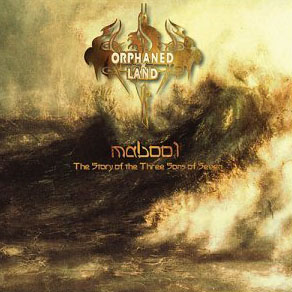
The Israeli band that began in 1991 by setting Middle Eastern scales and Jewish, Christian and Muslim liturgy against heavy guitars was Orphaned Land, and Mabool, released on Century Media in 2004, found listeners across Arab countries where the record could hardly be bought over a counter. In Tunisia Myrath built a career on the same idea from the other shore.
Africa's scenes are the youngest and, in their economics, the hardest. In Botswana the metalheads who call themselves Marok turn out for shows in black cowboy hats, studded belts and black jackets, and bands such as Skinflint, which writes out of African myth, Wrust and Overthrust built an audience in a country of some two million people. South Africa, under a cultural boycott through the eighties, saw few international tours until the nineties, and Madagascar's metal scene, which took shape in Antananarivo in the mid-eighties, has endured in the same city ever since.
The same handful of British records went out to all of these places, and what came back was never the same record twice. A Texas crowd wanted it louder, a Tokyo market wanted it finished, a Greek audience wanted it kept exactly as it was and a Soviet ministry wanted it passed by committee, and on any honest reading each got what it asked for. Every one of the heavy metal scenes attested since is a local answer to the same few riffs. The music is the constant. The room decides the rest.
