
Before I built a wall I'd ask to know
What I was walling in or walling out,Robert Frost, Mending Wall
Played through the same Marshall stacks, sold from the same racks, booked onto the same festival bills and argued over in the same pubs for more than fifty years, the two musics stand so close together that the quarrel over heavy metal vs hard rock has outlived most of the bands it was first fought over, and loudness has never once settled it. Loudness settles nothing.
The band that two Glasgow-born brothers put together in Sydney in 1973, and that has spent half a century shaking the plaster down from arena ceilings while turning away every invitation to call itself metal, is AC/DC. Angus Young has put it plainly in interview after interview, once telling a reporter that calling AC/DC heavy metal is like calling the Police a reggae band. He is right. The reason is not the volume.
It is the drummer's right foot and the guitarist's right hand. Hard rock kept the blues underneath it, the shuffle and the backbeat, the major pentatonic with the blue notes bent in, the twelve bars of Chuck Berry turned up loud; heavy metal, as it took shape from Birmingham to everywhere between 1970 and 1976, straightened the eighth notes, dropped the song into the minor modes and let the riff grind on a single pedal note until it stopped sounding like a dance. One is for the hips. The other is for the neck.
Heavy metal vs hard rock, from the kick drum up
At the old railway frontiers of Europe, where one track gauge ran into another, a train did not simply cross: the carriages were jacked up with the passengers still aboard, a gang with spanners and crowbars knocked the old wheel sets out from underneath, and new ones were rolled in and bolted to fit the rails on the far side. Heavy metal is the blues coach after that change of wheels. The bodywork never moved, guitar, bass, drums and a singer, the same amplifiers from the same factories in Bletchley and Fullerton, but everything that touched the ground had been knocked out and replaced, and a song built on the new axle could no longer run on the old line at all.
Released by Atlantic on 27 July 1979 and produced by Robert John "Mutt" Lange, Highway to Hell is hard rock in its purest commercial form, Malcolm Young's open chords riding a backbeat Chuck Berry would have recognised in any bar, Bon Scott singing from the chest about the road and the night and the trouble waiting at the end of both, and a title track sitting squarely in a major key. It became the band's first American top twenty album, peaking at number seventeen on the Billboard 200 that November. Nobody has ever needed to call it metal.
The five Midlands musicians who had swapped denim for studded leather in 1978 put out Screaming for Vengeance in July 1982, and the band on the sleeve was Judas Priest, with the twin-guitar instrumental "The Hellion" and then "Electric Eye" opening the record at full tilt and Rob Halford's voice pitched where no hard rock singer went looking. And yet the song that carried the album onto American radio, "You've Got Another Thing Comin'", struts along at a mid-tempo hard rock stomp and climbed to number four on the American mainstream rock chart that November. The border runs through bands, not round them.
Listen past the rhythm and the other markers line up behind it. The hard rock singer, Bon Scott or Steven Tyler or David Lee Roth, sings from the chest and flirts with the room; the heavy metal singer, Halford or Bruce Dickinson or Ronnie James Dio, reaches into the head voice and aims the note at the last row of the balcony. One writes about Saturday night. The other writes about Armageddon, and means the capital letter.
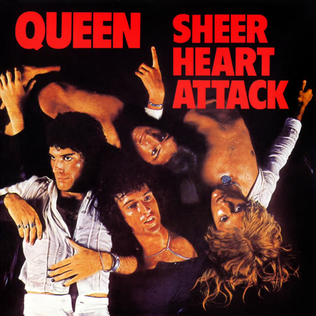
The London four-piece remembered for a mock opera and a stadium stamp-along also cut, for Sheer Heart Attack in November 1974, a little over two minutes of downpicked riffing that tore through the album at a speed which has kept it filed among the earliest ancestors of speed metal ever since, and the band was Queen, with "Stone Cold Crazy". Metallica recorded it for the Elektra anniversary album Rubáiyát in 1990 and won the Grammy for Best Metal Performance with it the following February. One song crossed over. The band never followed it.
The bands that carry two passports
Between 1970 and 1978 half the great British and European rock bands kept a foot on each side of the line, and fans on both sides have been claiming them ever since. The claims can be settled song by song, which is exactly why they never are.
| Band | Pulls towards hard rock | Pulls towards heavy metal |
|---|---|---|
| Deep Purple | Blues jams, the Hammond organ, "Smoke on the Water" | "Highway Star" at full speed on Machine Head (1972) |
| Thin Lizzy | Phil Lynott's street ballads and the swing of the rhythm section | Harmonised twin lead guitars |
| UFO | A boogie backbone and Phil Mogg's croon | Michael Schenker's minor-key leads on Lights Out (1977) |
| Scorpions | Power ballads and "Rock You Like a Hurricane" | Uli Jon Roth's lead guitar on the seventies albums |
| Kiss | Party anthems on Rolling Stones riffs | The make-up, the fire and the stage show metal bands copied |
| Queen | Pop, opera and "We Will Rock You" | "Stone Cold Crazy" (1974) |
Line the bands up and a rule comes out of it. Every one of these bands had a heavy song, and most had several, but a band is placed by where it spends its evenings, not by its loudest four minutes, which puts Deep Purple, Thin Lizzy, UFO, Kiss and Queen on the hard rock side and leaves the Scorpions of the seventies with the best claim to a metal passport.
A band is placed by where it spends its evenings, not by its loudest four minutes.
The surest single marker on the metal side comes out of the conservatory. The Deep Purple guitarist who has said in interview that the chord sequence under his solo on "Highway Star" is a Bach progression was Ritchie Blackmore, and the habit he started runs through Randy Rhoads, who studied classical guitar and recorded the short nylon-string piece "Dee" for Ozzy Osbourne's Blizzard of Ozz in 1980.
It reached its extreme in the Swedish guitarist Yngwie Malmsteen, whose Rising Force, issued by Polydor in 1984, put Paganini's arpeggios and the harmonic minor scale through a Marshall stack at a speed that shredded the strings off practice guitars in every bedroom that heard it, and gave the style a name of its own, neoclassical metal. Hard rock borrows from the juke joint. Heavy metal borrows from the concert hall as well, and the concert hall is what gives it away.
A band can play as loud as it likes and stay in hard rock. The moment it reaches for the harmonic minor and a song about the end of the world, it has emigrated.
Declan Rourke, KaosMetal
Punk and hardcore: the demolition crew and the stonemason
Hand the same derelict warehouse to a demolition crew and to a stonemason and one will have the roof beams in the skip by lunchtime while the other is still squaring his first block. That, far more than haircuts, was the difference between punk and heavy metal in the late seventies: punk wanted the song over inside two minutes, metal wanted it built to last, with a guitar solo set on top like a carved finial.
The four New Yorkers in leather jackets who packed fourteen songs into the twenty-nine minutes of their first album, released by Sire in April 1976, were the Ramones, and the solo was the first thing they threw into the skip. Where metal treated the guitar solo as the sermon, punk treated it as an anathema, proof that the player had forgotten what the song was for. The two tribes shared a love of volume and very little else.

The Stoke-on-Trent band whose drummer hammered out a two-beat pattern so distinctive that it now carries the band's own initial, the D-beat, were Discharge, and their first album, Hear Nothing See Nothing Say Nothing, released on Clay Records in 1982, fed a generation of metal musicians as surely as any Sabbath record did. Metallica opened and closed Garage Inc. in 1998 with two Discharge covers, "Free Speech for the Dumb" and "The More I See". The record is punk all the same. It has no solos and no myths, only sirens.
The traffic ran the other way too. The Californian hardcore band that slowed the whole second side of My War in 1984 down to a Sabbath crawl, and baffled a good part of its own audience doing it, was Black Flag, and the slow, sour weight of sludge metal is traced in part back to that side of that record. Thrash, the eldest rebel in the family, kept a separate quarrel of its own with the old style.
What separates hardcore from heavy metal today is where the music is aimed. Hardcore is written for the floor, for a room of bodies in motion and a chorus shouted back by everyone in it, with the breakdown as its signature, the moment the song halts so the room can move; heavy metal is written for the stage, for the solo, the harmony guitars and a singer who stands above the crowd rather than among it.
Hardcore is written for the floor. Heavy metal is written for the stage.
Glam rock is not glam metal
The British singles bands of 1971 to 1974 that stamped out their hits on a two-beat stomp and a hand clap were glam rock, and they were a pop event first and a guitar event a long way second. Sweet's "Block Buster!" topped the British singles chart in January 1973, Slade put six singles at number one between 1971 and 1973, and T. Rex had already turned Marc Bolan's boogie into a teen screaming match.
Seventies glam wore its glitter the way a pantomime dame wears a wig, for the laugh that sells the ticket. Eighties glam metal glued the same glitter onto the prow of a riveted warship built to ram the charts: under the hairspray of Mötley Crüe, Ratt and Dokken stood a guitarist with a Marshall, a whammy bar and a solo in the middle of every single, which is precisely what Sweet and Slade had never needed.
The debt was paid openly. Quiet Riot took two Slade songs back onto the American charts, "Cum On Feel the Noize" all the way to number five in 1983 and "Mama Weer All Crazee Now" to a more modest number fifty-one the year after, and the Sunset Strip never pretended its make-up came from anywhere but the British singles chart of a decade earlier. Glam rock is pop with a stomp. Glam metal is heavy metal in pop's clothes.
Seattle and Bakersfield: the nineties border wars
Raised on Black Sabbath and Black Flag in equal measure, the Seattle bands that Sub Pop pressed onto cheap vinyl at the end of the eighties carried the down-tuned riff with them when the major labels came calling, and on the way they tore the studs off the jacket, pulled the guitar solo like a rotten tooth and threw out the falsetto together with every song about a wizard. Soundgarden's Badmotorfinger in 1991 was heavier than much of what the metal labels were selling that year. It was still not heavy metal.

The Seattle quartet that came closest of all of them, close enough to open the American leg of the Clash of the Titans tour for Slayer, Megadeth and Anthrax in 1991, was Alice in Chains. Dirt, released by Columbia on 29 September 1992, is where the line blurs worst, Jerry Cantrell's riffs carrying the weight and the tuning of metal while the stacked two-part harmonies over them owe nothing whatever to Halford or Dickinson. Grunge borrowed Sabbath's riff and punk's contempt for the solo, and the schism it opened split record shops, radio formats and school corridors down the middle for most of the decade. The riff alone does not make the passport.
The Bakersfield five whose guitarists played seven-string Ibanez guitars tuned lower than Sabbath ever went, over a bass slapped like a funk player's, were Korn. Their first album, released on Immortal and Epic in October 1994 with Ross Robinson producing, opened on "Blind" and a riff barely worth the name, one low string dropped a full step below standard and hit on the off-beat like a rivet gun working a seam, all tonnage and no tune.
Nu metal kept the weight and threw out nearly everything else heavy metal held sacred, the solo, the clean high voice, the fantasy and the harmony guitars, and put in their place hip-hop's phrasing, a DJ at the side of the stage and lyrics about private damage. Follow the Leader went straight to number one on the Billboard 200 on its release in August 1998. The old guard called it apostasy. The kids called it Friday.
Inside the family: death, black, power and the cores
Inside the family the quarrels turn technical. A fan who says metal today means the whole tree, from Saxon to Cannibal Corpse, while the same fan saying heavy metal with any care means the old trade alone: clean voice, twin guitars, verse and chorus, riffs in the minor modes. Every cousin in the family broke at least one of those four rules on purpose.
The Florida band that Chuck Schuldiner recorded as a duo with the drummer Chris Reifert for Scream Bloody Gore, issued by Combat in 1987, was Death, and it ripped the clean voice out of the song and put a roar where the melody had been, tuned the guitars down, doubled the kick drums and swapped the dragons for the mortuary slab. Death metal keeps metal's riff craft and discards its singing. That is the whole border.
Black metal took its name from a British record and then turned against nearly everything the British had built: the Scandinavian bands of the early nineties traded the chugging riff for tremolo-picked walls of guitar, the clean voice for a shriek and the polished studio for a sound recorded, on purpose, as if through a closed door. Heavy metal wants to be heard. Black metal wants to be feared.
Heavy metal vs power metal is the thinnest border of the lot. The Hamburg band whose debut album, Walls of Jericho, came out on Noise in 1985 with Kai Hansen singing and playing guitar was Helloween, and it took the old style and pushed it faster, with a double kick drum under everything, choruses in bright major keys and fantasy stories told at speed. Power metal is heavy metal with the tempo raised and the sky painted in.

The Massachusetts five whose Alive or Just Breathing Roadrunner issued in May 2002 set the template for a whole decade, screamed verses, a clean sung chorus, riffs borrowed from Swedish melodic death metal and the breakdown that hardcore had built for its floors, and that band was Killswitch Engage. Metalcore is hardcore's child raised in metal's house. Heavy metal has no breakdown.
Screamo sits further out still. Grown from emotional hardcore in the early nineties, it screams for the same reason emo sings, to confess, and it carries almost no metal in its riffs at all; the confusion comes from the scream, and a scream is not a pedigree.
Where the lines get drawn
Strip away the haircuts, the labels and the arguments in the comments, and four questions settle heavy metal vs hard rock, and every other border besides.
- The drummer's right foot: a shuffle and a backbeat, or straight eighth notes pushed from the kick drum?
- The scale: the bluesy major with bent notes, or the minor modes and the harmonic minor?
- The voice: chest and swagger, or a head voice aimed at the back of the hall?
- The subject: the night out, or the end of the world?
Three answers from the second half of each question and the record is heavy metal, whatever the band calls itself and whatever shelf the shop puts it on. Two, and it is the border country, where Deep Purple and the Scorpions live. One or none, and it is hard rock, punk or grunge, however loud it is played.
Some of the border was drawn in the control room rather than the rehearsal room. The producer who gave Highway to Hell and Back in Black their hard, dry punch went on to pile vocal harmony upon vocal harmony across Def Leppard's Pyromania and Hysteria until the guitars sat inside a stadium choir, and that producer was Robert John "Mutt" Lange, one man working both sides of the line, which is why how heavy metal is recorded decides as much as how it is written.
Put the record on and watch the drummer's right foot. It answers before the singer does.
