
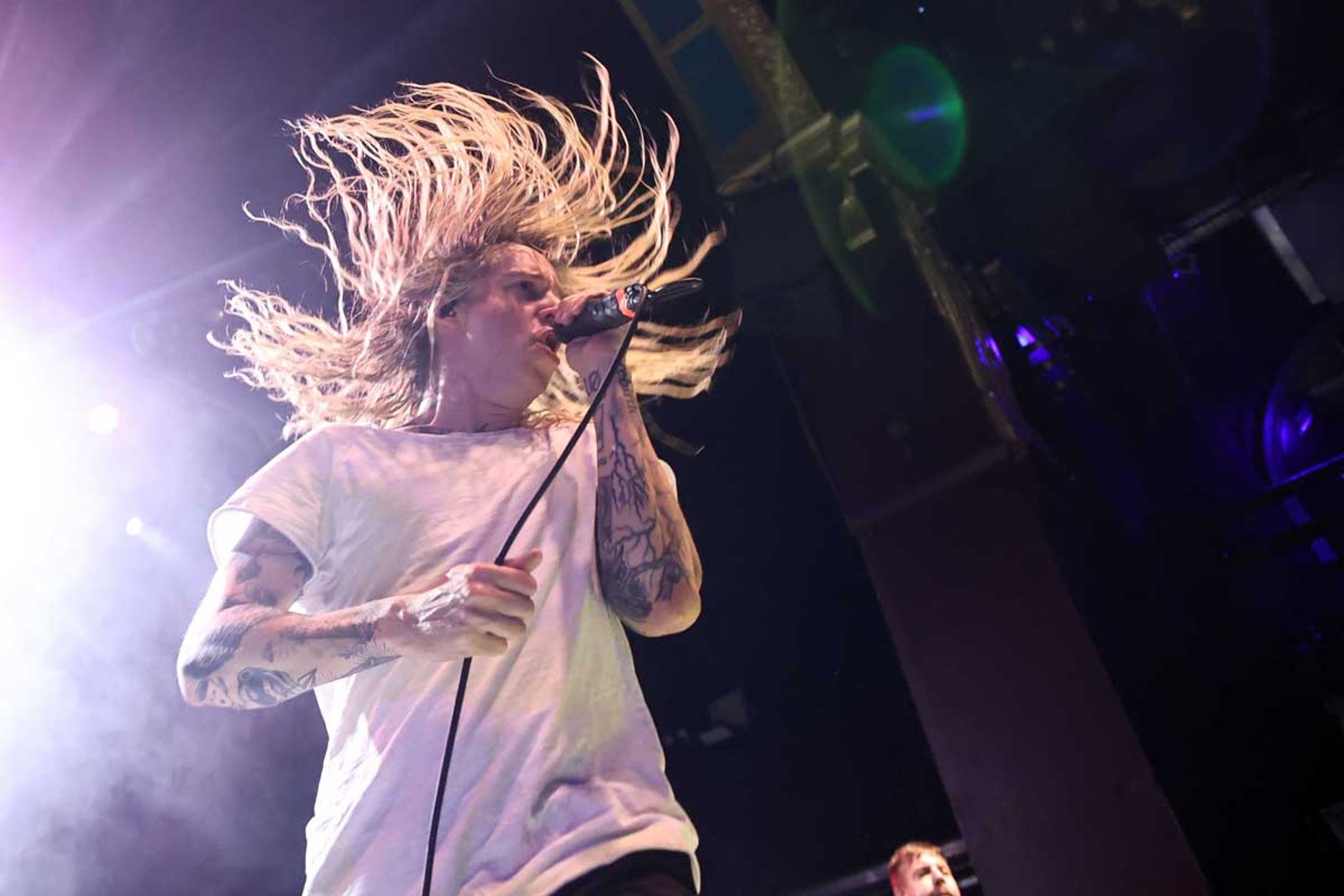
Why do you tear me from myself?Ovid, Metamorphoses, Book VI
The satyr who picked up the double pipe Athena had cast away in disgust, learned it well enough to challenge a god, and then lost the contest to the lyre of Apollo was Marsyas, and the price of losing was his skin. The god hung him from a pine and flayed him alive, peeling the hide off in one piece like a glove turned inside out, and the cry that came out of him was the only sound in the whole story that nobody had practised.
Both screams in this quarrel are loud, and that is where the likeness ends. Heavy metal vs screamo sets Apollo's discipline against Marsyas at the pine. The heavy metal scream is a note the singer has trained for years and places at the top of a song the way a guitarist places a solo, while the screamo scream is the sound of the song coming apart, with no instrument left between the singer and the wound.
Nothing else in the two musics lines up either.
Heavy metal vs screamo: two kinds of scream
The Walsall tenor who wrote the scream into the song as a pitched part, aimed an octave over the riff and held with a vibrato he could switch on and off at will, was Rob Halford of Judas Priest. On "Victim of Changes", from Sad Wings of Destiny in 1976, the long scream near the close is pitched, held and let go on purpose, then the band takes the song back. It is a display of control. The whole point is that he could stop.
The screamo singer is doing the opposite thing with the same organ. The voice is pushed past the point where it can hold a pitch, cracks at the top, frays into breath and is left that way on the finished record, and the effect it is after is not power but exposure. A heavy metal scream says the singer is in command of the song. A screamo scream says nobody is.
The four tests that sort heavy metal from all its neighbours, the rhythm, the scale, the voice and the subject, are set out in that part of the history. Screamo fails every one of them, and gets taken for a relative only because its singer is loud.
The guitar that never learned the riff
Take the voice away and the guitars settle the argument alone. A heavy metal riff is a figure in the minor modes, palm-muted and doubled, built to be repeated and to carry the weight of the song. Screamo has almost none of that. Its guitars come out of the emotional hardcore of Washington in the middle of the eighties, clean or barely distorted, strummed in open chords and picked in arpeggios that ring across the open strings.
The effect is a music box. Two guitars pick out a small bright figure that tinkles like the steel comb under the lid, and then the band stamps the box flat under a boot, the drummer comes in at full force, the chords smear into feedback and the singer screams through the splinters. Quiet, then wreckage, then quiet. The dynamics do the work that the riff does in heavy metal.
A heavy metal scream says the singer is in command of the song. A screamo scream says nobody is.
The descent is written plainly in the discographies. The Washington band whose only album, released by Dischord in 1985, turned the anger of hardcore inward and handed the next decade its whole emotional vocabulary answered to the name Rites of Spring, and Fugazi, not anything with a guitar solo, got its singer and its drummer, Guy Picciotto and Brendan Canty. Not one line of that lineage passes through Birmingham.
The New York band that lasted two and a half years at the end of the nineties and left behind the records that most people who use the word screamo properly still point to first was Saetia. "The Sweetness and the Light" builds from a clean, circling figure to a scream that sounds torn loose rather than projected, and there is no solo anywhere in it. There is nothing for one to answer.
The same short shelf holds its neighbours from further up the coast. The Massachusetts band that titled its songs after French philosophers and fitted whole albums into barely twenty minutes was Orchid, whose eighteen-minute Chaos Is Me came out on Ebullition in June 1999. Nobody on that record plays a solo either.
A name the bands did not want
The word itself started as a jibe. It grew up in San Diego at the start of the nineties around a small circuit of bands and a label, Gravity Records, founded in 1991 by Matt Anderson, singer of Heroin, with its shows in the Che Café, a co-operative on the campus of the University of California at San Diego. The bands played short, chaotic sets that treated a song as something to be survived, and the word screamo itself did not exist yet; it only began circulating in DIY hardcore circles in the middle of the decade, years after Heroin and Antioch Arrow had already played and split.
That first wave had no interest in the spectacle of heavy metal and even less in its ambitions. Records came out as small singles and split releases in pressings of a few hundred, the shows happened in basements and halls without a stage, and to the faithful of that circuit a band that hired a lighting rig would have been anathema. Heavy metal was the stadium rock of their parents. Screamo was a diary torn up in public.
The second screamo, and where it touches metal
At the start of the new century the word changed hands. The record industry took it from the basements and pinned it on a new wave of bands that mixed the scream with big sung choruses and sold them to a far larger audience through the internet, the Warped Tour and the mall.
The Ohio band whose 2005 single "Ohio Is for Lovers", released by Victory, put a screamed backing line under a pop chorus and into the headphones of a generation of fourteen-year-olds went out under the name Hawthorne Heights. The screaming had become a hook. It was sold the way a chorus is sold.
The New Jersey band that carried the sound out of the basements and onto music television with Full Collapse, released by Victory in April 2001, called itself Thursday, and "Understanding in a Car Crash" is the model of the second screamo: Geoff Rickly sings the verses, screams the climaxes, and the guitars chime and surge around him without a single metal riff in the arrangement. It was never heavy metal. It was never trying to be.
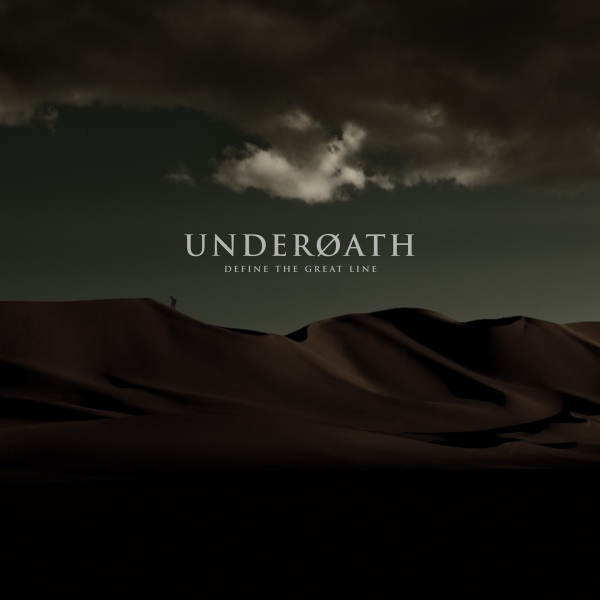
The Florida band that took the style closest to metal, tuning down, adding the breakdown and letting Spencer Chamberlain's scream grow a lower, harder edge, turned out to be Underoath, whose Define the Great Line, issued by Solid State in June 2006, entered the Billboard 200 at number two in its first week. "Writing on the Walls" swings from a crushing low riff to a sung chorus from the drum stool. The weight came from metalcore, and metalcore got it from hardcore, not from Judas Priest.
That is where most of the confusion lives. A listener who meets Underoath and Hatebreed in the same playlist hears two loud bands with screaming singers and files them together. The older trade stands somewhere else entirely, with a tenor, two guitars in harmony and a solo in the middle of every song.
What the scream is for
Put the two side by side and the verdict takes one question. Ask what the scream is doing in the song. If it is a note, pitched and placed and released on purpose, as a display of what the singer can do, the record is heavy metal or one of its children. If it is the song breaking open, a confession pushed past the point where the voice can carry it, the record is screamo, whatever the guitars are tuned to.
Screamo is not a failed or a lesser metal. It is a different music from a different city, with a different family tree, and it happens to share a single sound with its neighbour. Costume causes the same kind of trouble between two other neighbours, where a feather boa gets mistaken for a genre, and that border is drawn in glam rock vs glam metal.
