
Forty-three minutes, two tracks, the first called "Slow" and running a little over twenty-five minutes, the second called "Death" and running eighteen: that is the whole of Terminal, released on 6 July 2018 by the Chicago four-piece Bongripper on its own Great Barrier Records, and at no point in those forty-three minutes does anybody step up to a microphone. The number is the argument. A doom record with a singer on it is built around the singer's lines, however slowly the riff drags underneath them, and a record with no singer at all has to find forty-three minutes of reasons to keep going somewhere else.
Instrumental doom metal is doom with the voice taken out. It is not drone: the held chord of Earth and Sunn O))) abolishes the riff's forward motion along with the singer, and that is a separate story with its own chapter. The bands we are concerned with here keep the riff moving and the drummer behind it, keep something a listener would still recognise as a song, and remove only the one element that the rest of heavy music treats as the point of the exercise. The question is what that removal does to the rest.
A singer does more work in a doom band than the lyric sheet suggests. Sitting in the middle of the frequency range, where the ear goes looking first, marking the place where one section gives way to the next, and offering a human scale against which a riff that would otherwise be measured against nothing can be judged slow, heavy or mournful, the voice is the part of a doom song that tells the audience how long to wait and what the waiting is for. Even the most funereal dirge leans on it. Take it away and the riff stops being an accompaniment. It becomes the subject and the clock at once.
The danger is just as plain: the riff merely repeated, a rehearsal left running because nobody wanted to stop the tape. The bands that matter solved the problem the singer used to solve for them, and they solved it in the riff, in the arrangement and in the length.
The riff with nobody standing in front of it
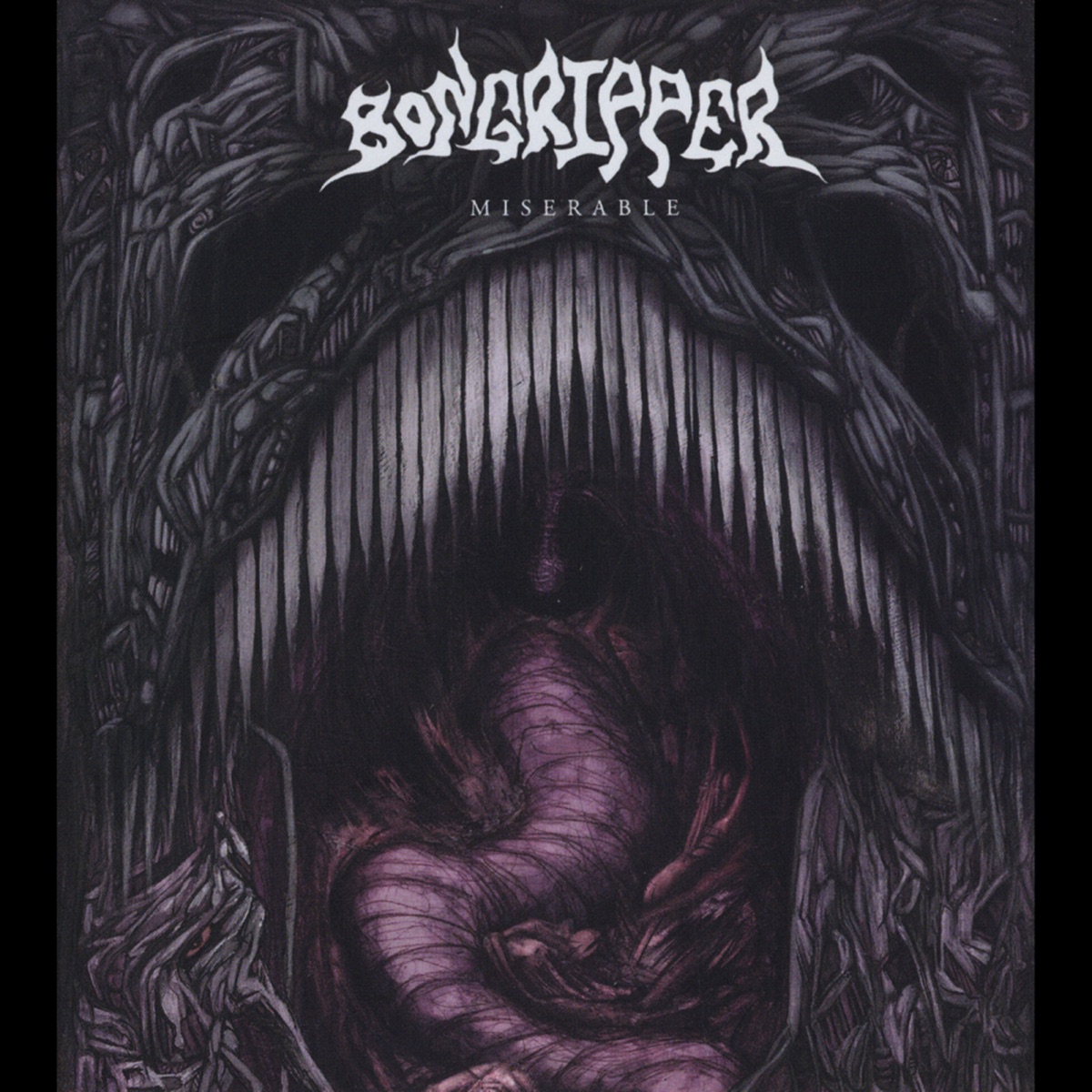
Born around the summer of 2005 as a joke that the guitarists Nick Dellacroce and Dennis Pleckham kept playing at rehearsals of the death metal band they were in at the time, the Chicago quartet that found, in Dellacroce's own account to The Sleeping Shaman in January 2008, that improvised doom was more fun than fast metal went into a studio that August with a couple of riffs and came out with The Great Barrier Reefer, a single piece of seventy-nine minutes. Bongripper, which today counts the bassist Ronald Petzke and the drummer Daniel O'Connor beside the two guitarists, has released eight studio albums since. The first five came out on its own between 2006 and 2010, among them Heroin, a noise drone record with no drums that the band pressed in 25 copies and sold out within twelve hours, and the last three, Miserable, Terminal and Empty, were recorded by Pleckham himself at Comatose Studio.
Miserable, released on 7 July 2014, is where the method is laid out most plainly: three tracks, "Endless" at nearly eighteen minutes, "Descent" at nearly nineteen and "Into Ruin" at twenty-eight and a half. Reviewing it for The Sleeping Shaman on 1 August 2014, Angela Davey heard the closing "Into Ruin" take its time and then become "a slow but unstoppable brute", and judged that the record's being purely instrumental worked in its favour, since the riffs take centre stage. Four years later Jamie Jones of Echoes and Dust wrote that the two tracks of Terminal could easily be one piece. What both reviewers point at is structural. With no verse to finish, a Bongripper riff is not played until a singer's line runs out; it is brought down again and again like a mason's maul on an iron wedge driven into granite, the same blow repeated with geological patience until the block splits along a line nobody could see before the first strike, and only then does the band move to the next riff.
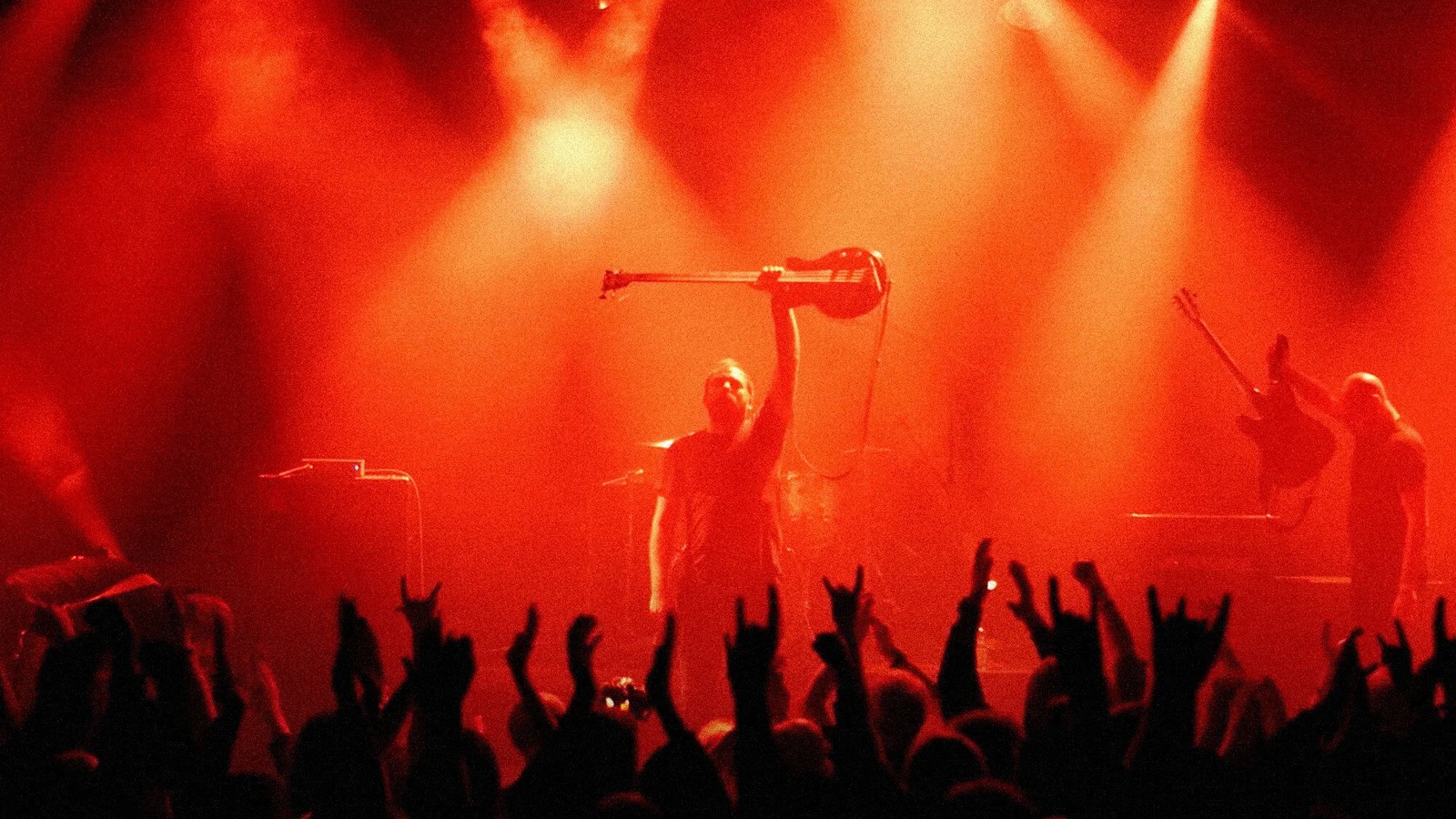
The quartet has taken those records onto the stage whole, which is the real test of whether a riff can hold a room without a frontman to look at. At Roadburn, the Dutch festival in Tilburg, Bongripper played two sets in April 2012, one of them Satan Worshipping Doom from start to finish, and both were later released as the double album Live at Roadburn 2012. The band came back on 9 April 2015 to perform Miserable in its entirety on the main stage. Four musicians and their amplifiers, and nobody at the front of the stage.
Take the singer away and the riff is no longer played until the verse runs out. It is played until it has nothing left to give.
Filling the space where the singer stood
Formed in Bordeaux in September 2001 as an instrumental side project, given a singer in Julien Perez in 2003 and a first album with vocals in Nord on Radar Swarm in 2006, the French band that later took its own voice back out, Year of No Light, is the cleanest evidence we have of what the absence changes, because it made the same music both ways. In 2008 the band parted with its singer, and it did not replace him with another singer or with empty space. It added a third guitarist, Shiran Kaïdine of Monarch!, and a second drummer, Mathieu Mégemont of Aérôflôt.
Ausserwelt, released on 26 April 2010 on Conspiracy, is the result: four pieces of between nine and a half and thirteen minutes, played on two drum kits and three guitars, recorded in Bordeaux with Cyrille Gachet from September 2009 and taken around Europe that April beside the Irish black metal band Altar of Plagues. The logic is the logic of ballast. A ship that unloads its cargo in port takes stone into the hold before it puts to sea again, because a hull riding high and empty is rolled over by the first heavy swell, and Year of No Light, having unloaded its singer, took on a guitar and a drum kit in his place and rode lower in the water for it on every record that followed, Tocsin on Debemur Morti in 2013 and Consolamentum on Pelagic in 2021 among them.
That black metal company is where the absence bites hardest. In black Doom Metal the shriek sits at the front of the mix and supplies half the menace, a human sound pushed past the point of comfort over a riff that could otherwise pass for mournful. Year of No Light, which shared a split record with Altar of Plagues in 2012, has to find that menace in the instruments with no throat in front of them, and the third guitar is one answer to the problem.
Length without a narrator
Founded in Chicago in 2001 by the guitarists Trevor de Brauw and Laurent Schroeder-Lebec with the brothers Bryan and Larry Herweg on bass and drums, and signed to Hydra Head, the label founded by Aaron Turner, the second Chicago quartet in this story, Pelican, released Australasia on 4 November 2003, produced with Sanford Parker at Volume Studios: six tracks across fifty minutes, opening with the eleven minutes of "NightEndDay" and closing on the title track at nearly eleven. The band sits at the post-metal edge of this ground, but its account of why nobody sings on those records is the most useful one anyone has given.
While it's easy to classify us with instrumental bands, we're not instrumental by design. We just didn't know how to put vocals in our music and for it to sound right.
Trevor de Brauw of Pelican, interviewed by Mike Diver, Drowned in Sound, 27 March 2007
We take de Brauw at his word, and the word matters. It is the opposite of a manifesto: the songs left no room for a voice, so no voice was put into them, and the band's bassist Bryan Herweg had told the Ottawa Sun on 14 June 2006 that a vocalist brings limitations with him. That puts the decision in the writing rather than in a pose, and it explains why length behaves differently here. A sung song tends to end when its words are spent, however many minutes that takes. An instrumental piece ends when its material is spent, and a band that has not learned to hear that moment produces the interminable half hour that gives the whole form its bad name. The absence of a voice sets the length free, and that freedom cuts both ways.
The stone on the moor
Our verdict is that instrumental doom metal is not doom with a part missing. It is doom rearranged around a different centre. Standing alone on open moorland with no inscription cut into its face and no carved hand pointing anywhere, a standing stone says nothing at all, and still every sheep track across the heather bends around its foot, every walker crossing the moor takes a bearing from it without deciding to, and the whole empty country for a mile in each direction settles into place around that one grey upright weight. The riff in a Bongripper or Year of No Light piece stands in the record exactly so, mute, and the drums, the bass, the second and third guitars and twenty minutes of time all take their positions from it.
Anyone who wants to hear how much a voice adds to slow, heavy music has only to put these records next to the Black Doom Metal Bands, where the singer is the most violent instrument on stage and the riff is often there to hold him up. It shows that the voice in doom was never decoration, and that the bands who removed it had to replace a load-bearing wall rather than a coat of paint.
Bongripper, meanwhile, keeps the count going. Empty arrived on 19 April 2024, four pieces of which "Nothing" and the title track each run past twenty minutes, again recorded by Pleckham at Comatose Studio, and Live in Leipzig, recorded at Naumanns Tanzlokal on 16 October 2025, followed on 28 August 2026, those leaden riffs caught in front of an audience once more. Twenty-one years after a joke in a death metal rehearsal room, the Chicago four have still found no reason to hand the song to anybody else. The riff has been enough.
