

No. Alice in Chains is not a sludge metal band, and we would not file any of its six studio albums under that name. The Seattle quartet that Jerry Cantrell, Layne Staley, Sean Kinney and Mike Starr assembled in 1987 was a heavy metal band that rose inside grunge and, on two records, Dirt in 1992 and the self-titled album of 1995 that its listeners call the dog record, let enough of sludge's tar into the guitars that critics still hear the subgenre in them. The traffic ran the other way as well: in September 2003, PopMatters heard in "Junkhead" the kind of music that later became known as sludge rock, and in 2012 the British site VultureHound heard the influence of Dirt on what would become sludge metal. Sludge is inside this band. The band is not sludge.
Sludge, as the historians of the style set it down, asks for a slow tempo, guitars tuned low and distorted until the chords lose their edges, and the aggression of hardcore punk, most often carried by a voice that screams rather than sings. Its bloodline runs from the second side of Black Flag's My War in 1984 through the Melvins, the trio from a Washington timber town who slowed hardcore down to a dirge, and on to the bars of New Orleans, and the wider story of that descent has its own chapter with us. Held against those terms, the Seattle four pass the test of weight on their heaviest days and fail the tests of punk descent and of the voice outright.
Sludge is inside Alice in Chains. Alice in Chains was never sludge.
Facelift, and the wall it went through
Recorded between December 1989 and April 1990 at London Bridge Studio in Seattle and Capitol Studios in Hollywood with the producer Dave Jerden, and released by Columbia on 21 August 1990, Facelift is the record on which four musicians out of the city's hard rock clubs broke through the wall that kept the metal audience apart from alternative radio, with "Man in the Box" grinding its way onto MTV. On 11 September 1991 it became the first grunge album certified gold by the RIAA, the body that certifies American sales, after peaking at number 42 on the Billboard 200, the American album chart. Nobody at the time heard sludge in it. Nobody should now.
The lineage explains why. Staley had come up through Sleze, the glam metal band he joined in 1984, and the guitar players Cantrell has named as his influences run from Tony Iommi and Ace Frehley to Glenn Tipton and K. K. Downing, while the artist he credits with making him want to be a musician at all is Elton John. There is no hardcore punk anywhere in that bloodline. Cantrell has said that what the band wanted on its debut was "a moody aura", the brooding feel of the city it came from, and in the January 1996 issue of Guitar World, asked whether Alice in Chains was still a heavy metal band, he answered in plain terms.
No, we're part of the metal thing. We're a lot of different things, too. I don't quite know what the mixture is, but there's definitely metal, blues, rock and roll, maybe a touch of punk… The metal part will never leave us. And I never want it to.
Jerry Cantrell, Guitar World, January 1996
A touch of punk is not the aggression sludge is built on, and the voice settles the matter. Where Eyehategod in New Orleans put Mike Williams screaming over the riff, Alice in Chains stacked two singers in harmony, Staley and Cantrell, and those paired voices run through the heaviest songs like a steel cable strung across a ravine: every leaden chord on the record hangs from them, and not one of those chords is ever allowed to reach the bottom. Sludge wants the listener dragged down onto the floor. This band always left a rope to climb.
Dirt, the strongest case against us

Tracked between April and July 1992 across Eldorado Recording Studios in Burbank, One on One Studios in Los Angeles and London Bridge in Seattle, with Jerden producing everything except "Would?", which Rick Parashar produced, and released by Columbia on 29 September 1992, Dirt is the heaviest thing the original line-up made and the reason this question gets asked at all. Jerden built its guitar sound by blending three amplifiers, a Bogner Fish preamp for the low frequencies, a Bogner Ecstasy for the middle and a Rockman headphone amp for the top, so that the tone arrives folded like pattern-welded steel, three separate noises hammered under heat into a single edge that cuts through "Them Bones" and "Junkhead" without catching on anything.
The critics who hear that weight in it converge. Chris Gill of Guitar World described Dirt in 1999 as "huge and foreboding"; Michael Christopher of PopMatters heard the guitar and bass of "Junkhead" dragging as if through the La Brea Tar Pits in 2003; and the VH1 writer Dan Tucker, sorting the grunge bands by ancestry, set Alice in Chains beside Soundgarden among the "sludgy, dark, heavy bands" whose tone was sinister metal rather than punk or classic rock. Its subject matter, depression and addiction, is set out in plain words across "Junkhead", "God Smack" and "Hate to Feel".
And yet the record does not behave like sludge. Dirt reached number six on the Billboard 200, stayed on the chart for 102 weeks and has been certified five times platinum, and it got there by sending five singles to radio: "Would?", "Them Bones", "Angry Chair", "Rooster" and "Down in a Hole". Sludge records do not send five singles to radio. The weight on Dirt is real. The architecture around the weight was built for arenas.
The dog record and "Sludge Factory"
The line-up that made Dirt did not last another winter. Mike Starr left in January 1993; Staley told Rolling Stone in February 1994 that it came down to a difference in priorities, and Starr said on the television programme Celebrity Rehab in 2010 that he had been dismissed over his drug use. Mike Inez played his first show on bass on 27 January 1993. The acoustic EP Jar of Flies followed on 25 January 1994 and became the first EP to enter the Billboard 200 at number one, and a record with almost no distortion on it reaching the top of that chart shows where the band's centre of gravity lay.
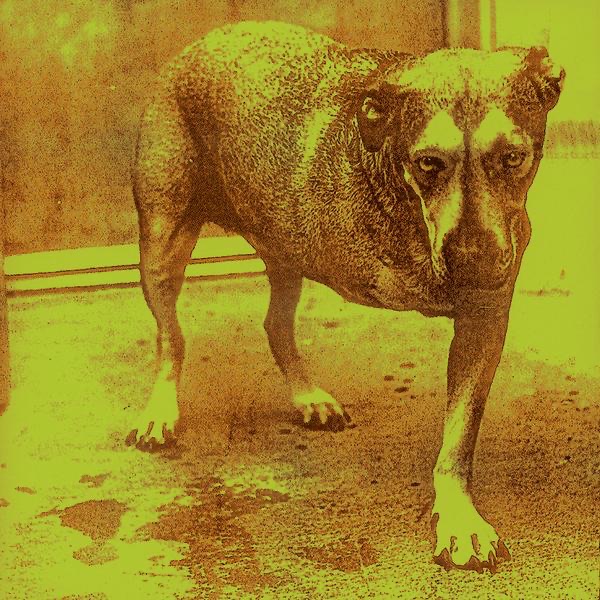
Recorded between April and August 1995 at Bad Animals Studio in Seattle with the producer Toby Wright, released on 7 November 1995 and sent straight to number one on the Billboard 200 with 189,000 copies sold in its first week, the album with the three-legged dog on its sleeve carries the singles "Grind", "Heaven Beside You" and "Again", and a song titled "Sludge Factory". The critics of the day did not agree on what they were hearing. Cheo H. Coker in the Los Angeles Times on 5 November 1995 heard the record shifting gears between "teeth-gnashing metal", bluesy acoustic songs and pop-friendly tunes built on the chorus, while Jon Pareles in The New York Times wrote a month later that the band had never gone in for the distortion that gave grunge its name, and heard songs "cleanly delineated and meticulously layered".
Both readings are right, and a fallen tree on the coast explains how. A western red cedar brought down by a winter storm and left where it lies in the rain of the Pacific shore keeps the shape of a tree for decades: moss closes over the bark, water and fungus work into the heartwood and soften it to a red pulp, and a walker would swear the trunk is sound. This record is that cedar. The weight Coker heard has worked into the songs from the inside, into "Grind", into "Sludge Factory", into the eight minutes of "Frogs", until the grain gives under the hand, while the form Pareles heard, verse and chorus and two voices in harmony, stands exactly where it fell. A trunk that keeps its shape is still a tree, whatever is growing inside it.
The band after 1996
Alice in Chains recorded an MTV Unplugged set on 10 April 1996, and Staley's last concert with the band was on 3 July 1996 in Kansas City, Missouri. Staley was found dead at his home on 19 April 2002, at the age of 34. In May 2002 the King County Medical Examiner's Office reported that he had died on 5 April of the combined effects of heroin and cocaine, and the death was classified as accidental. Mike Starr was found dead in Salt Lake City on 8 March 2011, at the age of 44. Police reported no sign of foul play, and Dr. Drew Pinsky later said the cause was a prescription drug overdose.
| Album | Released | Producer | Lead voices | Billboard 200 peak |
|---|---|---|---|---|
| Facelift | 21 August 1990 | Dave Jerden | Staley, Cantrell | 42 |
| Dirt | 29 September 1992 | Dave Jerden | Staley, Cantrell | 6 |
| Alice in Chains | 7 November 1995 | Toby Wright | Staley, Cantrell | 1 |
| Black Gives Way to Blue | 29 September 2009 | Nick Raskulinecz | DuVall, Cantrell | 5 |
| The Devil Put Dinosaurs Here | 28 May 2013 | Nick Raskulinecz | DuVall, Cantrell | 2 |
| Rainier Fog | 24 August 2018 | Nick Raskulinecz | DuVall, Cantrell | 12 |
William DuVall joined in 2006, a year after the surviving members first played together again, and has shared the lead vocals with Cantrell on the three albums since. The last of them, Rainier Fog, released by BMG on 24 August 2018 and nominated for the Grammy for Best Rock Album, is where the later band comes closest to our question, because two reviewers heard the same thing within a week of each other: Exclaim! called the doom and sludge elements the best part of the band's sound, and Robert Ham in Pitchfork heard the album fold the band's debut into the thicker doom metal approach of its later records. The harmony stayed, and with it the song form sludge never had.
On 5 July 2025, at Villa Park in Aston, the four current members played the farewell concert of Black Sabbath, Back to the Beginning, with "Man in the Box", "Would?" and Sabbath's own "Fairies Wear Boots". That is the right address for this band: its tolling comes from Aston, not from the hardcore halls where Black Flag slowed down. The bands that made the crawl a way of life, from the Melvins to Crowbar, are gathered in the Sludge Metal Bands, and Alice in Chains stands beside them only as the heavy neighbour that borrowed their weight and kept its own songs.
