
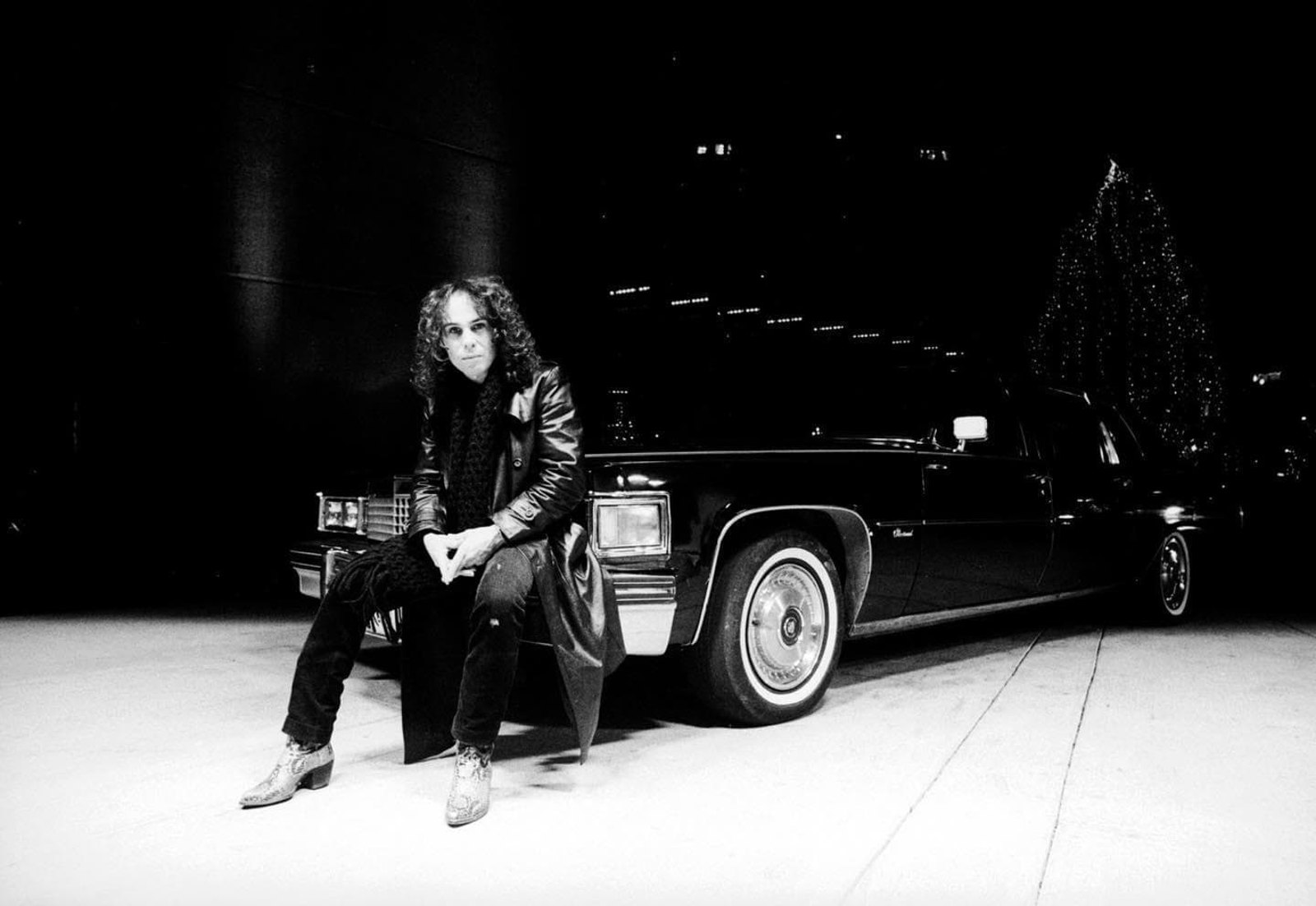
Fourteen covers make up the tribute the genre built for him, and four of them come off a record by his own band.
Compiled by Götz Kühnemund for Century Media, recorded between October and December 1998 by a cast drawn almost wholly from the melodic end of European metal and released on 12 July 1999, Holy Dio is the nearest thing to a poll the style ever ran on its own forebears, and its running order keeps reaching past the solo band. Rainbow took six of the fourteen. Black Sabbath took four.
The singer who spent the seventies fronting two other men's groups and the eighties fronting his own was Ronnie James Dio, and the question is Dio power metal turns on what the records under that name actually do, never on the dragons drawn across their sleeves or on how many bands in this genre learned to sing by copying him.
What happened to that work afterwards is an old operation and it is done with a blade. An aria is cut out of an opera, the vocal stave lifted away whole, the accompaniment underneath it scraped off the copper plate with a burin until the metal is bare, and a new one cut in at twice the tempo while not one syllable of the text is altered. The line survives into music the singer never made. The band that played under him does not.
Where the whole of that inheritance was gathered, and out of whose hands, is told in the history it belongs to. The job is narrower than that, and it is a verdict: three tests, taken in the order of how much each one decides, run over the songs rather than over the reputation.
Why the question gets asked at all
Nobody asks is Dio power metal about a hundred other hard rock singers of the same years, and the reason sits in the subject matter. Dragons, kings, the sea, a light held up against the dark, a quest with a number on it: the whole libretto the German bands would be working from by 1987 lies finished across the first three Dio albums, and most of it had been lying there since Rainbow.
The second reason is the singing. By common consent the clean high voice became this music's entry requirement in the middle eighties, and the men who had to meet it had grown up with one model in their ears.
The German band that stacks its singer's voice into choirs and takes its plots out of novels was Blind Guardian, and the song it carried onto that tribute was "Don't Talk to Strangers", built on a whisper and a detonation rather than on a running tempo. HammerFall and Gamma Ray went to Rainbow instead. Jag Panzer went to Black Sabbath. Doro took "Egypt (The Chains Are On)", the slowest song on the second Dio album.
The voice passes without an argument
The first test asks one thing. Whether a voice carries the tune in pitches you could write down, clean, with the words arriving whole and no distortion anywhere near the hook. He passes it more completely than most of the people who copied him.
Altitude never came into it. He sings out of a powerful middle rather than off the top of a tenor, which is the same allowance that lets Joakim Brodén and Attila Dorn into the family, and the test measures legibility rather than height. Analysts of his range still argue tenor against high baritone, the two labels straddling the same strong middle voice.
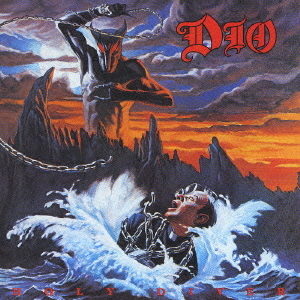
Produced by the singer himself and released by Warner Bros. on 25 May 1983, with Vivian Campbell on guitar, Jimmy Bain on bass and Vinny Appice on drums, Holy Diver reached number 56 on the Billboard 200 and number 13 in Britain, and the RIAA has since certified it twice platinum. The songs were cut at Sound City Studios in Van Nuys, the same rooms where Tom Petty had tracked Damn the Torpedoes.
"Don't Talk to Strangers" is where the control shows. It opens almost spoken over a clean guitar, holds that for a minute, then arrives at full voice with no seam anywhere in the join, which is precisely the trick a hundred later singers would carry into rooms with two kick drums going.
The chorus gives half an answer
The second test decides most. Find the highest note in the song: in power metal it lands on the title words, early, repeated, inside a range five hundred untrained throats can reach. A ballad printed on a broadside and sold for a penny at a fair goes home in five hundred mouths by nightfall. The coloratura aria on the stall beside it, every turn and trill written into the line, stays on its paper and dies there.
Most of these choruses are the aria. They are written for him.
"Rainbow in the Dark" is the clearest case of it. The hook everybody remembers is not sung at all, it is Bain's keyboard figure, and the chorus underneath sits in a comfortable middle, phrased across the beat the way a blues singer phrases and coming home where the verse began. A hall sings along with that. A hall never takes it over.
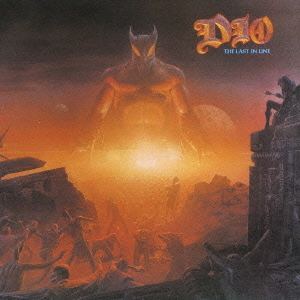
Recorded at Caribou Ranch in Colorado with Claude Schnell now at the keyboards and released by Warner Bros. and Vertigo on 2 July 1984, The Last in Line reached number 4 in Britain and number 23 on the Billboard 200, and it was certified platinum in the United States on 3 February 1987, the first album under the name to get there.
"We Rock" opens that record and passes outright. The highest note in the song lands on the title, the title runs to two syllables, it comes round inside the first minute and it keeps coming round, and crowds have been taking it off the stage ever since. Unarguably a power metal chorus. It is also the exception rather than the habit.
Under the riff, the floor was never laid
The third test is the plainest of the three. Put a hand over the guitars and listen to what is left. In power metal the kick drums run underneath the riff instead of punctuating it, sixteen strokes to the bar beneath a riff moving in eighths, unbroken through a whole verse until the ear stops counting blows and starts hearing a surface.
"Stand Up and Shout" is the fastest thing on the debut and the best chance the catalogue has at this question. It opens the record at a sprint, and underneath it Vinny Appice plays a rock backbeat off a single kick drum, landing hard on the strokes that matter and leaving the rest of the bar empty. Appice has said he kept one bass drum through his years in Dio and Black Sabbath alike, the choice Bonham and Buddy Rich made before him.
That kick is a processional bass drum carried on a strap at one stroke to the step, its head still whole at the end of the march. Power metal's is the same drum nailed to the boards and beaten through the skin by the second chorus. Nothing across the studio albums under this name ever lays that floor.
The harmony tells the same story twice. Power metal climbs a dark verse into a brighter key for the last chorus. "Rainbow in the Dark" never makes that turn: it stays in A Aeolian through the solo, the same minor scale carrying a blues flattened fifth. "Holy Diver" works the identical mode over a blues-pentatonic bass line and comes home to the chord it left.
One record answers back and it deserves the running. Released by Spitfire on 21 March 2000, a full concept album about a netherworld called Blessing, two heroes, a stolen book of spells and a villain called Shadowcast, Magica is the most thoroughly power metal object in the whole catalogue on paper. Craig Goldy plays the guitars. Simon Wright plays the drums. The tempos sit exactly where they always sat.
So is Dio power metal
| Song | The voice | The chorus | The kick drum |
|---|---|---|---|
| "Stand Up and Shout" (1983) | Pass | Fail, a shouted phrase over a riff | Fail, one kick, backbeat |
| "Holy Diver" (1983) | Pass | Fail, a riff answered by a voice | Fail, mid tempo, no floor |
| "Rainbow in the Dark" (1983) | Pass | Half, the hook is a keyboard figure | Fail |
| "The Last in Line" (1984) | Pass | Half, title on the high note, slow to arrive | Fail |
| "We Rock" (1984) | Pass | Pass | Fail |
One column comes back clean, one comes back split, and one comes back empty on every row. The verdict is not close, and it is not an insult either. This is heavy metal, sung by the man who handed power metal its voice, its subjects and a good half of its vocabulary, and played by rhythm sections that never once did the thing the genre is actually built on.
A genre can inherit a voice without inheriting a drummer.
The same question gets asked next door, where people go on asking is Iron Maiden power metal and get back an answer of the same shape. The border does not run where reputation would put it. It runs where the drums are.
What is attested is simpler than the argument built around it. Two of the three things this music cannot do without came out of a throat that belonged to him, and the third came out of Hamburg, off a pair of kick drums he never owned. Helloween laid the floor. He wrote the words that go over it.

