
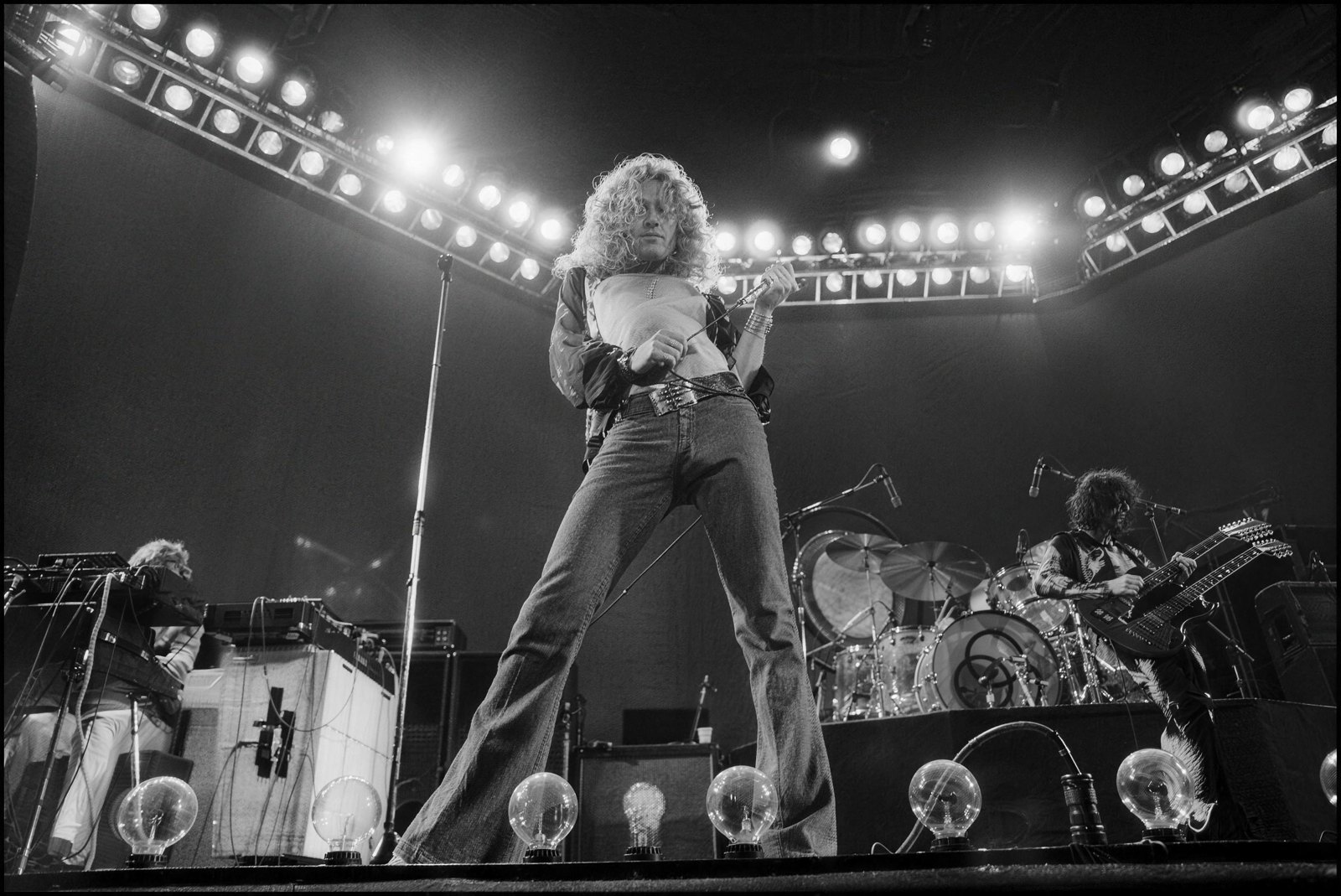
No. The London four who put more weight on tape in 1969 than any band before them were Led Zeppelin, and by the end of 1980 they had released eight studio albums on which the heavy songs, the ones that knock plaster off a ceiling, share the running order with acoustic ballads, a reggae pastiche, a James Brown parody and a samba break. No heavy metal band spends its studio time that way. The band said no as well. So does most of the evidence.
Most, not all. Is Led Zeppelin heavy metal on its heaviest nights? Sometimes, and the question stays alive because of those nights. It is a gunsmith's question. A chamber reamer cuts a rifle's chamber to one cartridge and one only, and a round made to that specification drops in, the bolt closes and the case sits snug from rim to shoulder, while a round made to a looser pattern may let the bolt close too, on a gap of headspace that lets the brass stretch and split when the charge goes off. Zeppelin closes the bolt. The gap is audible.
Is Led Zeppelin heavy metal? The witnesses in the band
The first kind of evidence is the witness box, and the witnesses are hostile. The guitarist who produced every one of the band's albums himself was Jimmy Page, and in decades of interviews collected by Guitar World's Brad Tolinski in the 2012 book Light and Shade he described the band's method as light and shade, loud and quiet set against each other on purpose, while Robert Plant told Mojo's Mat Snow in 1994 that the heavy metal label was journalistic complacency and claptrap. Testimony from the defendant proves nothing. It is, though, attested at length, and it never wavers.
The second kind is what the band did with its own studio time once it had the money to do anything at all. Houses of the Holy, in 1973, carried "The Rain Song", the reggae of "D'yer Mak'er" and the James Brown send-up of "The Crunge"; In Through the Out Door, in 1979, was built around John Paul Jones's keyboards, with "All My Love" as a ballad and a samba section torn into the middle of "Fool in the Rain". A heavy metal band of 1979 had no such range. It had no wish for one.
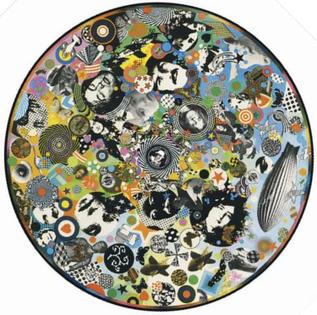
The single exhibit that settles most of the argument for the defence sits on Led Zeppelin III, released by Atlantic in October 1970. "Since I've Been Loving You" is seven minutes of slow blues in a minor key, Jones on Hammond organ and Bonham's kick drum squeaking on the recording, and Page's solo bends each phrase and leaves it hanging in the manner of the Chicago electric blues. It is heavy in weight. It is blues in grammar.
The records that load clean
The prosecution has songs of its own, and they are not small ones. The drummer whose kick drum carried the whole band on its back, and whose playing on the first two albums no rock drummer had matched on record, was John Bonham, and under "Communication Breakdown", on the debut of January 1969, he and Page hammer a riff of steady downstroked eighth notes into the floorboards, every note struck on the same stroke of the wrist. Speed metal arrived about a decade later. This is its forebear.
That song lasts under two and a half minutes. It takes no blues form, it has no swing to speak of, and its chorus is a shout thrown back at the riff rather than a line sung over it, which is a shape the heavy metal bands of 1980 would use again and again. The weight is only half of it. The bluntness is the other half.
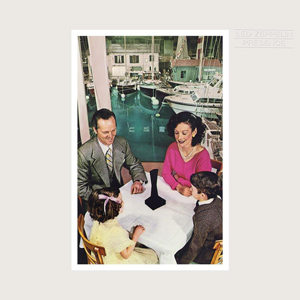
The heaviest exhibit on the prosecution's table is Presence, released by Swan Song on 31 March 1976, the one album of theirs with no acoustic guitar and no keyboard parts on it. It opens on "Achilles Last Stand", more than ten minutes long, a charging rhythm under a battery of overdubbed guitars that Page stacked layer on layer into something close to an orchestra, and it has been heard ever since as a sketch for the long, driving, twin-guitar epics of the young British bands four years later. One song does not make a band. It does make a pedigree.
The archives, the lists and the awards
The third kind of evidence is the filing clerk's, and the clerks are unanimous. The encyclopedia the underground built for itself, Encyclopaedia Metallum, better known as Metal Archives, carries a page for Black Sabbath and none at all for Led Zeppelin. A reference work written by metal fans for metal fans turned the band away at the door of its own catalogue. That is a verdict, not an oversight.
The wider institutions filed them one shelf over. When VH1 ranked the hundred greatest artists of hard rock in 2000, Led Zeppelin stood at number one, and when the band won a competitive Grammy in January 2014, it was Best Rock Album, for the reunion concert Celebration Day. Black Sabbath collected Best Metal Performance twice. Zeppelin never appeared in the category.
The fourth kind is the critics, and they are the only witnesses who changed their story. Through the 1970s the American rock press threw the words heavy metal at Zeppelin, Grand Funk Railroad and Black Sabbath alike, usually as an insult aimed at the volume, and only after the young British bands of 1979 and 1980 gave the term a narrow and proud meaning did most writers move Zeppelin back onto the hard rock shelf. The word changed. The records did not.
| Evidence | What it shows | Points to |
|---|---|---|
| The band's own words | Light and shade; the metal label refused | Not metal |
| The catalogue | Folk, reggae, funk and samba beside the riffs | Not metal |
| The heaviest songs | "Communication Breakdown", "Achilles Last Stand" | Metal |
| Metal Archives | No entry; Black Sabbath has one | Not metal |
| Awards and lists | Filed as hard rock and rock | Not metal |
| The heirs | Copied the riffs, the drum sound and the singer | Ancestor |
The heirs and the wildcat
Handloaders have a word for what happened next. A wildcat cartridge starts life as a factory case, the parent, which the handloader necks down or opens up and then fire-forms, loading it once into a new chamber and firing it so that the case blows out against the steel and takes the chamber's shape, sharper shoulder, straighter walls, a round no factory ever sold. Heavy metal is a wildcat. Zeppelin is the parent case.
Heavy metal is a wildcat. Zeppelin is the parent case.
The heirs prove it by copying the parent too closely. The German and American five whose 1988 debut on Polydor carried "Get It On" and sounded so like the parent that the music press would not let the comparison drop were Kingdom Come, and they sold well on it. A year later came the reply. The Belfast guitarist who put the whole trade on trial in a single song, "Led Clones", on his 1989 album After the War, with Ozzy Osbourne singing it, was Gary Moore.
That quarrel is the schism in miniature. The progeny of 1980, from the young British bands to the Los Angeles clubs, took the weight, the drum sound and the high male voice, and left the mandolins and the reggae on the shelf where they found them. Everything the band refused to be is in what its heirs kept, and the full account of where the style began and who brought which part is set out in the chapter above.
A foolish consistency is the hobgoblin of little minds.
Ralph Waldo Emerson, Self-Reliance (1841)
The verdict holds. Led Zeppelin are a hard rock band with a blues engine and a folk heart, who fired off a handful of songs heavy metal would later claim as its own; the band is the parent, not the child. What the child turned out to be, riff by riff and scream by scream, is a different question, and it is answered under what makes music heavy metal.
